Dallas Urban Planning: Navigating the Complex Divide Between Residents and Developers
Dallas, a city experiencing rapid growth and transformation, is grappling with a fundamental question: how can urban development move forward while protecting the interests and property rights of its long-term residents? This complex challenge is particularly evident in areas like West Oak Cliff, Lake Cliff, and Elmwood, where community-driven plans often collide with the economic realities and ambitions of developers. What begins as a promise to empower residents can sometimes evolve into a tool for unintended consequences, sparking debates over density, affordability, and the very character of Dallas neighborhoods.
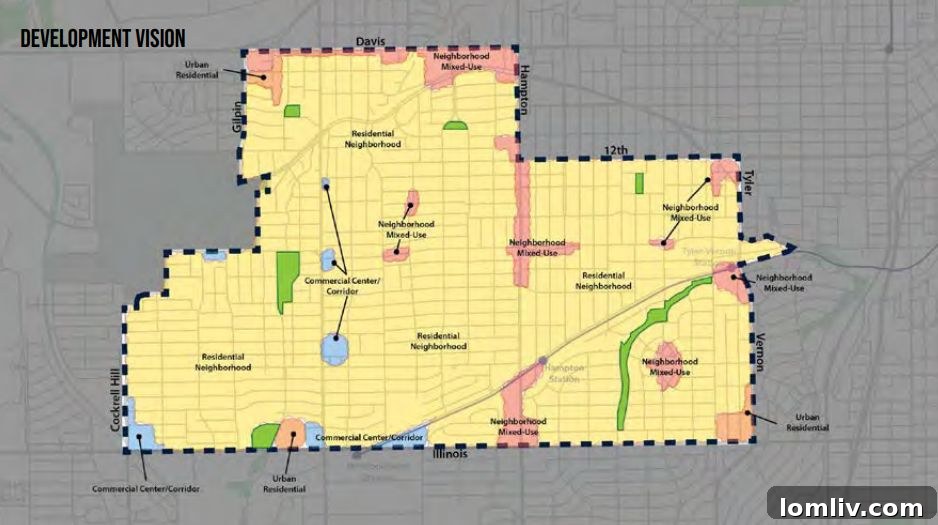
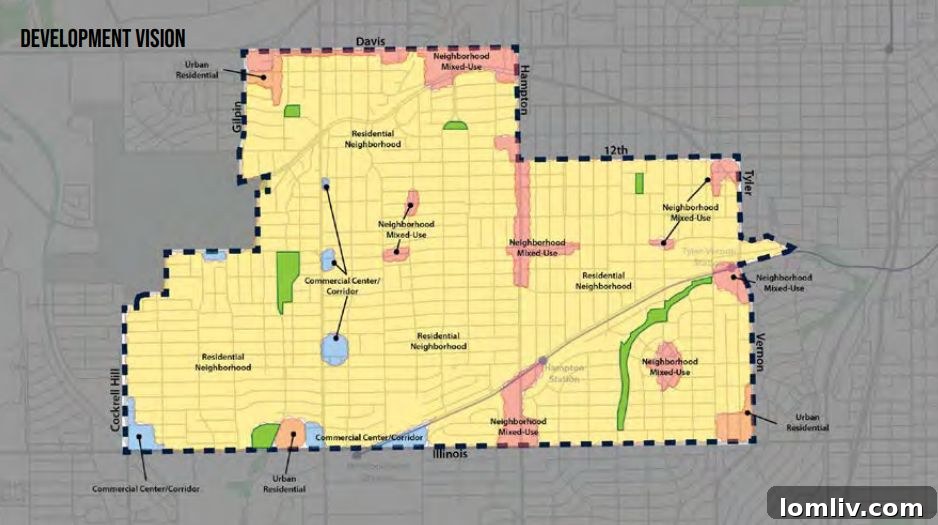
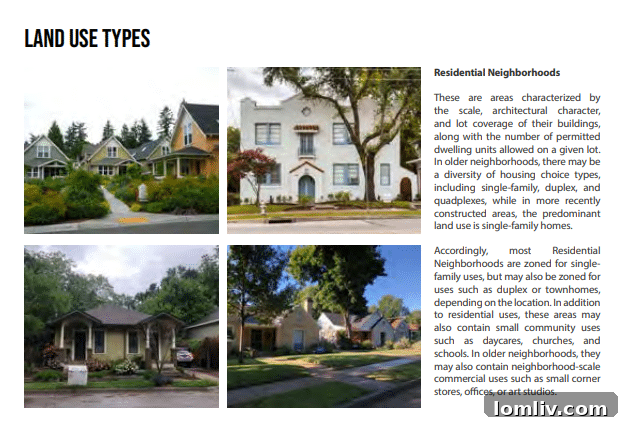
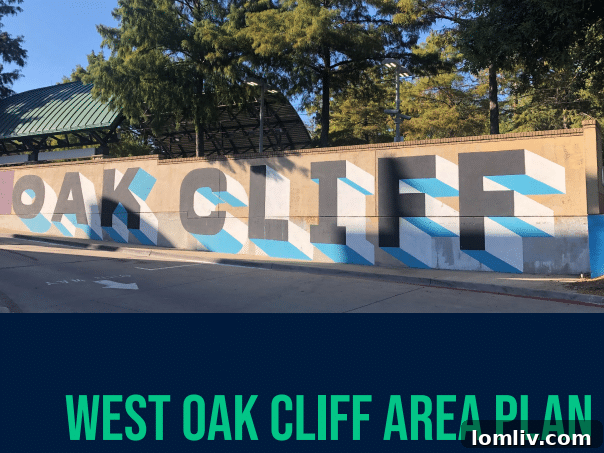
The West Oak Cliff Area Plan (WOCAP), once lauded as a groundbreaking initiative born from years of extensive public input, was envisioned as a shield for residents, safeguarding their homes and property rights from aggressive development. The goal was clear: reclaim control from developers and shape the future of their community collectively. Yet, today, some residents in adjacent South Edgefield voice profound concerns. They contend that WOCAP, rather than protecting them, has inadvertently become a mechanism for investors to acquire and demolish single-family homes, replacing them with higher-density duplexes, fourplexes, and accessory dwelling units (ADUs).
This sentiment echoes in nearby Lake Cliff, where a proposal to eliminate a ground-floor retail requirement for a new development has ignited frustration. Residents are asking a crucial question: if such stipulations are deemed unworkable for developers, why were they included in the planning process in the first place? This disjunction highlights a growing perception that city council decisions, while aiming to foster housing growth and ease developer burdens, might inadvertently sideline the deeply held wishes and long-term visions of the very communities they seek to serve.
The West Oak Cliff Area Plan: A Vision Under Scrutiny
The 97-page WOCAP document, officially adopted in October, presented a comprehensive, long-range vision for West Oak Cliff. It detailed guidelines for land use, urban design, transportation, mobility, infrastructure, and open spaces, with explicit objectives to address gentrification, displacement, and community revitalization. A summary of the plan affirmed its intention to “lay out a roadmap to help ensure that existing residents will be able to remain in the neighborhood, while also working to improve quality of life and provide opportunities for future growth in designated locations.” This grand vision was meant to guide responsible development and preserve the existing fabric of the community.
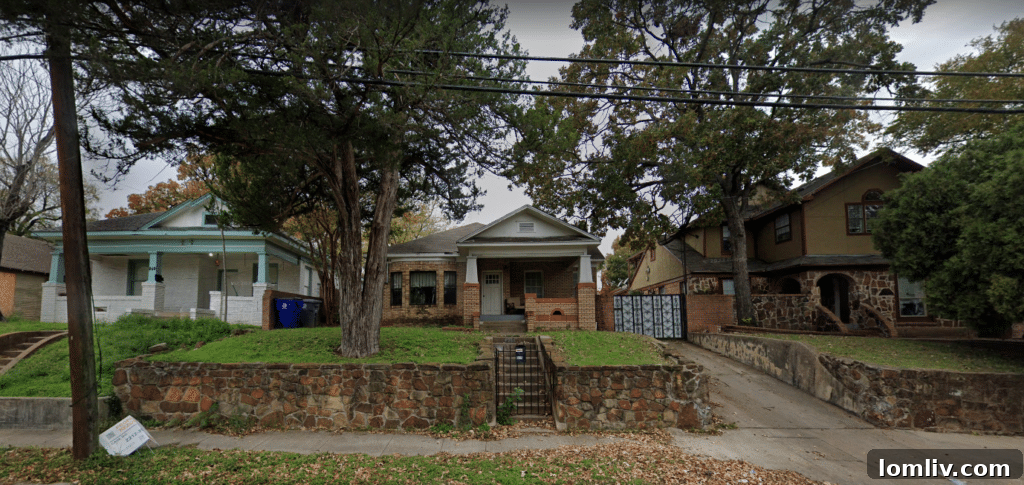
However, the reality of its implementation has proven more complex. Many South Edgefield residents, who initially championed WOCAP, now find themselves questioning its efficacy. The influx of investor-led projects that lead to teardowns and conversions into multi-family units has created a sense of betrayal. These residents feel that the very plan designed to protect them is, in practice, facilitating the very changes they sought to prevent, undermining the stability and character of their single-family neighborhoods. This unforeseen outcome underscores the critical challenge of translating broad policy intentions into tangible, positive community impacts.
Assistant Director of Planning and Urban Design, Andrea Gilles, shed light on the distinctions between various planning instruments, which often contributes to public confusion. She clarified that while “neighborhood plans” are ideal for capturing residents’ detailed desires for their area’s future, “area plans” like WOCAP provide broader guidance, particularly in regions that have lacked recent land use planning or visioning. Gilles explained, “That was the case in the West Oak Cliff area. There were a bunch of authorized hearings, a bunch of city-initiated rezonings that were authorized, but we didn’t have the plans in place to talk about what kinds of uses you actually want to see in that area.” This distinction highlights the challenge of balancing macro-level planning with micro-level community needs.
Understanding Dallas’s Diverse Planning Framework
The City of Dallas operates under a multifaceted planning framework, which can be a source of both guidance and bewilderment for residents. Beyond area plans, the city utilizes a multitude of planning documents, including neighborhood plans, corridor plans, vision studies, and traffic impact analyses. Each serves a distinct purpose, and crucially, some carry more legal and practical weight than others. This hierarchy and overlapping nature often create ambiguity regarding how development decisions are ultimately made and whose voices prevail.
At the highest level, ForwardDallas, the citywide comprehensive land use plan, is currently undergoing a significant overhaul and update, slated for early 2024. This foundational document will serve as the overarching baseline for guiding all future land uses across the city. Gilles elaborated on the relationship between citywide and localized planning: “From there, we know there are certain areas that have more fine-grained issues that we need to look at on a property-by-property basis and have more education with residents and business owners to think about how we deal with different changes. The neighborhood-plan level is a great way to do that because you can focus on the issues of a particular area.” This approach suggests a recognition of the need for both broad strategic direction and detailed local engagement.

Area plans, by their nature, often address a wide array of diverse issues affecting numerous neighborhoods, each with potentially varied development patterns. This broad scope can make it challenging to delve into the specific, fine-grained concerns of individual communities. Gilles noted, “Sometimes it’s difficult to get down to the fine-grained issues at that scale. I think moving forward, we’re going to be looking at doing neighborhood plans, which includes doing one, two, or three neighborhood groups together, really looking at and working through an issue. I think we’re going to try to be a little more focused in our planning efforts.” This shift towards more focused neighborhood planning signals an attempt to better address local concerns directly. Additionally, corridor studies have gained prominence during the ForwardDallas process, as city staff examine the evolution of aging commercial corridors and their immediate residential surroundings.
Lake Cliff’s Zoning Battle: Retail Requirements and Resident Frustration
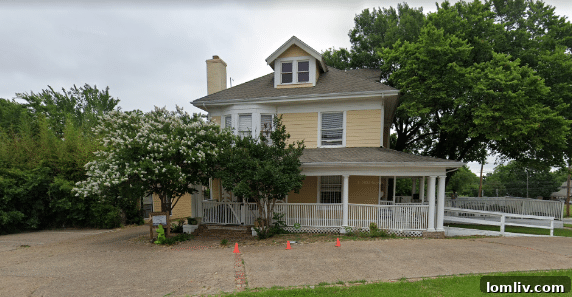
The challenges of Dallas’s planning and zoning policies are vividly illustrated by the experience of Katrina Whatley, a Lake Cliff resident. In May, Whatley shared her story with daltxrealestate.com, detailing how she became a “victim” of zoning decisions that impact not just the rezoned area, but critically, adjacent properties. Her situation arose during the Oak Cliff Gateway rezoning case, which placed a newly rezoned boundary directly against her property line. While her home falls under the Lake Cliff Historic District overlay, the neighboring property did not. This discrepancy allowed a developer to build almost to the brick wall separating her kitchen from a future apartment balcony, a clear example of how zoning lines can create dramatic disparities.
When the Oak Cliff Gateway rezoning case went through, Whatley’s building, which is next door to the boarding house where Lee Harvey Oswald spent his last days as a free man, ended up directly bordering the rezoned area. In fact, that edge went right up to her property line. Whatley’s property and several nearby are governed by the Lake Cliff Historic District overlay. The building next door was not. The developer who purchased the property next door was able to, according to the zoning enacted, build almost right up to the brick wall that separates her kitchen from someone else’s apartment balcony.
daltxrealestate.com report, May 2023
Now, Whatley is actively opposing a new proposed zoning change for an area a block from her home, bordered by E. 5th and E. 6th streets, and N. Beckley and N. Zang. This proposal seeks to reduce the street-level retail requirement for a developer on E. 5th and E. 6th streets and adjust the street-level use on N. Beckley Avenue to a live/work configuration or townhomes. The project itself would bring a seven-story multifamily development with 253 residential units, conforming to existing density zoning. However, Whatley argues that removing the retail component would be detrimental: “If the city council approves the developer’s request to remove the retail requirement, it could send a signal that the developers who want more profits come before the benefit to the neighborhood,” she told daltxrealestate.com.
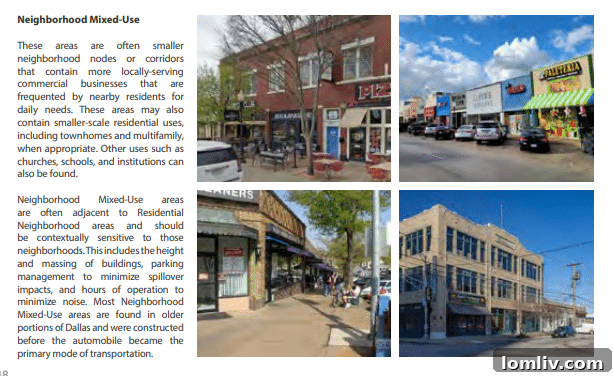
This situation raises a critical question about the flexibility of urban planning. If a ground-floor retail mandate, as outlined in a city plan, proves unfeasible or unaffordable for developers, does that indicate a flaw in the plan itself? Critics point to numerous vacant retail spaces in Bishop Arts, often attributed to ground-floor requirements that make them financially prohibitive to lease. They ask why these spaces cannot be repurposed for studio apartments or other uses that better align with market demands. This debate highlights the tension between preserving planned urban design and adapting to an evolving housing market, particularly in a city where housing affordability is a pressing concern.
Developer Reid Beucler of Slate Properties clarified that his firm is not seeking changes in density or height for their Lake Cliff project. Their primary goal is simply to remove the retail requirement on “side streets,” arguing that the city’s mandated parking allotment for retail could exacerbate local traffic congestion. Gilles acknowledged the need for flexibility: “A plan can recommend that, and if you don’t follow up with the appropriate zoning, you’re in a bind because you don’t have the regulations in place to be consistent with the plan. Or you did follow up with the rezoning and as projects come in, you start to figure out, ‘Oh, shoot, this actually doesn’t work,’ that’s where you have to take a look at the zoning again and potentially make adjustments if it’s consistently not working.” This perspective underscores the iterative nature of urban planning and zoning, where real-world outcomes often necessitate policy adjustments.

Further amplifying the conversation around density and housing, Dallas City Council member Chad West, representing North Oak Cliff and the Bishop Arts District, recently proposed reducing the city’s minimum lot size. The aim of this initiative is to foster more “missing middle housing”—housing types that bridge the gap between single-family homes and large apartment complexes, such as duplexes, triplexes, and townhouses. West acknowledges that such proposals can be misconstrued as an attempt to dismantle single-family neighborhoods for high-density development. However, he emphasizes his intent is not to eradicate existing homes but to create greater housing variety and affordability. He has requested city staff to carefully craft the resolution to ensure that while a mix of housing types becomes allowable by right, it doesn’t grant a free pass for the wholesale demolition of single-family residences, underscoring the delicate balance between increasing housing supply and preserving neighborhood character.
Unintended Consequences: The Real-World Impact of WOCAP
Despite widespread support from South Edgefield residents for the original West Oak Cliff Area Plan, its implementation has stirred significant controversy and raised questions about unintended consequences. Councilman Chad West, who championed the plan, initially praised the extensive resident feedback process, which included dozens of bilingual community meetings and a higher response rate to the WOCAP survey than to a citywide Racial Equity Plan. This robust engagement signaled a strong community desire for self-determination in their development future.
Christine Hopkins, an Elmwood resident and founding member of the West Oak Cliff Coalition, highlighted WOCAP’s commendable goals: protecting family-owned minority businesses, preserving neighborhood affordability, and preventing displacement. However, she stressed that these goals require concrete action: “The city needs to put action behind those goals in order for there to really be a positive outcome when it comes to the implementation of those plans. The implementation only comes when zoning changes take place or when anti-displacement programs are put into place.” Hopkins also noted that teardowns are a citywide phenomenon, occurring regardless of area plans. Yet, she critically observed, “Unfortunately the city does not do what it should do to protect largely minority areas of this city from that type of predatory real estate practice nor from displacement pressures.” This sentiment points to a systemic failure to protect vulnerable communities from rapid market forces.
David Dockery, president of the South Edgefield Neighborhood Association, conducted a survey during the WOCAP public input process, revealing that the majority of his neighbors opposed increased density. “So we expressed to the city what the majority wanted,” he stated. Now, they hope for an authorized hearing to formally address their concerns. They are hesitant to pursue a conservation district—a tool often used to prevent teardowns—due to the diverse range of homes and lot sizes in the area, and the prior failure of such an attempt in nearby Wynnewood. Dockery further expressed frustration with the city’s broader strategy: “[The city is] trying to increase housing density within a half-mile radius of [the Tyler/Vernon DART station]. None of us want triplexes or fourplexes in the neighborhood.” This direct conflict illustrates the tension between transit-oriented development goals and established neighborhood preferences.
The Garland Road Vision Study in East Dallas serves as a cautionary tale: a written plan, no matter how well-intentioned, may ultimately be overridden by the votes of elected and appointed bodies. Lochwood residents opposed Ojala Holdings’ plans for a mixed-income housing development, arguing it violated the vision study’s 36-foot height maximum. Yet, the proposal, funded through a Public Facility Corporation structure, received unanimous approval from both the City Plan Commission and City Council. This incident starkly demonstrates that a documented plan does not always guarantee its enforcement when political will or other development priorities come into play. The fate of that project remains uncertain, with residents reporting no signs of construction or communication from Ojala representatives in months.
The Elmwood Revitalization Plan: A Model for Community-Led Development?
In contrast to the controversies surrounding WOCAP, the recently initiated Elmwood Revitalization Plan appears to have garnered widespread community support. Covering the downtown portion of the historic Elmwood neighborhood, parts of which were originally planned in the 1920s, this initiative offers a potential blueprint for successful, community-led development.
Andrea Gilles clarified that the Elmwood Revitalization Plan is distinct from both traditional area and neighborhood plans. She explained that as part of the ForwardDallas process, the city is diligently categorizing different planning documents to ensure consistency and clarity. “When I say a neighborhood or a corridor plan, that’s city-initiated and led in partnership with the communities. Those will have a land use component that could potentially have zoning implications or recommendations for infrastructure improvements where we’re seeking resources from different departments in the city.” A revitalization plan, however, might be initiated by Economic Development or Housing and Neighborhood Revitalization, or even originate outside city departments entirely. This flexibility allows for a more targeted approach, often tied to specific funding sources or specialized community needs.
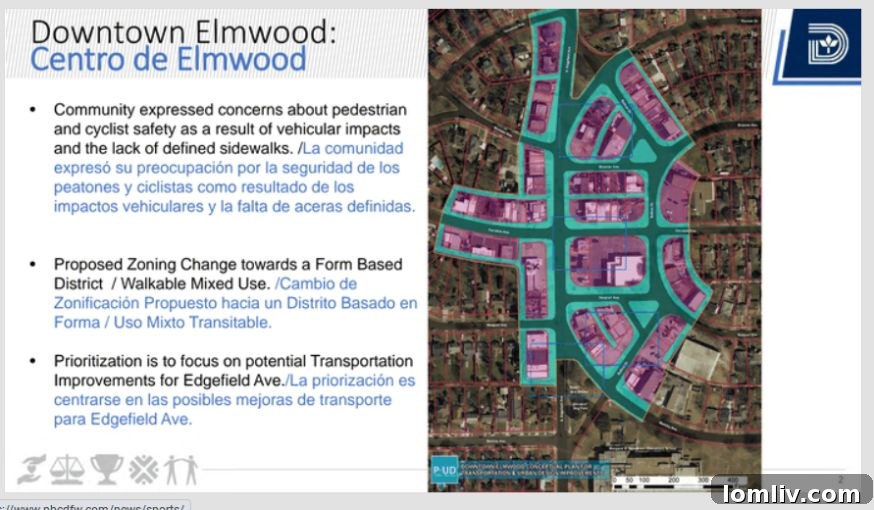
Elmwood residents have made their preferences clear: they do not wish for their neighborhood to emulate the high-rise, high-density environments of Uptown or Bishop Arts. Instead, they seek to preserve the distinctive single-family charm and the walkable, locally-owned business district along South Edgefield Avenue. This specific focus on maintaining local character and fostering a vibrant pedestrian environment differentiates their plan from broader, more comprehensive urban development strategies.
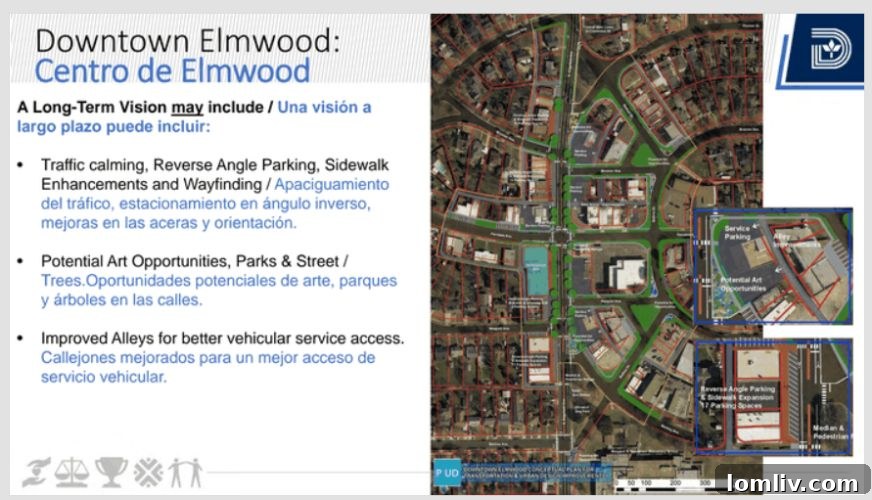
Gilles further distinguished the Elmwood plan’s focus: “They’re looking at one particular issue. When we do a neighborhood plan, that’s when we look at land uses, transportation infrastructure, housing, environmental concerns, and things like that. We really go into the weeds on all those issues and get lots of different departments involved to have conversations about how we’re going to address the issues that have been raised in a particular area. A revitalization plan can be a strategizing document or specifically attached to some funding source.” The Elmwood Revitalization Plan specifically calls for reduced parking regulations and promotes walkability through encouraging sidewalks, marked bike lanes, and center islands on Edgefield. Residents express strong optimism that these measures will invigorate the area and put an end to vacant storefronts, demonstrating how targeted, community-driven planning can lead to positive, tangible outcomes.
Conclusion: Towards a More Harmonious Dallas Development
The experiences in West Oak Cliff, Lake Cliff, and Elmwood illustrate the inherent complexities of urban planning in a dynamic city like Dallas. While robust planning documents like WOCAP are created with the best intentions—to protect residents and guide growth—their implementation can often lead to unforeseen challenges and community discontent. The tension between facilitating necessary housing density and preserving existing neighborhood character is palpable, exacerbated by the often-conflicting interests of residents seeking stability and developers pursuing economic opportunities.
The city’s diverse array of planning instruments, from comprehensive citywide plans like ForwardDallas to highly localized revitalization efforts, reflects a continuous attempt to manage this growth. However, the recurring themes of resident concerns being overlooked, plans being overridden by political decisions, and the struggle to translate policy into effective anti-displacement measures highlight critical areas for improvement. As Dallas continues its trajectory of rapid development, fostering greater transparency, ensuring meaningful resident participation, and developing more responsive zoning policies will be paramount. The success of the Elmwood Revitalization Plan offers a hopeful example of what can be achieved when planning efforts are sharply focused, deeply rooted in community desires, and effectively implemented to protect and enhance local identity.
This article is part of a series exploring housing and development issues in the Elmwood and South Edgefield neighborhoods of Oak Cliff.