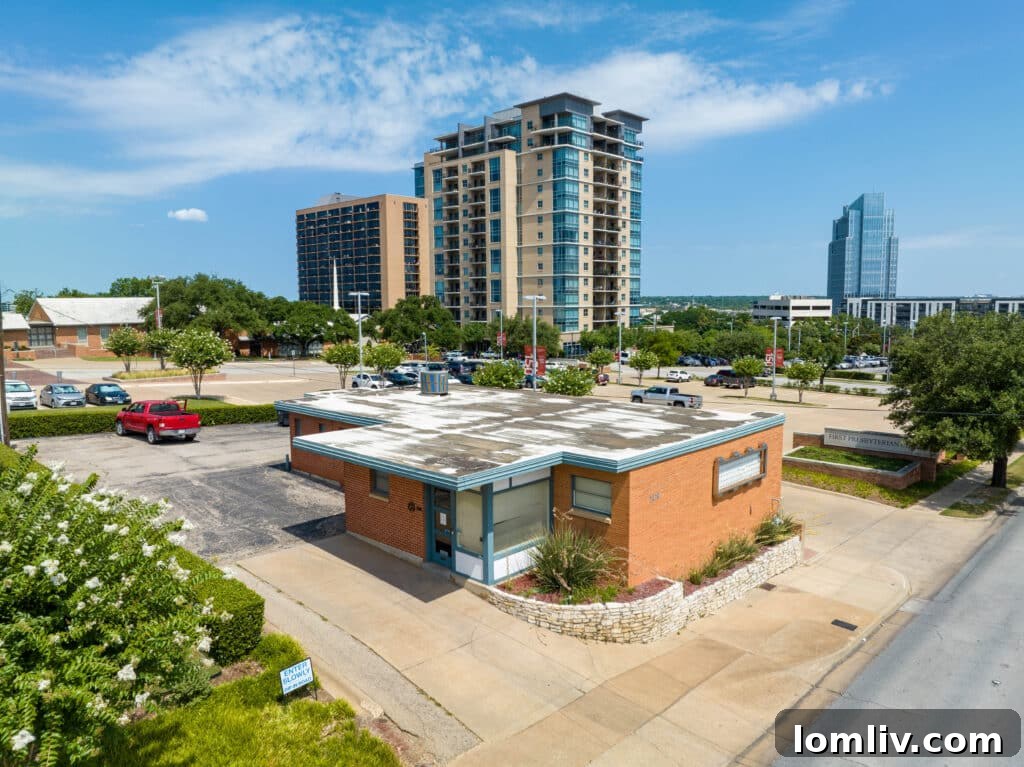
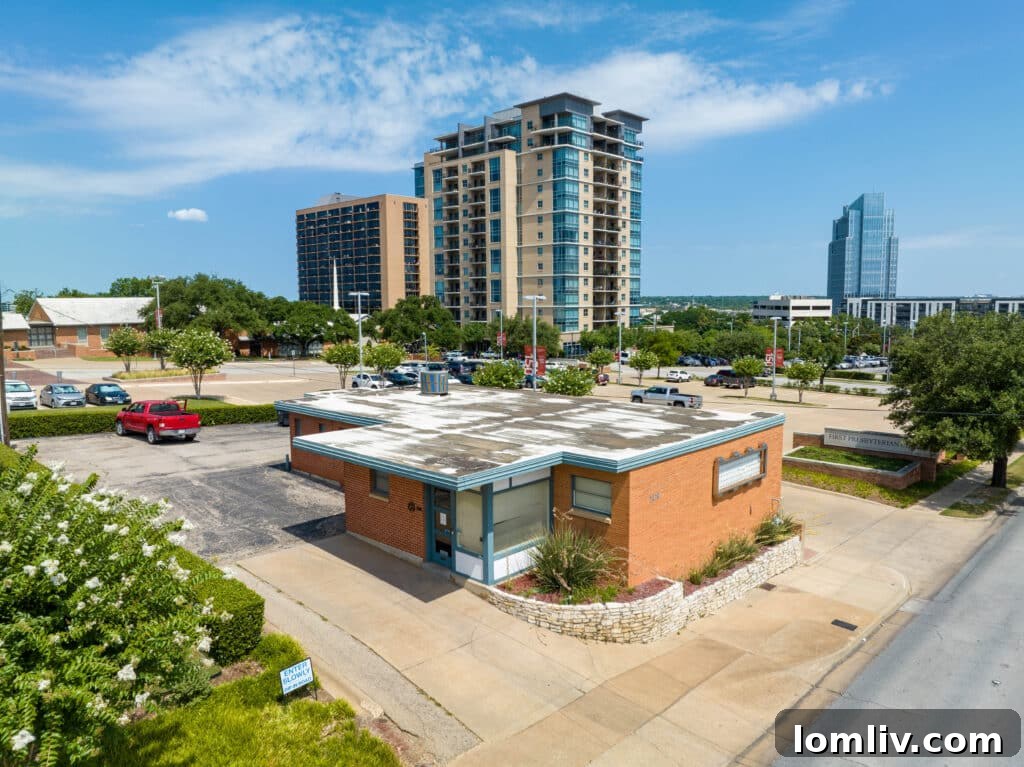
For business owners seeking more than just an office space – an environment infused with character, history, and a touch of serendipity – a remarkable opportunity awaits in the heart of Fort Worth. The Yates-Ottmann Building, a distinctive historic office property, is now available for lease, offering a unique blend of architectural heritage and modern business potential. This isn’t just any building; it boasts an extraordinary reputation as a “good luck charm” for its previous occupants, a testament to its nurturing environment for growing enterprises.
Nestled at 1020 Summit Avenue, this captivating 1953 structure has consistently proven to be a launchpad for success. Every business that has called the Yates-Ottmann Building home has experienced significant growth, eventually necessitating a move to larger premises to accommodate their expanding operations. This remarkable track record has cemented its status as a highly sought-after location for ambitious ventures in the dynamic Fort Worth business landscape, making it an ideal choice for forward-thinking entrepreneurs.
Jerre Tracy, the esteemed executive director of Historic Fort Worth, Inc., proudly affirms the building’s unique quality, stating, “Every little business that’s been in there has grown.” This strong endorsement underscores the property’s undeniable ability to foster development and prosperity. Interestingly, Historic Fort Worth, Inc. is not just an admirer of the building’s rich history; it is its dedicated steward, having acquired the property in 1998 to serve as its very first office space. This personal connection further emphasizes the building’s significance within the city’s broader historic preservation efforts, highlighting its architectural and cultural value.
Despite its modest footprint, the Yates-Ottmann Building commands attention through its distinctive presence. “It is Fort Worth’s smallest, free-standing office building,” Tracy highlights, adding with affection, “It’s tiny, but it’s fabulous.” This description perfectly encapsulates its unique charm and intimate appeal, making it an ideal choice for businesses looking for an independent identity and a standout presence without the overwhelming scale of a conventional multi-tenant corporate complex. Its standalone nature offers unparalleled privacy and a strong brand identity.
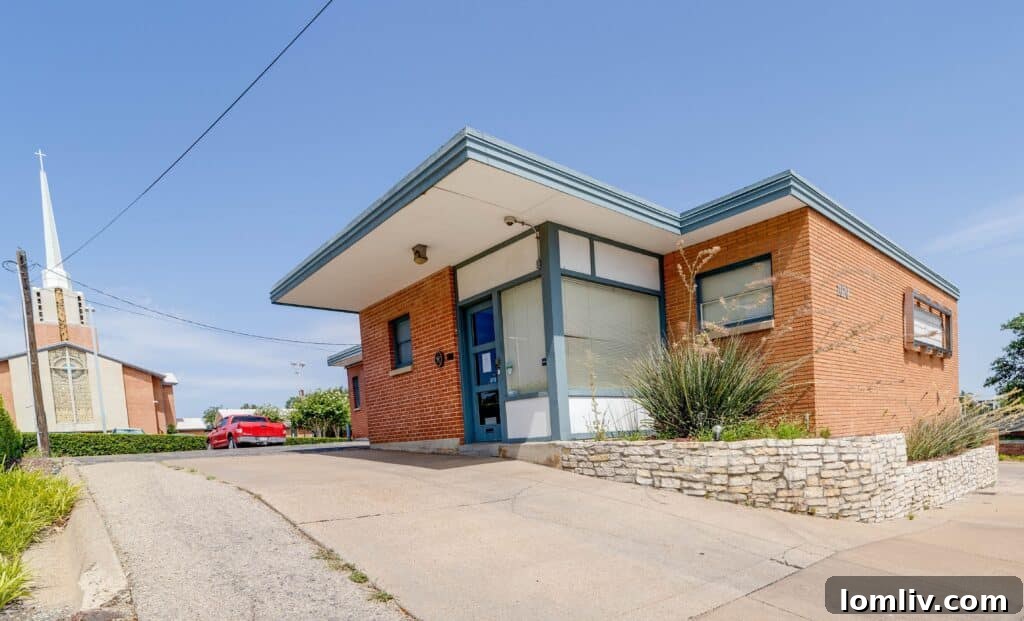
Spanning a meticulously designed 1,352 square feet, this petite yet powerful office building was originally conceived as an advertising agency for Harry Ottmann and a Mr. Yates, whose first name has been lost to historical records but whose vision contributed to this enduring edifice. Its strategic location is a significant and undeniable advantage for any enterprise. Positioned at 1020 Summit Avenue, tenants are placed mere minutes from the vibrant bustle of Downtown Fort Worth, the critical Fort Worth Medical District, and the dynamic, rapidly developing West 7th area. This prime geographical positioning offers unparalleled access to major business hubs, a diverse talent pool, and the city’s thriving cultural and entertainment scenes, ensuring convenience for both employees and clients.
The lease rate for this exceptional property is competitively set at $26 per square foot per year. Margaret Lattimore, an experienced associate with Northern Crain Realty, notes that this price point is well within the going market rate for such a unique and historically significant commercial property in Fort Worth’s sought-after areas. “A lot of people are looking at it because it’s very charming,” Lattimore observes, attributing much of its allure to its impeccably preserved Midcentury Modern appeal. She further emphasizes its robust structural integrity, stating with confidence, “It has great constructional integrity,” assuring prospective tenants of a well-maintained, durable, and architecturally sound commercial space ready for immediate occupancy.
A Legacy in Design: The Enduring Midcentury Modern Charm of the Yates-Ottmann Building
The Yates-Ottmann Building stands as a proud and prominent example of Midcentury Modern architecture, a highly influential design movement that truly flourished in the post-World War II era. This distinctive style, celebrated for its optimistic outlook and progressive aesthetic, is characterized by its clean, uncluttered lines, an emphasis on functionality, and a seamless integration with its natural surroundings. The building on Summit Avenue beautifully embodies these core principles, offering a light-filled, airy, and geometrically pleasing environment that is inherently conducive to creativity, focus, and collaboration among its occupants. Its design speaks to a timeless elegance that continues to captivate.
The enduring charm and appeal of this Fort Worth office building are not merely superficial; they are deeply rooted in the superior quality of its original design and construction. For modern businesses, occupying a commercial space with such distinct architectural character can serve as a powerful differentiator, setting them apart from competitors housed in more generic or contemporary office complexes. It provides a unique, inspiring atmosphere that can significantly boost employee morale, foster innovation, and leave a lasting, positive impression on clients. The meticulous retention of its original Midcentury Modern features ensures that tenants benefit from a genuine piece of Fort Worth’s architectural history, carefully preserved and thoughtfully updated for the demands of today’s professional landscape.
The Visionary Architect: Robert P. Woltz Jr. and His Contributions to Fort Worth
The remarkable longevity, structural integrity, and inherent aesthetic appeal of the Yates-Ottmann Building are largely attributable to its visionary designer, the distinguished architect Robert P. Woltz Jr. Born in Fort Worth in 1905, Woltz maintained deep and abiding connections to his “Cowtown” roots throughout his extensive and celebrated career. His father, Robert Pratt Woltz Sr., was a successful local real estate agent, an occupation that undoubtedly provided young Robert with early, invaluable exposure to the built environment and likely ignited his profound passion for architecture, shaping his future path from a young age.
Woltz’s rigorous architectural education commenced at Texas A&M University before he transferred to the prestigious University of Pennsylvania, where he ultimately earned his architecture degree. It was during his formative years in Pennsylvania that he had the invaluable opportunity to study under the profound tutelage of Paul Philippe Cret. Cret, a French architect of immense influence, played a pivotal role in shaping the trajectory of American architecture throughout the early to mid-20th century. Renowned for his sophisticated Beaux-Arts Classicism and his later work integrating modernist principles, Cret instilled in Woltz a rigorous understanding of architectural design, an unwavering commitment to quality craftsmanship, and a deep appreciation for the impact of civic architecture – principles that would profoundly define much of Woltz’s subsequent work across Texas.
Upon successfully graduating and becoming a licensed architect, Woltz returned to his beloved hometown of Fort Worth. He commenced his professional career by working alongside Hubert Crane, another highly prolific and respected Fort Worth architect of the era. Crane is particularly celebrated for his pioneering Dr Pepper building, a significant local example of the International Style, as well as his numerous elegant residential designs across some of Fort Worth’s most esteemed neighborhoods, including Ridglea, Monticello, Crestwood, River Crest, and Westover Hills. Woltz’s experience working under such a seasoned master as Crane undoubtedly broadened his understanding of diverse architectural styles, practical construction methodologies, and the nuances of client relations.
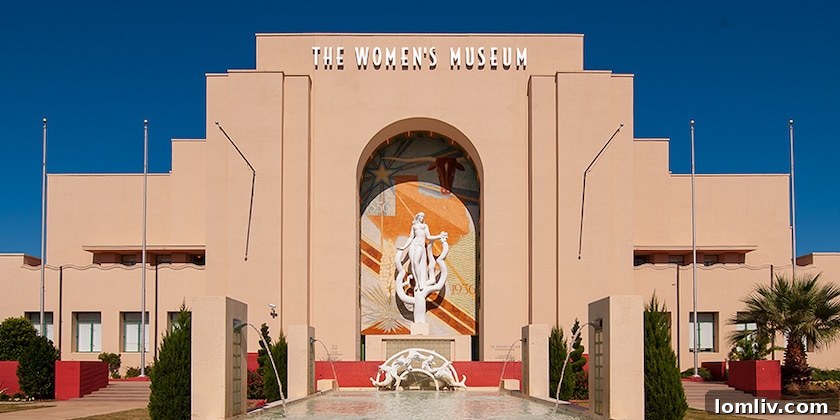
Woltz’s exceptional talents soon propelled him to Dallas, where he embarked on a significant collaboration with the renowned architect George Dahl. Their most notable joint endeavor was the groundbreaking 1936 design plans for the monumental Texas Centennial Exposition. The magnificent fruits of their collaboration are still admired today as the iconic and enduring Art Deco buildings that gracefully adorn Dallas’ historic Fair Park. These structures, with their striking geometric forms, intricate detailing, and vibrant decorative elements, continue to captivate visitors and stand as magnificent, internationally recognized examples of the Art Deco movement in America. Woltz’s instrumental contribution to such a monumental and historically significant project firmly solidified his reputation as a capable, innovative, and highly respected architect with a keen eye for impactful public works and grand design.
Beyond his extensive design work, Robert P. Woltz Jr. was deeply committed to the advancement and professional development of the architectural profession itself. He played an instrumental and foundational role in helping to establish the Fort Worth chapter of the American Institute of Architects (AIA), proudly serving as a distinguished charter member. Furthermore, he was also a charter member of the Texas Society of Architects, unequivocally demonstrating his unwavering dedication to fostering robust professional standards, promoting ethical practices, and building a strong, supportive community among architects throughout his home state. This profound leadership and commitment underscored his belief in the crucial importance of organized professional bodies in elevating the practice and perception of architecture as a vital public service.
Woltz’s diverse interests extended far beyond the realm of pure architectural design. He was, for instance, an avid member and highly respected judge of the American Camellia Society. This unique and passionate interest in horticulture found a beautiful and harmonious architectural expression in 1959 when he meticulously designed the Texas Federation of Garden Clubs headquarters, which is elegantly situated within the renowned Fort Worth Botanic Garden. This particular project beautifully illustrates Woltz’s remarkable ability to seamlessly integrate his personal interests and passions with his professional skills, creating structures that were not only exquisitely functional but also perfectly harmonized with their natural surroundings and intended purpose, leaving a lasting mark on the city’s green spaces.
The Enduring Legacy and Modern Potential of This Historic Fort Worth Office Building
The Woltz-designed office building on Summit Avenue offers a thoughtfully laid-out interior that caters with remarkable flexibility to the needs of modern businesses, all while meticulously retaining its inherent historic charm and architectural character. The space features four distinct and private offices, complemented by a versatile conference room. Margaret Lattimore suggests that this conference room “could be converted to a fifth office,” providing invaluable adaptability for different business models, team sizes, and future expansion needs. In addition to these private and collaborative workspaces, the building includes a welcoming reception area, an efficient workroom perfect for administrative tasks, a practical storage closet for organization, and two well-maintained restrooms. This comprehensive and flexible layout ensures that the building is not only aesthetically pleasing but also highly functional for a diverse array of professional uses, from burgeoning startups and creative agencies to established consulting firms and boutique professional practices.
Beyond its significant practical amenities, the Yates-Ottmann Building carries a profound and tangible historic legacy. Leasing this unique commercial space means much more than simply acquiring an office; it signifies becoming an integral part of a continuing narrative, linking your business directly to the rich architectural heritage and vibrant entrepreneurial spirit of Fort Worth. It offers an unparalleled opportunity to operate from a landmark, a place that has not only witnessed but actively contributed to the city’s remarkable growth and development for decades. This deep connection to history can serve as a powerful asset for branding, marketing, and storytelling, resonating profoundly with clients, partners, and employees who appreciate authenticity, heritage, and a sense of place.
“I’m certainly such a fan of historic architecture, in general,” Margaret Lattimore passionately expresses, articulating a sentiment shared by many who recognize the intrinsic and often undervalued beauty and value of these enduring structures. She continues, emphasizing the critical importance of preservation through active utility: “Using these buildings and continuing to operate them is so important.” This philosophy underscores the fundamental belief that the most effective and sustainable way to preserve historic properties like the Yates-Ottmann Building is to integrate them seamlessly into contemporary life, allowing them to continue serving a meaningful purpose and actively contribute to the economic, cultural, and social vitality of the entire community, rather than simply standing as static museum pieces.
For discerning business owners in search of an office space that offers substantially more than just four walls – a place imbued with unique character, boasting a proven track record of business success, situated in a prime Fort Worth location, and possessing an undeniable architectural pedigree – the Yates-Ottmann Building represents an unparalleled and truly exceptional opportunity. It is an invitation to become an active participant in Fort Worth’s living history, to thrive and innovate within a building designed by a master architect, and, perhaps, to inherit the “good luck charm” that has so famously propelled its previous tenants to greater and greater successes. Don’t miss this rare chance to establish your business in what is truly a unique and historically significant Fort Worth office for lease, a space where history meets future aspirations.