Exploring Dallas in 1900: A Journey Through Time with a Historic Map
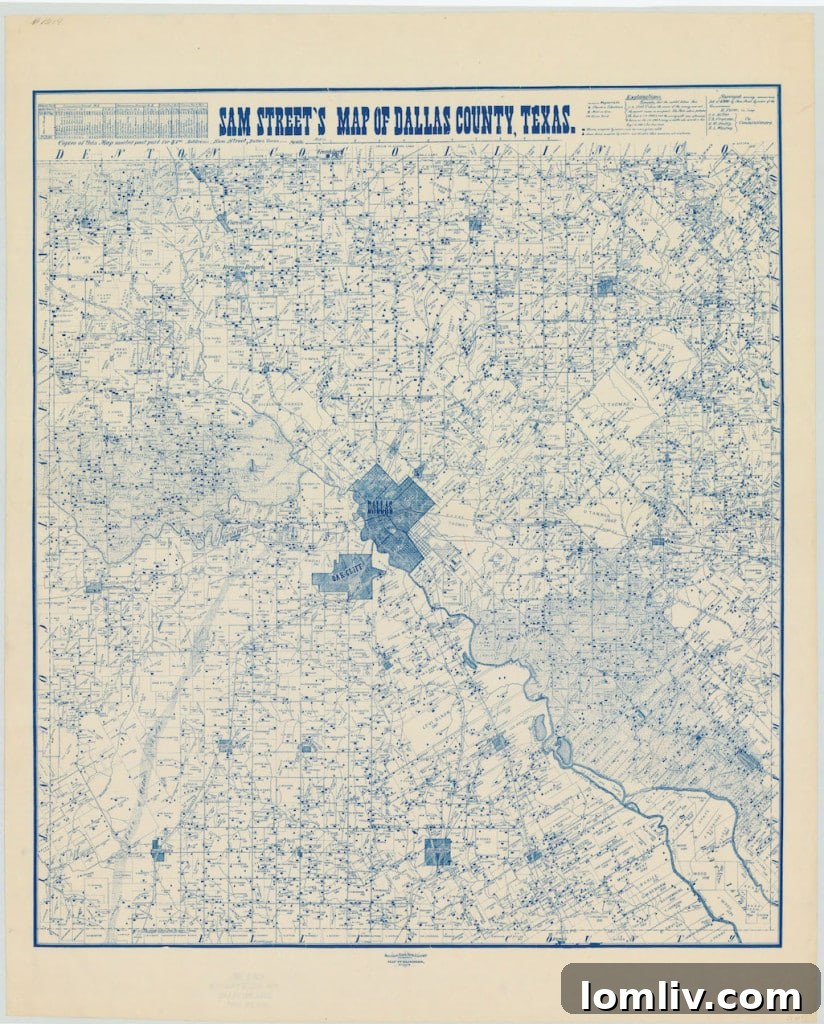
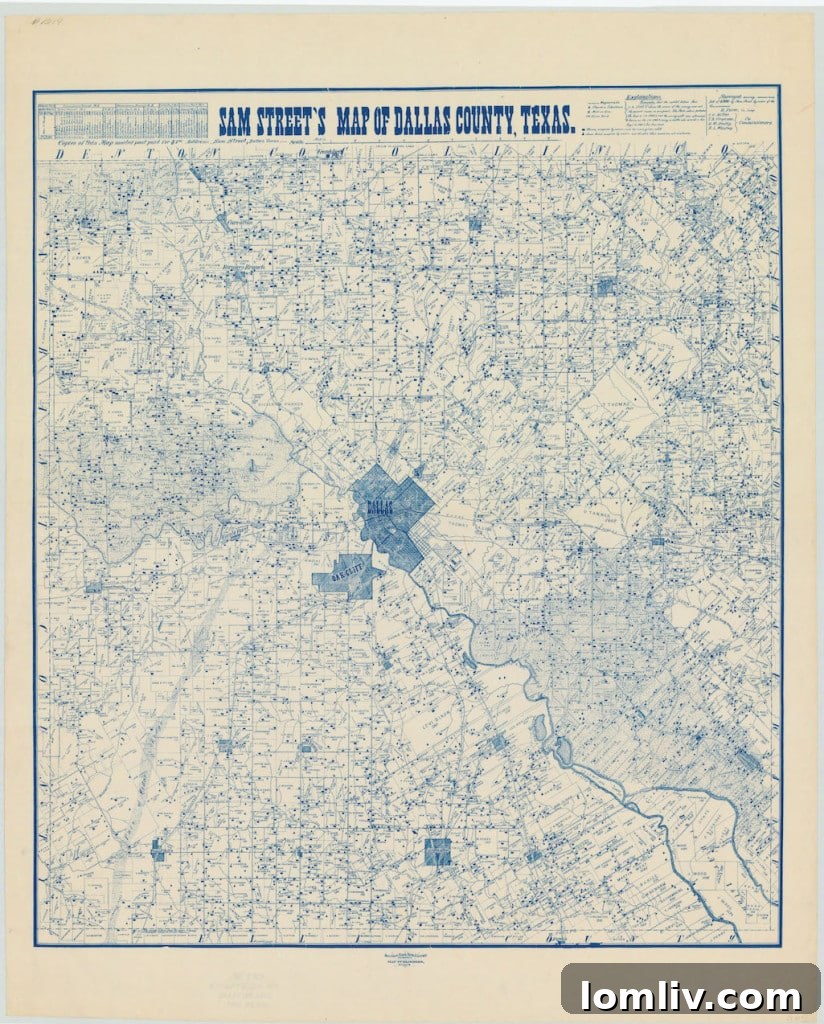
Stepping back in time is often best achieved through visual aids, and a historic map can be one of the most compelling. Recently featured by The Advocate, a remarkable 1900 map of Dallas offers an unparalleled glimpse into the city’s past, revealing a landscape vastly different from the bustling metropolis we know today. This meticulously detailed map serves as a crucial historical document, illustrating not just geographical boundaries but also the socio-economic fabric of a burgeoning Texas city at the turn of the 20th century. It invites us to discover the origins of familiar neighborhoods, the evolution of transportation, and the stories of communities that have shaped Dallas’s unique identity.
Dallas at the Dawn of a New Century: A City Unfolding
In 1900, Dallas was a city on the cusp of immense transformation, yet it remained a far cry from its modern incarnation. The map eloquently portrays a Dallas confined to a mere few square miles, its urban core surrounded by sprawling agricultural lands and nascent communities. This was a time before the engineering marvels that define today’s landscape, such as the expansive White Rock Lake, the intricate network of paved roads, or the vital arteries of interstates like I-35. Life moved at a different pace, dictated by the rhythm of horse-and-buggy transportation and the emerging technology of steam-powered streetcars. The very essence of daily life, from commerce to social interaction, was profoundly influenced by these primary modes of transit and the relatively compact size of the city.
The 1900 Dallas map, generously donated to the Texas State Archives by H.L. DeGolyer in 1944, is an invaluable artifact. It presents Dallas in a pristine state, unburdened by the urban sprawl and infrastructure that would come to define it later. This visual testament allows us to appreciate the foundational elements upon which one of America’s largest cities was built, highlighting the foresight and ambition of its early inhabitants.
Before the vast expansion and subsequent integration, many of Dallas’s distinct communities existed as separate entities, often with their own unique character and governance. The map vividly demonstrates how neighborhoods, which today seamlessly merge into a continuous urban tapestry, once retained their individual identities, connected yet distinct, prior to the major highway constructions that would fundamentally alter the city’s layout and connectivity.
Oak Cliff’s Independent Spirit and Early Connections
One of the most striking revelations from the 1900 map is the clear delineation of Oak Cliff as its own municipality. Today, Oak Cliff is an integral, vibrant part of Dallas, renowned for its historic charm and diverse culture. However, a century ago, it operated with a distinct sense of autonomy, a testament to its independent founding and early development. The map also offers intriguing insights into the origins of recreational spaces, indicating that what we now know as the Dallas Zoo was either a part of, or perhaps entirely encompassed by, Oak Cliff Park. This suggests an early vision for combining leisure, nature, and urban development within a single, expansive green space, illustrating how essential public parks were to the quality of life in these emerging communities.
This historical perspective reminds us that urban development is a dynamic process, with boundaries shifting and communities evolving over time. Oak Cliff’s journey from a separate entity to a beloved Dallas district reflects a common pattern of growth for American cities, where smaller towns and communities are eventually absorbed into larger metropolitan areas, enriching the urban fabric with their unique histories and contributions.
The Lifelines of Early Dallas: Transportation and Urban Growth
The 1900 map offers more than just geographic boundaries; it’s a narrative of connectivity and movement. Without modern expressways, the lifeblood of Dallas and its surrounding areas depended on more rudimentary yet equally vital transportation networks. The prevalence of horse-and-buggy travel speaks to a slower pace of life, where local commerce and social interactions were largely confined to walkable or short-distance rides. However, the map also highlights the significant role of steam-powered streetcars, which represented the cutting edge of urban transit at the time. These streetcar lines were instrumental in linking the nascent suburbs, like Oak Cliff, to the Dallas city center, facilitating commuting and trade, and effectively shaping the early patterns of urban sprawl.
Perhaps even more crucially, the map reveals the extensive network of railroad tracks that crisscrossed the region. These railroads were the primary arteries for freight and long-distance passenger travel, connecting Dallas to national markets and serving as vital conduits for its agricultural and industrial output. It’s a fascinating historical tidbit to realize that many of these early railroad corridors would, decades later, be repurposed and expanded into the major highways we navigate today. This transformation underscores a foundational principle of urban planning: infrastructure, once established, often dictates future development pathways, demonstrating a profound continuity in the city’s spatial evolution, even as the modes of transport change dramatically.
Glimpses of Future Affluence: Early Landowners and Developing Neighborhoods
A closer inspection of the 1900 Dallas map, particularly a larger, more detailed version available here, reveals the names of prominent landowners whose legacies endure in the names of some of Dallas’s most prestigious neighborhoods today. We can discern the holdings of ‘Farquhar,’ which would later become the affluent area of Bluffview, known for its scenic bluffs overlooking Bachman Creek. Similarly, the map points to ‘F. Scruggs,’ whose land laid the groundwork for parts of old Preston Hollow, a neighborhood synonymous with luxury and expansive estates. Furthermore, the presence of ‘Mrs. W.M. Caruth’ identifies the foundational acreage that would eventually develop into the Park Cities, including Highland Park and University Park – communities renowned for their meticulous planning, verdant landscapes, and distinct identities. These early land grants, often held by influential families, illustrate how the initial distribution of property profoundly influenced the character and demographics of future urban developments. The names etched on this vintage map are not just labels; they are testaments to the individuals and families who literally owned the ground upon which modern Dallas was built, offering a tangible link between the city’s humble beginnings and its present-day grandeur.
The Enduring Legacy of Letot: A Village Absorbed by the City
The 1900 map also guides us to the story of Letot, a small village that once thrived northwest of Dallas, now integrated into the bustling area around Lombardy Lane and Harry Hines Boulevard. The compelling history of Letot offers a poignant illustration of Dallas’s relentless expansion. Founded by Clement Letot, a Crimean War veteran who settled in the region in 1876, the community began to flourish around a Dallas and Wichita Railway stop built near his large farm.
Letot was strategically located at the intersection of Lombardy Lane and the Missouri, Kansas and Texas Railroad, seven miles northwest of the nascent city of Dallas. This prime location on J. S. Shelby’s original land grant was instrumental in its formation. Clement Letot, a resilient Crimean War veteran who migrated from Illinois in 1876, established a significant farm in the vicinity of Calvary Hill Cemetery. The construction of the Dallas and Wichita Railway by 1878, with its inaugural stop near Letot’s farm, catalyzed the community’s development, leading to it being named after him.
By 1881, Letot boasted twenty-one families, primarily farmers, supported by a general store and cotton gin owned by Letot himself. The village also featured a post office, operational until 1907, and a nondenominational church that doubled as a schoolhouse during weekdays, underscoring the strong community spirit. Its population surged to 200 by 1882, transforming into a shipping hub for cotton and grain. The community’s infrastructure continued to grow; by 1884, Letot was home to a doctor, a wagonmaker and carpenter, a blacksmith, a teacher, and several livestock traders, though its population was listed at forty. This reported dip in population from 200 in 1882 to 40 in 1884 is indeed striking and suggests potential nuances in census methodology or perhaps a temporary economic fluctuation rather than a definitive decline, a common enigma in historical data interpretation. By 1890, the population had modestly risen to sixty, with the addition of a corn mill.
Letot experienced a resurgence in the early 20th century, reaching an estimated population of 150 by 1939, paralleled by an increase in businesses from three in 1931 to six in 1939. Mid-century saw remarkable growth, with 500 residents and seventeen businesses in 1950. The last recorded listing for Letot was in 1968, noting a population of 540. By the 1970s, this once-independent, thriving village was fully enveloped into the expanding boundaries of Dallas, its identity as a separate entity fading into the urban sprawl. The story of Letot is a compelling micro-narrative of countless communities across America, born of necessity and opportunity, only to be gradually absorbed by the relentless march of urban development.
A Timeless Discovery: Street Names, Renters, and a Surveyor’s Dream
Beyond the grand narratives of urban development, the 1900 Dallas map offers countless smaller, delightful discoveries. It’s immensely satisfying to pore over the intricate details and stumble upon street names that resonate with today’s nomenclature. Discovering a “Marsh” or a “Merrell” on this antiquated document is a charming reminder that these thoroughfares were often named after the very individuals who owned the land or played significant roles in the community’s early life. These aren’t just names on a map; they are echoes of historical figures whose contributions are still literally etched into the city’s layout, providing a tangible connection to the past.
The map also serves as an informal sociological document, offering insights into the social structures of Dallas at the time. It’s particularly interesting to observe the differentiation between landowning residents and renters. Houses occupied by renters are often designated with a simple triangle, a stark contrast to the named properties of landowners. This anonymity for renters speaks volumes about the societal emphasis on property ownership in 1900, where land titles conferred not just economic power but also a form of social recognition reflected even on official city maps. One can only imagine the astonishment of a figure like J.A. Jones, a surveyor diligently charting Dallas in 1900, if he were to be transported to the modern city. The sheer scale, complexity, and density of today’s Dallas would present him with an entirely new world to survey, a testament to over a century of explosive growth and relentless transformation.
Conclusion: The Enduring Power of a Historic Map
The 1900 Dallas map is far more than a simple geographical representation; it is a profound historical artifact. It serves as a vital bridge connecting contemporary Dallas with its foundational past, allowing us to visualize the city’s early form, understand its nascent infrastructure, and appreciate the communities that contributed to its initial growth. From the independent spirit of Oak Cliff and the strategic importance of early transportation networks to the vanished village of Letot and the legacies of pioneering landowners, every detail on this map tells a story. It encourages a deeper appreciation for the continuous evolution of urban landscapes and the rich tapestry of human endeavor that shapes them. Engaging with such historical documents not only enriches our understanding of where we come from but also offers valuable context for the challenges and opportunities of urban life today. This map is a powerful reminder that every street, every neighborhood, and every corner of Dallas carries with it a piece of history, waiting to be rediscovered.