

Understanding U.S. Foreclosure Trends: A Deep Dive into October 2019 Data
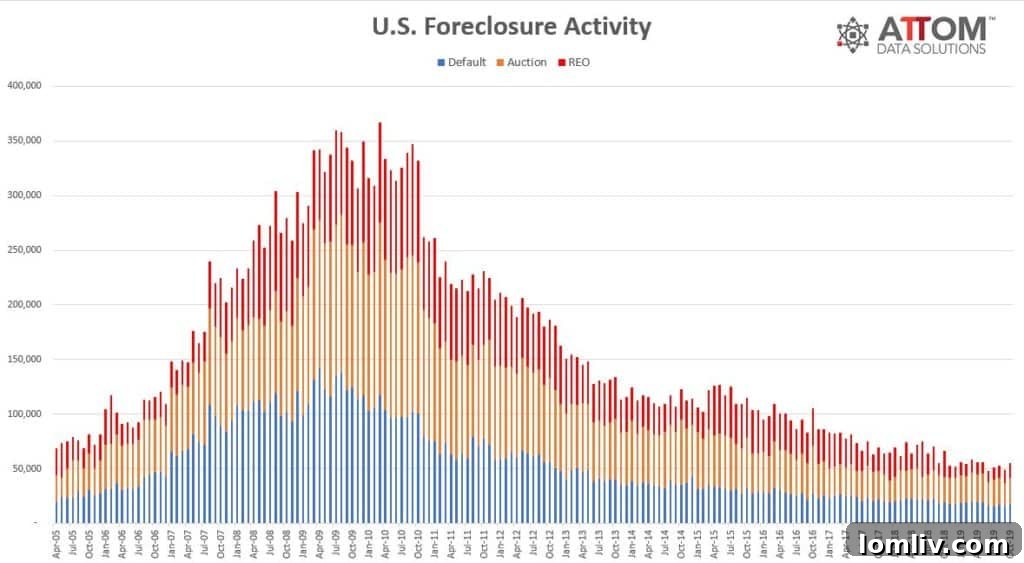
The U.S. housing market constantly navigates a complex interplay of economic factors, homeowner financial health, and lending practices. One critical indicator of this landscape is foreclosure activity, which provides a snapshot of the challenges faced by homeowners nationwide. In October 2019, fresh data from ATTOM Data Solutions shed light on these trends, revealing over 55,000 U.S. properties entangled in various stages of the foreclosure process.
This comprehensive report, released on a Thursday in late 2019, detailed filings that encompass default notices, scheduled foreclosure auctions, and bank repossessions. While the reported figure marked a 13 percent increase from the previous month of September, it also represented a notable 17 percent decrease when compared to the same period a year prior. This fluctuation offers valuable insights into the dynamic nature of the real estate market.
Todd Teta, Chief Product Officer at ATTOM Data Solutions, provided crucial context to these numbers. He explained that a seasonal uptick in October foreclosure activity is often observed, as lenders frequently push filings through their pipelines before the onset of the holiday season. This strategic timing can contribute to short-term spikes that don’t necessarily indicate a fundamental shift in market health. Teta further emphasized the broader historical perspective, noting that the latest figures remained significantly below the peaks experienced during the depths of the Great Recession, standing at less than 15 percent of those severe levels. This comparison underscores a period of relative stability in the housing market preceding more recent economic shifts.
Regional Disparities: A Look at State-Level Foreclosure Activity
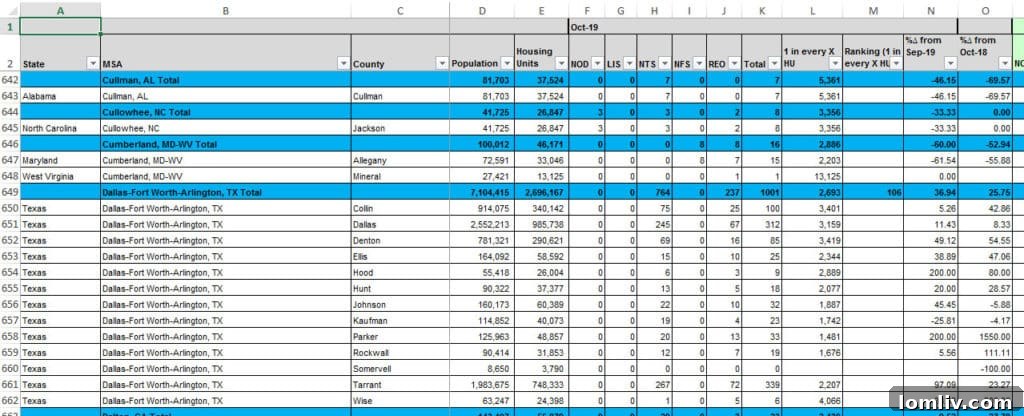
While national trends provide an overall picture, a closer examination of state-specific data reveals significant regional variations in foreclosure activity. In October 2019, certain states experienced higher concentrations of completed foreclosures, indicating localized challenges or unique market dynamics.
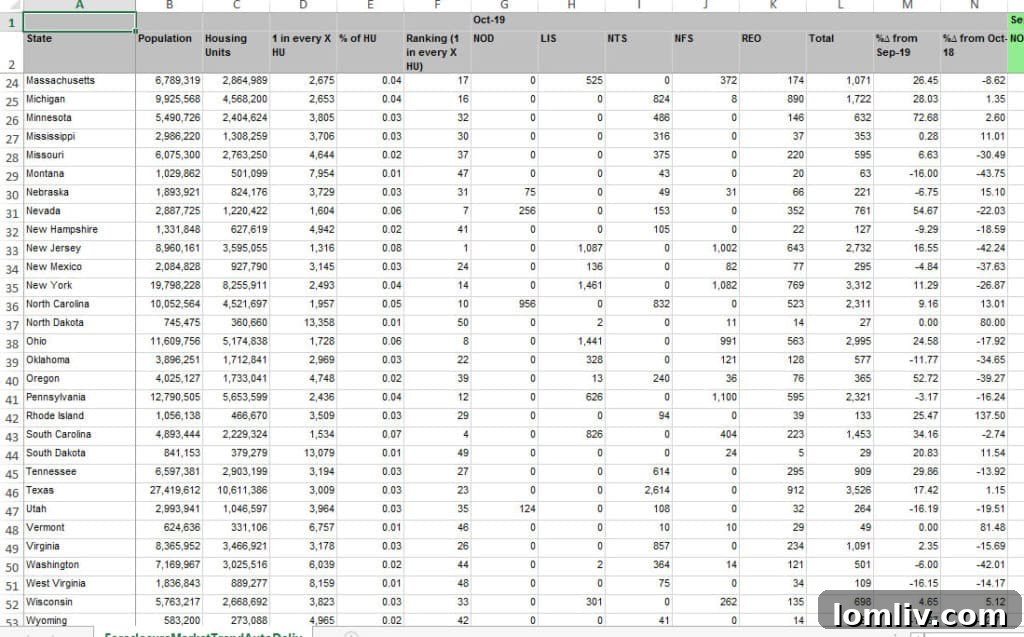
Florida, a state with a large and often volatile housing market, led the nation with 1,493 completed foreclosures during that month. Following closely behind was Texas, another populous state with a robust real estate sector, which recorded 912 completed foreclosures. The substantial numbers in these states highlight their ongoing exposure to foreclosure proceedings, influenced by factors such as population growth, economic conditions, and state-specific lending regulations.
Beyond completed foreclosures, the report also detailed lender repossessions—properties that have been fully taken back by lenders. In October 2019, lenders repossessed a total of 13,484 U.S. properties. This figure represented a significant milestone, marking the highest point for repossessions recorded throughout the entire year up to that date. This metric is a strong indicator of the final stage of the foreclosure process for many homeowners, reflecting situations where all other alternatives have been exhausted.
Understanding the Foreclosure Process and Its Initiations
The foreclosure process typically begins when a homeowner defaults on their mortgage payments. Lenders then initiate legal proceedings to reclaim the property to recover their investment. This multi-stage process can involve default notices, scheduled auctions, and ultimately, bank repossessions. The initiation of this process is often tracked through “foreclosure starts,” which indicate new cases entering the pipeline.
According to the detailed ATTOM report, lenders initiated the foreclosure process on nearly 29,000 U.S. properties in October 2019 alone. This figure represented a 17 percent increase from the previous month, suggesting a notable acceleration in new filings. However, when compared to the same period a year prior, foreclosure starts were down by a marginal 1 percent, again pointing to the subtle shifts within the market rather than drastic long-term changes.
While Texas did not experience dramatic month-to-month fluctuations in foreclosure starts, several other states saw significant double-digit increases from September to October 2019. These included Arizona (up 52 percent), Ohio (up 52 percent), Florida (up 48 percent), New Jersey (up 47 percent), and California (up 36 percent). Such substantial increases can be indicative of various localized factors, including economic downturns in specific industries, regional employment challenges, or particular real estate market corrections affecting homeowners’ ability to meet their mortgage obligations.
Navigating Financial Hardship: Crucial Options to Avoid Foreclosure
Facing foreclosure can be an incredibly stressful and daunting experience for homeowners. However, it’s crucial to understand that defaulting on a mortgage payment doesn’t immediately lead to losing your home. There are numerous proactive steps and viable options available to homeowners experiencing financial hardship, designed to help them avoid the devastating consequences of foreclosure. Early action and open communication with lenders are key to successfully navigating these challenges.
The Short Sale: A Strategic Alternative
One of the most popular and effective strategies to avoid foreclosure is a short sale. As aptly described by Nicole Espinosa, a Dallas Realtor known as the “Short Sale Queen,” on her website, “A short sale is when a seller is in financial hardship due to a variety of reasons (loss of employment, divorce, death of the borrower, etc.). In this case, the seller owes more than the house is worth and can’t afford to sell their home. We get the seller’s lender to take a loss, so the seller does not owe any money in the transaction, avoiding foreclosure.” In essence, a short sale allows a homeowner to sell their property for less than the outstanding mortgage balance, with the lender agreeing to accept the sale proceeds as full or partial satisfaction of the debt. This option can mitigate credit damage compared to a foreclosure and helps homeowners move forward without lingering mortgage debt.
Refinancing Your Home: Adjusting Loan Terms
For some homeowners, refinancing their mortgage can provide a lifeline. This involves obtaining a new loan to replace the existing one, often with more favorable terms. A refinance could lead to a lower interest rate, a reduced monthly payment, or a longer repayment period, making the mortgage more affordable. Homeowners with good credit or those who have built up sufficient equity might qualify for conventional refinancing. Government-backed programs, though some have expired or changed since 2019, have also historically offered refinancing options for those struggling to make payments. Understanding your current equity and credit standing is vital before pursuing this path.
Seeking Guidance from HUD-Approved Housing Counselors
The U.S. Department of Housing and Urban Development (HUD) sponsors housing counseling agencies nationwide that provide free or low-cost advice to homeowners. Contacting a HUD-approved representative is a proactive step that can offer invaluable assistance. These counselors are trained to assess a homeowner’s financial situation, explain all available options, and help negotiate with lenders. They can provide unbiased advice on loan modifications, forbearance programs, and other foreclosure prevention strategies, acting as a crucial intermediary between homeowners and their mortgage servicers. Their expertise can demystify complex financial jargon and processes, as noted by PocketSense.com.
Traditional Home Sale: Leveraging Equity
If a homeowner has sufficient equity in their property, a traditional sale before the foreclosure process progresses too far is often the best solution. Selling the home at market value allows the homeowner to pay off the mortgage and potentially retain any remaining equity. This option preserves their credit rating and avoids the negative long-term impact of a foreclosure on their financial future. Even if equity is limited, a quick sale can prevent the lender from taking possession, offering a more controlled exit strategy.
Loan Modification: Restructuring Your Debt
A loan modification involves changing the original terms of a mortgage loan to make it more manageable for the homeowner. This could include reducing the interest rate, extending the loan term, or even forgiving a portion of the principal balance (though this is less common). Lenders may be willing to offer modifications to avoid the costs and complexities associated with foreclosure. To qualify, homeowners typically need to demonstrate a verifiable financial hardship and show that they can afford the modified payments. This option is often explored in conjunction with advice from a housing counselor.
Forbearance Agreements: Temporary Relief
A forbearance agreement allows a homeowner to temporarily pause or reduce their mortgage payments for a specific period. This option is particularly useful for those experiencing a short-term financial setback, such as a job loss or medical emergency, with the expectation that their financial situation will improve. During the forbearance period, the lender agrees not to pursue foreclosure. However, it’s important to understand that the missed payments will eventually need to be repaid, either in a lump sum, through increased monthly payments, or by extending the loan term.
Deed in Lieu of Foreclosure: Voluntary Surrender
For homeowners who have exhausted all other options and realize they cannot keep their home, a deed in lieu of foreclosure can be a less damaging alternative to a full foreclosure. In this process, the homeowner voluntarily transfers the property title to the lender in exchange for a release from their mortgage obligations. While it still involves losing the home, it can be less detrimental to a credit score than a foreclosure and can avoid some of the public records and legal fees associated with a protracted foreclosure process.
Reinstatement or Payment of Arrears: Catching Up
The most straightforward way to avoid foreclosure, if financially feasible, is to reinstate the loan by paying all missed payments, interest, and late fees in a single lump sum. Some homeowners might be able to secure funds from family, savings, or other sources to catch up on their arrears. If a lump sum isn’t possible, some lenders may allow a repayment plan where the missed payments are spread out over a period, added to the regular monthly payments. This option requires significant financial discipline and a clear path to sustained income.
Conclusion: The Ever-Evolving Landscape of Homeownership
The foreclosure data from October 2019 serves as a valuable reminder of the ongoing challenges and resilience within the U.S. housing market. While showing an increase in monthly filings, the broader perspective highlighted by ATTOM Data Solutions indicated a landscape far removed from the crisis levels of the Great Recession. This period, just before the global economic shifts of subsequent years, showcased a market with regional hotspots of activity but also a fundamental strength that allowed many homeowners to navigate financial difficulties.
For homeowners facing or fearing foreclosure, the message is clear: knowledge and proactive engagement are paramount. Options ranging from short sales and refinancing to loan modifications and seeking professional counseling provide pathways to resolution. Understanding these alternatives and acting swiftly can significantly alter the outcome, protecting not only one’s home but also their long-term financial stability. As the housing market continues to evolve, staying informed about trends and available resources remains key to successful homeownership.