Unearthing History: The Hidden 1860s Log Cabin Discovered in a Flower Mound Home
In a truly remarkable turn of events, a seemingly ordinary 1970s traditional home in Flower Mound, Texas, has yielded an astonishing secret from its very walls. What began as a routine demolition project for developer Curtis Grant at 4801 Quail Run quickly transformed into an archaeological discovery of significant local and historical importance. The property, initially purchased for its expansive acreage and development potential, was concealing an impeccably preserved 1860s log cabin, offering a rare glimpse into North Texas’s pioneer past. This incredible find has not only altered the future of the property but has also ignited a renewed interest in the hidden histories that might lie beneath the veneer of modern suburbia.
From Modern Dwelling to Historical Treasure: The Unveiling of an 1860s Log Cabin
The story unfolds in Flower Mound, a vibrant community known for its excellent schools and suburban charm, rather than its deep historical roots, making this discovery even more extraordinary. Developer Curtis Grant had acquired the property at 4801 Quail Run with a clear vision: to dismantle the existing structure, subdivide the generous 4.33-acre lot, and construct a dozen new homes. The house itself presented as a typical 1970s dwelling, with no outward signs of the profound history it contained. It was during the initial stages of the demolition process, as workers began stripping away layers of drywall and insulation, that the unexpected became undeniable. Behind the contemporary facade emerged the sturdy, hand-hewn timbers of a remarkably intact log cabin, a structure clearly pre-dating the 1970s home by more than a century.
This startling revelation brought the demolition to an immediate halt. The discovery of a robust log structure, carefully concealed within the walls of a seemingly modern building, was an exhilarating and humbling moment. It posed an immediate challenge and an incredible opportunity: what was this structure, and how had it remained hidden for so long? The implications were immense, transforming a routine development project into a potential cornerstone of local heritage. Grant, recognizing the unique nature of his find, understood that this was far more than just old lumber; it was a tangible link to a bygone era, demanding expert attention and a revised plan.
The Property’s Initial Appeal: A Modern Home with a Hint of the Past
Before the grand unveiling, the property at 4801 Quail Run was marketed as a rare opportunity, highlighting its extensive features and potential. The listing description, provided by agent Jeannie Seth, painted a picture of a versatile estate perfectly suited for extended families or those seeking ample space and amenities. It detailed a property that had seen significant expansion and modernization over the years, yet subtly, almost prophetically, hinted at its deeper heritage. The description read:
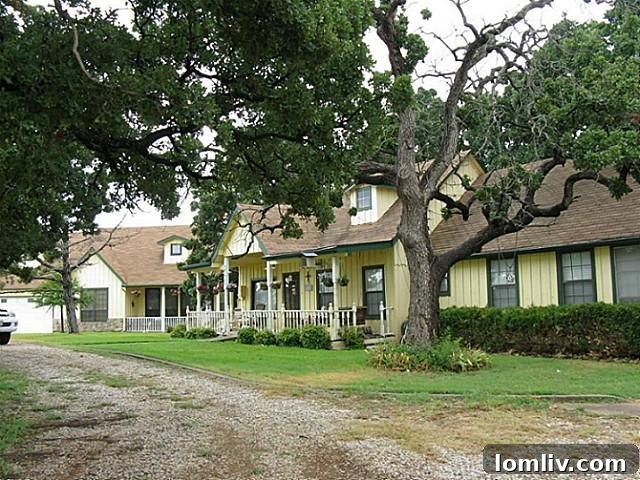
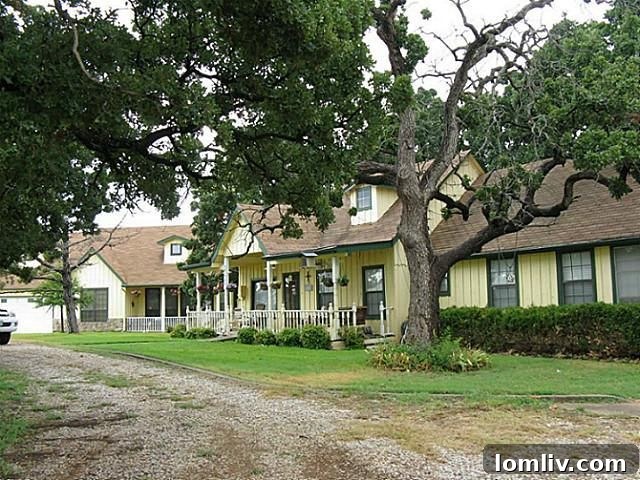
Rare opportunity! Original 1970 home added entire 2nd attached home in 2003, perfect for extended families. One story, 4.33 acre property in Flower Mound with exemplary schools. Diving pool, two 2 car garages plus car port for addtl parking. 3 sheds, 2 barns, 1 w-4 stalls, 2 pastures & well for watering. 1970 home has pergo flrs & 1800era FP. 2003 home has ss appl, gas cook top, 42 in cab, wood flrs. Please see media for detail on 2003 home.
While the focus was primarily on the contemporary comforts – the 2003 addition with stainless steel appliances, wood floors, and modern conveniences, alongside the diving pool, multiple garages, and extensive acreage perfect for equestrian pursuits – one particular detail now stands out with profound significance: “1970 home has pergo flrs & 1800era FP.” This seemingly minor mention of an “1800-era fireplace” was the initial, cryptic clue, a whisper from the past embedded within the listing. It suggested that parts of the older structure, though perhaps not fully understood at the time, were recognized as having an antique provenance, foreshadowing the incredible discovery that was to come. This detail, perhaps overlooked by many prospective buyers focused on the acreage and amenities, was in fact the silent guardian of the property’s true historical secret.
A Developer’s Vision Transformed: From Demolition to Preservation
Curtis Grant’s initial business model for the 4.33-acre site was clear and pragmatic: acquire the property, demolish the existing structures, and maximize its value by developing it into 12 new residential lots. This is a common and financially sound approach in growing communities like Flower Mound, where land is at a premium. The discovery of the log cabin, however, forced a fundamental re-evaluation of this plan. It presented a dilemma: proceed with the original, profitable development strategy, or embrace an unexpected opportunity for historical preservation. Grant’s decision to halt demolition and seek expert consultation speaks volumes about his appreciation for history and his willingness to adapt his vision.
The developer’s swift pivot from a purely commercial endeavor to one of historical stewardship is commendable. It highlights a conscious choice to prioritize cultural heritage over immediate financial gains, a decision that is regrettably rare in the fast-paced world of real estate development. Grant’s immediate response was not to destroy the find but to understand it, leading him to engage specialists who could shed light on the cabin’s origins and significance. This change of heart signifies a profound shift in perspective, recognizing that some treasures are invaluable beyond their market price. His actions underscore the idea that development can, and perhaps should, sometimes serve a dual purpose: meeting modern needs while honoring the legacies of the past.
Unraveling the Past: The Expert Investigation Confirms Historical Significance
With the log cabin’s discovery, the next crucial step was to determine its exact age and historical context. Curtis Grant wisely enlisted the help of experts to authenticate the structure. Among them was Peggy Riddle from the Denton County Historic Museum, a pivotal figure in local historical preservation. Riddle’s expertise in regional history and artifacts was invaluable in dating the cabin and understanding its place within the broader narrative of North Texas settlement. Her initial investigations pointed towards a significant age, far exceeding the 1970s exterior.
To further solidify the historical timeline, Riddle reached out to a Geoscientist from the University of Arkansas. This collaboration underscored the meticulous approach taken to verify the cabin’s provenance. Geoscientists often employ dendrochronology (tree-ring dating) or other scientific methods to determine the precise age of wooden structures. The findings from this expert analysis were conclusive and exciting: the building was likely part of a colony constructed in the 1860s, a tumultuous yet formative period in Texas history. Some evidence even suggested it could be older, placing it firmly within the pioneer era of Denton County and Flower Mound’s earliest days. This dating transforms the cabin from an interesting old structure into a priceless artifact, a direct link to the hardy individuals who first settled this frontier land. It speaks to a time before modern infrastructure, when settlers built their homes from the very land around them, forging communities amidst challenging conditions.
The Significance of the Discovery for Flower Mound and North Texas History
The unearthing of this 1860s log cabin carries immense significance for Flower Mound and the wider North Texas region. Flower Mound, while rich in natural beauty and community spirit, doesn’t always feature prominently in historical accounts compared to older Texas cities. This discovery provides a tangible and compelling piece of its early history, challenging existing narratives and filling in gaps in our understanding of its origins. The cabin is more than just an old building; it is a historical document, preserved in timber and mortar, offering a direct connection to the pioneer families who braved the frontier and laid the groundwork for the communities we see today.
Moreover, the existence of such a structure suggests that Flower Mound was not just a passing point but a place where early settlers established permanent homes, perhaps even as part of a nascent community or colony. This offers invaluable insights into the social and economic conditions of the mid-19th century in the region. For historians, educators, and local residents alike, the cabin serves as an educational tool, bringing the past to life in a way that textbooks alone cannot. It underscores the importance of preserving these hidden treasures, reminding us that history is not always found in grand monuments but often lies concealed beneath the layers of time, waiting to be rediscovered in unexpected places like a suburban backyard.
Pioneering a New Path: The Vision for a Homestead Destination Spot
Inspired by the extraordinary discovery and the deep historical significance of the log cabin, Curtis Grant has completely reimagined the future of the 4.33-acre property. Instead of proceeding with demolition and modern residential development, his new vision is to preserve the cabin and transform the site into a unique “homestead destination spot.” This ambitious plan involves more than just saving the existing structure; it aims to create an immersive historical experience for the community.
Grant’s idea is to restore the 1860s cabin to its former glory, allowing visitors to step back in time and experience what pioneer life might have been like in North Texas. Furthermore, he intends to add another historic structure to the lot, potentially another period cabin or an authentic outbuilding, to enhance the “homestead” atmosphere. This expanded historical complex would serve as an educational and cultural attraction, offering insights into the daily lives, challenges, and resilience of early Texas settlers. Such a destination could feature period-appropriate landscaping, interpretive displays, and even hands-on activities, making history accessible and engaging for all ages. It’s a bold departure from traditional development, proposing to create a lasting legacy for Flower Mound, providing a focal point for local history and community pride, and offering a tranquil escape where visitors can connect with the past.
The Rarity and Importance of Preservation in Modern Development
The decision to preserve and transform the 4801 Quail Run property into a historical homestead destination is particularly noteworthy because such projects are genuinely rare in today’s rapid-paced development landscape. All too often, historical structures, especially those hidden within newer constructions, are either unknowingly destroyed or intentionally demolished to make way for more profitable modern developments. The economic pressures and the demand for new housing frequently overshadow the intrinsic value of preserving older buildings, making Curtis Grant’s commitment to this cabin an inspiring exception.
This initiative highlights the critical importance of historical preservation. Beyond mere sentimentality, preserving structures like the 1860s log cabin contributes significantly to a community’s identity, providing a tangible link to its heritage and fostering a sense of place. It allows future generations to understand their roots, learn from the past, and appreciate the journey of those who came before them. Moreover, historical sites can become significant cultural and educational assets, drawing visitors and fostering local tourism. Grant’s project sets a powerful precedent, demonstrating that thoughtful development can coexist with, and even be enhanced by, the respectful integration of historical assets. It’s a reminder that sometimes the greatest value of a property isn’t in what can be built upon it, but in the untold stories that lie beneath its surface, waiting to be discovered and shared.
Conclusion: An Unexpected Twist and a Lasting Legacy
The remarkable discovery of an 1860s log cabin hidden within the walls of a 1970s Flower Mound home is more than just a local news story; it is a captivating narrative about serendipity, historical detective work, and the profound power of preservation. What began as a routine demolition intended to pave the way for modern residences has unexpectedly unearthed a priceless relic of North Texas’s pioneer past. Developer Curtis Grant’s willingness to pivot from his original profit-driven plan to embrace a vision of historical stewardship is a testament to the enduring allure and intrinsic value of our shared heritage. This hidden gem at 4801 Quail Run, once a secret, is now poised to become a cherished “homestead destination spot,” offering future generations a tangible connection to the early settlers of Flower Mound. This story serves as a powerful reminder that history is not always confined to museums or textbooks, but can often be found in the most unexpected places, waiting patiently for its moment to re-emerge and enrich our understanding of where we come from.