The $9,100 Foot-Wide Strip: A Florida Man’s Real Estate Auction Nightmare
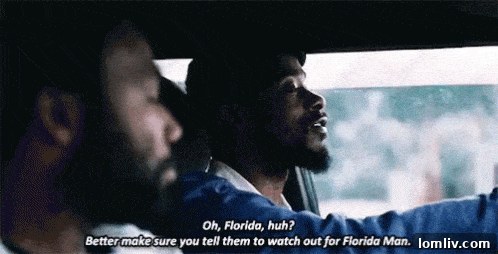
Ah, the legendary “Florida Man.” This iconic phrase, often preceding a headline that defies belief, has become a cultural phenomenon. From wrestling alligators to unusual public antics, stories beginning with “Florida Man…” rarely disappoint. It’s even sparked viral social media games, where simply searching your birth month and day alongside “Florida Man” unveils a personalized dose of Sunshine State absurdity. Indeed, the author’s own search once yielded the unforgettable headline: “FLORIDA MAN THROWS TOILET THROUGH SCHOOL BOARD BUILDING WINDOW IN ILLINOIS, IS ARRESTED SITTING ON ANOTHER.” These tales are a testament to the unpredictable nature of news, and more specifically, the peculiar events that often transpire in Florida.
We encourage you, dear reader, to try this entertaining exercise yourself. Share your hilarious or bizarre “Florida Man” headline in the comments below – we’re genuinely curious about the gems Google might unearth for you!
This week, however, our attention is drawn to a “Florida Man” story that, while maintaining its characteristic absurdity, ventures into the perplexing world of real estate. This particular incident serves not just as an amusing anecdote but also as a stark, cautionary tale for anyone considering dipping their toes into the seemingly lucrative waters of property tax auctions.
The Allure and Treachery of Property Tax Auctions
Many aspiring investors and bargain hunters are drawn to county property tax auctions with the promise of acquiring valuable real estate for mere “pennies on the dollar.” These sales occur when property owners fail to pay their taxes, and the local government opts to auction off the property to recoup the outstanding debt. The appeal is undeniable: imagine purchasing a substantial piece of land or even a built-up property for a fraction of its market value. Kerville Holness, our protagonist in this saga, was one such individual, eager to capitalize on what he believed would be a phenomenal steal at a Broward County auction.
Holness thought he had secured an incredible deal, believing he had successfully bid on a desirable villa valued at an estimated $177,000. His winning bid of $9,100 seemed like an absolute triumph, a textbook example of smart investing at a tax sale. The prospect of such a substantial return on investment must have been exhilarating, fueling dreams of quick equity and future prosperity. Unfortunately for Mr. Holness, the reality of his purchase was far removed from his initial, optimistic assessment.
A Costly Misunderstanding: The $9,100 Foot-Wide Strip
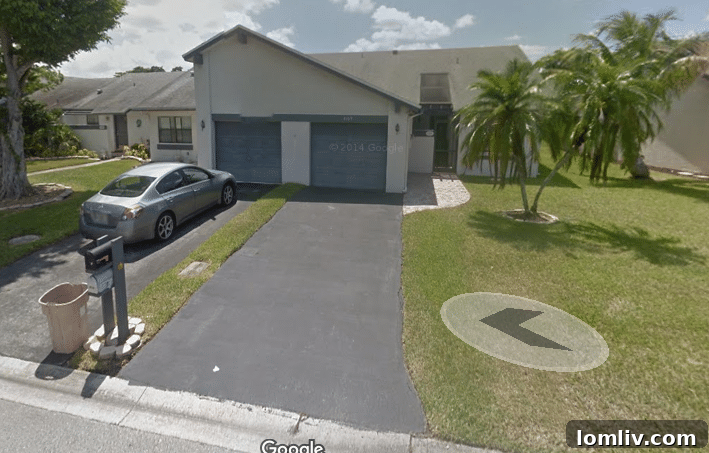
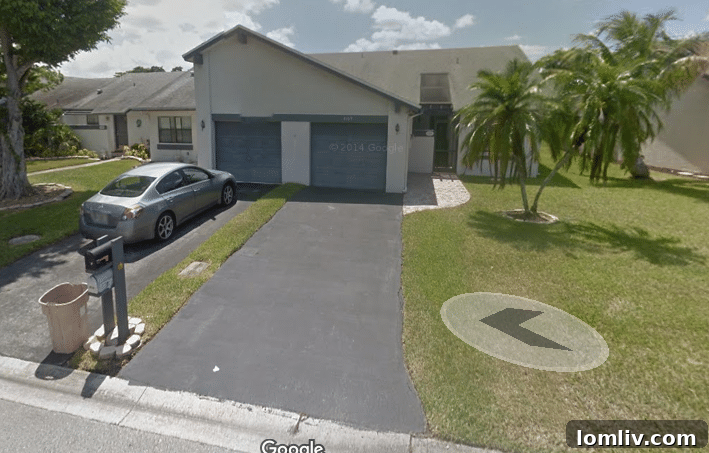
Instead of the anticipated $177,000 villa, Kerville Holness found himself the proud, albeit bewildered, owner of a property valued at approximately $50. His $9,100 investment secured him a strip of land precisely one foot wide and about 100 feet long. This incredibly narrow parcel stretched from the street curb, along two residential driveways, continued beneath the wall separating two adjacent garages, and extended all the way to the back of the property. The shocking truth of his purchase was first brought to light by the Orlando Sun-Sentinel, painting a vivid picture of a real estate transaction gone terribly wrong.
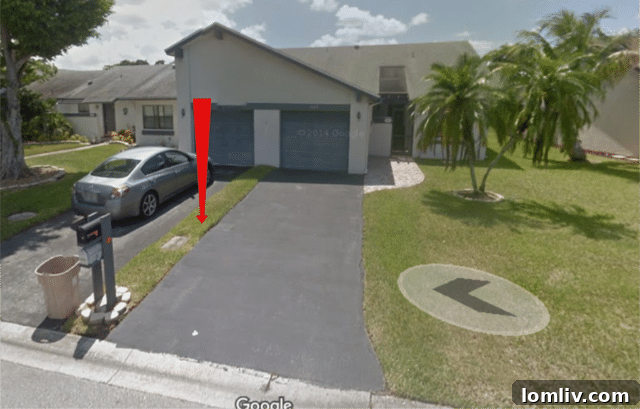
Unsurprisingly, Holness felt utterly ripped off. And who could blame him? He had invested a significant sum, only to acquire a piece of land that is, by all practical measures, unusable. The strip is too narrow to build anything upon, too small for any conventional development, and essentially serves no beneficial purpose to its owner. His frustration was palpable when he mused aloud about the impracticality of his purchase: “If I’m vindictive enough, I can cut right through the garage wall and the home to get to my air space, but what use would that be to me?” This statement, while perhaps made in jest or out of sheer exasperation, underscores the sheer futility of his ownership.
The homeowners whose properties now flank Holness’s peculiar acquisition seemed largely unconcerned. One neighbor calmly stated, “If we have to move our mailbox, we’ll move our mailbox.” This reaction highlights the minimal impact, if any, that this foot-wide strip has on their daily lives, further emphasizing the isolated and impractical nature of Holness’s investment.
The Curious History of a Sliver Parcel
The existence of such a peculiar and isolated land strip raises significant questions. Why was this sliver parcel never integrated into one of the adjacent villas? Property experts and locals alike remain puzzled. The most commonly accepted theory points to an oversight during the original subdivision’s development. When the company responsible for creating the subdivision eventually dissolved, this tiny, seemingly inconsequential strip of land was left in a legal limbo, separate from the surrounding properties. Consequently, no entity continued to pay the property taxes on it, eventually leading to its inclusion in the Broward County tax auction.
Adding insult to injury, the county has maintained a firm stance: funds spent at property tax auctions cannot be refunded. This policy, while designed to ensure the integrity and finality of such sales, leaves Kerville Holness with virtually no recourse. He is now the unfortunate steward of a $9,100, one-foot-wide patch of grass and concrete, responsible for any associated property taxes, and with no clear path to recover his investment or make the land productive. His “very pricey lawn mowing obligation” as some have jokingly called it, represents a significant financial loss stemming from a single, critical misjudgment.
The Indispensable Role of Due Diligence in Real Estate Auctions
Kerville Holness’s predicament serves as a powerful, albeit painful, lesson on the paramount importance of due diligence, particularly when engaging in high-stakes real estate transactions like tax auctions. While the allure of a bargain is strong, the risks are equally significant. Here are crucial steps every prospective buyer should undertake to avoid similar pitfalls:
- Thorough Property Research: Before bidding, meticulously examine all available documentation. This includes plat maps, legal descriptions, assessor’s records, and any blueprints or surveys. These documents provide precise details about property boundaries, dimensions, and any existing easements or restrictions. Had Holness carefully reviewed these, the minuscule nature of the parcel would have been immediately apparent.
- On-Site Inspection: Whenever possible, conduct a physical inspection of the property. This allows buyers to verify the land’s actual condition, assess its surroundings, and confirm its accessibility and boundaries. Relying solely on photographs or brief descriptions can be dangerously misleading, as evidenced by Holness’s experience.
- Professional Title Search: A comprehensive title search is non-negotiable. This process uncovers any liens, encumbrances, or disputes related to the property’s ownership history. It ensures that the buyer is acquiring a clear title and understands any potential liabilities or competing claims. While a title search might not have explicitly prevented Holness from buying the strip, it would have clearly delineated the exact parcel he was bidding on.
- Understanding Local Zoning and Building Codes: Even if a parcel appears usable, local zoning ordinances can dictate what can or cannot be built on it. Dimensions, setbacks, and land use regulations can severely limit development potential. For a one-foot-wide strip, these codes would render any construction virtually impossible.
- Consultation with Experts: Before placing any bids, it is highly advisable to consult with a qualified real estate attorney, a licensed surveyor, and potentially a real estate agent specializing in distressed properties. These professionals can interpret complex legal documents, clarify property boundaries, and offer invaluable advice on the risks and realities of a purchase.
- “Buyer Beware” Principle (Caveat Emptor): Tax auctions often operate under strict “as-is” conditions, meaning the buyer assumes all risks and responsibilities for any defects or unexpected issues with the property. Governments typically offer no warranties or guarantees, making it incumbent upon the buyer to conduct all necessary investigations.
Holness’s story underscores the fact that a “deal” is only a deal if you truly understand what you’re buying. The cost of skipping due diligence can far outweigh the perceived savings.
What Can You Do with a One-Foot Strip of Land? Creative (and Impractical) Ideas
Given Kerville Holness’s unique predicament, the question naturally arises: what, if anything, can one actually do with a one-foot-wide, 100-foot-long strip of land? While practical solutions are scarce, the situation certainly sparks some imaginative, albeit mostly impractical, ideas:
- The World’s Narrowest Art Installation: Imagine a linear sculpture, a series of thin panels, or a mural that stretches the entire 100-foot length, transforming the unusable strip into a quirky public art display.
- A “Right of Way” for Ants: Perhaps a designated, miniature path for local insect populations. Not exactly revenue-generating, but certainly unique.
- An Exclusive, One-Person Walking Path: If legally permissible and with neighborly consent, it could become a very personal, very narrow meditative path.
- The Ultimate “Private Property” Sign: Erecting a series of exceptionally thin, tall signs proclaiming private ownership along its length would certainly make a statement, if nothing else.
- A Linear Herb Garden: For the most dedicated urban gardener, perhaps a row of herbs planted in extremely narrow containers or directly into the ground, assuming suitable soil and light.
- An Eccentric Fence Line: While it wouldn’t offer much in terms of privacy, a decorative, ultra-thin fence could define the space.
- A Point of Negotiation: Perhaps the most realistic, albeit challenging, option. Holness could try to sell the strip to one or both of the neighboring homeowners. While they currently seem unbothered, the strip technically encroaches on their garages and driveways. They might eventually see value in owning it to avoid potential future disputes or simply to consolidate their property lines. However, given their dismissive attitude, this would likely require significant negotiation and perhaps a very reduced asking price.
Ultimately, the practical utility of such a parcel remains highly limited. Holness’s best hope might indeed lie in convincing an adjacent property owner to purchase it, even at a significant loss, simply to consolidate their own land.
A Final Cautionary Tale from the Sunshine State
Kerville Holness’s misadventure in Broward County serves as a poignant reminder that while the “Florida Man” headlines often elicit laughter, they can sometimes carry a serious underlying message. In this case, it’s a critical lesson for anyone venturing into the complex world of real estate investments, especially through auctions. The allure of a seemingly incredible deal must always be tempered with rigorous research, professional advice, and a clear understanding of what exactly is being purchased.
Without meticulous due diligence, a dream investment can swiftly transform into a costly nightmare, leaving an unsuspecting buyer with little more than a “very pricey lawn mowing obligation.” So, the next time you hear a “Florida Man” story, remember that behind the bizarre façade, there might just be a valuable lesson waiting to be learned.
What are your thoughts on this incredible real estate gaffe? Have you ever encountered a similar “sliver parcel” or a property auction gone wrong? Share your insights, experiences, and perhaps even some more inventive ideas for Kerville Holness’s one-foot-wide strip in the comments section below!