The Implosion of Exchange Park: A Painful Loss for Dallas Historic Preservation
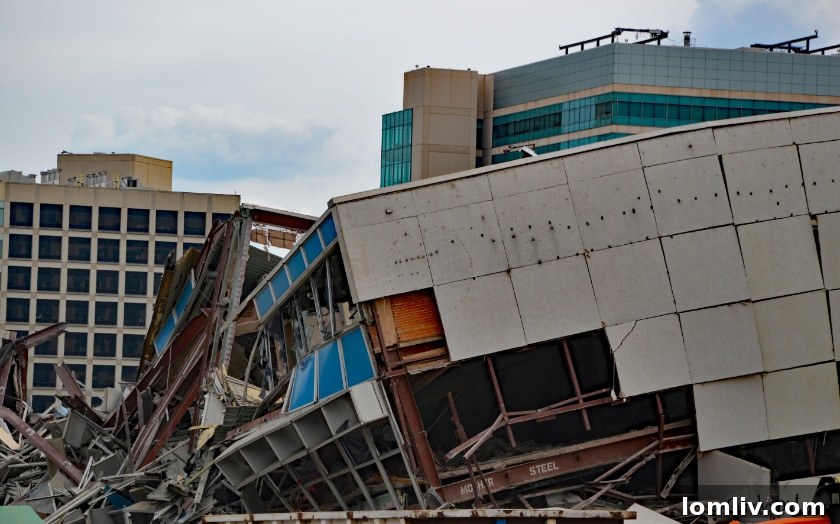
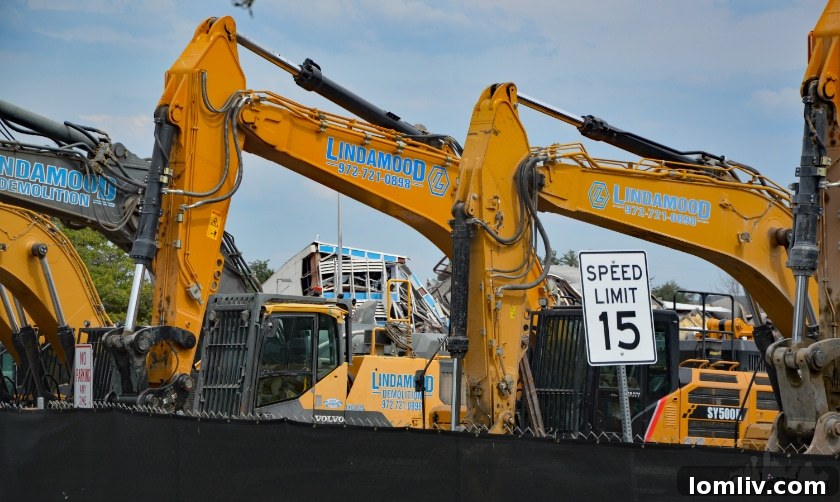
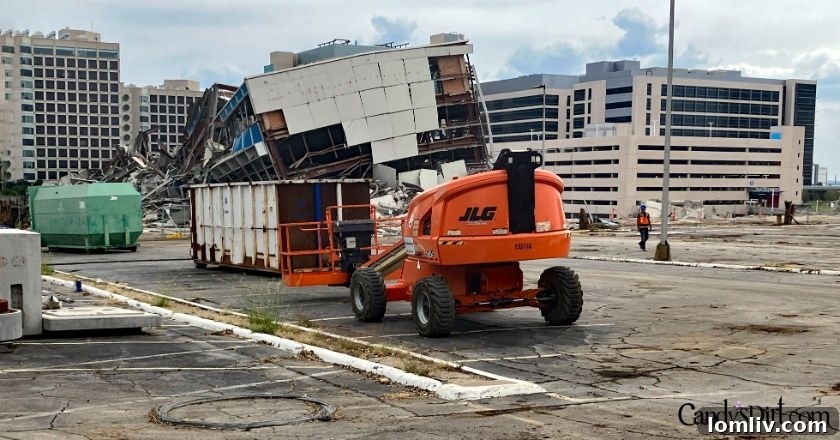
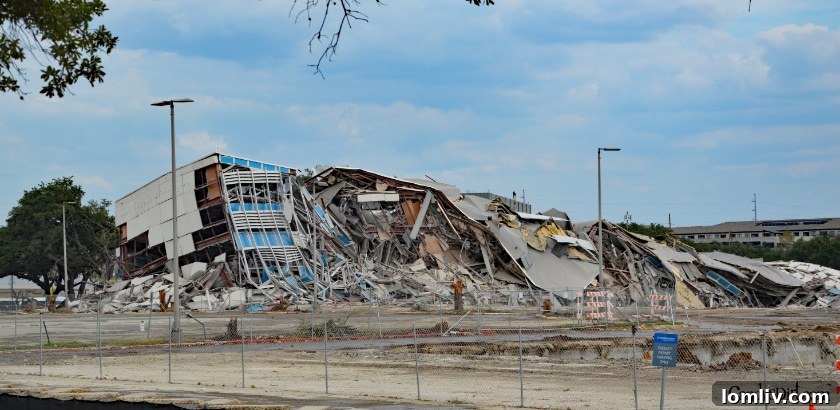
At the early hour of 8 a.m. Sunday, the Dallas Medical District bore witness to a significant, yet disheartening, event. Lindamood Demolition executed the controlled implosion of the three historic Exchange Park buildings, clearing the way for a new, state-of-the-art pediatric campus. For many who champion the preservation of architectural heritage, this moment, though anticipated, felt like a profound and irreversible loss.
The impending demolition of these iconic structures had been a subject of considerable discussion and concern within the Dallas community. While it was widely known that the buildings were slated for removal, and despite the absence of a “preservation knight in shining armor” to intervene, the actual implosion on Sunday morning still resonated deeply. Those of us who advocate for historic preservation collectively released a sigh of resignation leading up to the event, but the raw finality of it felt like a sharp, personal blow, cutting through the hope that a more thoughtful solution might have emerged.
View this post on Instagram
A post shared by DallasMicdUp (@dallasmicdup)
Ironically, it was also on the very morning of the implosion that a devoted reader commented on an earlier article about Exchange Park. The comment highlighted a common sentiment that often clashes with preservation efforts.
As someone who was working in that building when it closed, it was time for that mold-infested rat’s nest to go. And for those weeping, because a state-of-the-art pediatric hospital is being built in your community in place of a useless, dilapidated relic, get a life.
Daltxrealestate Comment
While we deeply value all feedback from our readers, this particular comment, though expressing a valid viewpoint from personal experience, seemed to misinterpret the core message of the ongoing discussion. The debate surrounding Exchange Park has never been about denying the immense value of a new pediatric hospital to our thriving city. In fact, this point was explicitly acknowledged and supported in previous discussions.
UTSW is building a state-of-the-art, cutting-edge pediatric cancer research center on the site, and no one can argue that this is not the highest and best use of the land.
The true heart of the matter lies in the apparent lack of creative effort to integrate and preserve a significant piece of Dallas’s architectural and cultural history. Many believe that with ingenuity and commitment, these buildings could have been saved, perhaps through adaptive reuse, allowing them to contribute to the new development rather than being completely erased. Such an approach, while potentially more complex, would have honored the city’s past while embracing its future. However, it seems the path of least resistance—demolition—was chosen, primarily for convenience rather than out of absolute necessity.
Exchange Park Demolition: A Case Study in Expediency Over Heritage
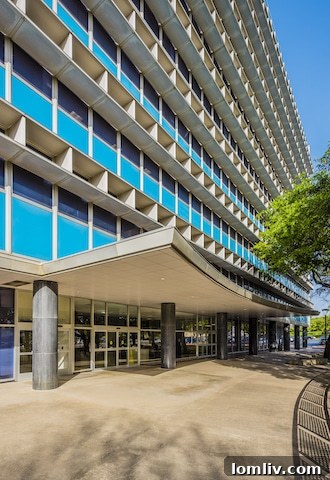
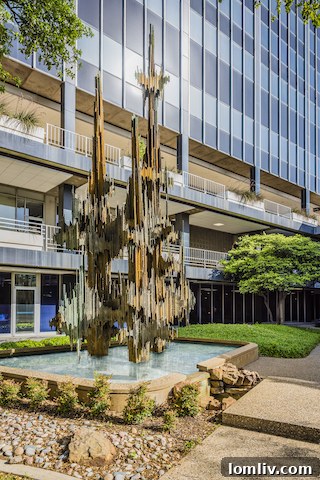
The decision to completely level the Exchange Park site, rather than exploring avenues like historic tax incentives for a sensitive rehabilitation, represents a deeply regrettable missed opportunity for Dallas. Exchange Park was far more than just an old building; it was a groundbreaking architectural marvel of its time. In 1956, it emerged as the state-of-the-art template for indoor malls and a pioneering “new concept” of a temperature-controlled environment designed to seamlessly blend business, shopping, and dining experiences under one roof. It was a vision of urban planning that predated the modern enclosed mall by years, setting a precedent for future developments across the nation.
This complex was a vibrant hub of activity, a historical crucible where countless stories unfolded. It proudly housed the Exchange Bank and Trust Company, served as a key location for Braniff Airlines, was home to the corporate offices of Frito Lay, and featured the fondly remembered, exotic La Tunisia restaurant, a cherished memory for many longtime Dallas residents. Its corridors echoed with the footsteps of innovators, entrepreneurs, and everyday citizens, making it an irreplaceable part of Dallas’s post-war boom narrative. The swiftness of its removal underscores a broader trend where the immediate convenience of development often eclipses the long-term value of historical continuity and architectural significance.
The ramifications of this implosion extended beyond just the loss of history. On the morning of the demolition, social media platforms buzzed with activity as residents from as far away as Preston Hollow and the M Streets reported hearing what sounded strikingly similar to a sonic boom. This widespread disturbance brought to light immediate concerns about the physical impact on the surrounding community, far beyond the immediate construction zone. It served as a stark reminder that such large-scale demolition projects, particularly those involving explosives, have a tangible, disruptive effect on urban environments and the daily lives of their inhabitants.
The Unseen Costs: Noise Pollution and Public Health Implications of Demolition
The widespread noise from the implosion quickly became a point of contention and discussion across various social platforms:
That was the “explosion” people were freaking out about on Ring & Nextdoor this morning. I heard it from my house in M Streets!
Facebook Post
While it is standard procedure for developers like UTSW to conduct due diligence, including screening for hazardous materials such as asbestos and lead paint, to ensure minimal health impacts, the reality is that building implosions inherently carry significant health risks. The very nature of such an event releases an enormous plume of dust and particulate matter into the atmosphere. This dust can contain various microscopic particles, including silicates, heavy metals, and other potentially harmful substances that were part of the building materials. These airborne particulates can travel surprisingly far, settling on properties, entering ventilation systems, and being inhaled by unsuspecting residents, leading to short-term respiratory irritation and potentially contributing to more serious long-term health issues, especially for vulnerable populations such as children, the elderly, or individuals with pre-existing conditions.
Photo: Mimi Perez for daltxrealestate.com
Certainly, the implosion was conducted in a commercial area and specifically scheduled on a Sunday morning to ostensibly mitigate the direct impact on human activity. However, this does not eliminate all concerns. Nearby service businesses, often operating on weekends, could have been adversely affected by the dust and debris. Moreover, while direct human exposure might be reduced, the environmental fallout remains. The sheer volume of fine particles released can linger in the air, impacting air quality for hours or even days, irrespective of the immediate presence of people. This highlights a crucial aspect often overlooked: the environment itself, and by extension, the indirect health of the community, bears the brunt of such activities.
Another poignant observation circulated on social media that Sunday morning, underscoring the broader environmental and ethical considerations:
A huge amount more dust and debris is going into the environment. A large fraction of landfill volume worldwide is taken up by discarded buildings. A premium should be put on re-using buildings, removing some of the incentive to destroy them. I propose extensive tax breaks for reuse and automatic LEED Platinum rating. The latter because of the immense amount of waste avoided and the material and embodied energy saved. Better architecture is simply a happy by-product.
Facebook Post
Photo: Mimi Perez for daltxrealestate.com
These concerns are not unique to Dallas. Keith Matheny, writing for the Detroit Free Press in 2015 about the implosion of the Park Avenue Hotel, provided sobering insights that remain highly relevant today:
Watching the hotel come down, particularly outside in the immediate area, will likely expose onlookers to severe — and potentially health-harming — air pollution, according to scientists who’ve studied the air quality impacts of building implosions.
“One of the bottom lines is the tremendous amounts of particulate matter generated from those events,” said Tim Buckley, a lead investigator on a 2003 study by Johns Hopkins Bloomberg School of Public Health.
…
That study found the implosion of a 22-story building in Baltimore increased airborne dust particles by “And this was a very successful implosion; it went according to script,” Buckley said. “The meteorological conditions were quite favorable. There’s just no avoiding the kinds of dust plumes that result from these kinds of activities.”
The Detroit Free Press
The Fate of Rubble: Will Exchange Park End Up in the Landfill?
Beyond the immediate environmental and health impacts of the implosion itself, we must also consider the fate of the remaining rubble, a massive quantity of material generated from the demolition of the Exchange Park buildings. Demolition debris, if properly managed, can indeed be sorted and recycled. Crushed concrete, for instance, finds new life as aggregate for road bases and construction fill, reducing the demand for virgin materials. Steel, a valuable commodity, can be melted down and repurposed almost indefinitely. However, the process of careful sorting, transportation, and recycling takes time, effort, and financial investment. The less sustainable alternative, and often the path of least resistance, is for all of this valuable material to be transported directly to a landfill, contributing significantly to mounting waste crises and consuming precious land resources.
The lack of a truly creative and forward-thinking approach to the Exchange Park site is particularly troubling in an industry that prides itself on innovation and problem-solving. While the need for a new pediatric campus is undeniable and laudable, the method chosen for its realization—the complete obliteration of a historically significant complex—sends a concerning message. It suggests that in the pursuit of “progress,” convenience often takes precedence over thoughtful preservation, environmental responsibility, and the rich tapestry of a city’s history. Thus, Dallas loses yet another set of historically significant buildings, not out of absolute necessity or insurmountable obstacles, but seemingly for the sake of mere expediency. This pattern diminishes our collective heritage and begs a critical re-evaluation of how we balance future growth with respect for the past.