Comprehensive Guide to Detecting and Preventing Home Water Leaks
As a homeowner, few things can disrupt your peace of mind quite like a water leak. From the persistent drip of a faulty faucet to the sudden, catastrophic flood caused by a burst water heater, water where it shouldn’t be can quickly escalate from a minor annoyance to a major financial burden. During the crucial home buying process, professional home inspectors are rigorously trained to spot these very issues, recognizing that undetected water intrusion poses significant risks to a property’s structural integrity, indoor air quality, and overall value. This article, inspired by real-world home inspection finds, delves into various types of water leaks you might encounter, ranging from those that are merely “a bummer” to those demanding an immediate “call a plumber, STAT.” We’ll explore common culprits, the often-overlooked signs, and, most importantly, proactive steps you can take to safeguard your home against costly water damage.
The Silent Threat: Unmasking Old Water Heater Leaks
@greenscenehome Nothing to see here…whoa! That’s a lot of corrosion! That’s one way to know your water heater cold water inlet is leaking…for awhile. #askahomeinspector #homeinspectionfinds #homeinspector #realestate #waterheater #dallasrealestate #austinrealestate #fortworthrealestate
♬ original sound – Green Scene Home Inspections – Green Scene Home Inspections
As previously emphasized, it is crucial to periodically inspect your water heater. This often-neglected appliance, unlike a furnace, rarely instills fear, yet it quietly holds the potential for significant damage.
While a water heater may not seem as intimidating as a furnace, neglecting its maintenance can lead to equally, if not more, destructive outcomes. The image above, referencing a video from Green Scene Home Inspections, perfectly illustrates the consequences of overlooking this vital appliance. What we see is a severe case of corrosion around the cold water inlet of a water heater, a clear indicator that a leak has been present for an extended period – possibly for years. This level of rust build-up doesn’t happen overnight; it’s a slow, insidious process that could have been easily prevented with routine checks.
If a homeowner had taken a moment to perform a simple visual inspection of their water heater at any point in its operational life, this issue could have been identified much earlier. Rust and corrosion around the top of the water heater, particularly near the inlet and outlet pipes, are definitive signs of an ongoing leak. Such leaks, if left unaddressed, don’t just stop at cosmetic damage; they can lead to structural decay of surrounding areas, promote mold growth in dark, damp spaces, and even compromise the efficiency and lifespan of the water heater itself. Regular maintenance, including an annual flush and inspection by a qualified professional, is paramount to catching these issues before they escalate into an expensive and hazardous problem. Don’t wait for a “tetanus colony” to form to realize your water heater needs attention.
The Grave Risks of Plumbing Cleanout Leaks
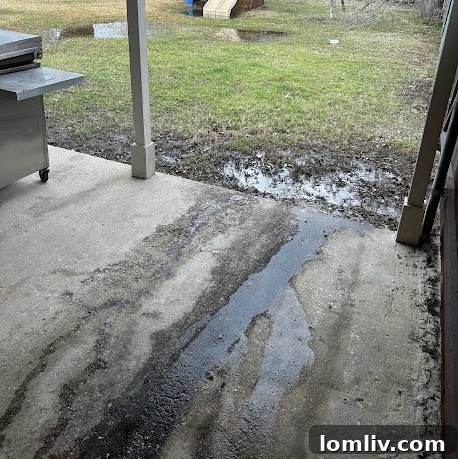
The sight of a giant, muddy puddle in your backyard is never a good sign, especially when it’s accompanied by foul odors and backing up toilets. This particular scenario, as depicted in the image, was the direct result of a severely leaking plumbing cleanout. A plumbing cleanout is an access point in your home’s drainage system, typically capped, designed to allow plumbers to clear blockages in the sewer line. It’s not meant to be an overflow valve for raw sewage.
In this alarming case, rather than seeking professional help for their backed-up toilets and showers, the homeowners made a critical error by removing a cleanout cap, allowing raw wastewater to drain into their backyard. Upon closer inspection, the root cause was discovered: a collapsed cast iron drain line located beneath the house. This structural failure prevented waste from flowing out to the street, forcing all household wastewater to erupt from the open cleanout. This isn’t just a minor inconvenience; it’s a critical health hazard, an environmental contaminant, and a sign of a significant underlying plumbing issue. Exposed sewage poses risks of bacterial and viral infections, attracts pests, and can seep into the soil, contaminating groundwater. Repairing a collapsed main drain line is a substantial undertaking, often requiring excavation and professional pipe replacement, underscoring why such issues classify as a big problem that demands immediate expert intervention.
Ignoring symptoms like slow drains, gurgling noises from fixtures, or multiple backed-up appliances can lead to catastrophic damage and health risks. Homeowners should understand that a plumbing cleanout is a tool for professionals, not a temporary solution for a major blockage. Any issues with your main drain line should always be diagnosed and repaired by a licensed plumber to ensure safety, efficacy, and compliance with local health and building codes.
The Avoidable Blunder: AC Condensate Leaks and Misguided Fixes
The adage “work smarter, not harder” holds profound truth, particularly when it comes to home maintenance. The YouTube video above, showcasing an AC secondary drain line leak, provides a classic example of how well-intentioned but misguided efforts can complicate a simple fix. Instead of addressing the actual problem, these homeowners devised an elaborate Rube Goldberg-esque contraption to divert water leaking from their secondary condensate line away from the house. While their ingenuity might be commendable, their approach to plumbing maintenance certainly is not.
The core issue was a clogged AC condensate line, a common problem that arises when algae, mold, and dust accumulate, obstructing the drainage of condensation produced by the air conditioning unit. Every AC system has both a primary and a secondary condensate drain line. The primary line is responsible for routing the collected moisture away from your home, typically to a designated outdoor drain. The secondary line acts as an emergency overflow; if the primary line becomes clogged, water will divert to the secondary line, often triggering a safety switch to shut down the unit and prevent overflow, or simply draining to a visible location (like above a window or into a pan) to alert the homeowner to a problem.
The correct, simpler, and far more effective solution in this scenario would have been to unclog the primary condensate line, and certainly the secondary one. This usually involves flushing the line with a solution of distilled vinegar or a mild bleach mixture, or using a wet/dry vacuum to clear the blockage. Neglecting a clogged condensate line can lead to severe water damage to ceilings, walls, and flooring, fostering mold growth within your home’s structure, and potentially causing your entire AC system to shut down, leaving you without cooling during hot weather. Understanding the basic mechanics of your HVAC system’s drainage can save you significant time, money, and hassle, proving that sometimes, the simplest solution is indeed the smartest.
The Ticking Time Bomb: Incompatible Plumbing Materials and Future Leaks
While this particular instance might not depict an active water leak yet, it illustrates a critical problem that is a water leak waiting to happen, with potentially devastating consequences. The issue at hand is the use of PVC (Polyvinyl Chloride) piping for hot water distribution. PVC is a widely used and cost-effective material in plumbing, primarily for cold water lines, drain-waste-vent (DWV) systems, and irrigation. However, it has a significant limitation: PVC is not rated for use with hot water exceeding approximately 140 degrees Fahrenheit (60 degrees Celsius).
During a home renovation, it’s possible that shortcuts were taken, or an inexperienced contractor used the wrong materials. When hot water, especially at the temperatures typically found in residential hot water systems, continuously flows through PVC pipes, the material begins to expand, soften, and degrade. Over time, this degradation can lead to a multitude of problems, including stress cracks, weakening of joints, and ultimately, catastrophic failure. What starts as a small drip can quickly become a significant burst, releasing gallons of hot water into your home and causing extensive damage to drywall, insulation, flooring, and personal belongings.
This situation underscores the critical importance of adhering to plumbing codes and using appropriate materials for specific applications during any renovation or repair project. While PVC is suitable for many plumbing needs, CPVC (Chlorinated Polyvinyl Chloride) or PEX (Cross-linked Polyethylene) are the more appropriate plastic alternatives for hot water lines, offering superior heat resistance and durability. Copper piping also remains a robust and reliable choice. Identifying the type of piping in your home, especially after a renovation, is crucial. If you suspect your home has incorrect piping materials, a professional inspection can confirm the issue and recommend necessary corrective actions to prevent future plumbing disasters and ensure the long-term safety and integrity of your home’s water distribution system.
Your Proactive Approach to Home Water Leaks
Water leaks, whether they are minor drips or major floods, represent a significant threat to your home’s integrity, your wallet, and your peace of mind. As we’ve seen, from neglected water heaters and compromised main drain lines to incorrectly installed piping and improperly managed AC condensate systems, potential leak sources are diverse and often hidden. The common thread among all these issues is that early detection and proper intervention can prevent small problems from escalating into devastating and expensive repairs.
Being a vigilant homeowner means understanding the various systems within your property and recognizing the warning signs of distress. Regular visual inspections, understanding the typical lifespan of your appliances, and knowing when to call in the professionals are your best defenses against water damage. When in doubt about a suspicious damp spot, an unexplained puddle, or any unusual plumbing behavior, the best course of action is always to consult an expert. A licensed plumber can diagnose and repair immediate leaks, while a thorough home inspector can provide a comprehensive seasonal home maintenance check, identifying potential vulnerabilities across all your home’s systems before they turn into emergencies. Don’t let a hidden leak compromise your sanctuary; take proactive steps today to ensure your home remains dry, safe, and secure.