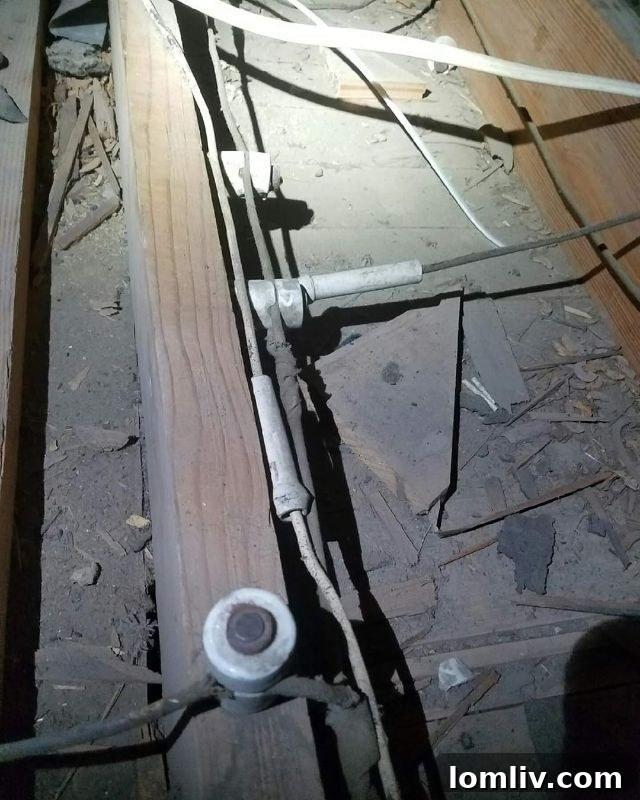
Welcome to “Upon Closer Inspection,” an exclusive series brought to you by the meticulous experts at Green Scene Home Inspections. Each week, we delve deep into the unseen aspects of residential properties, empowering Daltxrealestate.com readers with invaluable insights into the world of home inspection. Our goal is to equip you with the knowledge to understand what lies beneath the surface of a potential home, ensuring peace of mind and informed decisions.
When our certified inspectors examine older homes, a common discovery involves original or “as-built” conditions that, while compliant at the time of construction, no longer meet contemporary building codes and safety standards. This distinction is crucial for both prospective home buyers and current homeowners. Awareness of these outdated systems is paramount for two primary reasons: first, the materials or installation methods may no longer be considered safe, posing potential risks to occupants; and second, the necessary upgrades or replacements can incur significant financial costs, impacting your budget and future home ownership expenses.
Navigating the complexities of an older home requires a keen eye and extensive expertise. Our team routinely uncovers elements that were once perfectly acceptable but have since been rendered obsolete or hazardous by advancements in construction technology and stricter safety regulations. Understanding these potential pitfalls is a vital step in safeguarding your investment and the well-being of your family. Here are a few prominent examples of such findings, illustrating how past practices can become present-day concerns:
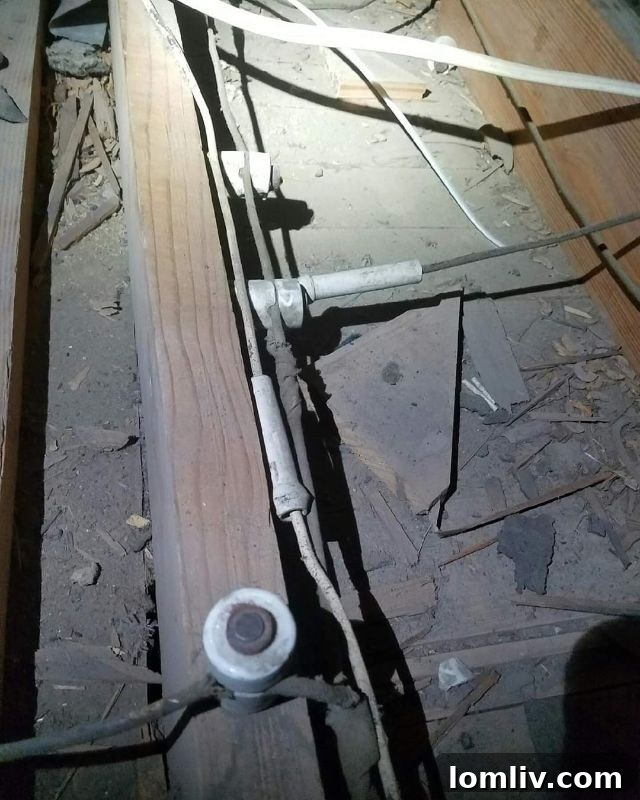
Knob And Tube Wiring: A Historical Electrical Hazard
Knob and tube (K&T) wiring represented the cutting edge of residential electrical systems from the 1880s through the 1930s. Characterized by insulated copper conductors passing through porcelain “knobs” and protected by porcelain “tubes” where they passed through wood framing, it was a revolutionary design for its era. However, as electrical demands increased and safety standards evolved, K&T wiring was eventually phased out, largely due to concerns over its safety and the higher costs associated with its installation compared to newer cable wiring systems.
While we encounter K&T wiring less frequently today, and even more rarely find it in active, unmodified use, its presence in historic homes demands serious attention. The system lacks a ground wire, which is a critical safety feature in modern electrical installations, designed to prevent shocks and protect appliances. Its cloth and rubber insulation degrades over time, becoming brittle and prone to cracking, exposing live wires. Furthermore, K&T wiring was not designed for the heavy electrical loads of contemporary households, making it susceptible to overheating when paired with modern appliances, leading to a significant fire hazard, especially given the age of the equipment and the surrounding dry, aged building materials.
Homeowners with K&T wiring may face challenges with insurance coverage and the resale value of their property. Modernizing this system often involves extensive and costly rewiring, replacing all K&T circuits with grounded, code-compliant wiring. Our inspectors meticulously identify and report the presence of K&T wiring, providing crucial information for homeowners to address these potential risks proactively. It’s not just an aesthetic concern; it’s a fundamental safety issue that requires professional evaluation and often, complete remediation.
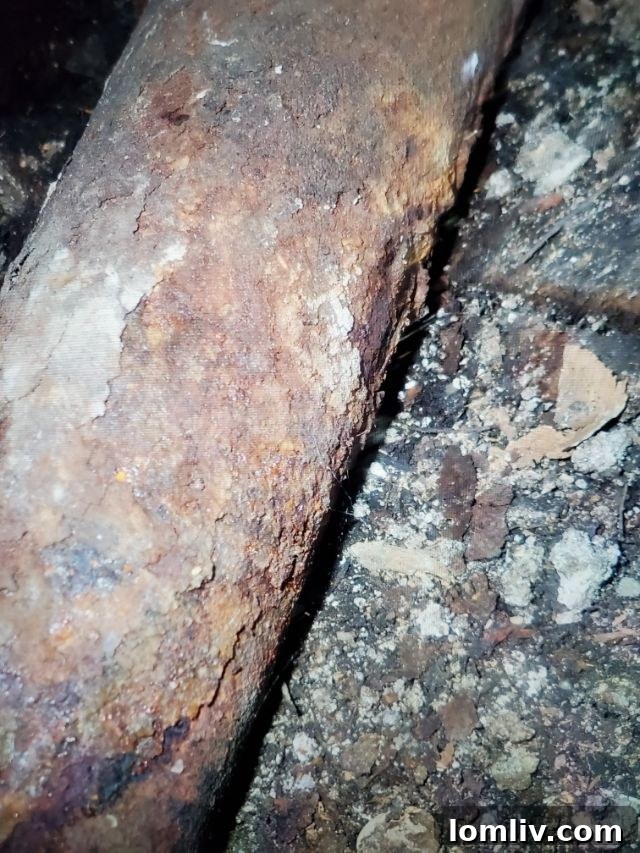
Cast Iron Pipes: The Hidden Plumbing Liability
Cast iron pipes were introduced to the US plumbing landscape in the early 1800s and became the material of choice for drain, waste, and vent (DWV) systems for well over a century. Consequently, it’s not uncommon to find these robust-looking pipes still serving their original purpose in homes built before approximately 1980. However, despite their initial durability, cast iron pipes possess a finite life expectancy, typically ranging from 50 to 100 years, and they are particularly susceptible to a host of issues that render them problematic in the long term.
The primary concern with cast iron plumbing is its inevitable corrosion. Over decades, both internal and external factors contribute to its degradation. Internally, the constant flow of wastewater, chemical drain cleaners, and even natural mineral deposits can erode the pipe walls, leading to pitting, scaling, and eventual leaks. Externally, moisture in crawl spaces or basements, soil acidity, and even contact with other metals can accelerate rust and deterioration. The image provided strikingly illustrates a corroded and blistered cast iron pipe, observed from the confined quarters of a crawl space in a pier and beam house – a vivid example of internal failure.
The consequences of failing cast iron pipes can be severe. Leaks can cause significant water damage to ceilings, walls, and flooring, fostering mold growth and compromising indoor air quality. More critically, sewage backups pose serious health risks and can lead to extensive property damage. Replacing these deteriorated pipes is often a complex and costly endeavor, requiring extensive demolition to access buried or concealed lines. Homebuyers inspecting properties with cast iron plumbing should be prepared for potential future investment in a complete plumbing system overhaul, a critical detail Green Scene Home Inspections always brings to light.
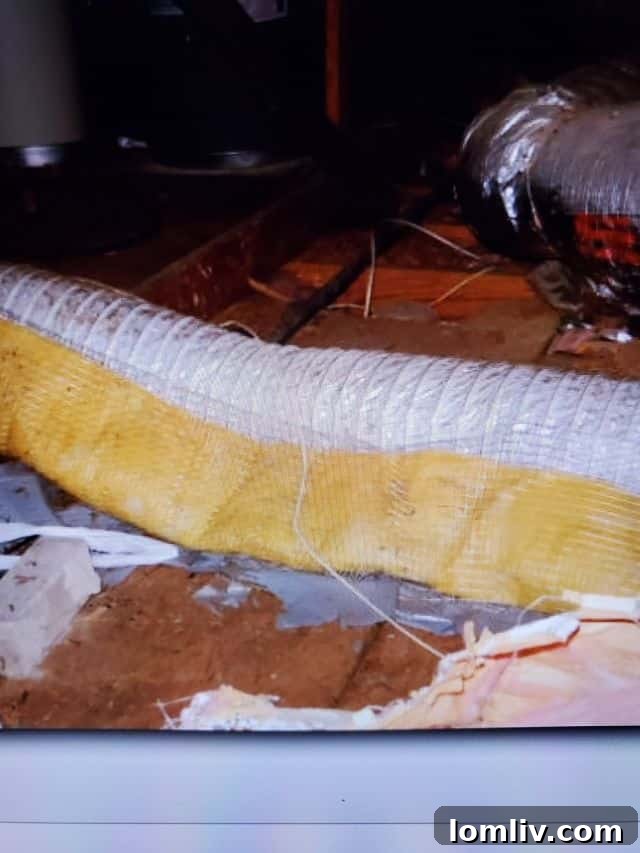
Grey Ductwork: An Outdated HVAC Insulation
Grey ductwork, often referred to as grey flex duct or grey insulation wrap, was a popular product used primarily throughout the 1980s as a means to insulate heating, ventilation, and air conditioning (HVAC) ductwork. Its purpose was to improve energy efficiency by preventing thermal loss from the ducts as conditioned air traveled through a home’s HVAC system. However, its widespread use began to decline by the early 1990s as significant flaws in its composition became apparent, particularly concerning its long-term durability and performance.
The core issue with grey ductwork lies in the outer grey coating, which was discovered to deteriorate significantly when exposed to high heat or ultraviolet (UV) rays. Attics, being notoriously hot environments with direct exposure to intense solar radiation (even through roofing materials), proved to be an especially detrimental location for this material. The prolonged exposure in such harsh conditions causes the grey coating to become brittle, crack, and eventually disintegrate. This breakdown compromises the insulation’s integrity, leading to a host of problems.
As the grey ductwork disintegrates, it loses its insulating properties, causing considerable energy waste as conditioned air leaks out or unconditioned air infiltrates the system. This forces HVAC units to work harder, leading to higher utility bills and premature wear and tear on equipment. Furthermore, the deteriorating material can release fiberglass particles and other debris into the airstream, potentially impacting indoor air quality. The image depicting this type of ductwork shows it in a state of advanced disintegration, rendering it completely ineffective. Our inspectors highlight these findings to inform homeowners about potential energy inefficiencies and air quality concerns, recommending modern, more resilient insulation solutions for optimal HVAC performance and a healthier home environment.
Zinsco Electrical Panels: A Silent Fire Hazard
During the 1970s, Zinsco was a highly popular and widely installed brand of electrical panel, found in countless homes across the United States. Its widespread adoption made it a familiar component in residential electrical systems of that era. However, despite its initial popularity, the company eventually became defunct, leaving behind a legacy of electrical panels that are now recognized as significant safety hazards. Many homes built during the 1970s still contain these potentially dangerous Zinsco panels, unbeknownst to their current occupants.
The danger associated with Zinsco electrical panels stems from several critical design and manufacturing flaws. These panels often feature aluminum bus bars, which can corrode and oxidize over time, leading to poor electrical contact between the circuit breakers and the bus bar. This poor connection creates resistance, which in turn generates excessive heat. The faulty breakers themselves are another major concern; they often fail to trip when overloaded or when a short circuit occurs, negating their primary safety function. This inability to disconnect power during an electrical fault can lead to wires melting, arcing, and ultimately, a severe fire risk within the panel and surrounding walls.
Our experienced inspector, Brian, frequently demonstrates the inherent dangers of these panels using advanced tools like a thermal imaging camera. This technology allows him to visualize the heat anomalies and hotspots within the panel, unequivocally proving the overheating issues that are characteristic of Zinsco products. If a Zinsco electrical panel is identified during a home inspection, immediate action is highly recommended. Replacing these panels with a modern, code-compliant alternative is not merely an upgrade; it is a critical safety imperative to protect the home and its occupants from the very real threat of electrical fires and potential electrocution. This is one of the most serious deficiencies we can uncover, and addressing it promptly is vital for home safety and peace of mind.
Understanding these historical deficiencies is vital for anyone engaging in real estate transactions involving older properties. While an older home offers charm and character, it often comes with the responsibility of addressing outdated systems that no longer meet current safety and efficiency standards. Green Scene Home Inspections is dedicated to uncovering these issues, providing clear, actionable insights, and empowering you to make informed decisions about your home. Trust our detailed-oriented team to provide the comprehensive inspection you need to ensure your home is not just beautiful, but also safe and sound. For more expert insights and essential home inspection education, remember to tune in weekly for “Upon Closer Inspection.”