By Lydia Blair
Special Contributor
Navigating the Texas Property Tax Cycle: A Homeowner’s Essential Guide
As the adage wisely states, two things are certain in life: death and taxes. While the former remains shrouded in unpredictability, the latter, especially property taxes, follows a remarkably consistent annual cycle. For homeowners in Texas, understanding this predictable rotation is not merely beneficial—it’s an indispensable component of effective financial planning and informed decision-making. Just as there is a natural life cycle, your property in the Lone Star State meticulously moves through a yearly property tax cycle, an intricate process that impacts every homeowner.
Property taxes constitute a significant portion of homeownership costs in Texas, a state notably without a personal income tax. Consequently, local governments rely heavily on property tax revenue to fund vital public services such as schools, municipal operations, county functions, and various special districts. This dependence shapes the property tax system into a robust and, by design, cyclical process. Familiarizing yourself with each stage of this cycle empowers you to anticipate financial obligations, utilize available resources, and potentially even reduce your tax burden. Being informed allows you to engage proactively with the system, rather than passively react to notices and deadlines.
This comprehensive guide offers a detailed breakdown of the Texas property tax collection cycle, drawing crucial insights from the Texas Tax Code. We will explore each critical phase, providing Texas homeowners with a clear, actionable roadmap of what to expect throughout the year, from initial assessment to final payment.
The Annual Texas Property Tax Cycle Explained
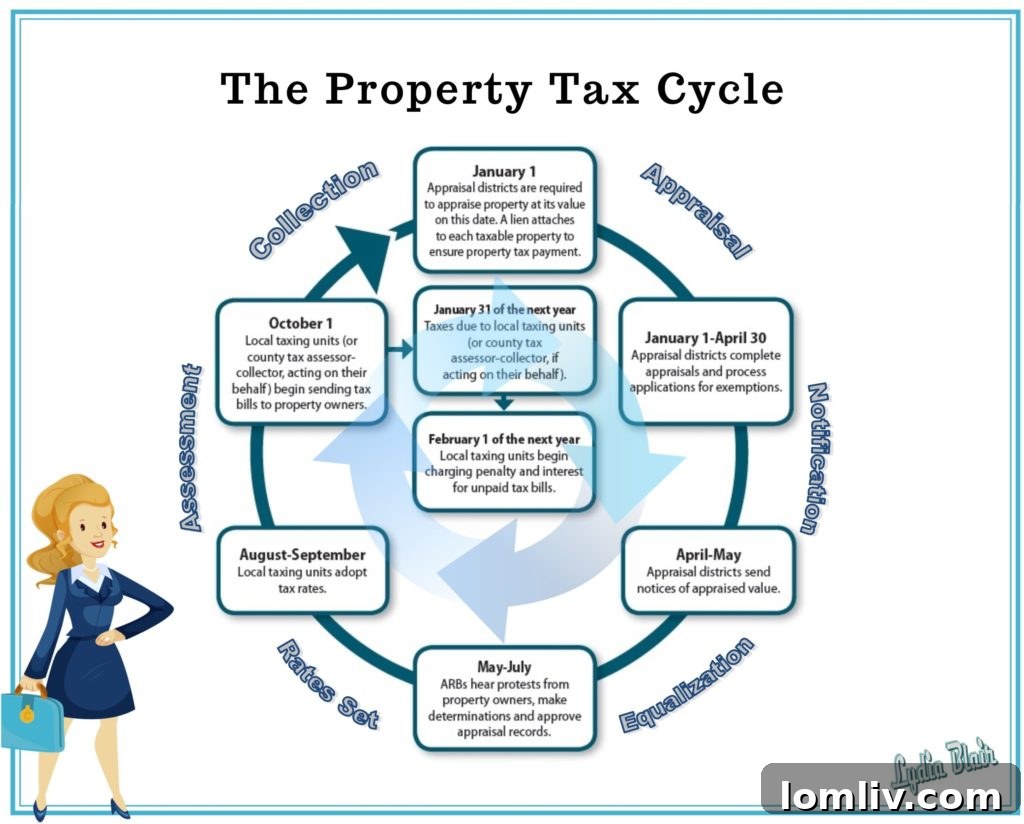
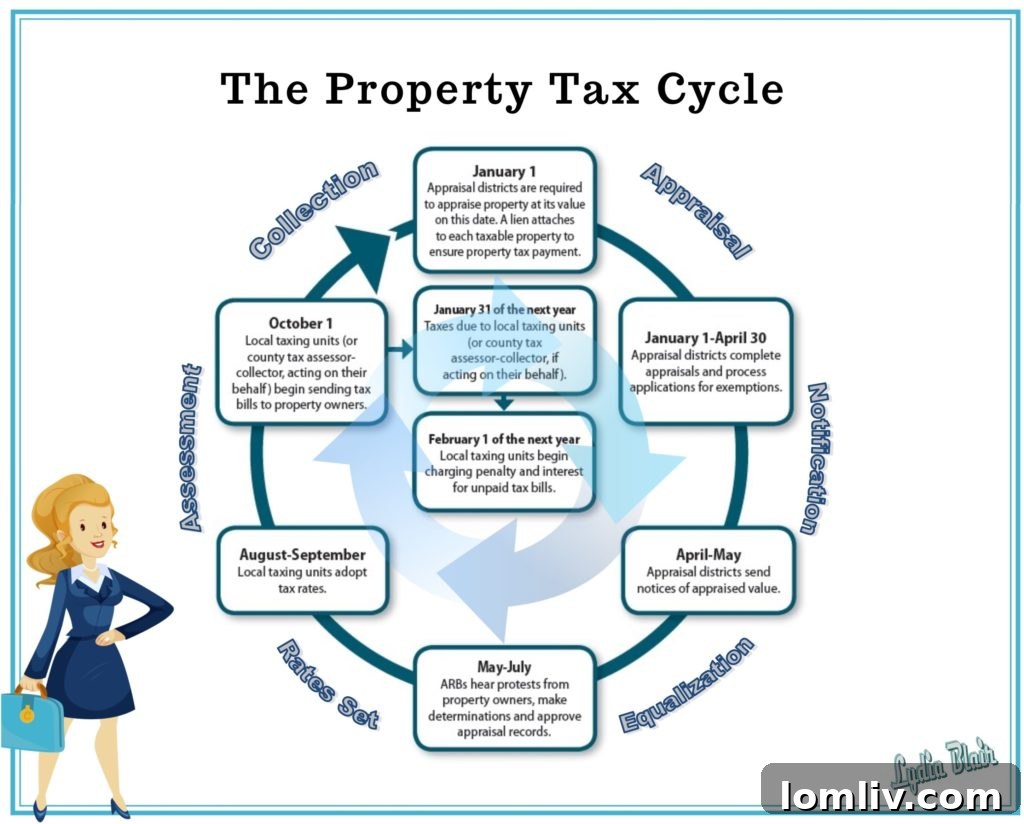
January 1: The New Tax Year Begins – Ownership and Assessment Date
The calendar year doesn’t just herald a new personal year; it marks the official commencement of a new property tax year in Texas. As of January 1st, the individual or entity owning a property is personally responsible for the taxes assessed for that entire year. This date carries profound significance because it serves as the snapshot for determining the status of your property and its ownership for tax purposes. For instance, if you were the registered owner of a home on January 1st, you are considered the taxpayer for that year, even if you sell the property months later (though prorations for taxes typically occur during the closing process). Similarly, the eligibility and application of various tax exemptions, most notably the homestead exemption, are typically predicated on the property’s status and ownership as of this specific date. Therefore, ensuring your property records are accurate and up-to-date with your local appraisal district by this time is a crucial proactive step that can have long-lasting implications for your annual tax bill.
Spring: Appraisal Time – Determining Taxable Value
As the chill of winter recedes and spring blossoms, the focus of the property tax cycle shifts to property appraisals. While commonly referred to as “appraisal time,” it is more precisely described as the period for “taxable value determination.” The value assigned by the Central Appraisal District (CAD) isn’t always identical to a private market appraisal conducted for a sale; instead, it represents the CAD’s official assessment of your property’s market value, which then forms the foundational basis for taxation. During this critical period, local appraisal districts meticulously determine the taxability and market value of all properties within their respective jurisdictions. This process involves complex methodologies, including analyzing recent sales data, evaluating property characteristics, and assessing neighborhood trends to arrive at an estimated value. It is also a crucial window for homeowners to ensure all eligible exemptions—such as homestead, over-65, or disability exemptions—are properly filed. Most exemption application deadlines fall in April or May, and missing these can mean forfeiting significant tax savings for the year, directly impacting your financial outlay.
Notification of Appraised Value: What to Expect in Spring/Early Summer
Following the extensive appraisal period, taxing districts are legally mandated to notify property owners of their newly appraised value. This critical notification, known as the “Notice of Appraised Value,” typically arrives by April 1st or May 1st, depending on the specific property type, or “as soon thereafter as practicable” if delays occur. This document is far more than just a piece of mail; it’s an official statement detailing your property’s current assessed value, alongside vital instructions on how to protest if you believe the valuation is incorrect. However, an often-overlooked caveat in the Texas Property Tax Code stipulates that if there is no change in your tax position (meaning no increase in your appraised value and no alteration in your exemption status), the appraisal district is not legally obligated to send you a notification. This makes it absolutely imperative for homeowners to proactively check their property’s valuation with their local CAD, even in the absence of a mailed notice, to ensure they are fully aware of their current assessment and any potential changes that could affect their taxes.
Summer: The Property Tax Protest Period – Ensuring Fairness and Equalization
Once you receive your appraised value notice (or if you proactively look it up), the summer months usher in the highly important “protest time,” frequently referred to as “equalization” by tax officials. This is your statutory right and invaluable opportunity as a property owner to challenge the value placed on your property by the appraisal district. You can protest if you genuinely believe the assessed value is too high, or if it is unequal compared to similar properties in your immediate area or neighborhood. The protest process typically commences with an informal review with an appraiser from the CAD, offering a chance for a quick resolution. If an agreement isn’t reached, it escalates to a formal hearing before the Appraisal Review Board (ARB). Homeowners should diligently prepare for this stage by gathering compelling evidence, such as recent comparable sales, independent appraisals, or detailed estimates for necessary repairs. This period is vital for ensuring your property is appraised fairly and uniformly across the district. Once the protest period concludes and any subsequent appeals are finalized, the property’s value for the upcoming tax year is officially set in stone.
Fall: Tax Rates Set by Local Authorities
With property values firmly established, local taxing authorities—including cities, counties, school districts, and various special districts—turn their attention to setting their respective tax rates. It is paramount to understand that property value and the tax rate are two distinct, though interconnected, components that determine your total tax bill. Tax rates are meticulously determined based on the budgetary needs of these local governmental entities. They assess how much revenue is required to fund essential public services, initiate infrastructure projects, and support educational programs. Rates can fluctuate from year to year, potentially increasing or decreasing. Generally, if property values across the district experience a significant rise, taxing entities may find they do not need to raise their rates to achieve their revenue goals, as their total revenue will automatically increase with higher valuations. Conversely, if property values remain stagnant or decline, authorities might opt to raise tax rates to maintain or increase their necessary revenue. Homeowners are typically provided opportunities to attend public hearings where these rates are discussed and voted upon, allowing for invaluable citizen input and oversight.
October 1: Tax Bills Go Out – Time to Pay
As the vibrant colors of fall begin to emerge, property tax bills make their anticipated journey to homeowners’ mailboxes around October 1st. This date not only marks the official distribution of the bills but also signifies when payments become legally due and payable. For many, this is the first tangible and comprehensive reminder of their annual property tax obligation. It’s imperative to meticulously review your tax bill, ensuring all details—such as property identification, assessed value, the specific tax rates from each taxing unit, and the total amount due—are accurate and match your understanding. In some specific areas or for certain taxing units, early payment incentives, such as small discounts, might be offered if taxes are paid shortly after the bills are issued, encouraging prompt payment. Homeowners typically have a variety of convenient payment options, including online portals, mail, in-person payments, or through a mortgage escrow account, which seamlessly handles tax payments on your behalf from collected mortgage payments.
January 31 of the Next Year: The Final Due Date
While property tax bills are distributed in October, homeowners are typically afforded a generous grace period for payment. The ultimate deadline for paying the previous year’s property taxes is January 31st of the following calendar year. For instance, if you received your 2023 tax bill in October 2023, it would be unequivocally due by January 31st, 2024. This extended payment window is a welcome provision, offering homeowners ample time to meticulously plan and make their payments without immediate financial pressure. It stands as a key benefit of the Texas property tax system, preventing the need to pay taxes far in advance of the new year. However, marking this critical deadline clearly on your calendar is absolutely crucial to avoid incurring unnecessary penalties and fees.
February 1: Delinquency and Penalties Begin
The swift transition from January 31st to February 1st carries significant financial weight and potential consequences for property owners. On February 1st, any unpaid property taxes from the previous year officially become delinquent. This status immediately triggers the accrual of late fees, stiff penalties, and interest, which can rapidly inflate the total amount owed. The penalty structure in Texas is specifically designed to strongly encourage timely payment, with penalties escalating progressively with each passing month that taxes remain unpaid. If taxes remain unpaid by July of the delinquent year, the accounts are typically turned over to a collection agency or legal counsel. At this stage, the consequences become substantially more severe, potentially leading to formal lawsuits, the filing of liens against the property, and ultimately, in extreme cases, even foreclosure proceedings. Much like the inevitability of death mentioned in our initial analogy, there truly is no escaping the obligation to pay your property taxes once they are duly assessed and become delinquent.
Why Understanding the Property Tax Cycle Matters
A thorough and nuanced understanding of the Texas property tax cycle is invaluable for every homeowner. It provides the foresight necessary to budget effectively, clearly identifies critical deadlines for applying for exemptions and filing protests, and profoundly empowers you to challenge unfair valuations. Proactive engagement with each stage of the cycle can lead to significant financial savings and invaluable peace of mind, ensuring you meet your obligations without incurring unnecessary penalties. Furthermore, staying informed allows you to actively participate in local governance by understanding precisely how tax rates are set and advocating for responsible spending by your taxing entities.
Tips for Texas Homeowners
- Keep Meticulous Records: Maintain organized copies of all property tax-related documents, including appraisal notices, protest filings, and payment confirmations, for at least five years.
- Stay Informed of Deadlines: Mark all key dates—exemption application deadlines, protest windows, and payment due dates—prominently on your personal calendar or digital planner.
- Utilize Available Exemptions: Ensure you have applied for and received all property tax exemptions for which you qualify, especially the homestead exemption, as these can substantially reduce your taxable value.
- Don’t Hesitate to Protest: If you genuinely believe your property’s appraised value is too high or unequal compared to similar properties, exercise your constitutional right to protest. Gather strong, verifiable evidence to support your case.
- Budget for Taxes: Incorporate property tax payments into your annual financial planning, whether by paying through a convenient mortgage escrow account or by consistently setting aside funds regularly in a dedicated savings account.
Conclusion: Empowering Texas Homeowners Through Knowledge
The Texas property tax cycle, while initially appearing complex, is fundamentally a structured and predictable annual process. By diligently understanding each distinct phase—from the initial assessment on January 1st to the critical final delinquency date on February 1st of the following year—homeowners can navigate their tax obligations with confidence, competence, and strategic foresight. Knowledge truly is power when it comes to effectively managing property taxes. By staying informed, actively participating in the process, and utilizing all available resources, Texas homeowners can ensure fair taxation and robust financial management, ultimately transforming a potential financial burden into a manageable and transparent aspect of responsible homeownership.
The opinions expressed are of the individual author for informational purposes only and not for the purpose of providing legal or tax advice. Contact an attorney or accountant to obtain advice for any specific issue or problem.
Lydia Blair (formerly Lydia Player) was a successful Realtor for 10 years before jumping to the title side of the business in 2015. Prior to selling real estate, she bought, remodeled and sold homes (before house flipping was an expression). She’s been through the real estate closing process countless times as either a buyer, a seller, a Realtor, and an Escrow Officer. As an Escrow Officer for Carlisle Title, she likes solving problems and cutting through red tape. The most fun part of her job is handing people keys or a check.