For weeks, a pressing issue has been at the forefront of community discussions in Dallas: the alarming vulnerability of disabled residents facing aggressive threats from investors. These predatory individuals often pressure homeowners to sell their properties far below market value, leveraging the threat of reporting them to City Code Compliance. This tactic, while insidious, is unfortunately a growing concern for many residents across the city.
Many Dallas homeowners are familiar with the barrage of unsolicited calls, texts, and emails from investors. While some are fortunate enough to simply mark these as spam and move on, these deceptive business practices can have devastating consequences for more vulnerable populations. Senior citizens, non-English speakers, and individuals with disabilities are often disproportionately targeted, finding themselves caught in a stressful and potentially financially ruinous situation. The lack of awareness regarding available city resources only exacerbates their predicament, making them easy targets for those looking to capitalize on their homes.
Our recent investigation into the challenges faced by Woody Brodie Jr., a North Oak Cliff resident, illuminated several critical issues within the Dallas housing landscape. Mr. Brodie, who owns two code-compliant homes, has become a symbol of the broader struggle. Through his story, we discovered that while vital city programs exist to support homeowners, many residents remain unaware of them. Furthermore, the power of compassionate neighbors, strong neighborhood organizations, and strategic political pressure often proves instrumental in finding solutions and safeguarding community members against displacement.
Navigating City of Dallas Code Compliance: Help or Hindrance?
The Dallas Code Compliance department, designed to ensure public safety and property standards, can sometimes be perceived as a tool used against vulnerable homeowners. Christine Hopkins, a dedicated Elmwood resident, highlights the anxieties prevalent in City Council District 1, which encompasses North Oak Cliff. According to Hopkins, dozens of vulnerable residents and small businesses in the district fear that Code Compliance reports could be weaponized by investors to force them out of their homes.

“They feel like Code Compliance can be used as a way to force them out of their homes and that if they don’t sell, maybe Code is going to get called on them all the time and they’re going to be forced out,” Hopkins explained. She drew parallels to the struggles of Latino-owned mechanic shops in Oak Cliff, which successfully fought against being excluded from the West Oak Cliff Area Plan. “Businesses have felt that way in Oak Cliff,” she added, emphasizing the community’s lingering fear of displacement, as witnessed in areas like Bishop Arts. “There’s always a fear in the community that one way or another they’re going to push you out if they want to push you out.” This sentiment underscores a deep-seated distrust and anxiety among long-term residents facing increasing development pressures.
Jeremy Reed, Assistant Director of Code Compliance, a seasoned 14-year city employee known for his straightforward approach, confirmed these concerns. Speaking with daltxrealestate.com, Reed acknowledged that investor threats, specifically targeting disabled and elderly homeowners with the ultimatum to sell or face code violation reports, are indeed “a thing.” However, he was quick to clarify that the city’s intent is not to arbitrarily punish residents. Instead, the department’s primary goal is to assist homeowners in addressing code violations before resorting to punitive measures.

“I would tell them to ignore it and not let them get to you,” Reed advised regarding investor threats, while also urging residents to proactively ensure their properties remain compliant. This duality highlights a core challenge: many residents, particularly those with limited income or physical abilities, struggle to afford essential home repairs or routine yard maintenance. Reed openly admitted that this inability to maintain property is a significant part of the problem. Despite numerous city programs designed to offer assistance, their effectiveness is often hampered by inadequate advertisement and accessibility, preventing those who need them most from utilizing these vital resources.
For instance, the city operates a community hand tool shed, offering homeowners free access to lawn equipment to help bring their properties up to code. However, awareness of this program remains low. Reed emphasized, “We do have quite a few assistance programs of varying sizes. Some are funded; some are not.” He pointed to accessible programs like those found on savedallaswater.com, which offer free irrigation evaluations and minor plumbing repair assistance. These programs, he noted with a pun, “never dry up.”
Common code violations in Dallas include litter accumulation, overgrown weeds, bulky trash violations, excessive vegetation, and the absence of necessary building permits. To enhance transparency and resident awareness, the City of Dallas plans to launch a new Code Compliance dashboard, allowing residents to easily look up violations within their neighborhoods and stay informed about local property standards.
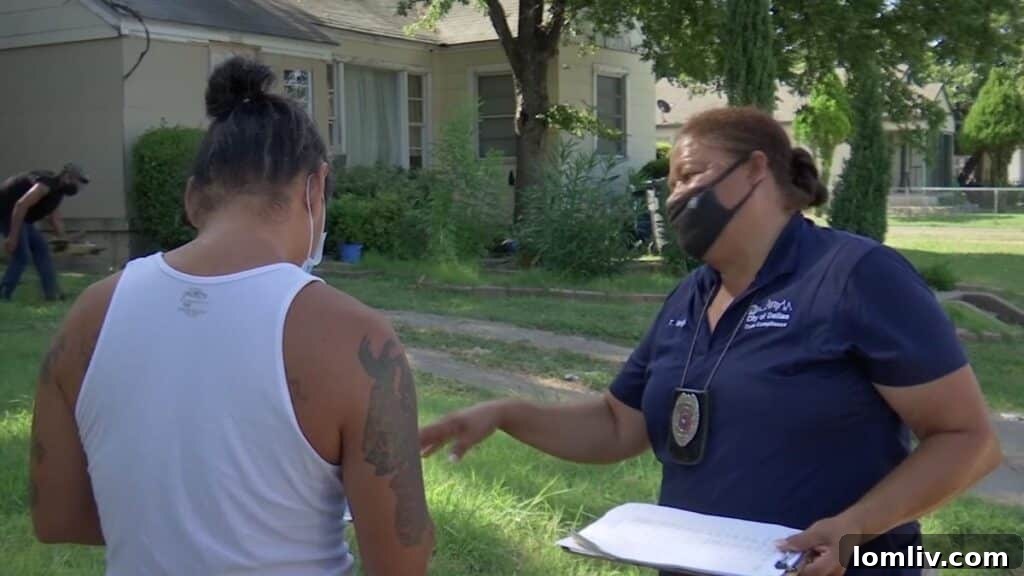
“Failure to protect exterior surfaces is one of the most common structural issues,” Reed elaborated, often manifesting as peeling paint or rotted wood. When Code Compliance cannot directly offer a government-funded solution, they often refer residents to local churches or civic organizations, highlighting a community-centric approach to problem-solving. “We try to be empathetic and create a solution,” Reed stated. “It’s just a problem that doesn’t always have a government solution.”
In cases where direct assistance isn’t immediately available, Code Compliance can issue a special citation for Community Court. This is not a civil citation but a criminal one, which leads to a more structured support system. Residents are assessed and assigned a caseworker who guides them through the process, identifying potential city resources. For property maintenance issues, residents are given clear steps to take; successful completion often results in the dismissal of the citation, demonstrating the city’s commitment to rehabilitation over pure punishment.
Reed added that Community Court might assign individuals with code violations to an hour-long training session with a code official. These sessions educate residents on the top 10 violations and strategies to avoid future citations. “Again, they get a caseworker who might recognize the problem and something we can help them with,” Reed explained. He cited an example where an elderly person struggling with lawn maintenance might be placed on a rotation for community service volunteers. “We always want to help those who want to be helped, when we have the resources to help,” he concluded, emphasizing the conditional nature of the assistance.
Advocacy for Targeted Funding: $2 Million for District 1 Home Repairs
While the Dallas Housing Resource Catalog lists numerous home repair programs and funding sources, many are highly competitive and notoriously difficult to access. Christine Hopkins, a founding member of the West Oak Cliff Coalition, pointed out the systemic flaws in programs like the Home Improvement and Preservation Program (HIPP). She vividly described its application process as “Hunger Games-style,” operating on a strict first-come, first-served basis, often requiring applicants to queue up hours before opening to secure a chance at limited annual funding.
“If you are not at that building in line at the beginning of the day, camped out like you’re trying to get Taylor Swift tickets, then you’re not going to get money to help repair your home,” Hopkins lamented. She passionately argued that this system is fundamentally unfair and impractical for the very demographic it aims to serve: elderly and disabled individuals who face immense physical and logistical barriers to participate in such a demanding process. “It’s just not the right kind of process, I don’t think, for the type of people who you’re trying to serve,” she asserted, advocating for a more compassionate and accessible approach to housing assistance.
In response to these systemic failures, Hopkins galvanized nine neighborhood associations – including Polk-Vernon, South Edgefield, Hampton Hills, East Hampton Hills, Jimtown, West Kessler, Ruthmeade Place, Casa Guanajuato, and Kidd Springs. Together, they penned a compelling letter to Councilman Chad West, urging the allocation of $2 million for a targeted home repair program specifically dedicated to District 1. Residents stressed that the source of funding – whether from the upcoming 2024 bond election or the general fund – was less important than ensuring their district received its equitable share of resources. The urgency stems from the undeniable and escalating need within the community.
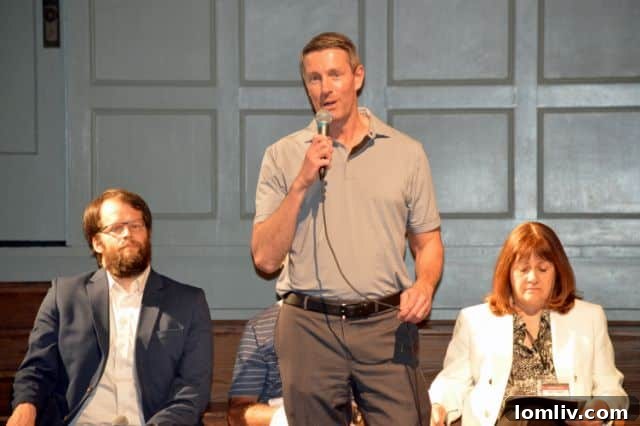
“The need is not being met,” Hopkins underscored, highlighting a critical disparity. She calculated that even if District 1 received its “fair share” under the current HIPP program, only three to four residents out of a sprawling population of 90,000 would be served annually. “Out of 90,000 residents in our district, the need is much, much greater than that,” she emphasized, making a powerful case for substantially increased and more accessible funding for home repair and preservation.
Councilman West, who was re-elected in May to represent District 1, responded via email, expressing his shared vision for Oak Cliff’s prosperity and his commitment to exploring all feasible solutions. He acknowledged the importance of bond program funds for various community initiatives but noted a significant hurdle: utilizing these funds for home repair programs would necessitate amending the bond charter, a complex process requiring approval from the entire City Council. West highlighted that such an amendment has not been pursued in recent history, indicating the legislative challenges involved in reallocating bond funds for this specific purpose.
To further address housing issues, West appointed Ashley Brundage, co-founder of the Dallas Housing Coalition, to the Economic Development/Housing subcommittee of the Community Bond Task Force. The Dallas Housing Coalition has been a vocal advocate, requesting a substantial $200 million in bond funds dedicated to comprehensive housing solutions, reflecting the scale of the challenge facing Dallas residents.
Learning from Success: The West Dallas Home Repair Program
A precedent for targeted home repair programs within Dallas exists. District 6, under the leadership of Councilman Omar Narvaez, successfully established a “West Dallas Home Repair Program.” This initiative was funded through a surplus from a previous bond, which was subsequently channeled into the Equity Capital Revitalization Fund. Such a model offers a glimmer of hope for District 1, demonstrating that innovative funding solutions are possible with strategic planning and political will.
However, the replication of this success in District 1 faces timing and logistical complexities. The 2024 bond election, which could provide potential surplus funds, is still some time away, scheduled for either May or November of next year. Councilman West explained, “As we look ahead to the 2024 bond, determining the presence of a surplus will only be possible years later when certain projects might require less funding than initially anticipated.” He also pointed out that departments like Housing, Economic Development, and Homeless Solutions typically hesitate to allocate bond money for specific programs. This reluctance stems from the additional demand placed on staff and resources, alongside various other logistical considerations inherent in managing such targeted initiatives.
Despite these challenges, Councilman West has proactively requested a meeting with Christine Hopkins to delve deeper into how District 1’s specific needs can be effectively addressed. This commitment to dialogue signifies a crucial step toward finding tailored solutions. West has been a long-standing advocate for both more affordable housing and innovative housing solutions, while also emphasizing that “missing middle” housing can be achieved without necessitating the demolition of existing homes, a stance critical to preserving neighborhood character and existing communities.
The Imperative for Enhanced Education and Outreach
Christine Hopkins strongly believes that the city has a crucial role to play in improving public awareness and accessibility of its housing programs. Beyond simply offering aid, she argues for proactive measures to protect residents from the intense displacement pressures driven by developers seeking to construct more expensive properties in existing neighborhoods. This includes a robust educational component, particularly for vulnerable groups.
“They could have bilingual, bicultural education about predatory real estate practices or make sure that Oak Cliff District 1 residents were getting help from the home repair program,” Hopkins asserted. She expressed disappointment that such initiatives have not yet materialized: “Unfortunately, we haven’t seen any of that happen. We have not seen any rollout of bilingual, bicultural education about predatory real estate practices. We have not seen any increase in the HIPP funding.” This lack of targeted, culturally sensitive outreach leaves many residents susceptible to exploitation and unaware of their rights or available support, further widening the gap between existing resources and community needs.
“Don’t Bishop Arts My Elmwood”: A Call for Preservation
The saga of Woody Brodie Jr.’s family home on Nolte Drive powerfully illustrates the challenges at hand. Although his mother’s home was nearly entirely rebuilt by the City of Dallas, Woody, despite owning the property and keeping it up to code, found himself targeted by investors. His disability—a brain injury that impairs his verbal communication—made him vulnerable. Since daltxrealestate.com began reporting on the South Edgefield neighborhood and Brodie’s plight in August, he has received multiple notices from attorneys representing “Your Problem My Solution,” demanding he sell his property. This aggressive campaign underscores the ruthlessness of some predatory real estate practices.
The community’s fight to help Woody retain his family home continues with renewed hope. The pivotal moment arrived when attorney Matt Glenn met with Brodie and his friend and neighbor, Suzanne Felber. Glenn’s generous offer to take Brodie’s case pro bono has significantly brightened the outlook. “The future is looking much brighter in South Edgefield,” Felber shared with daltxrealestate.com, reflecting the collective relief and determination of the neighborhood. We will continue to follow this compelling story, which serves as a microcosm of the broader battles for home preservation in Dallas.
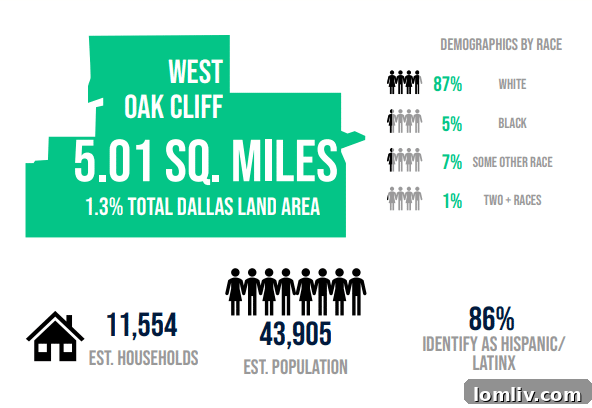
“There are a lot of neighbors who try to help other neighbors get through that process and I think the people who get through it successfully are the people who have help,” Hopkins observed, highlighting the critical role of community solidarity. However, the underlying, larger-picture issue remains the imperative to prevent Oak Cliff from losing its unique character to rapid, unchecked development, encapsulated in the rallying cry: “Don’t Bishop Arts My Elmwood.”
“You can see what is happening to the neighborhoods here,” Hopkins warned. “We’re having expensive apartment units built, expensive luxury townhomes built, and the people who have been longtime residents holding down Oak Cliff and making Oak Cliff the Oak Cliff we love to live in, are now fighting rising property taxes and an inability to afford to live here.” This surge in high-end development threatens to displace the very fabric of the community. “I don’t want it to be whitewashed, and I don’t want it to be basically made into an Uptown. That’s not what Oak Cliff is about,” she declared passionately. “If we care about protecting and preserving Oak Cliff, we need to start investing real money in helping people stay in their homes.” This call to action emphasizes that true preservation requires more than just rhetoric; it demands tangible financial and systemic support for the residents who define Oak Cliff’s soul.
This comprehensive report is the fourth installment in a series dedicated to exploring critical housing and development issues impacting the vibrant Elmwood and South Edgefield neighborhoods within Oak Cliff, Dallas.