The Enduring Legacy of Craig Ellwood: Master of California Modernism
In the pantheon of mid-century modern architects, few figures command as much intrigue and admiration as Craig Ellwood. Born John Burke in the quiet town of Clarendon, Texas, in 1922, he would later redefine himself and his profession under the moniker Craig Ellwood, becoming synonymous with a sleek, minimalist aesthetic that blended the rigor of European Bauhaus with the laid-back elegance of Southern California living. His architectural creations, often lauded as works of art, are testaments to precision, clarity, and an unwavering commitment to the principles of modern design. Ellwood’s vision transcended mere construction; he crafted serene living environments that celebrated light, space, and a seamless connection to their surroundings, leaving an indelible mark on the landscape of 20th-century architecture. His homes, frequently considered masterpieces, exemplify a perfect synthesis of spare, midcentury German Bauhaus architecture and the more informal California sensibilities of the state he called home longer than the Lone Star State.
From John Burke to Craig Ellwood: A Self-Made Architect’s Journey
The man we know as Craig Ellwood began life far from the architectural epicenters of California. John Burke’s family relocated from Texas to the burgeoning metropolis of Los Angeles by the mid-1930s, a move that would prove pivotal in shaping his destiny. The vibrant, optimistic atmosphere of post-war California undoubtedly fueled his ambitions and provided fertile ground for his architectural aspirations. After serving with distinction in the Army Air Corps during the 1940s, Burke, alongside his brother and two friends, established a contracting business. It was during this period that the name “Craig Ellwood” first emerged, originally designating the firm itself. Not long after, John Burke officially adopted the name, a symbolic shedding of his past and an embrace of a new, professional identity. This transformation was more than a mere name change; it marked the beginning of his self-taught architectural education, a testament to his innate talent and fierce determination.
Despite never obtaining a formal architecture license – a fact that often surprises those unfamiliar with his story – Ellwood immersed himself in rigorous study. He attended night classes in structural engineering, meticulously analyzing the works of modernist pioneers like Ludwig Mies van der Rohe, Walter Gropius, and Le Corbusier. His profound understanding of structural mechanics, combined with an innate aesthetic sensibility and an almost obsessive attention to detail, allowed him to bypass traditional accreditation and establish himself as a legitimate, highly sought-after designer. This unconventional path underscored his genius, proving that talent, vision, and relentless self-education could pave the way to architectural eminence, challenging the very notion of what it meant to be an “architect” in mid-20th century America. He opened his own firm and began to make a name for himself, quickly earning recognition for his distinctive style.
The Ellwood Aesthetic: Where Bauhaus Discipline Meets California Light
Craig Ellwood’s architectural philosophy was a masterful synthesis of two distinct yet complementary traditions: the austere, functionalist principles of German Bauhaus and the informal, sun-drenched sensibilities of California modernism. From the Bauhaus school, Ellwood adopted a profound appreciation for industrial materials, exposed structural elements, and a minimalist aesthetic. Architects like Ludwig Mies van der Rohe were clear influences, inspiring Ellwood’s precise use of steel frames, flat roofs, and expansive glass walls that blurred the lines between interior and exterior. His designs frequently featured a clear grid system, modularity, and an unwavering commitment to functionalism, stripping away unnecessary ornamentation to reveal the pure essence of form and structure. This dedication to structural honesty and material integrity was a cornerstone of his work, resulting in buildings that were both intellectually rigorous and visually striking.
However, Ellwood was no mere imitator of European modernism. He ingeniously adapted these often rigid ideals to the specific climate and lifestyle of Southern California. Instead of the stark and imposing feel of some European counterparts, Ellwood’s homes exuded an elegant lightness and an inviting openness. He masterfully embraced California’s abundant natural light, designing spaces that were flooded with sunshine and offered panoramic views of the surrounding landscapes. Indoor-outdoor living became a signature hallmark, with large sliding glass doors seamlessly connecting interior living areas to patios, gardens, and courtyards, integrating the built environment with the surrounding natural world. This fusion resulted in homes that felt both intellectually rigorous and refreshingly livable – structures of exceptional clarity and precision that also offered comfort, warmth, and a deep connection to nature. It was this unique ability to soften the industrial edge of modernism with an inherent understanding of place that cemented his signature style and captivated a discerning clientele, making his work instantly recognizable and eternally relevant.
Architectural Masterpieces: The Case Study Houses and Beyond
Ellwood’s most celebrated contributions to modern architecture were largely realized through his involvement with the groundbreaking Case Study House program. Initiated by Arts & Architecture magazine in 1945, this ambitious project aimed to commission leading architects to design and build prototypes of affordable, replicable modern homes using innovative materials and construction techniques suitable for post-war America. Craig Ellwood proved to be a natural fit for this forward-thinking initiative, embodying its spirit of experimentation and progressive design. His designs for the program showcased how modernism could be both aesthetically sophisticated and practical, offering a vision for contemporary living that was both aspirational and attainable for the emerging middle class.
Among his significant contributions to the program were Case Study House #16, also known as the Feldman House, completed in 1953 in Beverly Hills, and Case Study House #17, the Hoffmann House, completed in 1956 in Los Angeles. These homes powerfully exemplified his signature approach: exposed steel frames, large expanses of glass, simple rectilinear forms, and meticulously detailed interiors. They demonstrated a commitment to modularity and prefabrication concepts, pushing the boundaries of residential construction. His work on these projects garnered critical acclaim and solidified his reputation as a visionary leader in American modernism. The precision of his structural expression and the clarity of his spatial organization made these houses iconic representations of California modernism, influencing countless subsequent designs.
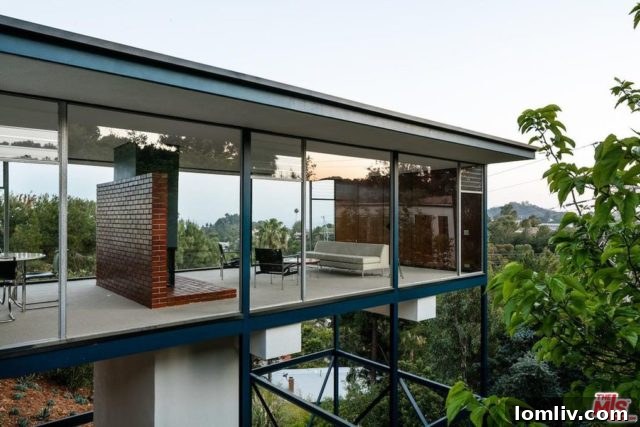
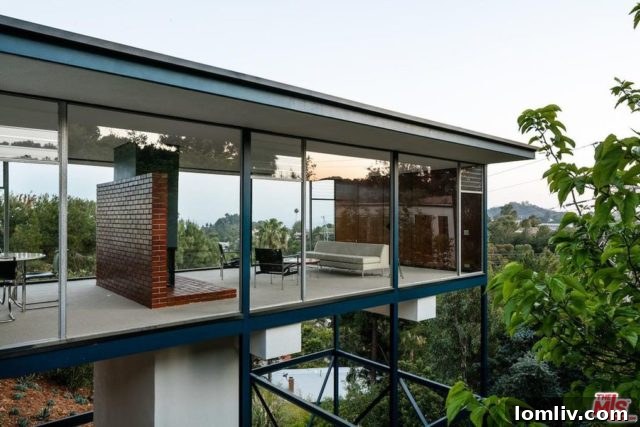
Beyond the Case Study program, Craig Ellwood continued to produce an array of stunning residential and commercial projects that perfectly articulated his architectural philosophy. One such masterpiece, and a particularly notable example of his standalone residential work, is The Smith House. Built in 1958 and perched gracefully on a Los Angeles hillside, the Smith House embodies all the quintessential Ellwood characteristics: a minimalist steel and glass structure, an open floor plan that encourages fluid movement, and breathtaking views that are dramatically framed by the architectural envelope. Its clever use of cantilevered elements and transparent walls creates a sense of lightness, allowing the structure to seemingly float above its challenging site while providing an unparalleled connection to the dramatic urban landscape below.
Recently, the Smith House underwent a meticulous restoration under the expert guidance of American Institute of Architects fellow (and former Ellwood associate) Jim Tyler. Tyler’s deep understanding of Ellwood’s original intent, combined with his own extensive architectural expertise, ensured that the restoration honored the home’s historical integrity while subtly updating it for contemporary living. The successful revival of this architectural gem speaks volumes about the enduring relevance and timeless appeal of Ellwood’s designs, cementing its place as an invaluable piece of architectural heritage.
Ellwood’s versatility also extended beyond single-family residences. He designed notable commercial projects, such as the elegant South Bay Bank in Gardena (1960), which applied his minimalist aesthetic to public spaces, and multi-family residences like the Courtyard Apartments (1953). Each project, regardless of scale or function, bore the unmistakable stamp of his meticulous design philosophy: elegant simplicity, structural honesty, and a profound respect for light and space. These diverse commissions showcased his ability to adapt his signature style to a variety of programmatic needs, always maintaining the highest standards of architectural purity and precision.
A Lasting Legacy: Influence and Enduring Appeal
Craig Ellwood’s impact on architecture reverberates far beyond his active years. His work played a crucial role in defining the aesthetic of post-war California modernism, influencing a generation of architects and designers who sought to emulate his clarity of vision and structural elegance. His buildings, characterized by their almost effortless grace and structural purity, continue to be admired and studied for their timeless appeal. The clarity of his vision and his unwavering dedication to modern principles earned him a reputation as a master builder, even without the traditional academic credentials. He was a sought-after guest lecturer at universities and architectural institutions, sharing his insights and inspiring future architects with his unique perspective on design and construction. His articulate explanations of his methods further solidified his influence, proving that true architectural genius transcends formal training.
The market’s sustained interest in his properties, exemplified by the recent meticulous restoration and subsequent re-entry onto the market of the iconic Smith House, underscores the lasting value and profound cultural significance of his creations. These homes are not merely structures; they are pieces of art, embodying a specific, optimistic moment in architectural history while remaining remarkably contemporary in their appeal. They represent an ideal of modern living – sophisticated, functional, and deeply connected to nature – that continues to resonate with those who appreciate refined design and enduring quality. The preservation efforts dedicated to his works ensure that his legacy continues to inspire and educate, securing his place as an architectural luminary.
Closing a Chapter: Life After Architecture
In 1977, at the height of his highly successful architectural career, Craig Ellwood made a rather abrupt and surprising decision to close his firm and relocate to Italy. This significant departure from the active architectural scene in Los Angeles marked a profound shift in his life’s trajectory. While the exact motivations behind this move remain a subject of some conjecture – perhaps a desire for a change of pace, an urge to reconnect with the European roots of modernism that had so deeply influenced his early work, or simply a wish to pursue other creative and intellectual endeavors – his relocation signaled an end to his prolific building period. He spent his remaining years primarily in Europe, engaging in art, writing, and other personal pursuits, a testament to his multifaceted interests and his restless creative spirit that extended beyond the confines of architectural design. Craig Ellwood passed away in 1992, leaving behind a remarkable and influential collection of buildings that continue to inspire and captivate.
Conclusion: The Undeniable Mark of a Visionary
Craig Ellwood’s journey from John Burke of Texas to an undisputed icon of California modernism is a compelling narrative of self-reinvention, relentless dedication, and artistic triumph. His distinctive blend of rigorous Bauhaus-inspired modernism with the open, light-filled sensibility of Southern California created an architectural language that was both innovative and enduring. Through his groundbreaking Case Study Houses and independent masterpieces like the Smith House, Ellwood demonstrated that architecture could be both structurally honest and profoundly beautiful, functional yet elegantly artistic. His legacy continues to shape our understanding of modern design, ensuring his place as one of the most influential and visionary architects of the 20th century. His homes remain sought-after treasures, not just as historical artifacts, but as vibrant, livable spaces that continue to inspire awe and exemplify the very best of mid-century architectural thought. If you are captivated by the allure of a Craig Ellwood original, the newly restored Smith House presents a rare opportunity to own a piece of this remarkable heritage, and we have the details on SecondShelters.com.