

In the vibrant heart of Dallas, urban planning initiatives are continuously shaping the future of its cherished green spaces. Among these, the ongoing update to the White Rock Lake Master Plan stands as a testament to the city’s commitment to community-driven development and the preservation of its natural treasures. What truly sets this process apart is the exceptional dedication and constructive participation of East Dallas residents, who consistently demonstrate their passion for White Rock Lake. This remarkable engagement can be attributed, in part, to the masterful facilitation by the Dunaway consulting firm, which has diligently crafted a process that genuinely listens to and incorporates community input, all while recognizing the unparalleled significance of White Rock Lake as a truly indispensable urban gem.
A recent public meeting held on November 6 at the scenic Bath House Cultural Center, overlooking the very waters of the lake, drew an impressive crowd of over 100 individuals. This gathering was a collaborative effort, expertly hosted by Dunaway, alongside Councilwoman Paula Blackmon, and Park and Recreation Board member Maria Hasbany. The presence of several esteemed city leaders, including former City Plan Commission Michael Jung, underscored the high priority and broad support for this vital planning endeavor. Such robust attendance and high-level representation highlight the collective understanding that the future of White Rock Lake is a shared responsibility, demanding thoughtful deliberation and unified action.
Councilwoman Blackmon candidly articulated the prevailing challenge that necessitated this comprehensive planning effort. She revealed that approximately 20 disparate plans currently exist, each pertaining to different aspects of White Rock Lake. “One plan says this and one plan says that,” Blackmon noted, emphasizing the resulting lack of predictability and consistent direction. This fragmented approach has historically hindered effective management, made it difficult to assess maintenance needs—such as the last time docks were inspected—and complicated the strategic allocation of resources. It became abundantly clear that a singular, overarching “bible” was desperately needed to guide all future decisions and developments. This realization propelled the community and city leadership to embark on this journey: to consolidate collective aspirations into a coherent plan, enabling the city to strategically pursue bond money and ensure that all stakeholders and partners are, as she aptly put it, “rowing in the same direction.” This unified vision is crucial for the long-term sustainability and enhancement of White Rock Lake.
The Dunaway consultants are on track to deliver an updated White Rock Lake Master Plan in early spring, a timeline that reflects the intensity and dedication invested in this project. Throughout the preceding weeks and months, the firm has continued its diligent efforts to gather extensive community feedback, understanding that broad input is the cornerstone of a truly successful and representative plan. This ongoing engagement ensures that the final master plan will not merely be a technical document, but a living testament to the shared aspirations and practical needs of the Dallas community that cherishes White Rock Lake.
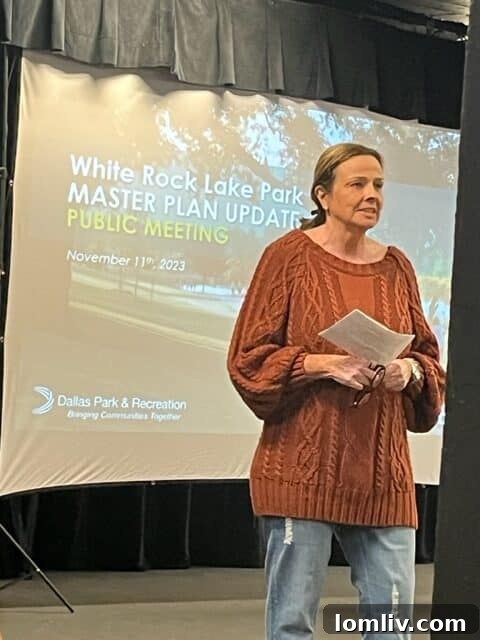
White Rock Lake Master Plan: Securing the Future of a Dallas Icon
At the heart of this comprehensive planning effort lies White Rock Lake itself. Spanning an expansive 1,015 acres, this man-made reservoir, originally constructed in 1911 to serve as a water supply for Dallas, has evolved into much more. Today, it stands as one of the most heavily used and beloved urban parks in the entire city, a vibrant hub of recreation, conservation, and community life. Its vast expanse offers a diverse array of activities, from sailing and kayaking on its waters to cycling, running, and walking along its extensive trails. The lake and its surrounding parkland serve as a critical ecological refuge, supporting a wide variety of wildlife and contributing significantly to the urban biodiversity of Dallas. Understanding its multi-faceted role – as a recreational amenity, an environmental preserve, and a cultural landmark – is fundamental to crafting a master plan that honors its past while strategically guiding its future, ensuring its vitality for generations to come. More insights into its dredging efforts can be found here.
Overseeing this intricate process is Dunaway’s dedicated team of experts. Landscape architect Philip Neeley, serving as the senior engagement manager for the firm, played a pivotal role in facilitating the recent public meeting. Neeley emphasized that while the team is making significant progress, no definitive new concepts have been formally drawn or presented to the public just yet. “We’re advancing toward that,” he explained, outlining the crucial preliminary phases of the project. These initial stages have involved extensive data gathering, meticulous base mapping of the entire lake area, and a deep dive into the incredible tapestry of history that White Rock Lake has woven over the decades. This foundational work ensures that any future designs are rooted in a thorough understanding of the lake’s existing conditions, its historical evolution, and the complex interplay of natural and urban elements. Neeley assured attendees that as the project progresses and tangible ideas begin to take shape “on paper,” there will be ample future opportunities for residents to review, react, and provide further input, maintaining the collaborative spirit throughout the entire planning lifecycle.
In addition to updating the overarching master plan, Dunaway consultants are also meticulously revisiting the design guidelines that were originally established for White Rock Lake back in 1994. Engagement manager Brad Moulton highlighted the importance of this review. Decades have passed since these initial guidelines were put in place, bringing with them significant changes in population density, recreational trends, technological advancements, and our understanding of environmental stewardship. A comprehensive re-evaluation ensures that the new master plan is not only forward-thinking but also responsive to contemporary needs and challenges, aligning White Rock Lake’s development with modern best practices for urban park management and conservation.
To facilitate a structured and thorough approach to planning, the White Rock Lake Master Plan is strategically divided into distinct land use sections. These categories allow for focused discussion and targeted recommendations for specific areas, recognizing the diverse character and function of different parts of the park. The primary sections include: **General Park**, encompassing broad recreational areas, green spaces, and community gathering points, considering aspects like playground upgrades, picnic areas, and universal accessibility; **Lakeside Drive**, focusing on traffic flow, pedestrian and cyclist safety, scenic corridors, and connections to surrounding neighborhoods; the **Environmental Preserve**, dedicated to the rigorous protection of natural habitats, native flora and fauna, and the critical enhancement of water quality through sustainable practices; **Nautical**, addressing boating facilities, water sports, safety regulations, and equitable lake access for various water activities; and **Special Areas**, which account for unique sites such as cultural institutions like the Bath House, historical landmarks, specific athletic fields, or unique recreational zones. This compartmentalized approach ensures that every aspect of White Rock Lake receives the attention it deserves, allowing for tailored solutions that optimize its use and preservation for all.

Unlocking Community Insights: Public Input Shapes the White Rock Lake Master Plan
The essence of this master plan update lies in its unwavering commitment to incorporating genuine public input. At the November 6 meeting, Brad Moulton encouraged attendees to actively engage with the detailed maps and proposed ideas. “We want you to react to those details and add to them,” he urged, inviting residents to articulate “what’s working and what’s not working, what your big ideas are for these areas or an area that’s not flagged.” This direct appeal for feedback ensures that the plan reflects the lived experiences, diverse perspectives, and genuine desires of those who utilize and cherish the lake most, creating a truly representative and community-driven vision for White Rock Lake’s future.
Among the many passionate voices was Mick Weisberg, a resident who purchased his home in the area back in 1979 and regularly cycles the scenic trails surrounding White Rock Lake. Weisberg shared his historical perspective with daltxrealestate.com, noting, “Thirty years ago, Dallas was woefully short of parkland. We’re not behind anymore.” He expressed deep gratitude and excitement for the current master plan update, acknowledging the unwavering involvement of East Dallas residents in such initiatives. His particular interest lies in the cycling trails, a critical amenity for many recreational users. Weisberg’s comments underscore a common sentiment: while planning processes can often be lengthy and complex, the enduring commitment of the community ensures that these plans, once adopted, effectively achieve their intended goals. “I have nothing but praise for all who are involved,” he concluded, reflecting the appreciation for the collaborative efforts and dedicated leadership.
The overwhelming importance of White Rock Lake’s trails was further corroborated by data presented by Philip Neeley. He revealed that trail usage at White Rock Lake is among the strongest and most active in the entire state of Texas. This fact was powerfully reinforced by survey results, with more than 400 respondents identifying trails as their number one primary use and reason for visiting the area. This strong preference for trails highlights the need for continued investment in their maintenance, expansion, and safety, ensuring that White Rock Lake remains a premier destination for cyclists, runners, and walkers alike. Future planning will undoubtedly focus on enhancing this crucial aspect, considering factors like trail connectivity, surface quality, amenities along the routes, and integration with broader urban trail networks.
Councilwoman Blackmon echoed the recurring sentiment that East Dallas residents are not only present but also adept at engaging in respectful and productive dialogue. “That’s how we are in East Dallas,” she affirmed, highlighting a cultural characteristic of the community. “We like to sit and communicate through our problems.” This capacity for thoughtful debate and collaborative problem-solving is invaluable to the success of any large-scale urban planning project. It signifies a mature and engaged citizenry, willing to invest their time and intellectual capital to safeguard and improve their shared public spaces. This active, communicative approach ensures that the White Rock Lake Master Plan will be a truly collaborative document, reflecting the diverse needs and aspirations of the community it serves and fostering a strong sense of ownership.
As the Dunaway consultants finalize their work for an early spring delivery, the updated White Rock Lake Master Plan promises to be more than just a document; it will be a foundational “bible” for the future. This comprehensive strategy will provide much-needed predictability, guide future investments, streamline maintenance efforts, and ensure that White Rock Lake continues to thrive as an ecological haven and a vibrant recreational destination. It will serve as a roadmap for preserving the lake’s natural beauty, enhancing user experience for all visitors, improving accessibility, and securing the necessary bond funding for critical projects. With the sustained engagement of East Dallas residents and the expert guidance of city leaders and consultants, White Rock Lake is poised for a future that is as bright and enduring as its cherished legacy, cementing its role as a jewel in the crown of Dallas’s public spaces.