Embracing the Autonomous Revolution: Frisco Paves the Way with Driverless Car Service
The advent of driverless car technology is not merely a futuristic fantasy but a rapidly approaching reality poised to redefine urban mobility and road safety. As the industry swells to an impressive $80 billion valuation, its potential to revolutionize our daily commutes and commercial logistics is undeniable. My personal experiences on the road frequently underscore the urgent need for such innovation. Just last weekend, a near-miss with a speeding vehicle whose driver disregarded a stop sign at a busy Old Preston Hollow intersection served as a stark reminder of human fallibility behind the wheel. Similarly, enduring a two-hour gridlock on the Dallas North Tollway during peak hours, primarily caused by human error-induced accidents, highlights the frustrating inefficiencies of our current transportation systems. These everyday challenges make a compelling case for handing over the reins to technology, where precision and algorithms can drastically reduce errors, improve flow, and enhance overall safety.
The Trillion-Dollar Promise: Economic Impact of Robo-Taxis
Beyond the immediate benefits of safety and traffic reduction, the financial sector is keenly observing the burgeoning autonomous vehicle market. Wall Street analysts are projecting a monumental shift in the transportation landscape, with particular attention to the ride-hailing and ride-sharing sectors. Goldman Sachs Group Inc., a leading voice in global finance, estimates that the robo-taxi market alone will see an explosive growth, soaring from a modest $5 billion in revenue today to an astounding $285 billion by 2030. This forecast isn’t built on wishful thinking but on concrete projections of operational efficiency. The elimination of driver wages, a significant overhead for traditional ride services, is expected to boost operating margins into the 20 percent range, more than double what established car manufacturers currently achieve.
Goldman Sachs Group Inc. predicts that robo-taxis will help the ride-hailing and -sharing business grow from $5 billion in revenue today to $285 billion by 2030. There are grand hopes for this business. Without drivers, operating margins could be in the 20 percent range, more than twice what carmakers generate right now. If that kind of growth and profit come to pass—very big ifs—it would be almost three times what GM makes in a year. And that doesn’t begin to count the money to be made in delivery.
Should these projections materialize – and indeed, they are “very big ifs” subject to technological maturity and public acceptance – the revenue generation would dwarf the annual earnings of automotive giants like General Motors. This financial windfall doesn’t even account for the immense potential in autonomous delivery services, which promises to reshape supply chains and last-mile logistics, adding further billions to the industry’s economic footprint. The promise of such transformative growth is igniting a fierce competition among tech companies and automakers alike, all vying for a slice of this future economy.
Frisco’s Forward Leap: Launching America’s First Driverless Car Service
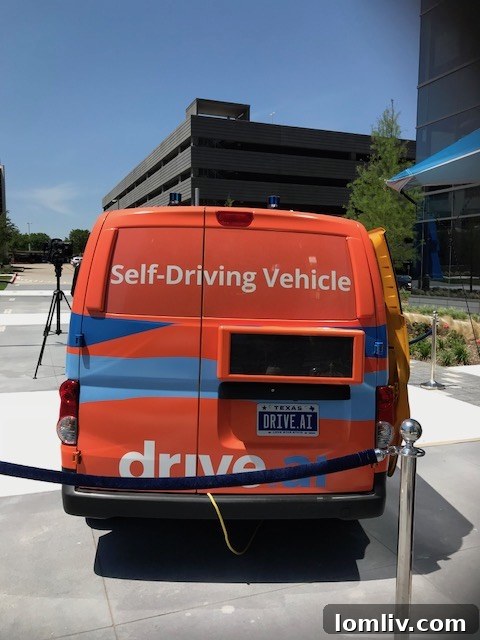
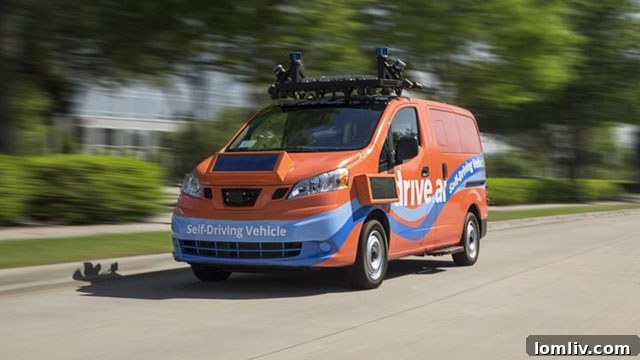
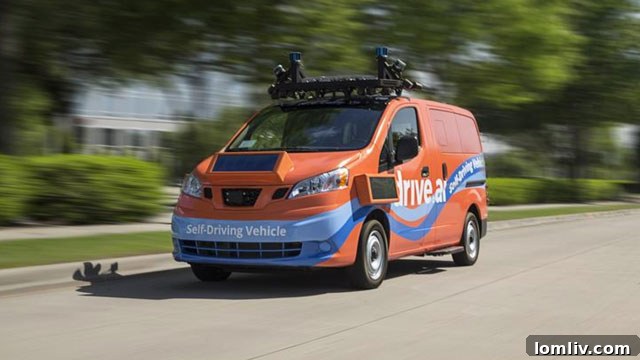
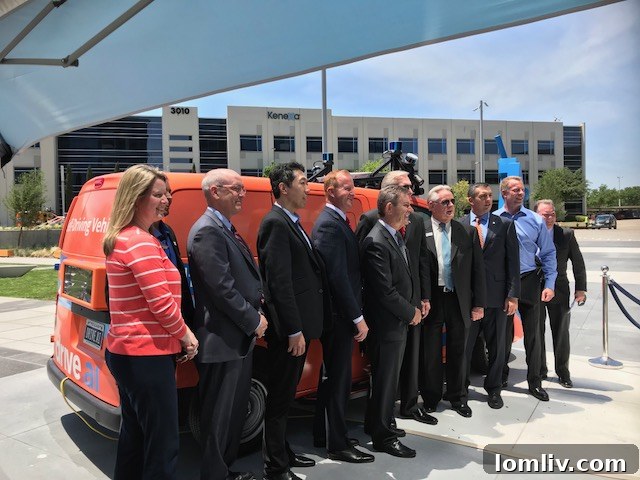
It was with considerable excitement that I accepted an invitation to Frisco, Texas, for a firsthand experience with the pioneering autonomous transportation service. Monday marked a significant milestone as the city unveiled America’s first self-driving car service, a groundbreaking pilot public partnership set to introduce driverless passenger vans to Frisco roads this July. Drive.ai, a California-based startup, established its presence at HALL Park for a week-long demonstration, showcasing its capabilities. Their initial pilot program involves autonomous vans traversing fixed routes within a vibrant district encompassing retail centers, entertainment venues, and office complexes at HALL Park and The Star in Frisco. This six-month initiative, operating on public roads, is designed to gather crucial data and pave the way for an anticipated expansion to Frisco Station.
The launch event was a convergence of Frisco’s esteemed dignitaries, prominent developers, and of course, Mayor Jeff Cheney, a Realtor with The Associates. The atmosphere was celebratory, marked by a press conference and live riding demonstrations. Beyond the immediate excitement, the strategic brilliance of this initiative became clear: it’s a sophisticated public relations maneuver not only to acclimate the public to driverless technology but also to collect invaluable artificial intelligence (AI) data. As TexasMonthly.comastutely observed, “Starting in Frisco is likely to give Drive.ai enough data for how suburban North Texas drivers operate that they’ll be able to spread out across the region. That’s no small deal when you’re talking about the fourth-largest metropolitan area in the country, and makes the Frisco test an effective pilot program for how autonomous cars are likely to roll out across North Texas.” This regional focus highlights the program’s strategic depth, positioning Frisco as a crucial laboratory for the future of urban mobility.
Mayor Jeff Cheney underscored the significance of the day, stating, “Today definitely marks a mobility milestone for our entire region. It also gets us closer to achieving one of our council’s ‘Top Ten’ goals, which is to improve traffic throughout Frisco, one of the fastest growing cities in the country.” This pilot program is a testament to Frisco’s proactive approach to addressing the challenges of rapid growth and enhancing the quality of life for its residents.
Behind the Wheels of Innovation: Drive.ai’s Vision and Technology
Drive.ai, headquartered in the heart of Silicon Valley in Mountain View, California, is at the forefront of this autonomous revolution. The company has successfully raised over $60 million in funding, boasts a dedicated team of more than 100 employees, and traces its origins back to a group of brilliant graduate students from Stanford University’s Artificial Intelligence Lab. Dr. Andrew Ng, a co-founder and a prominent figure in the field of AI, spoke at the press conference, noting his academic background at Carnegie Mellon University – a renowned incubator for driverless car talent.
“We are ready to work with governments and businesses to solve their transportation needs,” affirmed Sameep Tandon, co-founder and CEO of Drive.ai, in an official press release. “Working with the city of Frisco and Frisco Transportation Management Association, this pilot program will take people to the places they want to go and transform the way they experience transportation.” This collaborative spirit is key to integrating cutting-edge technology into public infrastructure and service delivery.
The Drive.ai service operates through an intuitive smartphone application, mirroring the seamless experience of popular ride-hailing platforms like Uber. Users can effortlessly hail complimentary, on-demand rides, offering unparalleled convenience. This service is particularly appealing for scenarios such as lunch outings, where patrons can avoid the hassle of driving and finding parking. Imagine the possibilities of extending such a service across broader areas, perhaps connecting busy retail hubs or corporate campuses without the need for personal vehicles.
My visit to Frisco prompted numerous questions about the practicalities and safety of this nascent technology, and I was fortunate to receive insightful answers from the Drive.ai team.
Addressing Key Concerns: Safety, Regulations, and Technology
The enthusiasm surrounding the launch was palpable, with many attendees crediting developer Craig Hall for his instrumental role in spurring this cooperative initiative. Hall, who acquired the land for HALL Park over three decades ago when Frisco was a very different place, exemplifies the foresight needed for such transformative projects. Drive.ai employees confirmed that the City of Frisco went to extraordinary lengths to facilitate their operations in Texas, smoothing over the typical bureaucratic hurdles.
A burning question on my mind was, “Why Frisco, and not a tech-hub like California?” knowing full well the infamous traffic on California’s 101 freeway. The answer was swift and clear: stringent regulations and prohibitive restrictions in California would have made such a pilot program exceedingly difficult. “It would take ten years to be able to do this in California,” one of the tech engineers candidly revealed, highlighting the regulatory agility and business-friendly environment that made Frisco an ideal launchpad.
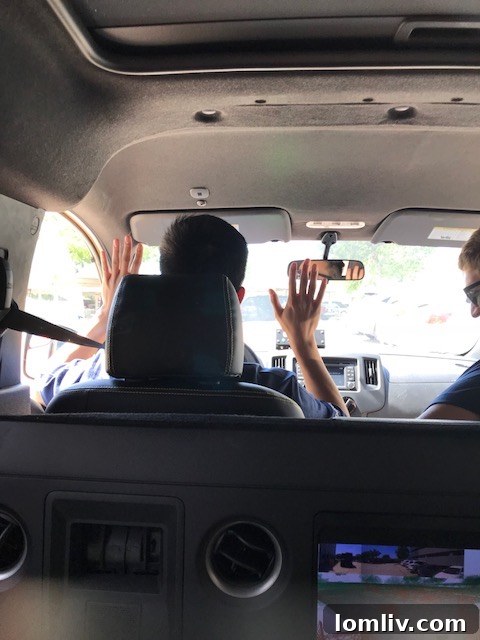
Regarding safety, a paramount concern for any autonomous technology, I inquired about Drive.ai’s accident record since its inception three years ago. The reassuring response was that they had experienced no accidents. This remarkable safety record is attributed to a sophisticated multi-layered monitoring system. Drive.ai vehicles are constantly supervised by human traffic control personnel, who, from a central desk, monitor every movement of the cars on large, real-time screens. For added redundancy and safety, three driverless cars are overseen by a single human operator. Furthermore, during this initial trial phase, a trained human safety driver remains inside each vehicle, ready to intervene and take control in the unlikely event of an emergency.
Another critical query concerned the performance of the rooftop cameras, especially when faced with North Texas’s notorious torrential rains. This aspect is crucial for reliable operation in diverse weather conditions.
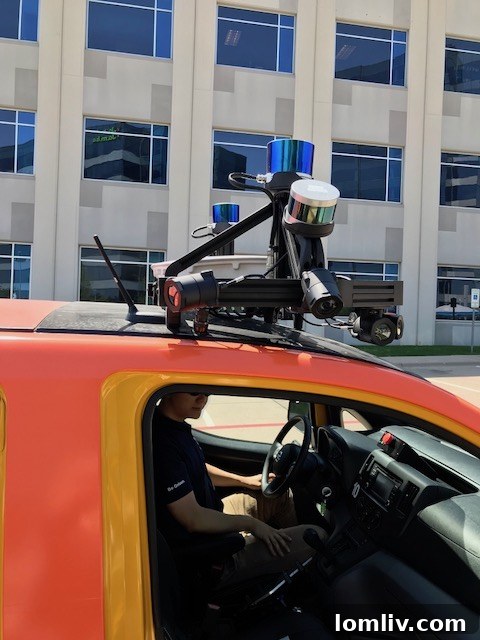
The answer was impressively simple: “No problem at all. The cameras utilize laser technology, which is unaffected by water.” This reliance on LiDAR (Light Detection and Ranging) technology, combined with radar and traditional cameras, creates a robust perception system that can navigate challenging environmental conditions with precision.
The intricate details of how the Frisco Transportation Management Association forged its partnership with Drive.ai remain an interesting point of inquiry, showcasing the proactive engagement of local entities in fostering technological innovation.
The Global Race for Autonomy: Frisco Joins the Frontrunners
Frisco’s entry into the autonomous vehicle space places it among a growing cohort of innovative cities and companies globally. Arlington, Texas, for instance, has already deployed low-speed, battery-powered driverless shuttles named “Milo” for residents and visitors near AT&T Stadium. In Phoenix, Waymo, Alphabet Inc.’s self-driving car division, is actively offering public rides, cementing its position as a leader in the race. According to Bloomberg, Waymo, a Google sibling, is widely regarded as the company most likely to perfect driverless cars, though numerous automakers, including General Motors, are making significant strides.
The Google sibling has cleared the way to beat its nearest rivals, General Motors Co. and a couple of other players, by at least a year to introduce driverless cars to the public. A deal reached in January to buy thousands of additional Chrysler Pacifica minivans, which get kitted out with sensors that can see hundreds of yards in any direction, puts Waymo’s lead into stark relief. No other company is offering for-hire rides yet, let alone preparing to carry passengers in more than one city this year. GM plans to start a ride-hailing service with its Chevrolet Bolt—the one with no steering wheel or pedals, the ultimate goal in autonomous technology—late next year, assuming the U.S. government has protocols in place by then. Most of the others trying solve the last remaining self-driving puzzles are more cautious, targeting 2020 or later. The road to autonomy is long and exceedingly complicated. It can also be dangerous: Two high-profile efforts, from Uber Technologies Inc. and Tesla Inc., were involved in recent crashes that caused the death of a pedestrian (in the first known case of a person killed by a self-driving vehicle) and a driver using an assistance program touted as a precursor to autonomy. One of Waymo’s autonomous vans was involved in a collision just last week. But the perceived stakes are so enormous, with the promise of transport businesses needing little in labor costs, that many players are racing to master the technology and put it to work.
Frisco, consistently demonstrating its innovative spirit, now decisively joins this global pursuit. While the specific genesis of the Drive.ai introduction remains to be fully elucidated, developer Craig Hall’s frequent ventures into the Bay Area, particularly Napa, suggest a plausible connection. Drive.ai has a proven track record, having logged over 6,000 autonomous driving miles in California in 2017, a substantial increase from over 500 miles in 2016, as detailed in a report by the California Department of Motor Vehicles. This experience underscores the continuous improvement inherent in AI (artificial intelligence) systems, which constantly refine their capabilities as more data is gathered and processed. An engineer from Drive.ai elucidated this fascinating aspect, explaining that the system is in a state of perpetual learning. If my recollection serves me correctly, he conveyed that the system collects an astonishing amount of data – gigabytes every single minute, comparable to two hours of a full-length movie in terms of data input. This relentless data acquisition and processing are what drive the rapid advancement and increasing reliability of autonomous technology.
The Road Ahead: Challenges and Exciting Possibilities
While the vision of widespread autonomy, where most individuals might eventually forgo their driver’s licenses and rely entirely on self-driving taxis, is compelling, it remains a goal some years in the future. The cutting-edge technology required for truly autonomous vehicles currently adds significantly to their cost, often exceeding the price of the cars themselves. With only a handful of companies actively testing these vehicles for public use, widespread adoption and seamless integration into everyday life are still a considerable distance away. Even industry leader Waymo is currently operating primarily in a pilot phase, meticulously refining its technology and services.
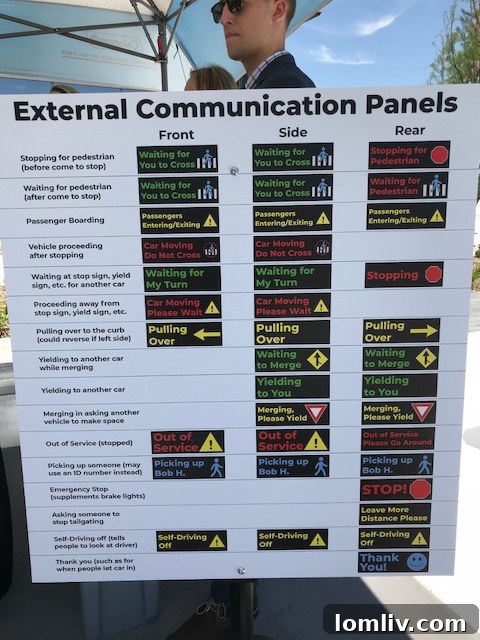
The promise, however, is clear: driverless cars by 2020 and beyond will continue to reshape our urban landscapes. One particularly intriguing feature observed on the Drive.ai vans was the integration of digital panels on each side of the vehicle. These panels are capable of displaying messages to other drivers, providing real-time communication that could enhance road awareness and safety. The potential applications are vast – from indicating turns and stops with greater clarity to communicating vehicle intentions in complex traffic scenarios. The immediate thought that came to mind was the desire for such a feature on my own car – a practical enhancement that could improve daily driving interactions.
Expanding on this concept, imagine the possibilities for sponsored panels. These digital displays could transform into dynamic advertising spaces, potentially showcasing local real estate listings, promoting businesses, or even sharing public service announcements. This innovative use of vehicle exterior could open new revenue streams for autonomous fleets and provide novel avenues for local advertising and community engagement, further integrating these advanced vehicles into the economic and social fabric of smart cities.