Dallas’s Evolving Skyline: A Deep Dive into Key Urban Development Projects
Dallas continues its dynamic transformation, with numerous development projects shaping its urban landscape and challenging conventional planning. As community discussions unfold, critical decisions are being made that will define neighborhoods for decades to come. This report offers an in-depth look at four significant projects currently under review by the Oak Lawn Committee and other stakeholders, exploring their architectural impact, zoning considerations, and potential contributions to the city’s vibrant future. From innovative hotel concepts to essential educational expansions and thoughtful senior living solutions, these developments reflect Dallas’s ongoing growth and commitment to evolving urban living.
A recent community meeting, spearheaded by District 14 council member David Blewett, underscored the importance of public engagement in the authorized zoning hearing concerning the Arts District’s periphery. These gatherings are crucial forums where developers present their visions and residents voice their perspectives, ensuring that new constructions align with community aspirations and address potential concerns. Our analysis today focuses on the latest proposals, two of which are entirely new, while two are refined iterations of previously discussed concepts.
The Dual-Branded Hilton: Motto & Spark on Hall Street
A significant new proposal making waves in the Dallas development scene is a dual-branded Hilton hotel. Situated at a prominent location bounded by Hall Street, Noble, and Oak Grove – just a few blocks east of Central Expressway near Breadwinners – this project introduces two of Hilton’s seventeen distinct brand types under one roof: Motto and Spark. This development is particularly notable given its proximity to the site of the never-realized Dream Hotel, which received approval back in 2015, highlighting the continuous evolution of Dallas’s hospitality market.
Both Motto and Spark are designed to appeal to the same demographic the Dream Hotel once targeted: the discerning Millennial traveler. These “app-style” single-word brand names evoke a modern, minimalist aesthetic, signaling an experience tailored to younger, tech-savvy guests. While Spark might sound like an electrifying innovation, the practical difference for the consumer often boils down to subtle distinctions in amenities and price point, with approximately a $20 difference in nightly rates separating the two brands.
This trend of proliferation in hotel sub-brands raises an interesting parallel to the U.S. automotive industry of old. Think back to General Motors, which once offered a multitude of brands like Oldsmobile, Pontiac, and Saturn, each ostensibly targeting a slightly different buyer segment. However, over time, this strategy often led to diluted brand identities and inconsistent quality. For the hospitality sector, the pursuit of numerous niche brands can sometimes compromise the consistent, high-quality experience that travelers truly value. Ideally, fewer sub-brands offering a consistently superior guest experience – cleaner carpets, fluffier pillows, and seamless service – should always be the ultimate goal, rather than relying on a new trendy name to merely imply freshness or modernity.
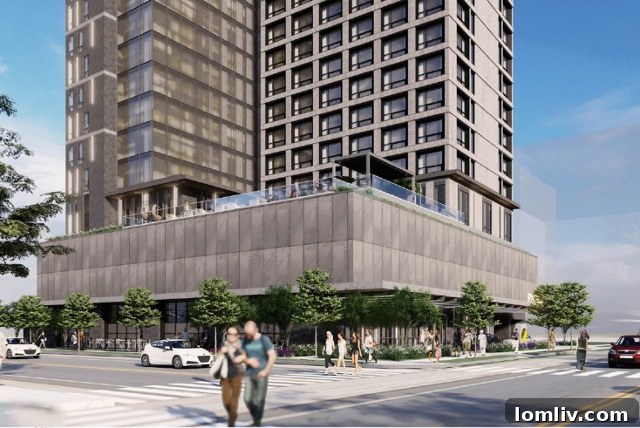
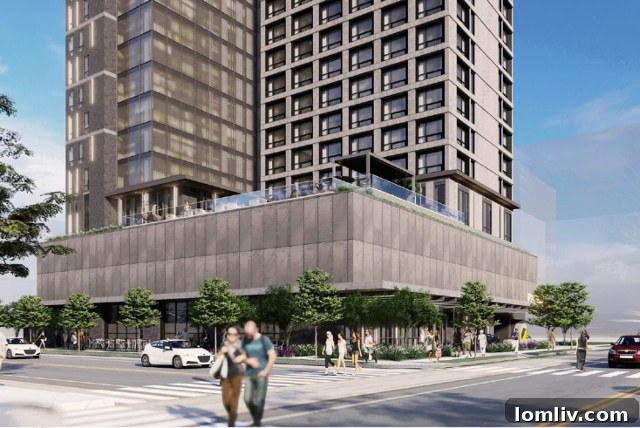
From an architectural standpoint, the proposed Hilton, designed by Merriman Anderson, draws comparisons to Hilton’s Canopy brand, located nearby. Critics suggest the design exhibits a degree of blandness, a “cookie-cutter” aesthetic that might not fully capture the youthful, hip energy it aims to attract. The rendering’s “Soviet gray skin” certainly doesn’t help in conveying a vibrant, contemporary image. While the Canopy brand boasts an excellent rooftop bar – a feature seemingly replicated here – the overall exterior struggles to project a distinct identity that resonates with its intended demographic or the surrounding urban context.
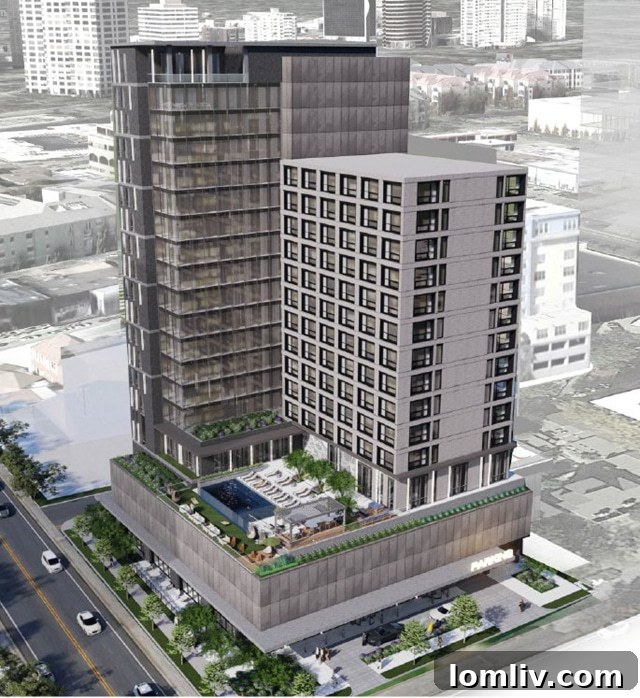
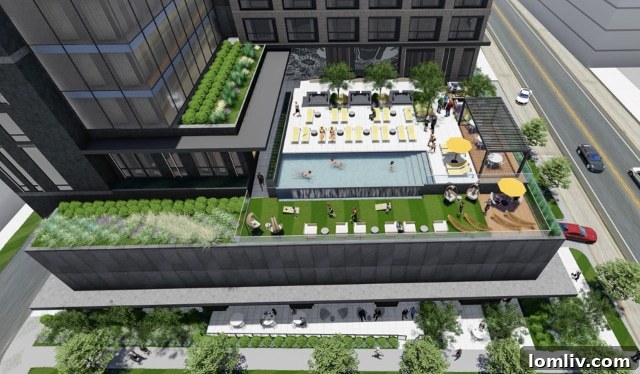
The building’s design echoes typical Hilton properties, reminiscent of their New York Midtown location. It features a recessed glass ground floor dedicated to hotel operations and restaurants, visually anchored by a two-story “muffin-top” parking garage. This garage, enclosed on only two sides, culminates in the hotel’s amenity deck, a feature that will undoubtedly spark future noise complaints from residents of the adjacent, upscale townhouses. The visual impact of an exposed parking structure remains a common point of contention in urban design, often detracting from the aesthetic appeal of a new development.
The hotel complex integrates both 15-story and 19-story elements, collectively housing 121 rooms for Spark and 196 rooms for Motto, totaling 317 guest rooms. A significant point of discussion revolves around parking provisions: the plan includes just 76 parking spaces for 317 rooms, a stark contrast to the current zoning requirement of 300 spaces. This substantial reduction in parking, while potentially encouraging alternative transportation, raises concerns about local traffic congestion and guest convenience. To mitigate this, an overflow agreement has been planned with the 3232 McKinney property, offering some relief to the anticipated parking deficit.
With a proposed restaurant spanning 2,200 square feet and meeting spaces limited to 1,350 square feet, this development is clearly not designed as a convention center or large-scale wedding venue, which helps minimize event-driven traffic. The debate over reduced parking in commercial developments is nuanced. In residential contexts, lack of parking directly impacts purchasing or leasing decisions. However, for hotels, guests often discover parking limitations only upon arrival. On the positive side, the project promises wider sidewalks, buried power lines, and lower lot coverage, enhancing the pedestrian experience and overall street aesthetic. Furthermore, the building is three stories shorter than what its zoning would permit, demonstrating a conscious effort to integrate more thoughtfully into the neighborhood. While not identical, the project’s scale and numbers bear enough resemblance to the previously approved Dream Hotel to illustrate how economic shifts influence the scope of urban developments over time.
Ultimately, a less generic exterior and a more thoughtfully concealed “muffin-top” parking garage would significantly enhance this project’s appeal. Furthermore, a simplified branding strategy from Hilton, focusing on a handful of distinct brands consistently delivering quality, would benefit consumers and the industry alike.
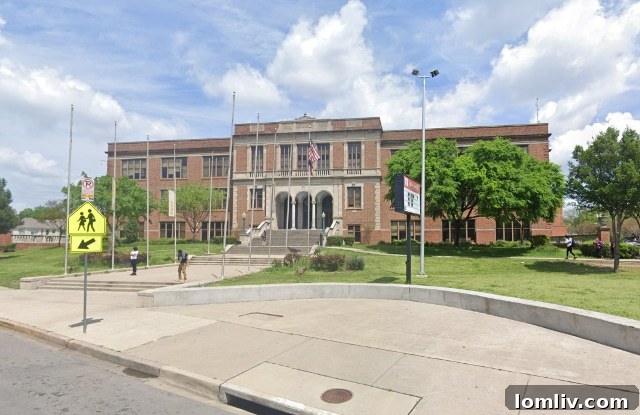
North Dallas High School Addition: Modernizing a Historic Landmark at 3120 N. Haskell
Nestled just north of West Village and south of Zippers on the west side of Central Expressway, North Dallas High School stands as a testament to the city’s rich history. Built in 1920, during an era when its location was indeed considered “North Dallas,” the original three-story structure received a three-story addition in 1983. Now, a new proposal seeks to further expand this historic institution with another three-story extension, primarily dedicated to modernizing its athletic facilities.
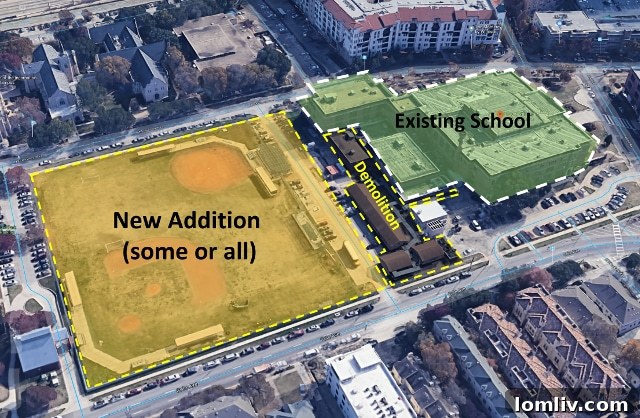
The school’s backyard currently features two baseball fields, a significant portion of which is slated to be repurposed for this new athletic complex. While the presentation left some ambiguity regarding the precise footprint of the new facility, the shift from outdoor to indoor athletic activities reflects a broader trend in urban school development, often driven by space constraints and the desire to provide year-round, weather-independent training environments. Though the trade-off warrants consideration, it is presumed the school administration has meticulously evaluated its needs to best serve its student body.
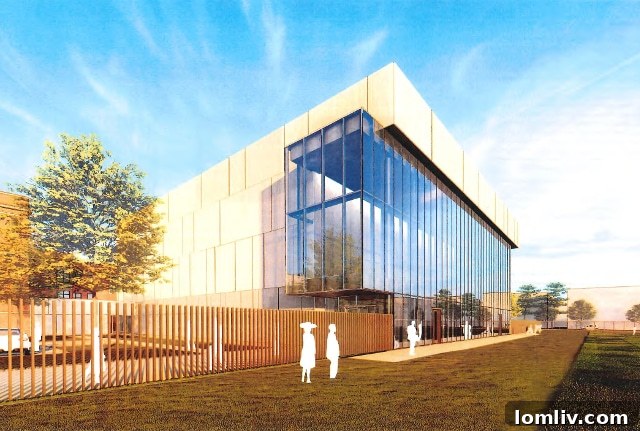
The design for this addition, crafted by the renowned architectural firm Perkins + Will, is commendably executed. The prominent glass box, aptly named the “overlook,” provides stunning views of Cole Park. Its northerly orientation, while not a traditional “south-facing” view, cleverly maximizes winter sun exposure, aiding in natural heating while minimizing harsh summer glare – a smart approach to energy efficiency and occupant comfort. The absence of windows on the sides is a practical design choice, typical for a gymnasium, focusing light and views where they are most beneficial.
This addition stands out as a thoughtful and respectful enhancement to an historic building. It speaks a modern architectural language that doesn’t attempt to mimic the past but rather complements it with contemporary utility and aesthetic. Such projects are vital for preserving the legacy of educational institutions while equipping them with the facilities necessary for future generations.
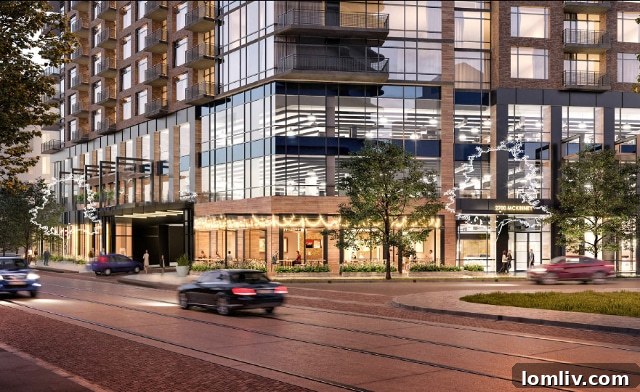
McKinney and Boll Redevelopment: Enhanced Urban Flow at 2702 McKinney Avenue
The reworking of the HKS-designed McKinney and Boll building at 2702 McKinney Avenue, last presented in September, has undergone a crucial revision that significantly improves the project’s functionality and urban integration. A primary challenge for many urban developments lies in managing traffic flow and ensuring seamless access for vehicles and pedestrians alike.
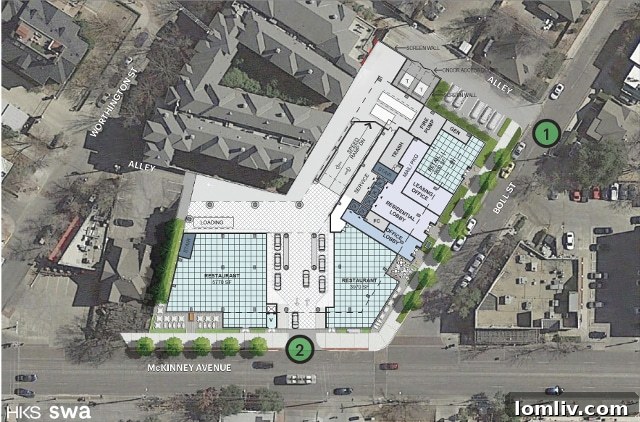
In its initial iteration, the project’s design channeled all vehicular traffic to a back alley or required drivers to circle the building, a less-than-ideal solution given McKinney Avenue’s existing traffic patterns. This original plan (labeled “1” in the diagram above) presented an awkward and potentially hazardous entry point, where a right-turning vehicle might appear to be heading directly into the building’s facade.
The revised plan (labeled “2”) introduces a much more elegant and efficient solution: cars now pull directly through the building’s front, accessing a dedicated valet and parking garage area. This change drastically improves the user experience, enhancing safety for both drivers and pedestrians, and streamlines vehicle ingress and egress from a bustling urban thoroughfare. Such intelligent modifications demonstrate a commitment to practical urban design, acknowledging and responding to the real-world dynamics of city traffic. This thoughtful adjustment makes the building more accessible and less disruptive to the surrounding streetscape, ultimately benefiting its tenants and visitors.
Herschel Senior Living: Balancing Needs and Aesthetics at 5205-4217 Herschel
The Herschel Senior Living project, located at 5205-4217 Herschel, has been a recurring topic of discussion for the Oak Lawn Committee, primarily due to the developer’s initial presentations lacking clarity and detail. The committee’s consistent request for “a legible presentation” underscores the critical importance of transparent and comprehensive communication in gaining community support for urban developments.
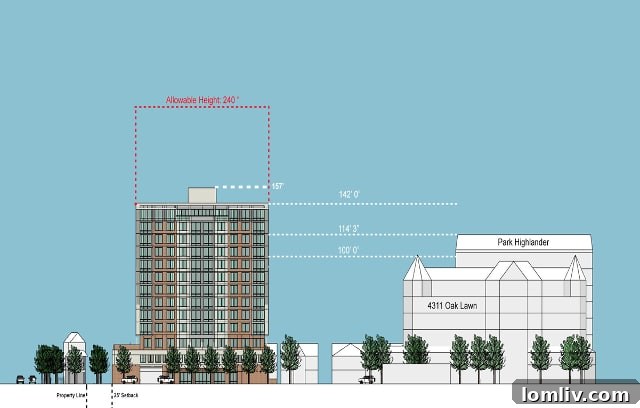
The latest iteration of the proposal, while still not destined for presentation awards, shows considerable improvement in its communication. The graphic above effectively illustrates the project’s proposed height (142 feet, plus an additional 15 feet for elevator housing and mechanicals) in relation to its zoned height (240 feet). This visual context is crucial, demonstrating that the proposed structure is well within allowable limits and, at two stories plus mechanicals taller than the nearby Park Highlander condos, is not an outlandish imposition on the skyline. Critics who claim the height will “stick out like a sore thumb” often overlook the existing density and the theoretical maximum height allowed by current zoning, which could permit an additional 10 stories.
A key aspect of the proposal involves an increase in the Floor Area Ratio (FAR) from 4.5 to 5.5, which translates to a greater buildable square footage per lot area. This increase facilitates the addition of two extra floors, a modification that, while significant, is presented as necessary for the project’s viability without being excessively detrimental to the neighborhood character. The project plans for a total of 140 units, supported by 64 parking spaces, with all but a dozen situated underground. While 64 spaces might appear limited at first glance, it’s important to note that code requirements for senior living facilities are typically lower, mandating only 42 spaces in this instance. Furthermore, for residents in “memory care” units, driving may not be a primary mode of transportation, making extensive parking provisions less critical.
The fundamental intentions behind the Herschel Senior Living project – addressing the growing need for specialized care and living options for the elderly – have always been well-received. The hurdles it faced stemmed largely from a perceived lack of professionalism in its early presentations, leading to multiple revisits to the Oak Lawn Committee. This iterative process highlights the democratic nature of urban planning and the power of community input in refining development proposals. The success of this latest iteration hinges on whether it adequately addresses lingering concerns and clearly articulates its value proposition to both residents and the wider community.

Understanding the intricate balance between high-rise developments, homeowners’ associations (HOAs), and historical preservation forms the core of my analysis. I advocate for modern and historically sensitive architecture that harmonizes with urban growth, often aligning with the YIMBY (Yes In My Backyard) philosophy that promotes thoughtful urban densification. My work in real estate journalism has been recognized by the National Association of Real Estate Editors, receiving three Bronze awards in 2016 (2016), 2017 (2017), and 2018 (2018), along with two Silver awards in 2016 (2016) and 2017 (2017). I am always keen to hear stories from the community or discuss new perspectives on Dallas’s development. Feel free to reach out via email at [email protected]. You can also look for me on social media, though my online presence is intentionally discreet.