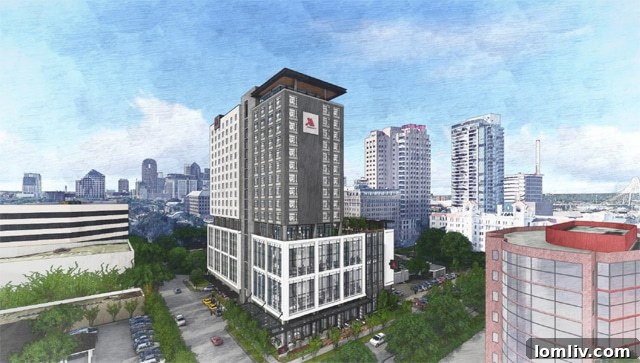
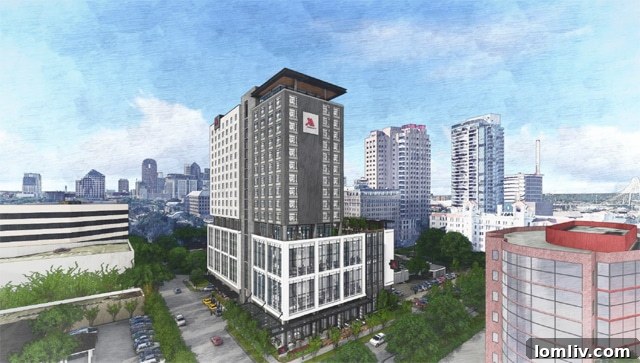
Navigating Uptown Dallas Development: The Marriott Proposal and the Oak Lawn Committee
The intricate dance between ambitious developers and vigilant community organizations is a recurring theme in urban development, particularly in highly coveted areas like Uptown Dallas. For the Oak Lawn Committee (OLC), this dynamic often resembles the persistent challenge of a parent dealing with a child who perpetually seeks approval for an oversized indulgence. Developers approach the OLC with grand visions, often presenting proposals that far exceed current zoning regulations – what we might call a “gallon of ice cream” development. They understand that while they are technically entitled to a standard portion, their ultimate goal is to secure more, perhaps even a generous surplus. The initial “gallon” serves as a strategic starting point, ensuring that even after inevitable negotiations, they don’t end up with less than their desired amount, or God forbid, just a mere scoop.
Uptown Dallas is currently experiencing a boom, attracting significant interest from various sectors, including the hospitality industry. Two prominent hotel projects are vying for a foothold in this vibrant district: The Dream Hotel and a proposed Marriott. The Dream was the first to present its extensive plans to the OLC, subsequently receiving a comprehensive list of adjustments and reductions. After a period of refinement, The Dream returned to the committee, demonstrating their commitment to addressing the OLC’s concerns. The outcome appears to be a carefully crafted compromise, likely granting more than the OLC initially preferred but significantly less than the developer’s original “gallon” proposal, setting a precedent for subsequent projects.
Alamo Manhattan and the Marriott Uptown Vision
It’s important to clarify that while the hotel will bear the prestigious Marriott brand, the driving force behind this particular development is Alamo Manhattan. As the developer, Alamo Manhattan will undertake the construction and ownership of the property, with Marriott stepping in to manage the hotel’s operations for what could be an extended period, potentially spanning decades. Alamo Manhattan recently made its inaugural presentation to the OLC, unveiling a development proposal that, much like “melting ice cream,” liberally exceeded numerous established zoning criteria. Their initial pitch was notably expansive, pushing boundaries on several fronts.
One might surmise that Alamo Manhattan entered these discussions with a clear understanding that their initial “gallon” request would not be fully granted. However, the strategic intent was likely to secure at least a portion of that “spillage” – those extra allowances beyond standard regulations. The timing, nearing the festive season, perfectly encapsulates this spirit of hopeful aspiration. Just as individuals craft their elaborate wish lists for Santa Claus, developers often present their most ambitious desires to the OLC, a time-honored tradition in the world of urban planning and negotiation.
Following their initial meeting, Alamo Manhattan revisited their plans, presenting a second iteration to the OLC. This revised proposal demonstrated a clear effort to incorporate many of the committee’s suggestions and address previously raised concerns. However, despite these revisions, there remains additional “melted ice cream” – lingering issues and areas where the proposal still pushes beyond existing zoning, requiring further discussion and potential compromise.
The Imperative for New Hotels in Uptown
The prospect of new hotels in Uptown Dallas is, in my view, a welcome development. The area is undeniably thriving, with a burgeoning corporate presence translating into increased demand for office space. This surge in business activity naturally brings with it a steady stream of business travelers who require quality accommodation. Furthermore, Uptown’s vibrant residential landscape continues to expand, attracting new residents and, consequently, their out-of-town guests. Currently, the range of hospitality options in Uptown, while growing, can feel somewhat limited, creating a clear market opportunity for new establishments.
While some might fear that new properties will inevitably draw business away from existing hotels, this is a natural consequence of market competition and largely unavoidable. More importantly, the introduction of new, modern facilities often serves as a powerful catalyst for improvement. Increased competition invariably prompts existing properties to invest in renovations, upgrades, and enhanced services to retain their clientele. Ultimately, the organic growth occurring within Uptown Dallas strongly suggests that the area would be significantly better served by an expanded inventory of hotel rooms, catering to the diverse needs of its evolving demographic and economic landscape.
Location, Competition, and the “Orphan Lot” Conundrum
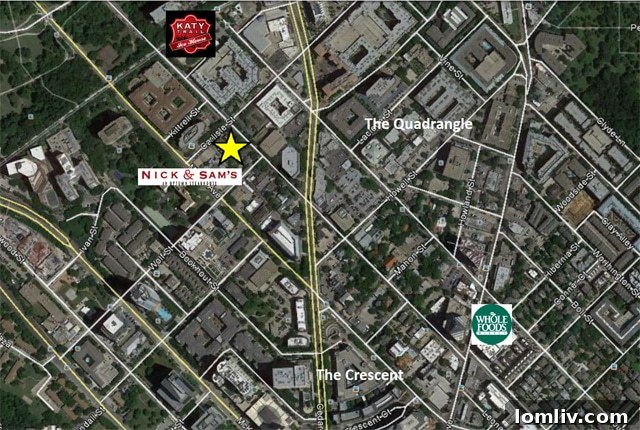
The proposed Marriott Uptown is strategically positioned to enter a competitive market, with The Stoneleigh hotel (a historic Starwood-managed property, now part of the Marriott portfolio) being a key existing player in the immediate vicinity. The new Marriott will be located on Fairmount Street, nestled between Wolf and Carlisle, directly behind the renowned Nick & Sam’s steakhouse. This places it literally kitty-corner to The Stoneleigh, setting the stage for direct, heightened competition.
An interesting consequence of this specific placement is the creation of an “orphan lot” at the intersection of Fairmount and Wolf, currently owned by James French Photography. It’s difficult to imagine that Alamo Manhattan, a seasoned developer, didn’t attempt to acquire this parcel. Should the Nick & Sam’s lot eventually undergo redevelopment – a matter of “when,” not “if” in a dynamic area like Uptown – this small, isolated lot could find itself hemmed in, severely limiting its future development potential. This situation mirrors historical urban planning challenges, reminiscent of properties in older parts of cities that, due to their insufficient size, become commercially unviable for meaningful development. As the old adage goes, sometimes you’ve got to “know when to fold ’em.” For the owners of such small, constrained parcels, future options can become extremely limited.
Deconstructing the Marriott’s Development Proposal
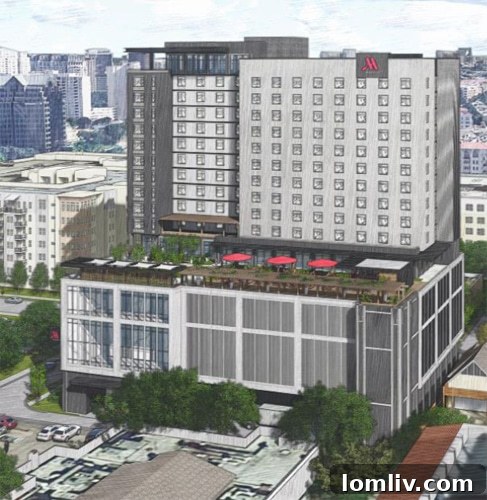
Alamo Manhattan’s current proposal for the Marriott Uptown is ambitious, outlining a comprehensive hospitality experience. The plans call for 221 meticulously designed hotel rooms, poised to accommodate the increasing demand for luxury lodging in Uptown. Complementing the guest rooms, the proposal includes a 3,500 square-foot restaurant, envisioning a vibrant dining destination for both hotel guests and local residents. Furthermore, the plans allocate 12,000 square feet each for sophisticated meeting rooms and an expansive outdoor deck, which will feature a pool – crucial amenities for attracting corporate events, social gatherings, and leisure travelers seeking a premium experience.
However, achieving this vision necessitates several significant deviations from existing zoning regulations, which the author refers to as “spillage” from the “gallon” of ice cream. These specific requests represent the core of the ongoing negotiations with the OLC:
- Height Extension: The proposal requests a height of 230 feet, which is a substantial 110 feet taller than the currently allowed limit of 120 feet. This significant increase would dramatically alter the skyline presence of the development.
- Floor Area Ratio (FAR) Increase: The Floor Area Ratio is nearly tripled, escalating from 2.0 to 5.95. This dramatic increase is largely a direct consequence of the requested additional height, allowing for a much larger building footprint in relation to the lot size.
(Note: Understanding FAR is crucial in urban planning. It represents the ratio of a building’s total floor space to the size of the lot it occupies. To illustrate, a 10,000 square-foot lot with an FAR of 2.0 would permit a 20,000 square-foot building. In the case of the Marriott, the combined lots total approximately 30,712 square feet. An FAR of 5.75 would allow for a colossal 174,000 square-foot building, starkly contrasting with the 60,344 square feet permissible under current FAR levels. This metric is a key indicator of development density.)
- Setback Reduction: A significant request involves reducing the required setback from 25 feet to a mere 10 feet. This particular reduction has been identified as a major point of contention and a “justifiable stink” for the OLC, as setbacks are crucial for maintaining street aesthetics, pedestrian comfort, and ensuring adequate light and air to neighboring properties.
- Lot Coverage Increase: The proposal seeks to increase lot coverage from 80 percent to 85 percent. While this is not perceived as a monumental deviation, it still contributes to the overall density and reduces permeable open space on the site.
In a prior iteration of the plans, the valet parking area was designed to encroach directly onto Fairmount Street. This would have inevitably led to significant traffic congestion, creating a “conga line” of vehicles attempting to access or exit valet services, particularly during busy periods corresponding to corporate meetings, social events, or large conventions. The OLC rightly rejected this aspect, leading to a revision in the latest proposal. Now, valet services and car staging are cleverly integrated within the building’s structure, a critical improvement for urban traffic flow and pedestrian safety.
Despite these adjustments, the OLC remains steadfast in its advocacy for completely underground parking – a standard that, quite frankly, should be non-negotiable in contemporary urban development. The committee’s persistent stance suggests a strong desire to eliminate unsightly and space-inefficient above-ground parking structures. One could almost imagine the OLC posting a clear directive on its door: “Do NOT Enter With an Above-Ground Parking Garage.” This reflects a broader urban planning philosophy aimed at creating more pedestrian-friendly and aesthetically pleasing streetscapes.
An Assessment: Balancing Growth with Community Character
When evaluating the various “spillage” items, the requested increase in building height rarely causes me significant alarm in a rapidly developing urban core. Dallas’s skyline is constantly evolving, and height can often contribute to a dynamic urban aesthetic. However, the Floor Area Ratio (FAR) presents a more intricate challenge. While height and FAR are intrinsically linked, a near-tripling of the FAR suggests a density that extends beyond merely doubling the building’s verticality. This implies a significant increase in the overall bulk and massing of the structure, which needs careful consideration.
The proposed five percent increase in lot coverage is, on its own, a relatively minor adjustment. Yet, when combined with other factors, it suggests that the tower might occupy a larger footprint of the lot than initially envisioned. If this were a residential building, I would voice concerns about the potential for overcrowding and a feeling of being too close to adjacent structures. However, for a hotel, these concerns are somewhat mitigated; guests are typically not seeking expansive mountain or sea views from their Uptown Dallas accommodations, and the transient nature of their stay makes proximity less impactful than for permanent residents.
A more perplexing aspect of the proposal is the developer’s steadfast adherence to a 10-foot setback, rather than conforming to the 25-foot requirement mandated by current zoning. The lack of movement on this particular point suggests that the reduced setback, alongside the heightened FAR and overall building height, represents a critical “get” for the developers. Setbacks play a vital role in defining the pedestrian experience, allowing for wider sidewalks, space for street trees, and a more pleasant, less imposing streetscape. Their reduction can create a canyon-like effect and diminish the quality of public space.
The insistence on completely underground parking is another paramount concern for the neighborhood and one that I wholeheartedly support. Residents and urban enthusiasts alike are growing weary of the omnipresent “giant boxes” of above-ground parking garages that dominate urban landscapes, occupying valuable space that could otherwise be transformed into more neighborhood-friendly retail, green spaces, or pedestrian amenities. Underground parking not only frees up street-level space but also significantly improves the visual appeal and walkability of the area, aligning with modern urban design principles.
On the positive side, the developers have committed to burying utilities, which means the unsightly “poll and wire-scape” that often mars urban views will be removed – an unequivocally beneficial enhancement to the street environment. They are also proposing an additional outdoor living room on the Carlisle Street side. While it’s difficult to predict the exact level of public utilization, any addition of landscaped public space is a positive contribution to the urban fabric, offering residents and visitors more areas for relaxation and interaction.
However, my most significant concern centers on the overall design’s banality. I find myself struck by a sense of déjà vu, convinced I’ve encountered this architectural blueprint numerous times before. It strongly suggests that within Marriott’s extensive portfolio, one could likely find a multitude of nearly identical designs. This approach smacks of a “purpose-built” mentality, akin to fast-food restaurants that, even after being repurposed, cannot escape the indelible mark of their original design – who hasn’t recognized an old Taco Bell or Pizza Hut, even when it’s transformed into a dry cleaner or, ironically, a non-Taco Bell Mexican restaurant? The architecture, in this instance, feels less like a unique contribution to Uptown’s character and more like a corporate template.
In my opinion, architecture as a mere extension of corporate branding is a bridge too far. Cities thrive on unique, context-sensitive designs that reflect their local character and aspirations. Developers should engage architects who are empowered to create distinct, wonderful buildings, not simply replicate a design that instantly screams “Marriott” from blocks away, even without signage. Or, worse yet, a building that in two decades might be seen as just an “old Marriott,” having lost its brand affiliation but retaining its generic architectural identity. Such predictability and monotony, I suspect, have less to do with Alamo Manhattan’s vision and everything to do with Marriott’s corporate imperative for consistency and brand recognition, often at the expense of architectural distinction.
Remember: High-rises, HOAs, and renovations are my primary focus. However, I also deeply appreciate the delicate balance between modern and historical architecture, especially in the context of movements like YIMBY (Yes In My Backyard). If you’re interested in hosting a Candysdirt.com Staff Meeting event, I’m your go-to person. My writing has been recognized with Bronze and Silver awards from the National Association of Real Estate Editors in 2016 and 2015, respectively. If you have a compelling story to share or even a marriage proposal to make, don’t hesitate to reach out via email: [email protected].