By Jay Firsching
In the intricate world of historic preservation, one of the most delightful yet challenging aspects is the inevitable journey down a research rabbit hole. It begins innocently enough: a curious fact uncovered during a routine archive search, a forgotten detail hinting at a larger narrative. Before you know it, hours have vanished, consumed by a captivating story that, while enthralling, may diverge significantly from your immediate research goals. Such was the case for me when the recent announcement of the T. Boone Pickens YMCA downtown closing sparked a wave of reflection, resurrecting memories of one particularly fascinating detour into Dallas’s architectural past.
As a long-standing member of the downtown Dallas YMCA, the building itself always presented a curious enigma. Its somewhat unconventional and, to some, “unsightly” appearance often left me pondering its origins, a lingering question that eventually led me to uncover a truly remarkable tale during one of my deep-dive research sessions. Dallas, a city celebrated for its ambitious spirit, is also replete with narratives of grand visions that, for various reasons, never quite materialized as initially conceived. The story behind the downtown YMCA is a perfect illustration of this, a testament to the city’s dynamic evolution and the unexpected twists of urban development.
J. Curtis Sanford Sr.: A Visionary Entrepreneur and Dallas Sports Pioneer
The visionary, and perhaps somewhat eccentric, developer behind the initial conception of this prominent downtown Dallas property was none other than J. Curtis Sanford Sr. For longtime Dallas residents and particularly for sports aficionados, Sanford’s name resonates deeply. However, for those less familiar with these specific historical threads, his legend warrants a closer look. Born in Arkansas, Sanford’s entrepreneurial journey began amidst the roaring East Texas oil fields in 1931, where he started as a foundry worker. Possessing a keen business acumen, he swiftly transitioned into brokering lucrative oil deals for a burgeoning clientele in Dallas, a move that quickly led to the establishment of his own highly successful brokerage company. This initial triumph was merely the springboard for a breathtaking array of diversified ventures, which spanned an impressive spectrum from innovative real estate development to large-scale poultry farming, sophisticated furniture manufacturing, and the vibrant restaurant industry, among many others. Yet, despite his myriad talents and profitable enterprises, Sanford’s true, unwavering passion lay in the thrilling world of sports promotion and development.
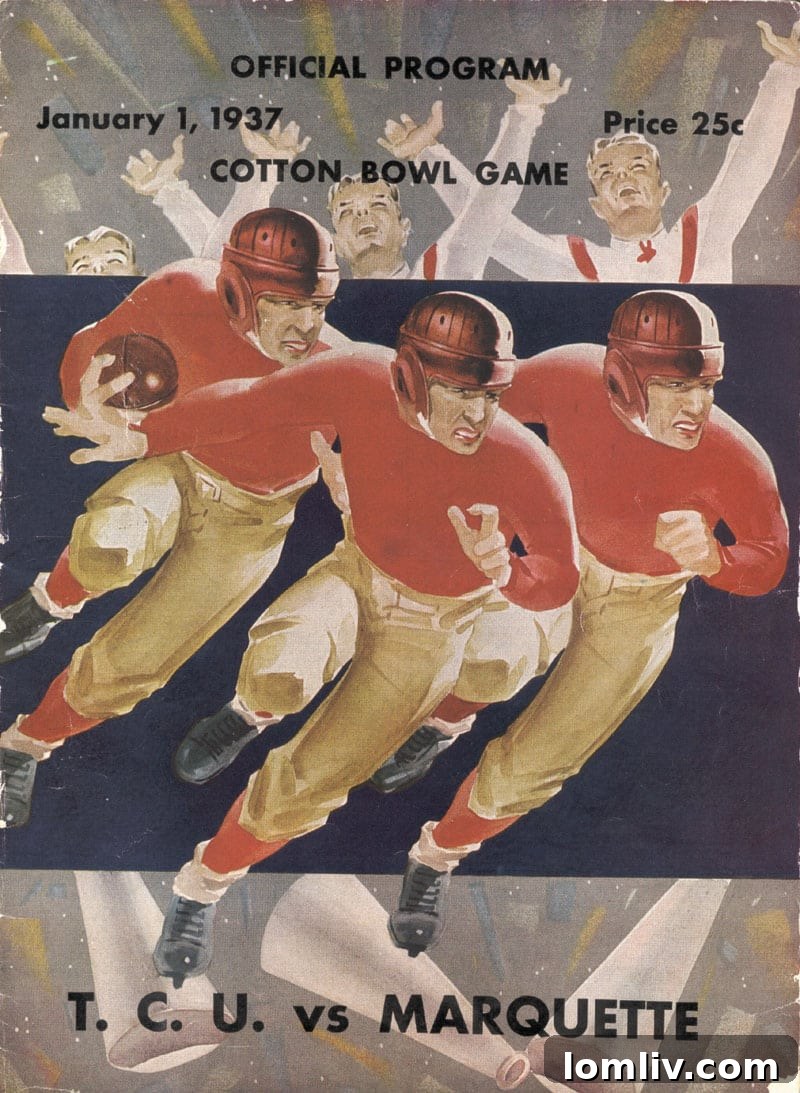
Sanford’s enduring legacy in the Dallas sports scene is perhaps best encapsulated by his groundbreaking initiative in 1936. Following an inspiring visit to the prestigious Rose Bowl, he was galvanized by a singular idea: to bestow upon Dallas its very own signature bowl game. With an unparalleled display of personal commitment and financial backing, Sanford single-handedly founded the now-iconic Cotton Bowl in 1937. The inaugural game, a captivating clash between Texas Christian University and Marquette, marked the beginning of a cherished Dallas tradition. Sanford personally oversaw the meticulous management of this nascent event, nurturing its growth and establishing its foundations, until he gracefully handed its stewardship over to the Southwest Conference in 1940. Beyond the Cotton Bowl, Sanford’s indelible mark on Texas sports history extends to his ownership of the state’s very first professional football team, the Dallas Texans, further cementing his reputation as a pioneering figure dedicated to elevating the sporting landscape of the region.
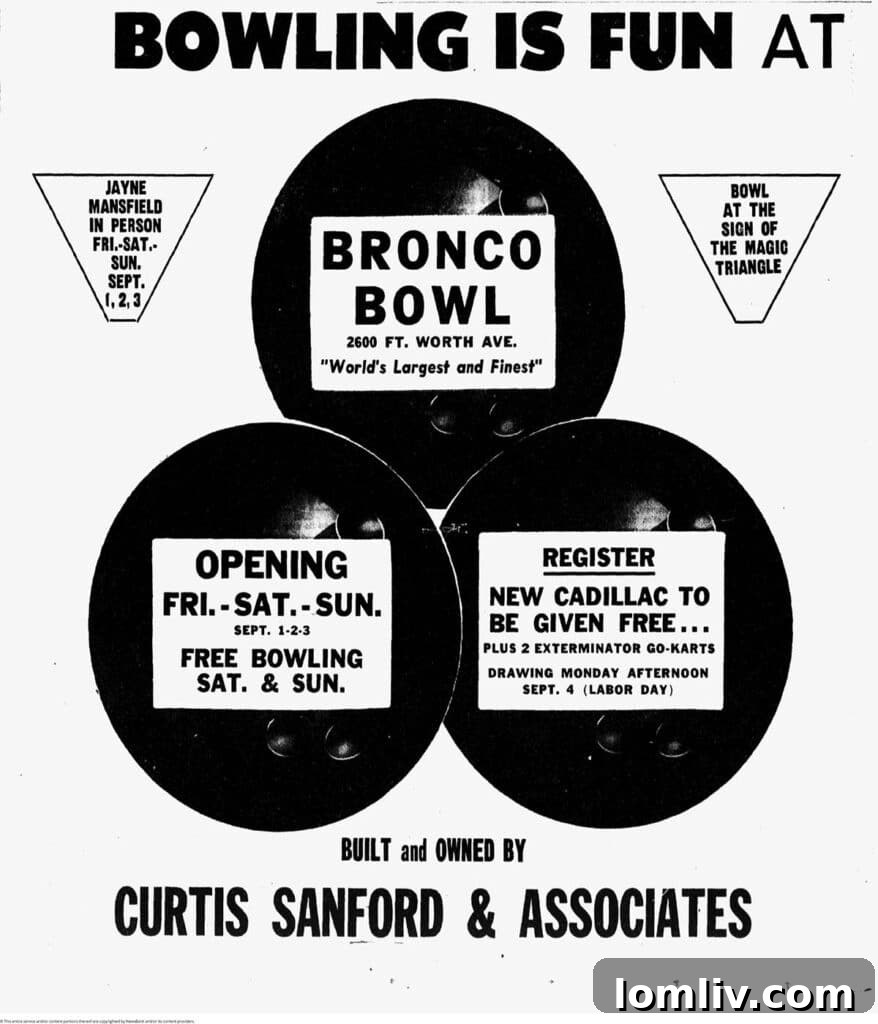
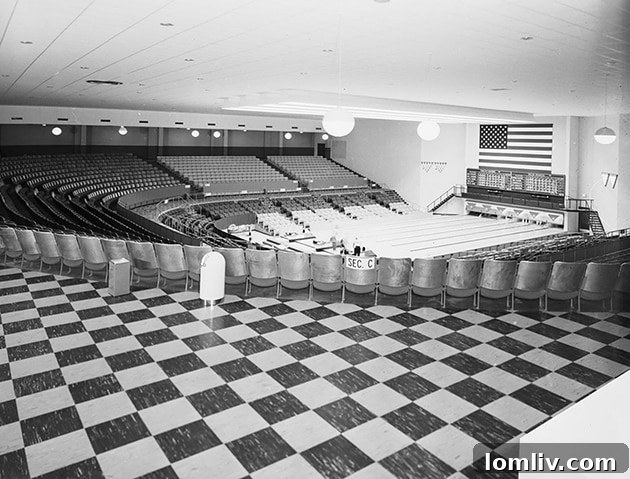
Sanford’s profound love for sports wasn’t confined to football; his enthusiasm for bowling was equally fervent and transformative. This passion spurred him to develop an impressive network of state-of-the-art bowling facilities across Dallas, revolutionizing the sport locally. Among his notable creations were Valwood Lanes, the grand Cotton Bowling Palace, and arguably his magnum opus, the magnificent Bronco Bowl on Fort Worth Avenue. Completed in 1961, the Bronco Bowl stood as a monumental achievement, boasting an astounding 72 lanes for public enjoyment, complemented by an additional six lanes specifically designed and dedicated for professional tournament play. It was within this grand arena that Sanford further solidified his pioneering spirit by establishing Dallas’ first professional bowling team, aptly named The Broncos, showcasing his unwavering commitment to professionalizing the sport. The Dallas Morning News, in a fitting tribute to his boundless energy and relentless drive, once aptly described Sanford as an individual who “had a new idea every few minutes on how to make a million dollars,” a testament to his ceaseless entrepreneurial spirit and visionary outlook.
The Ambitious Sanford Center: A Downtown Dream Unfulfilled
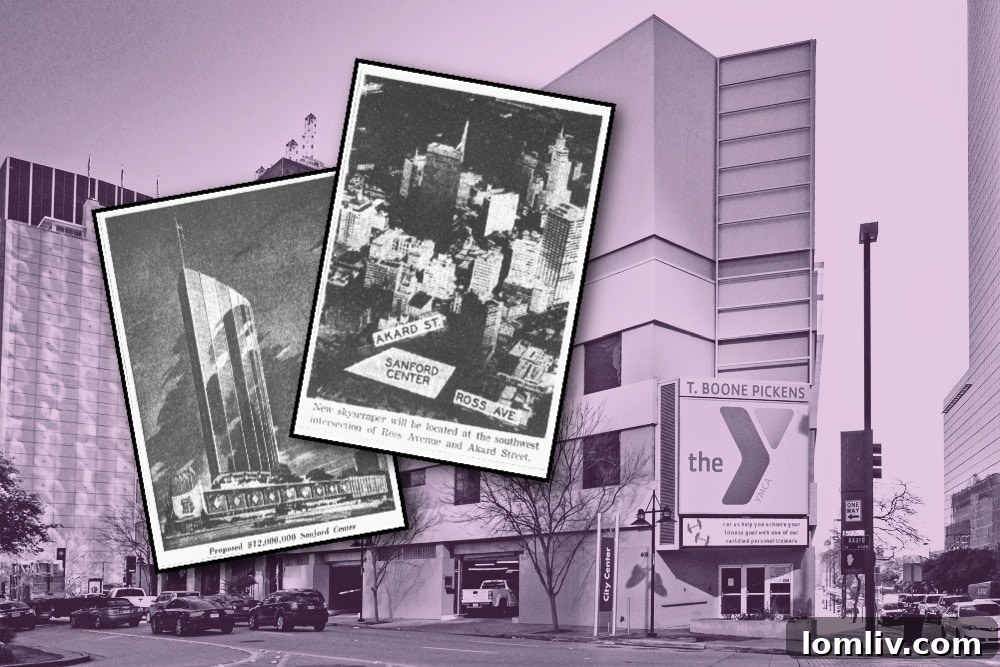
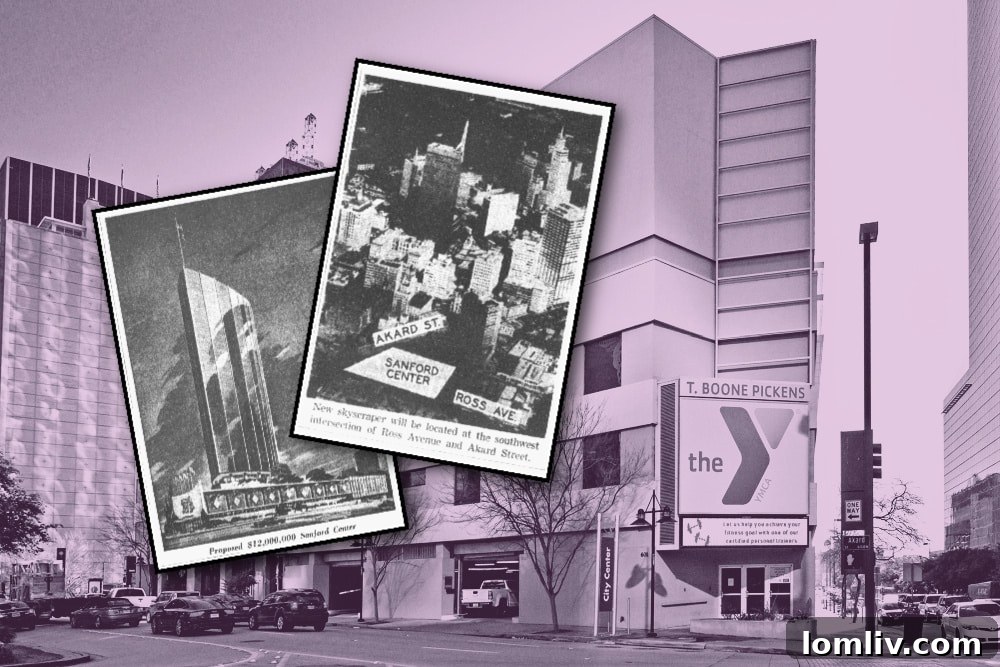
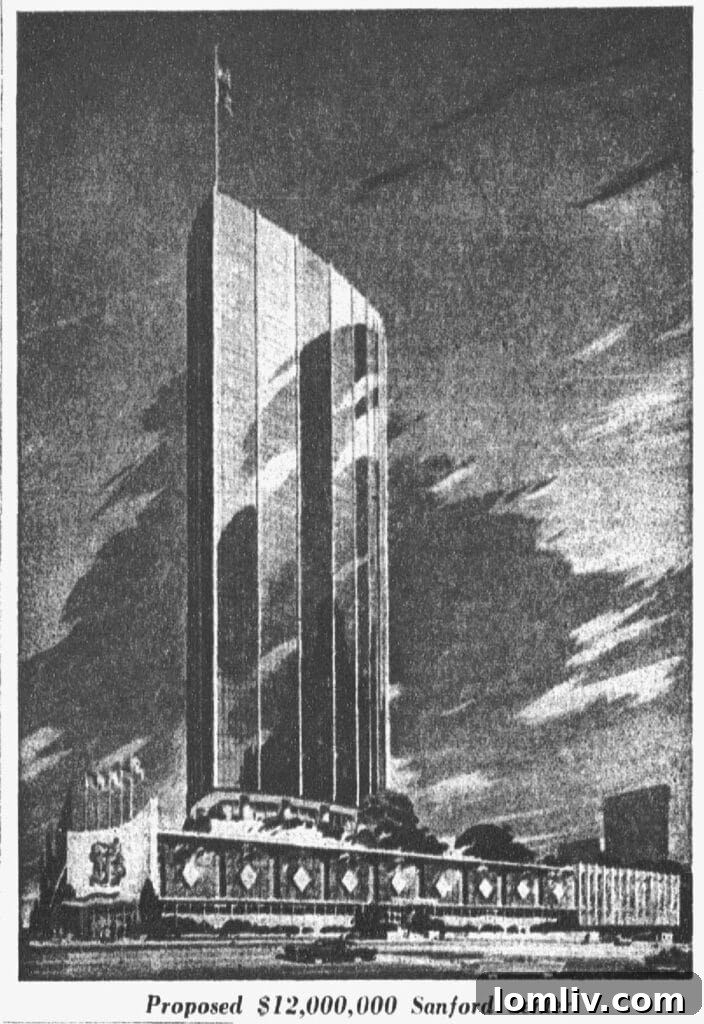
The genesis of the site that would eventually become the downtown YMCA traces back to J. Curtis Sanford’s formidable ambition for a prominent lot located at the bustling intersection of Ross and Akard. Sanford first unveiled his audacious plans for this prime downtown location in 1958, envisioning a transformative project that would reshape the city’s skyline. However, construction didn’t commence until 1961, strategically coinciding with the grand debut of his celebrated Bronco Bowl. The aptly named Sanford Center was a monumental undertaking, projected at a staggering $12 million (a colossal sum for that era), and meticulously designed by the esteemed architectural firm Roper & Vance. The grand scheme detailed a three-story base, robustly planned to accommodate both bustling retail establishments and extensive parking facilities, serving the needs of a dynamic urban center. Ascending majestically from this foundation, the design called for an impressive 26-story luxury apartment and hotel tower, envisioned to offer unparalleled living and hospitality experiences. To crown this architectural marvel, the plans included exquisite roof gardens and a sparkling pool, promising an oasis of luxury amidst the urban sprawl. A striking rendering of this proposed architectural masterpiece, proudly featured in The Dallas Morning News, showcased its innovative and captivating design, hinting at a future that, unfortunately, was never fully realized.
The chosen building site was strategically positioned on one of the most coveted corners within Dallas’s intensely competitive and rapidly expanding development market of the late 1950s and early 1960s. This period represented a golden age of urban renewal and growth in the city, with a flurry of ambitious projects transforming the downtown landscape. Directly across the street to the north, Cary Plaza, another opulent luxury apartment and hotel complex, was already under construction, a development that would eventually evolve into the iconic Fairmont Hotel. Simultaneously, Great Southwestern Life was breaking ground on its cutting-edge new headquarters at the intersection’s northeast corner, a structure that today proudly houses the Fashion Industry Gallery. Adding to this vibrant tapestry of development, the colossal First National Bank tower was beginning its ascent just a block to the south, asserting its dominance in the financial district. Further down Elm Street, the ambitious LTV Tower project was also in full swing, symbolizing the city’s relentless march towards modernity and towering ambition. The environment was ripe with competition, innovation, and an almost insatiable demand for new, grand structures that would define Dallas’s future.
Despite the initial fervor and promising vision, the Sanford Center project encountered an unforeseen obstacle, grinding to an abrupt halt after reaching only its third floor. The precise reasons for this premature cessation remain somewhat shrouded in the mists of history, yet prevailing theories suggest a confluence of factors contributed to its unfortunate demise. It appears that Sanford, perhaps a victim of his own timing, may have inadvertently missed his crucial window of opportunity. The vibrant, “red-hot” Dallas development market, once a boon, had become increasingly saturated, leading to an oversupply of luxury properties. This competitive climate, coupled with a discernible dwindling of investor interest, likely rendered the project financially unviable to continue as initially planned. What was once a soaring dream for a magnificent urban centerpiece ultimately collapsed under its own weight and the shifting sands of economic reality. Consequently, the partially completed structure, a mere skeleton of its intended grandeur, was pragmatically repurposed. The dream of a luxury hotel and apartment complex was dashed, and the property found new life as a public parking garage, with a bank occupying the valuable first-floor space, a stark contrast to its original, opulent aspirations.
From Parking Garage to Downtown Dallas YMCA: A New Chapter
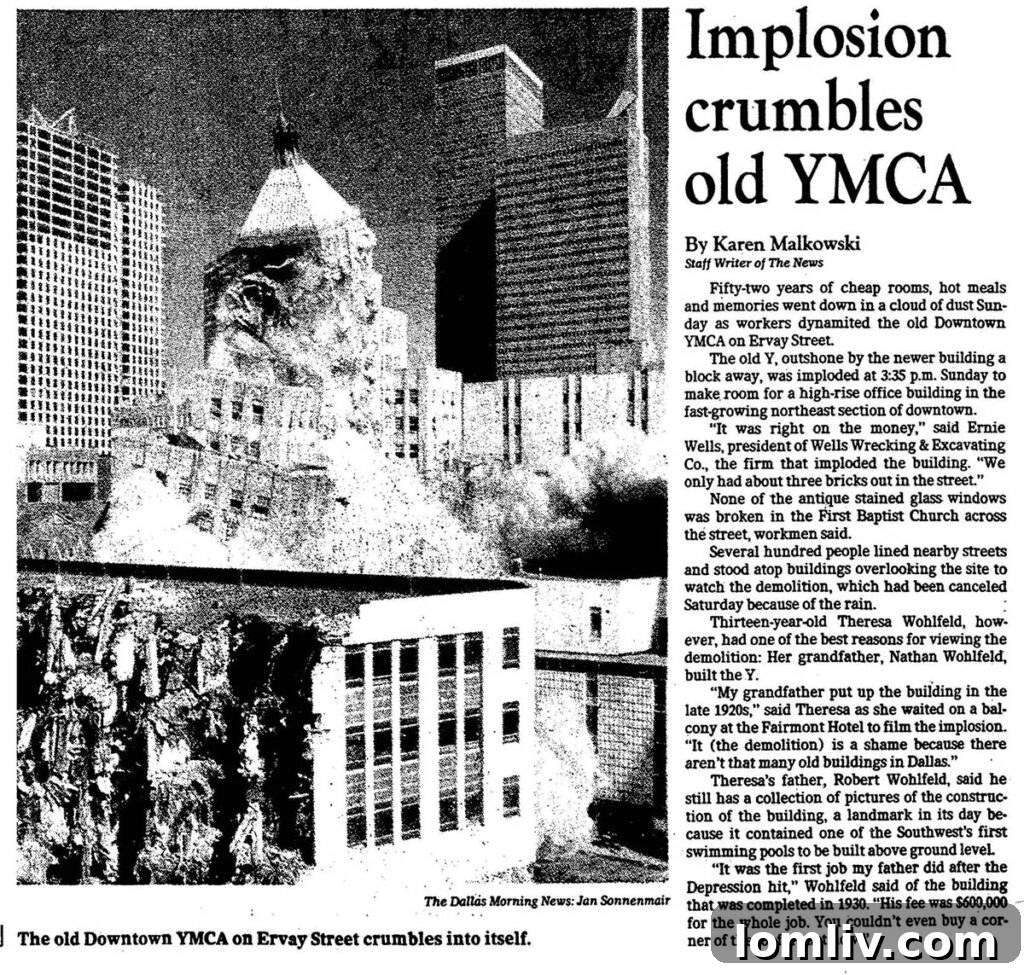
For nearly two decades, the Sanford Parking Garage efficiently served its utilitarian function, quietly standing as a testament to an unfulfilled dream, albeit providing a vital service to downtown Dallas commuters. This chapter of its existence continued until 1980, when a new vision for the property emerged. The YMCA, in a strategic move to revitalize and modernize its presence in the city center, acquired the property. This acquisition marked the beginning of a significant transformation, as the organization commenced construction on what would become its new flagship downtown facility. The inherent structure of the renovated parking garage, with its expansive, open levels, proved surprisingly adaptable. It provided ample and innovative new spaces perfectly suited for a wide array of sports activities and fitness programs, signaling a profound shift in YMCA programming. The traditional offerings, such as free meals and budget accommodations, which characterized earlier YMCA facilities, were phased out, replaced by a modern array of amenities, including a professional retail shop and a contemporary health food bar. This represented a deliberate pivot towards a focus on health, wellness, and community fitness, aligning with evolving societal trends. Meanwhile, the historic YMCA building, a venerable landmark erected in 1930 just up the street, was sold to make way for new development and ultimately met its dramatic end through implosion in 1982, symbolizing the dawn of a new era for the organization.
Thus, the shattered dream of J. Curtis Sanford Sr., a legendary figure in Dallas sports and entrepreneurship, unexpectedly metamorphosed into a vibrant focal point for community sports and wellness activities in the heart of the city. The distinctive, often debated, and undeniably unconventional design of the T. Boone Pickens YMCA downtown is, in essence, a direct architectural echo of its complex lineage: first conceived as a lavish luxury apartment hotel, then adapted into a functional parking garage, and finally repurposed for community betterment. Curtis Sanford’s untimely passing in 1972 at the age of 69 meant he never witnessed this unexpected evolution. Yet, one cannot help but speculate that, despite the radical departure from his initial grand vision, he would have found profound satisfaction in knowing that the Sanford Center, in its unexpected reincarnation, blossomed into a major hub for community sports and health in North Texas. As Dallas continues its relentless journey of growth and transformation, we hold a collective hope that whatever new endeavor eventually emerges on this historically rich site will not only pay fitting tribute to Sanford’s original ambitious dream but also honor the layered history and resilient spirit of urban development that defines this remarkable city.