Door.com’s Strategic Realignment: Halting National Expansion and Reigniting Focus on Texas
The real estate brokerage world is constantly evolving, with disruptors frequently challenging traditional models. Door.com, once a vanguard of the flat-fee brokerage movement, is now charting a new course. After an ambitious national expansion plan encountered unexpected headwinds, the company is undergoing a significant strategic pivot, refocusing its operations squarely on the vibrant Texas market and implementing a leaner operational structure. This shift comes on the heels of recent layoffs and a critical funding round that failed to materialize, prompting a necessary reevaluation of its growth trajectory.
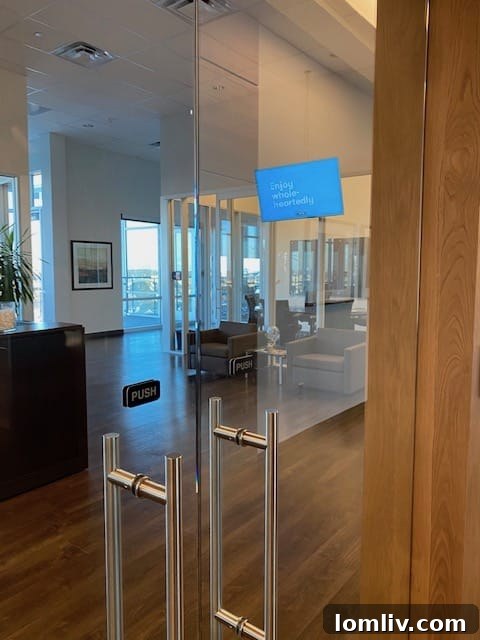
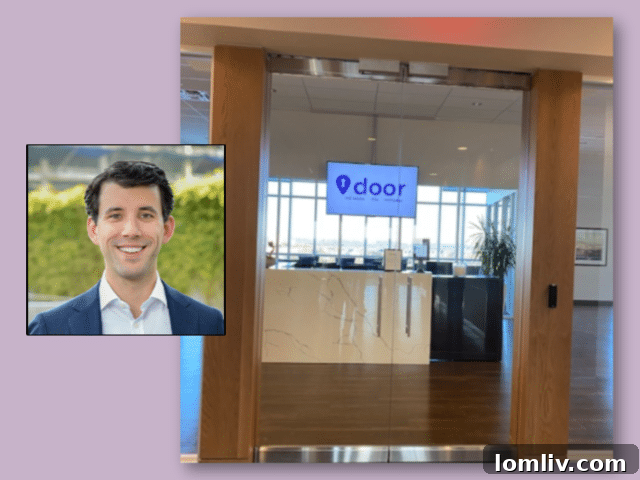
The murmurs of change began before the holidays, leading to on-the-ground investigations at Door.com’s Dallas offices at 12570 Dallas Parkway. These rumors culminated in confirmations that the company, known for its innovative approach to real estate commissions, was indeed reducing its workforce. Following initial reports, Door.com CEO Alex Doubet publicly addressed the situation, confirming to the Dallas Business Journal’s Bill Hethcock that 34 employees, predominantly agents, had been laid off from its expansive 34,000 square-foot Dallas headquarters. Doubet emphasized that no further layoffs were anticipated, but more critically, the firm’s once-aggressive plans for nationwide expansion were officially on hold.
A primary catalyst for the layoffs was the unfortunate collapse of a targeted $20 million to $30 million funding round last month, Doubet disclosed. “We did lay some people off, which is truly unfortunate,” Doubet stated. “We had been actively working on a national expansion, but we simply couldn’t solidify a sustainable cost structure for it. This necessitated a right-sizing of our employee cost structure, which meant letting go of good people – an always regrettable decision.”
This revelation marked a stark departure from previous declarations. As recently as October, Doubet had conveyed to the Business Journal his audacious vision of Door.com operating in all 50 states by mid-2020. At that time, when questioned by Hethcock about the staffing requirements for such rapid expansion, Doubet had offered a now-familiar refrain: Door.com “leverage(s) technology to make our agents significantly more efficient than the average agent. That’s precisely why we are able to charge so much less.” This emphasis on technological efficiency as a substitute for a larger headcount was central to their initial growth strategy.
“As efficiencies have markedly increased, our agents are now capable of handling a greater volume of transactions,” he had commented then. “The most accurate answer I can provide is that, without a doubt, we will continue to add more people as needed, but simultaneously, we are pushing exceptionally hard on the product development side to continuously enhance our employees’ efficiency and productivity.”
The abrupt halt to national ambitions underscores the inherent challenges faced by disruptive models in the highly competitive and capital-intensive real estate sector, particularly when relying heavily on successive rounds of venture capital. The inability to secure the crucial $20-30 million funding, as conveyed to Doubet in December, forced an immediate and decisive recalibration of the company’s trajectory.
CEO’s Personal Journey and Company’s Path Forward
In a more personal revelation, CEO Alex Doubet recently shared insights into both Door.com’s future and his own. During a conversation initiated from a bachelor party in Aspen, Doubet shed light on his unexpected incommunicado period in December. His absence was attributed to a trip to Russia, which also led to a joyful personal milestone: his engagement to a compassionate NICU physician from Oklahoma. The couple is set to exchange vows in November, adding a heartwarming personal chapter amidst the significant corporate shifts.
Correcting earlier reports, Doubet clarified that the 34 individuals laid off were primarily personnel whose roles were tied to the now-suspended national expansion initiatives. Moving forward, Door.com is fully committed to concentrating its efforts on selling and servicing real estate exclusively within Texas. “January is looking promising for us,” he confidently stated, signaling a renewed optimism despite the recent restructuring.
When questioned about the company’s current inventory, Doubet noted that Door.com maintains approximately 200 listings across the U.S., with the vast majority now concentrated within Texas. This geographical focus is not merely strategic but also logistical. The company is actively seeking to relocate from its current 34,000 square-foot office space at 12570 Dallas Parkway. “The space is simply too large for our current and projected needs,” he explained. While a new location hasn’t been finalized, it will likely remain within the same Dallas area, indicating a commitment to the region even as the physical footprint shrinks.
The Flat-Fee Model: A Constant Challenge and Evolution
Door.com’s business model hinges on a flat $5,000 commission fee per home sale, a stark contrast to traditional percentage-based commissions. This model, combined with paying agents a salary netting north of $50,000 annually, alongside significant overhead, marketing, and standard real estate operational costs, has long invited scrutiny regarding its profitability. During a previous appearance on a Disruption panel for the Dallas Builder’s Association, the critical question was posed: “How do you make money with this model?”
“I remain deeply passionate about helping people save money when they sell their homes, a mission we’ve successfully championed,” Doubet reiterated. “Our unwavering focus is on providing a superior experience for consumers, 100% of the time. Our formula consistently delivers substantial savings for sellers, particularly on high-value properties like a million-dollar home.” Despite this conviction, Doubet hinted at potential adjustments to parts of his business model, urging observers to “stay tuned.” This suggests an ongoing refinement of their strategy to ensure long-term viability and profitability within the competitive Texas real estate landscape.
Industry Perspectives on Door.com’s Contraction
The news of Door.com’s strategic contraction has elicited a range of reactions from local brokers and agents, offering a glimpse into the broader industry sentiment concerning real estate disruptors and their reliance on venture capital. Chris Kelly of Ebby’s expressed a sentiment shared by many: “We are always saddened when a door closes on our fellow real estate professionals. Unfortunately, it’s all too often the case when companies become overly dependent on the next round of venture capital to sustain operations and growth.” This perspective highlights the inherent fragility of models that prioritize rapid scaling through external investment over immediate profitability.
Echoing a more critical stance, Kyle Rovinsky of Coldwell Banker, one of the first agents to alert reporters to the layoffs, recalled his earlier predictions: “Anyone can sell houses in a bull market. I made that observation back when they first launched in 2015. However, when the market inevitably shifts or faces headwinds, these types of firms will find it incredibly challenging to remain in business.” Rovinsky’s comments underscore a fundamental debate within the industry: whether tech-driven, low-commission models can weather economic downturns as effectively as more traditional, relationship-based brokerages.
The recent developments at Door.com serve as a potent case study in the dynamic and often tumultuous world of real estate technology. It highlights the delicate balance between innovation, aggressive growth, financial sustainability, and market realities. As Door.com embarks on this new, more focused chapter in Texas, the industry will undoubtedly be watching to see how its refined model performs and if its commitment to consumer savings can thrive amidst the ongoing evolution of the real estate market. We encourage readers to share their reactions and thoughts in the comments section below, contributing to this important discussion.