The Heated Battle for Texas House District 115: Politics, Property, and Power
Texas House District 115, a crucial electoral battleground encompassing the dynamic communities of Addison, Coppell, Carrollton, Farmers Branch, and Irving in northwest Dallas County, is currently experiencing one of the state’s most fiercely contested political races. This election is not merely a clash of personalities but a vibrant nexus where local real estate developments intersect with significant state-level policy debates, captivating political observers and constituents alike.
The Contenders: Republican Incumbent Matt Rinaldi vs. Democratic Challenger Julie Johnson

The race pits Republican incumbent Matt Rinaldi against his determined Democratic challenger, Julie Johnson. Both candidates are strong contenders, and their campaigns have ignited passionate discourse among the diverse electorate of District 115. The stakes are exceptionally high, reflecting the ongoing political shifts and demographic evolution within suburban Dallas County, making this district a bellwether for broader statewide trends.
Diving into Controversies: Rinaldi’s 2017 Session Actions
A significant point of contention and a primary source of criticism leveled against Representative Rinaldi by Julie Johnson centers on his actions during the tumultuous final day of the 2017 legislative session. This day was marked by fervent protests against the “sanctuary cities ban,” a highly divisive piece of legislation known as Senate Bill 4, which Rinaldi vocally championed. Pro-immigrant demonstrators gathered in the Texas House gallery, leading to a dramatic and widely reported confrontation.
Johnson and other lawmakers have alleged that Rinaldi approached Democratic Representatives Ramon Romero of Fort Worth and Poncho Nevárez of Eagle Pass, informing them that he had contacted U.S. Immigration and Customs Enforcement (ICE) in response to the protesters. This claim reportedly escalated into a heated altercation between Nevárez and Rinaldi. While Rinaldi has publicly acknowledged contacting immigration authorities regarding the protesters and admitted to threatening a fellow House member, he maintains that he did not initiate the fracas. He asserts his actions were solely in defense of himself and his then-pregnant wife, who was also present at the Capitol. This incident has been consistently highlighted by Johnson as evidence of Rinaldi’s divisive tactics, becoming a central theme in their campaign and embodying a wider debate over immigration policy, legislative conduct, and decorum within the Texas legislature.
The Residency Question: A Key Campaign Battleground

Beyond policy disagreements, the political sparring in District 115 has veered into personal territory, particularly concerning the candidates’ legal residency within the district’s boundaries. Incumbent Rinaldi has publicly questioned Johnson’s eligibility to represent the area, suggesting her move into the district was strategically timed to challenge his seat. Johnson, in turn, has raised similar inquiries about Rinaldi’s residency. During a televised political debate on WFAA-TV, Johnson affirmed her residence in an apartment located in Addison. However, Rinaldi expresses skepticism, citing a homestead exemption linked to a $1.7 million home owned by Johnson in Preston Hollow, a neighborhood situated outside the district.
“Nobody believes Ms. Johnson lives in her little apartment in Addison and not her $1.7 million [home] in Preston Hollow,” Rinaldi declared during his campaign. He emphasized that the homestead exemption, typically reserved for one’s primary residence, applied to a property beyond the geographical limits of House District 115. This point, according to Rinaldi, casts doubt on Johnson’s genuine commitment to the constituents of the district she aims to serve, positioning it as a significant integrity issue.
Responding to these claims, The Dallas Morning News, which ultimately endorsed Johnson over Rinaldi, clarified that the $1.7 million homestead exemption was indeed for 2017 property taxes. This explanation aimed to underscore that the exemption pertained to a previous tax period and did not necessarily contradict her current declared primary residence. While this clarification sought to address the timeline of the exemption, the issue of residency has remained a persistent and often heated topic throughout the campaign, underscoring the intense scrutiny candidates face in highly competitive electoral contests.
Julie Johnson’s Farmers Branch Investment: Urban Renewal and Political Optics
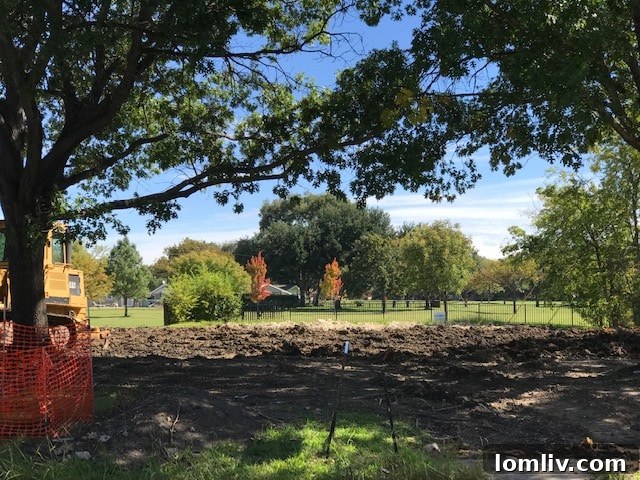
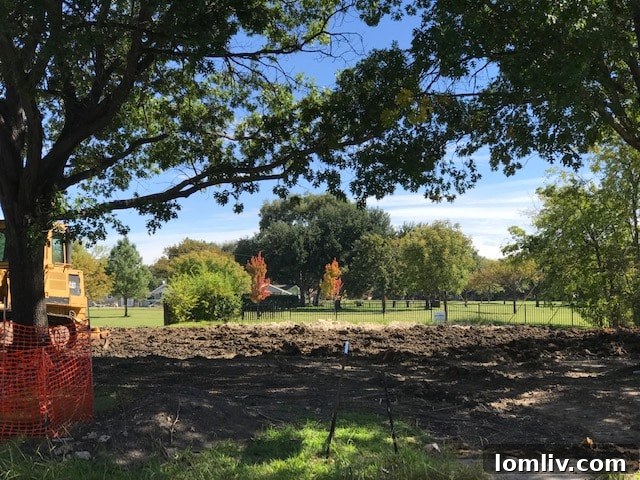
Adding another intriguing layer to the election’s real estate dimension, Julie Johnson has since acquired a property in Farmers Branch. Located at 3441 Golfing Green Drive, the site is just a few homes away from the prestigious Brookhaven Country Club. This strategic acquisition signifies a tangible and evolving connection to the district. Johnson and her partner are currently engaged in the construction of a new home on the previously razed property, a process that is fully transparent and documented as public record on the Dallas Central Appraisal District (DCAD) website, ensuring public access to property details and development plans.
Understanding the Farmers Branch Demolition/Rebuild Program
Further examination of this property transaction revealed Johnson’s participation in the City of Farmers Branch’s innovative demolition/rebuild incentive program. This forward-thinking initiative is specifically designed to spur urban revitalization by providing homeowners and builders with a tiered system of cash grants and valuable property tax incentives. The program’s core objective is to encourage the replacement of older, often outdated or underutilized homes with new, modern, and higher-valued real estate. This not only enhances the city’s housing stock and aesthetic appeal but also significantly boosts its property tax base. For participants such as Johnson, engaging in this program represents a shrewd financial strategy, aligning personal investment with community development goals.
Johnson’s confirmed involvement in this program is widely regarded as a fiscally astute decision, demonstrating a keen awareness of investment opportunities. Her property, initially valued at $175,000, is set to become the site of a new residence potentially worth triple that amount, benefiting from its desirable location directly on the golf course. With Tom Cusick overseeing the construction, the successful completion of this project could serve as a powerful exemplar for the Farmers Branch building incentive program, particularly if Johnson is victorious in the upcoming election. This initiative underscores a pragmatic approach to real estate development that merges personal gain with broader community benefit and urban renewal.
The Texas Property Tax Debate: A Central Point of Contention
The intersection of Julie Johnson’s personal real estate endeavors and her articulated political platform on property taxes has sparked a compelling, albeit sometimes controversial, discussion regarding perceived inconsistencies. Texas’s property tax system is famously intricate and often imposes a considerable financial burden on homeowners, primarily because it serves as the foundational funding mechanism for local public schools and vital municipal services. Consequently, property tax reform remains a perennial hot-button issue in state politics, and its significance is profoundly evident in the competitive race for Texas House District 115.
Johnson’s Stance on Property Taxes: Advocacy for Local Control
Julie Johnson has clearly outlined her main legislative priority: to bolster funding for public education. To achieve this, she advocates for the state to assume a greater financial responsibility for public schools, thereby alleviating the heavy reliance on local property taxes. Critically, Johnson has expressed firm opposition to any state-imposed caps on property taxes. She staunchly believes that local taxing authorities must maintain essential local control over their budgets. Her argument is predicated on the understanding that cities experience varied rates of population growth, necessitating the flexibility to increase budgets to adequately accommodate new residents and their escalating demands for public services.
“Cities are having rapid population growth at different rates and so their budgets are increasing by virtue of more people being there,” Johnson explained, articulating her position. “To put these arbitrary caps like this 2.6 percent that he wants to do is unreasonable, which is why I have so much support from the mayors of the cities in this district.” Her argument strongly underscores the unique challenges and opportunities faced by individual municipalities, advocating against a uniform, one-size-fits-all approach to complex tax policy.
The Perceived Paradox: Incentive Program Participation vs. Tax Cap Opposition
Herein lies the core of the perceived paradox that has drawn considerable attention. By actively participating in the Farmers Branch incentive program, Johnson and her partner will receive a direct building rebate and, notably, benefit from *lower property taxes for a period of several years specifically on the house improvement portion of their city taxes*. While this personal financial benefit is entirely legal and a sound fiscal decision, it creates a point of friction when juxtaposed with her public stance. She advocates strenuously against state-imposed property tax caps and champions the right of local authorities to raise taxes as needed to fund essential public services. Critics might argue that while she supports the principle of local control for others to potentially increase taxes, her personal actions directly benefit from a program designed to reduce her own local tax burden for a specified duration.
Rinaldi’s Vision for Property Tax Reform
In sharp contrast to Johnson’s position, Matt Rinaldi champions a distinctly different philosophy regarding property tax reform. He is a vocal proponent of empowering voters with the explicit right to veto any proposed property tax increase that exceeds a 2.5 percent threshold. Supporters of Rinaldi’s proposal argue that such stringent caps would provide much-needed financial relief to homeowners grappling with escalating property values and soaring tax bills. Furthermore, they contend that these caps would foster greater accountability from local governments, potentially compelling them to streamline operations, curb wasteful spending, and potentially even reduce instances of corruption. Conversely, opponents of Rinaldi’s proposal warn that such restrictive caps could severely hamstring local municipalities, depriving them of the necessary resources to adequately fund essential services, including public safety, critical infrastructure maintenance, and, most notably, public education, thereby risking a decline in the overall quality of life within these communities.
Broader Implications for Voters and North Texas
The intense competition for Texas House District 115 transcends a mere contest between two political figures; it serves as a powerful microcosm of the larger political and socio-economic forces actively shaping North Texas and the state at large. The array of issues at the forefront—ranging from contentious immigration policy and legislative conduct to fundamental property rights, strategic urban development, and nuanced local governance—resonate deeply with a broad spectrum of voters. The outcome of this particular race carries significant weight, as it could substantially influence the legislative agenda, potentially alter the balance of power within the Texas House, and crucially, reflect the evolving political landscape of traditionally conservative suburban areas now experiencing profound demographic and ideological shifts.
Voters across Addison, Coppell, Carrollton, Farmers Branch, and Irving are faced with the complex task of evaluating not only the candidates’ stated policy platforms but also their personal actions and perceived integrity. The ongoing residency debate directly addresses authenticity and commitment to the district, while the property tax discussion vividly highlights the intricate interplay between personal financial incentives and broader public policy advocacy. The undeniable intensity of this race suggests that every minute detail, every public stance, and every perceived contradiction will be meticulously scrutinized by the electorate right up until election day, making it a truly pivotal contest.
Conclusion: A Race Defined by Local Issues and State Politics
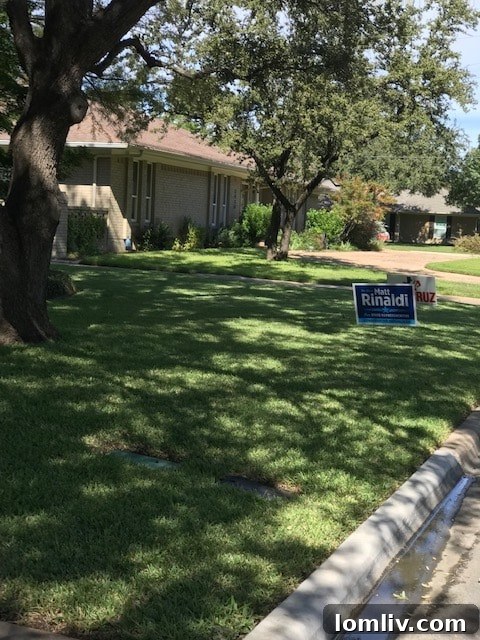
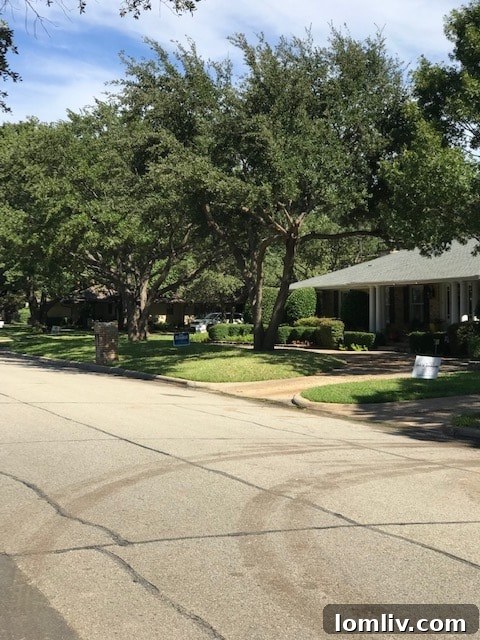
As the campaign for Texas House District 115 approaches its climax, the compelling blend of state-level policy debates, personal controversies, and local real estate dynamics continues to shape its narrative. The candidacies of Matt Rinaldi and Julie Johnson offer the constituents of this vibrant district distinct choices on a multitude of critical issues that directly impact their daily lives and the future trajectory of their communities. The political atmosphere is palpably charged, a sentiment visibly reflected even in Johnson’s new neighborhood, where signs supporting Rinaldi are conspicuously displayed in the front yards of some neighbors. This striking visual serves as a poignant reminder that, even amidst individual development and localized community improvements, the political battle for Texas House District 115 remains deeply entrenched and fiercely contested, promising an election result that is sure to command significant statewide attention.