Is Dallas Mirroring Los Angeles? Unpacking DFW’s Accelerating Housing Affordability Crisis
For years, real estate analysts and local residents have watched with growing concern as the Dallas-Fort Worth metroplex experiences explosive growth. This expansion, while a testament to the region’s economic vitality, has brought an uncomfortable question to the forefront: Is Dallas on a trajectory to become as unaffordable as Los Angeles? This isn’t a new observation for those closely tracking the market, but the mainstream media is finally catching wind of the pungent scent of real estate smelling salts, signaling a deepening crisis for a crucial demographic: first-time homebuyers.
The dream of homeownership, particularly for young professionals and families who aren’t receiving substantial down payment assistance from relatives, appears increasingly out of reach. For many, finding an affordable entry-level home in the Dallas-Fort Worth area is becoming a Sisyphean task, a challenge that, without significant market shifts or policy interventions, might continue indefinitely.
DFW’s Housing Boom: A Closer Look at Growth and Disparity
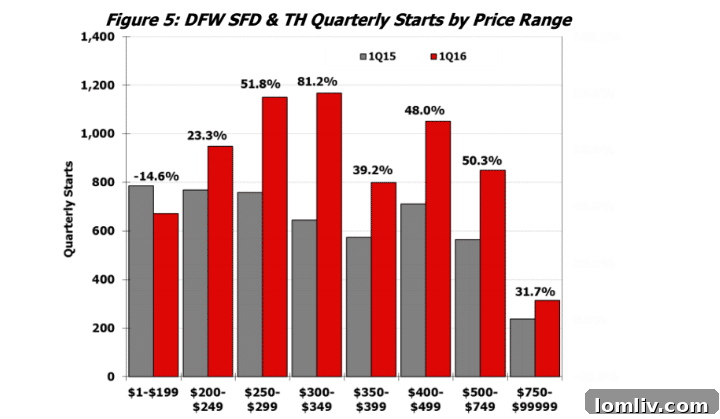
Recent data underscores the incredible pace of development in the DFW metro area. According to Metrostudy’s comprehensive 2016 first-quarter survey, homebuilding in the region is experiencing a veritable boom. New home starts during the first quarter surged by more than 39% compared to the previous year, an impressive figure by any standard. This robust activity suggests a vibrant construction industry responding to high demand.
However, beneath the surface of these encouraging numbers lies a stark reality: virtually none of these newly constructed homes are priced at an affordable entry-level for the average buyer. This disconnect is creating a widening gap between what’s being built and what a significant portion of the population can actually afford, fueling the narrative of an emerging affordability crisis in one of the nation’s fastest-growing regions.
The Los Angeles Warning: A Glimpse into Dallas’s Potential Future
To understand the potential implications for Dallas, one need only glance westward at the Los Angeles housing market. For years, LA has epitomized the challenges of an overheated real estate market, where homeownership is often a distant dream for many. In Los Angeles, the median price for single-family homes and condominiums in prime areas had already climbed to a staggering $1.035 million by early 2016.
With the median LA County home topping half a million dollars, it sometimes feels like all of Los Angeles is the luxury market, but when we focus on just the fancy parts of town, the numbers get even wilder. All the rich people parts of town had a great first quarter of 2016 in terms of home sales. The median price for single-family houses and condos in what the report calls Greater LA saw a record for the fourth consecutive quarter—a heartstopping $1.035 million—and enjoyed their 15th quarter in a row with a year-over-year rise, says a new quarterly report out from Douglas Elliman. (In the report, Greater LA applies to the high-end areas of the region, like the Westside and coastal cities including Malibu, plus Downtown, but leaves out lower-priced areas like South LA. The full list of communities included is here.)
This quote vividly illustrates a market where “luxury” has become the norm, even in areas once considered more accessible. The consistent year-over-year rise in median prices, particularly in “Greater LA” (which strategically excludes lower-priced areas to highlight the high-end trend), paints a picture of a market catering almost exclusively to affluent buyers. If Dallas continues its current trajectory, prioritizing high-end builds and seeing entry-level options vanish, it risks replicating LA’s extreme imbalance, pushing essential workers, young families, and the middle class out of the homeownership market entirely.
The Disappearing Entry-Level Home: A Crisis for First-Time Buyers
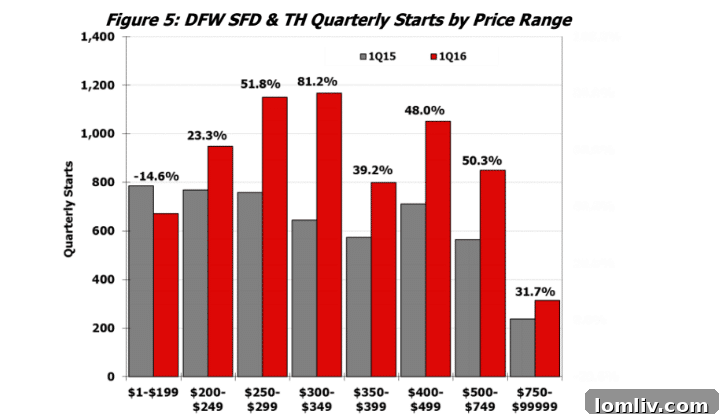
While the DFW area saw 7,015 new home starts in the first quarter of 2016, a healthy 39.1% increase from the same period in 2015, this growth is not translating into relief for the most vulnerable segments of the market. It’s true that the previous year’s severe spring weather, marked by ice and relentless rains, significantly hampered home construction, making the 2016 rebound seem even more dramatic. However, this surge in construction is overwhelmingly concentrated in pricier brackets, or designed with downsizing Baby Boomers in mind, rather than aspiring Millennials or cash-strapped first-time homebuyers.
The bulk of new housing starts are priced far beyond the reach of these demographics. “First-quarter starts data presents further evidence of Dallas-Ft. Worth’s market shift in price,” explained Paige Shipp, regional director of Metrostudy’s Dallas office. “Historically, most of DFW’s starts and closings occurred below $200,000. The new normal reflects a meteoric rise in starts above $200,000.”
This “meteoric rise” is evident in the numbers: housing starts priced between $300,000 and $349,999 surged by an astonishing 81.2%. Concurrently, home starts below $200,000 plummeted by 14.6% from the previous year, with closings in this crucial affordability bracket collapsing by a staggering 31%. These figures paint a grim picture for those seeking an affordable entry point into the market.
The outlook for new homes priced under $200,000 remains bleak. The primary culprits, according to industry experts, are rapidly escalating land and material costs. “Due to rapidly rising land and development costs, developers argue there is little hope for the revival of the sub-$200,000 new-home market,” Shipp stated. “This will remain an issue until municipalities, developers and builders understand and deliver higher-density lots and smaller homes to the market.”
Consequently, buyers searching for affordable new homes in the DFW area find themselves largely out of luck. Builders are naturally catering to the price points where demand (and crucially, profit margins) are highest, primarily in the $250,000 to $400,000 range. The Metrostudy report further confirms this trend, revealing that 31.6% of all new housing starts are occurring above the $400,000 threshold. This strategic focus on higher-priced homes allows builders to maximize their returns, a business imperative that unfortunately exacerbates the affordability challenge for others.
The numbers further reinforce this trend: homes slated to be priced between $250,000 and $299,999 saw a significant 51.8% year-over-year increase in the first quarter, while those in the $300,000 to $349,999 range jumped by an even more dramatic 81.2% from the previous year.
Rising Costs and the Search for Solutions
The challenges faced by builders are also contributing to the upward pressure on prices. “For the first three months of the year, builders and developers report that prices are stable but anticipate an increase in the cost of concrete in April,” Shipp noted. If builders cannot effectively pass these rising material costs onto buyers, their profit margins will inevitably shrink. This economic reality means that as land, development, labor, and material costs continue their upward climb, ushering young people into homeownership becomes an increasingly difficult task.
According to Shipp, the only viable long-term solution to this predicament lies in altering construction models: “Land prices, development costs, fees and home-building costs cannot be controlled. The only way to provide new homes below $300k will be by increasing home density and decreasing home square footage.” This paradigm shift towards more compact living spaces and higher-density developments is crucial for creating a more accessible housing market. Without such changes, the average price of a home in DFW will continue its relentless climb, making the prospect of homeownership a distant dream for many.
The consequences of this trend extend beyond individual aspirations. As affordable housing moves further away from the urban core, buyers are left with little choice but to endure increasingly lengthy commutes, especially if their jobs are located downtown. This not only impacts quality of life but also contributes to traffic congestion and environmental concerns, creating a ripple effect across the entire metroplex.
Hollywood Heights: A Microcosm of Dallas’s Affordability Shift
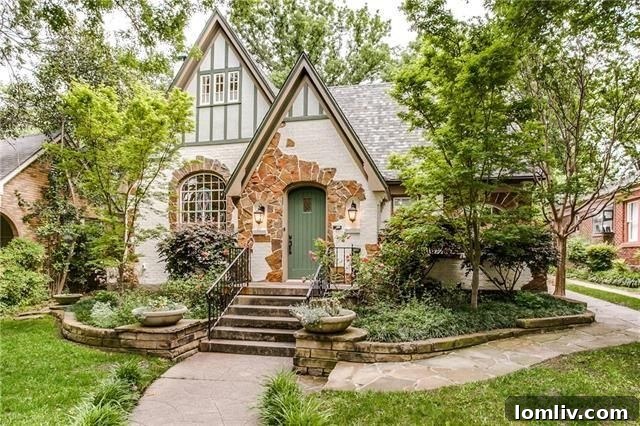
The inner-core neighborhoods of Dallas, once celebrated for their charm and relative affordability, are now experiencing this price surge firsthand. For Millennials who crave the vibrancy and convenience of urban living, these areas are becoming increasingly unattainable. Consider the example of 6934 Hammond Avenue in Hollywood Heights, a property recently listed for a staggering $869,000. This is in a neighborhood where the average home price hovers around $399,000, illustrating a significant leap in value for specific, highly desirable properties.
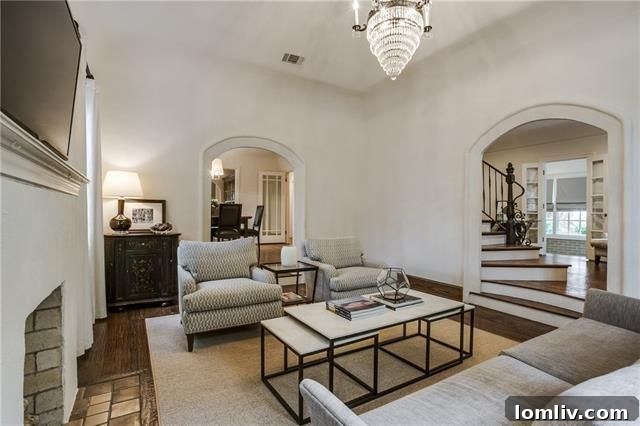
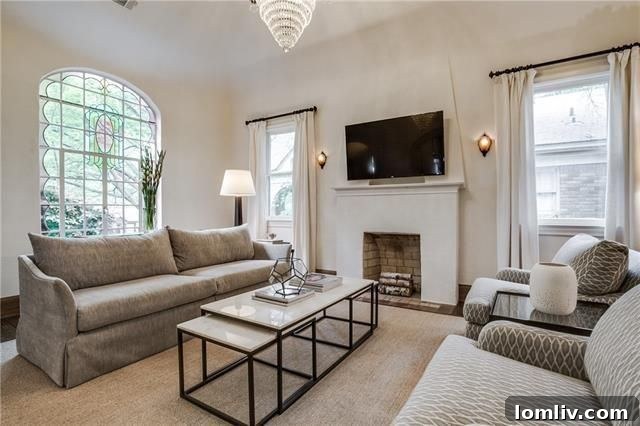
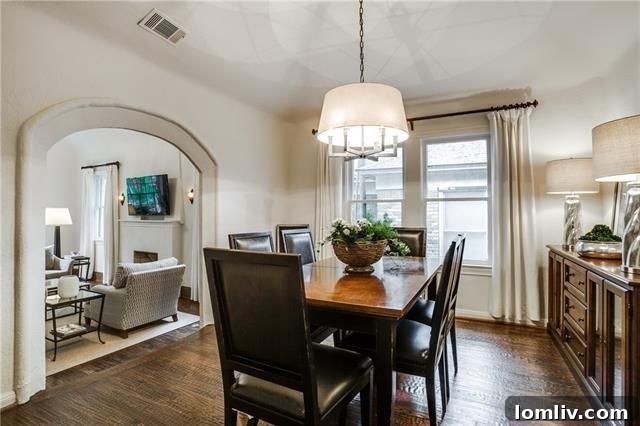
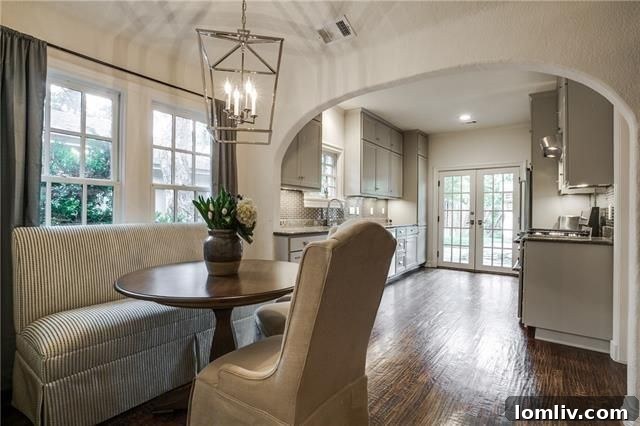
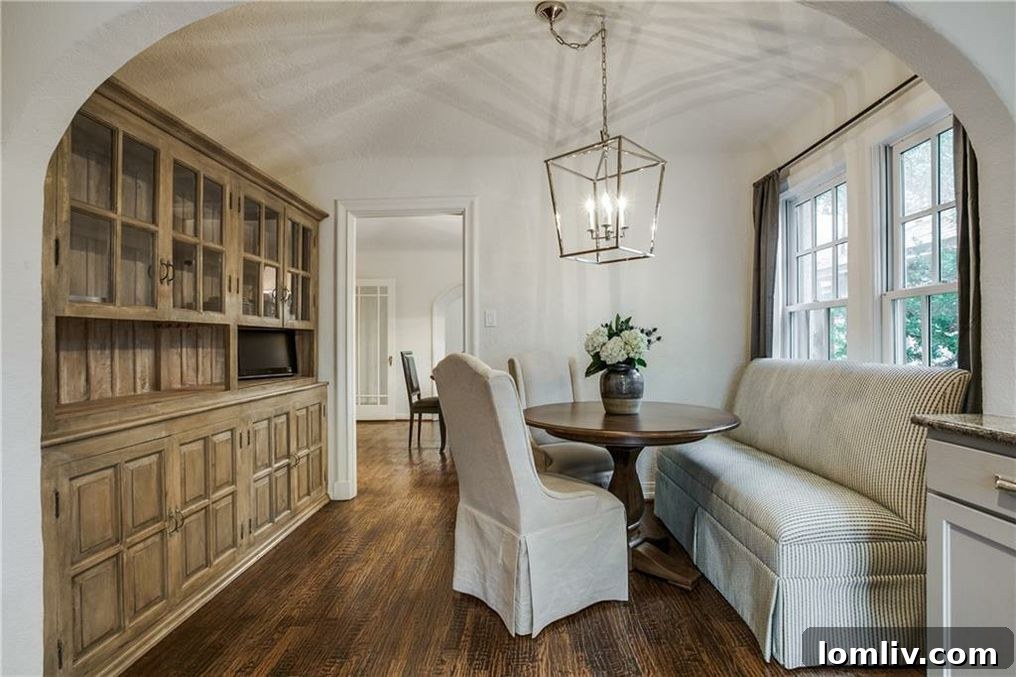
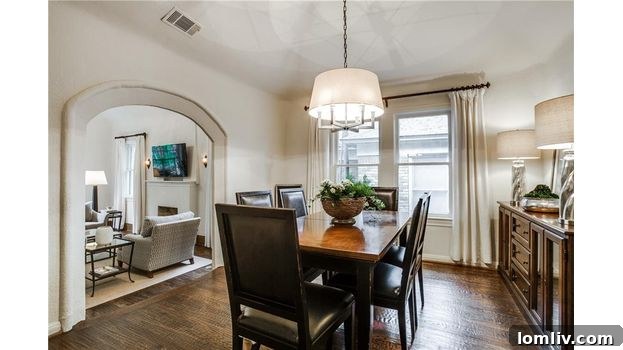
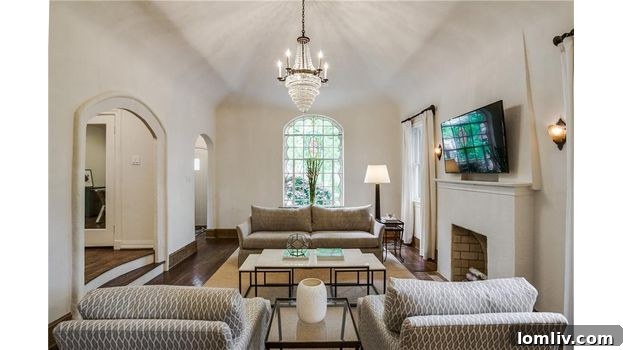
This particular property offers a substantial 3,185 square feet, featuring five bedrooms and three full baths, and is zoned for the highly-rated Lakewood Elementary. It has been meticulously updated to perfection, yet gracefully retains the inherent charm and character of the Hollywood Heights neighborhood. The flexible floor plan allows for a master suite either upstairs or downstairs, and an attic conversion contributes to the expansive living space. All bathrooms have been exquisitely updated with Ann Sacks tile and Carrera marble, and the kitchen boasts a complete, modern renovation. While it is undoubtedly a magnificent property, its price point in a traditionally more accessible neighborhood serves as a significant market indicator, pushing the “inside-the-loop” needle ever higher.
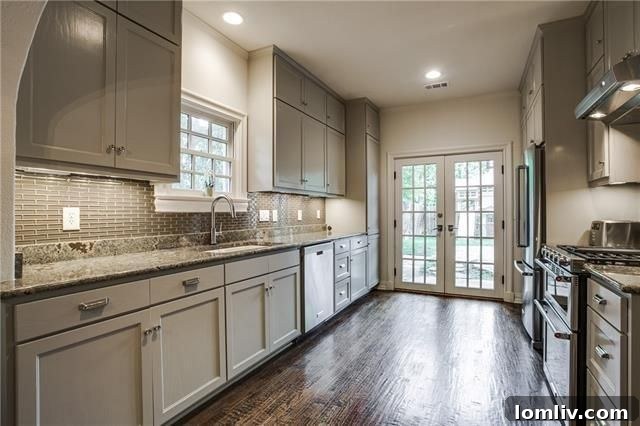
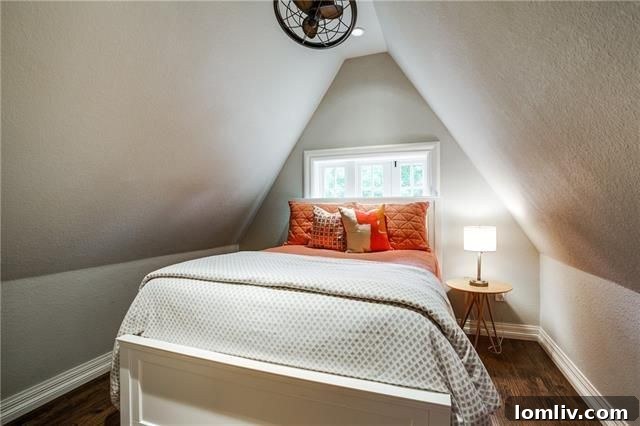
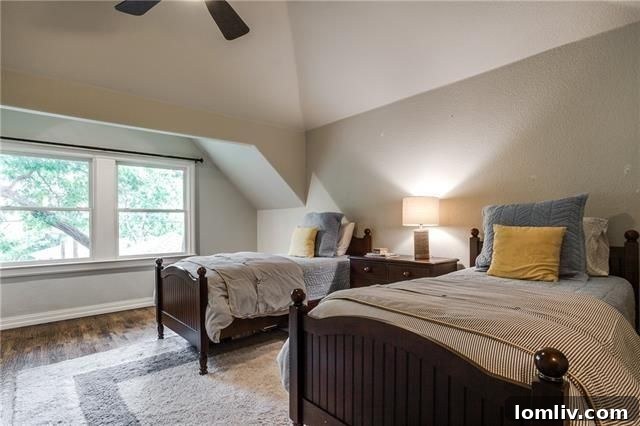
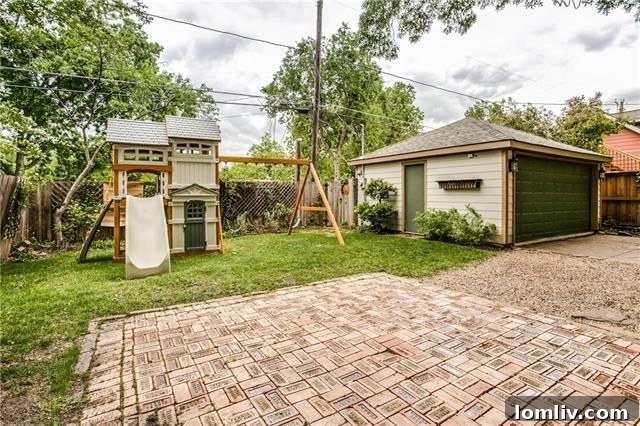
This property, listed with Dave Perry-Miller’s Julie Boren, stands as a testament to the changing face of Dallas real estate. It’s a clear signal that even historically mid-range neighborhoods are now commanding prices that reflect a luxury market, pushing them further from the reach of average income earners.