Dallas-Fort Worth Real Estate: Decoding the Market’s Dynamic Pulse
The Dallas-Fort Worth (DFW) metropolitan area remains a powerful economic engine and a vibrant hub for real estate activity. Yet, the narrative surrounding its housing market can often feel contradictory. Real estate professionals, often recounting tales over cocktails, might describe the current buying and selling climate as a “bloodsport” – a fierce arena of multiple offers, rapid sales, and intense competition. Conversely, national market analyses sometimes suggest a trend towards stabilization, indicating a potential cooling from the frenzied pace of previous years. Discerning the true state of the DFW market requires looking beyond anecdotal evidence and diving into the nuanced interplay of local dynamics, national trends, and the powerful economic forces at play in one of America’s fastest-growing regions.
Unpacking DFW’s Market Metrics: Is It Slowing, Stabilizing, or Still Scorching?
To gain a clearer perspective on the Dallas real estate market, it’s essential to examine the most recent data from reputable sources. These figures offer valuable insights into buyer demand, pricing trends, and the overall pace of sales across the metroplex.
Dallas Leads National Search Rankings for Real Estate
According to the latest reports from Realtor.com, Dallas consistently ranks as one of the most heavily searched cities on its platform, often securing the No. 2 spot nationally, just behind major urban centers like Chicago. This sustained high search volume is a critical indicator of robust, ongoing buyer interest. It signifies that a considerable number of prospective homeowners, both local and those relocating from other states, view Dallas as a highly desirable place to live. This continuous influx of potential buyers helps maintain strong underlying demand within the DFW housing market.
Analyzing Listing Price Trends and Market Pace
While demand remains high, other metrics paint a more intricate picture. Recent data shows the median listing price in Dallas climbing 1.91 percent year-over-year, reaching approximately $219,000. This figure positions Dallas’s median listing price well above the national median of $199,000, reflecting its strong economic fundamentals and desirability. However, a notable shift has occurred in the median age of listings, which has now surpassed the two-month mark. This represents a substantial 43.75 percent increase from the previous year, suggesting that homes are, on average, taking longer to sell.
A similar pattern is observed in Fort Worth, where the median listing price rose by 2.94 percent year-over-year to $174,900. The median market age in Fort Worth stands at 73 days, marking a 35.19 percent increase compared to the previous year. These statistics raise crucial questions: Is the market genuinely slowing down, or is it merely entering a period of healthy stabilization after years of unprecedented acceleration? Could it be that buyer behavior is becoming more discerning, leading to longer market times for homes that aren’t perfectly priced or presented?
Dallas: A Nationally Recognized Fast-Moving Market Segment
Adding another dimension to this market analysis, data from Redfin identifies Dallas as the fifth fastest-moving real estate market in the nation. A remarkable 14.4 percent of listings are reported to be “flying off the MLS” within three days or fewer. This places Dallas in the company of other hyper-competitive markets such as Denver, Austin, Seattle, and Portland, Oregon. This seemingly contradictory trend – longer overall listing times alongside rapid sales for a significant percentage of properties – underscores a critical truth about DFW real estate: it’s not a monolithic entity.
This duality implies that while some properties might linger on the market as buyers exercise more caution or negotiation power, highly desirable homes – typically those that are well-priced, in excellent condition, and located in prime areas – continue to attract immediate, aggressive offers. Buyers in these competitive segments must still be prepared for swift decisions and strong competition, reminiscent of the “bloodsport” narrative. For other segments, a more balanced environment may be emerging, offering buyers a bit more breathing room and negotiation leverage.
The Hyper-Local Truth: Dallas Real Estate is a Mosaic of Micro-Markets
One of the most profound and essential understandings for anyone engaging with the DFW real estate scene is this: there is no single “Dallas” real estate market. This concept is not an abstract idea but a practical reality that dictates distinct buying and selling experiences across different areas. Real estate in a sprawling metropolis like Dallas is intensely hyper-local, meaning market conditions can diverge dramatically from one neighborhood to another, sometimes even block by block.
Neighborhood Nuances: Diverse Markets Within One Metroplex
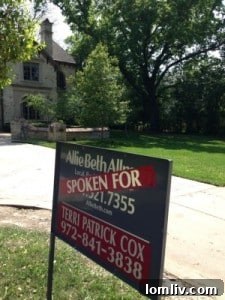
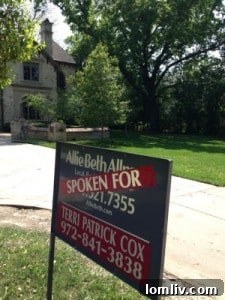
Consider the stark contrast between the luxury, high-demand enclaves of the Park Cities (Highland Park and University Park) and the vibrant, rapidly evolving communities within Oak Cliff. In the Park Cities, an enduring reputation for prestigious schools, exclusive amenities, and limited inventory fuels consistently high demand. Homes in these areas often command premium prices and are frequently “spoken for” through private networks or off-market deals long before they are publicly listed. Buyers here typically face intense competition and must be prepared for swift, decisive action and substantial investments.
In contrast, Oak Cliff, particularly areas like the Bishop Arts District, offers a different, yet equally compelling, market dynamic. Characterized by historic homes, diverse architecture, and a flourishing cultural scene, Oak Cliff has experienced significant revitalization and appreciation. While home values have risen considerably, entry points can often be more accessible than in the Park Cities. Buyers in Oak Cliff are often drawn to its unique character, strong community feel, and relative value, appealing to a different demographic seeking a blend of historic charm and modern amenities.
Similarly, established communities like Lakewood, known for its tree-lined streets, beautiful homes, and proximity to White Rock Lake, represent another distinct market. Here, excellent school districts and a strong sense of community drive consistent demand, attracting families and those seeking an active, outdoor lifestyle. Nearby Lake Highlands, while also family-friendly, offers a more diverse range of housing types and price points, catering to a broader spectrum of buyers while maintaining access to good schools and well-developed infrastructure.
Beyond the core of Dallas, the booming suburban markets of Plano, Frisco, McKinney, and Allen each present their own unique market conditions. These areas are often characterized by newer constructions, master-planned communities, and the presence of major corporate headquarters, attracting buyers looking for modern amenities, newer homes, and excellent public services. Understanding these localized dynamics is paramount for both buyers and sellers to formulate effective strategies.
Key Drivers of DFW’s Enduring Real Estate Strength
Several fundamental factors underpin the Dallas-Fort Worth real estate market’s consistent resilience and growth, contributing to its complex, hyper-local nature:
- Unprecedented Job Growth: DFW consistently ranks among the nation’s leaders in job creation. Major corporations continue to relocate or expand their operations here, fostering a robust employment landscape across diverse sectors like technology, finance, healthcare, and logistics. This continuous influx of jobs directly translates into a growing population and, consequently, sustained housing demand.
- Significant Population Influx: Driven by ample job opportunities, a relatively lower cost of living compared to coastal metropolitan areas, and a high quality of life, DFW attracts thousands of new residents annually. This consistent population growth ensures a deep pool of potential homebuyers and renters, preventing any significant downturns in demand.
- Economic Diversification: Unlike markets heavily reliant on a single industry, DFW boasts a highly diversified economy. This broad economic base provides stability and resilience, making the region less vulnerable to economic fluctuations in any one sector.
- Strategic Infrastructure and Location: Positioned as a major transportation hub with two international airports and an extensive highway network, DFW offers unparalleled connectivity. This strategic advantage enhances its appeal for both businesses and individuals, further fueling its economic and residential growth.
Navigating the DFW Real Estate Landscape: Strategic Advice for Buyers and Sellers
Given the multifaceted and dynamic nature of the Dallas-Fort Worth real estate market, a well-informed and strategic approach is essential for achieving success, whether you’re looking to purchase your dream home or maximize the value of your property.
Guidance for Prospective Buyers:
- Secure Pre-Approval Early: In a competitive market, having a solid mortgage pre-approval demonstrates your financial readiness and seriousness to sellers, giving your offer a significant edge.
- Partner with a Local Expert: An experienced real estate agent with deep knowledge of DFW’s hyper-local markets can provide invaluable insights into neighborhood-specific trends, pricing strategies, and emerging opportunities, helping you navigate competitive scenarios.
- Prepare for Swift Action: While overall market times may be lengthening, highly desirable properties still move quickly. Be ready to act decisively when you find the right home, but avoid impulsive decisions that don’t align with your long-term goals.
- Prioritize Your Needs: Clearly define your non-negotiables – whether it’s school districts, commute times, or specific home features. This clarity will help streamline your search and prevent decision fatigue.
- Broaden Your Search Horizon: Don’t limit your search to a single neighborhood. DFW is vast and diverse; exploring adjacent or lesser-known communities might uncover hidden gems that offer better value or a perfect fit for your lifestyle.
Essential Tips for Home Sellers:
- Strategic Pricing is Key: Even in a strong market, overpricing can deter potential buyers and lead to your home sitting on the market longer. Work with your agent to set a competitive price that reflects current market values and attracts immediate interest.
- Optimize Presentation and Staging: First impressions are paramount. Invest in minor repairs, decluttering, professional cleaning, and thoughtful staging to present your home in its absolute best light, appealing to a wider range of buyers.
- Leverage Hyper-Local Marketing: Your experienced DFW agent understands how to effectively market your property to the most relevant buyer demographic for your specific neighborhood, utilizing targeted strategies to maximize exposure.
- Maintain Flexibility and Responsiveness: Be prepared to respond promptly to offers and inquiries. Flexibility in negotiations can often lead to a smoother and more successful transaction.
The Enduring Appeal of DFW Real Estate
The Dallas-Fort Worth real estate market is poised to remain a dynamic and robust landscape for the foreseeable future. While the intense frenzy of previous years may be evolving into a more sustainable, albeit still strong, market, the core drivers of its growth – robust job creation, continuous population influx, and a highly diversified economy – remain firmly in place. Success in this complex market, whether you are a first-time homebuyer, a seasoned investor, or a homeowner looking to sell, will ultimately depend on making informed decisions, employing strategic planning, and leveraging the invaluable expertise of local real estate professionals who deeply understand the intricate tapestry of DFW’s many unique micro-markets.
From your perspective and experience, how do you perceive the current state of the DFW real estate market? Are you witnessing more signs of stabilization, or does the competitive “bloodsport” narrative still accurately describe your corner of the metroplex?