DFW’s Real Estate Dominance: A Deep Dive into North Texas’s Thriving Housing Market
Almost a decade removed from the historic housing crisis that plunged the U.S. economy into turmoil, the American real estate market has not just recovered, it has roared back to life. Nowhere is this resurgence more evident than in the dynamic Dallas-Fort Worth (DFW) metropolitan area. Data from the U.S. Census Bureau, as highlighted by the New York Times, revealed that national sales of new single-family homes reached a near-decade high in July of the past year, signaling robust health across the country. Yet, certain regions stand out, and DFW consistently leads the pack.
Nationwide, a prominent firm dedicated to tracking the vitality of the U.S. real estate landscape, confidently declared the overall market “sustainable” at the close of its second quarter. Their assessment further noted that “few regional housing markets are vulnerable to a housing downturn,” a testament to the broad-based recovery and underlying strength. This positive outlook paints a promising picture for both prospective homeowners and astute investors looking to capitalize on stable growth.
North Texas Shines: WalletHub’s Comprehensive Analysis
In a compelling new study, the financial services platform WalletHub undertook an exhaustive comparison of 300 U.S. cities, leveraging 16 crucial metrics to pinpoint the most attractive real estate markets for homebuyers. These metrics encompassed a broad spectrum, ranging from “median home-price appreciation” – a key indicator of investment growth – to “housing affordability,” which gauges accessibility for a diverse range of buyers, and “job growth,” reflecting economic vitality and demand. The results underscored North Texas’s exceptional performance, with a remarkable number of its cities earning top national recognition.
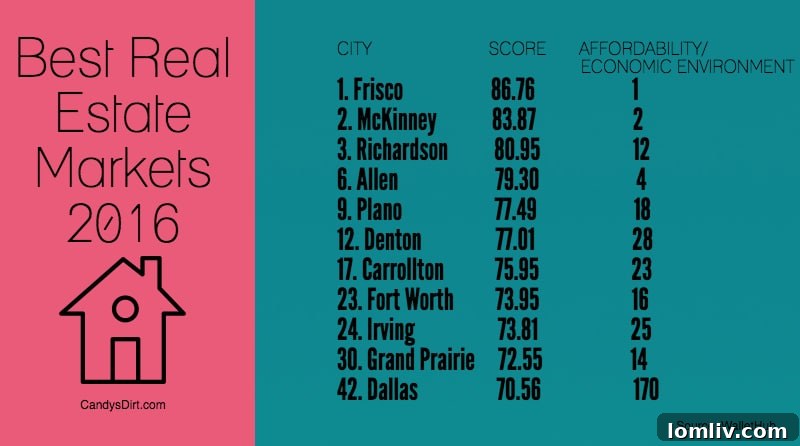
The DFW metroplex truly shone in WalletHub’s evaluation. Elite North Texas cities such as Frisco, McKinney, Richardson, Allen, and Plano proudly secured spots within the coveted top-ten list of the nation’s best real estate markets. Beyond this prestigious group, Denton, Carrollton, Fort Worth, Irving, Grand Prairie, and Dallas further cemented the region’s appeal by ranking within the top 50. This collective success is a powerful endorsement of the region’s economic strength, lifestyle appeal, and robust housing fundamentals.
What Drives DFW’s Unparalleled Success?
The question naturally arises: what specific factors contribute to the consistent high performance of DFW cities in such rigorous national rankings? Jill Gonzalez, a perceptive analyst from WalletHub, provided invaluable insights into the unique synergy of elements that propel North Texas to the forefront of the real estate landscape.
Key Factors Behind DFW’s Healthy Housing Market:
- Healthy and Sustainable Real Estate Markets: DFW boasts an inherently stable market, characterized by resilience and consistent growth, making it a safe haven for real estate investments. This sustainability is a magnet for long-term residents and capital.
- Minimal Negative Equity: A remarkably low percentage of homes are in a state of negative equity, meaning most homeowners have significant equity built up. This stability reduces foreclosure risks and bolsters consumer confidence, ensuring the market remains robust even during economic shifts.
- Consistent Home Appreciation: Over the past seven years, home values in North Texas have demonstrated continuous and impressive appreciation. This upward trend translates into tangible wealth creation for homeowners and attractive returns for investors, solidifying DFW’s reputation as a strong investment area.
- Extremely Low Foreclosure Rates: Mirroring the low negative equity figures, foreclosure rates in the region are exceptionally low. This indicates a healthy economy where residents are largely able to meet their mortgage obligations, further contributing to market stability and reducing downward pressure on prices.
- Exceptional Affordability: Despite its rapid growth and economic prowess, DFW maintains a strong reputation for affordability. This extends beyond housing prices to include low maintenance costs and a generally lower cost of living compared to other major U.S. metropolitan areas, enhancing its appeal to a broad demographic seeking value without compromising quality of life.
- Thriving Economic Environment: North Texas is an economic powerhouse. The region boasts some of the lowest unemployment rates in the entire country, consistently registering below 3 percent across various sectors. This robust job market fuels population growth, increases purchasing power, and sustains housing demand, creating a virtuous cycle of economic prosperity.
Dissecting WalletHub’s Methodology: A Transparent Approach
To arrive at these definitive nationwide rankings, WalletHub’s team of expert analysts meticulously evaluated cities based on two overarching categories, each comprising multiple critical metrics. This comprehensive approach ensured a holistic understanding of each market’s strengths and weaknesses, providing valuable guidance for potential buyers and investors.
The Two Pillars of Evaluation:
- Real Estate Market Health: This category delves into the intrinsic health and performance of the housing market itself, focusing on indicators that reflect stability, growth, and demand. Metrics included:
- Number of Bank-Owned Homes: A lower number signifies fewer distressed properties, indicating a healthier and more stable market where foreclosures are uncommon.
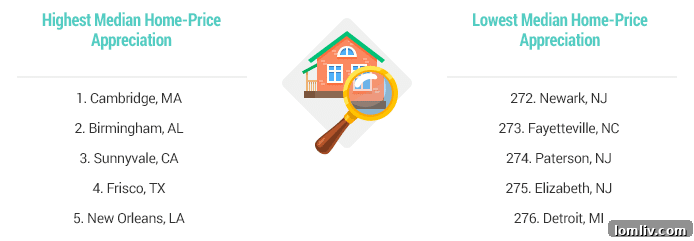
- Median Home-Price Appreciation: Measures the growth in home values over time, crucial for understanding investment potential and wealth building for homeowners. Consistent appreciation is a hallmark of a desirable market.
- Average Number of Days Until a Home Is Sold: A shorter duration indicates strong buyer demand and a competitive market, signaling that homes are attractive and move quickly.
- Foreclosure Rate: A lower rate suggests economic stability and responsible lending practices, minimizing market volatility.
- Negative Equity: The percentage of homes worth less than their mortgage balance; lower figures denote market robustness and protect homeowners from financial distress.
- Rental Vacancy Rate: While focused on rentals, a low vacancy rate often correlates with strong demand for all types of housing, signaling overall population growth and housing scarcity that can spill over into the for-sale market.
- Affordability & Economic Environment: This category assesses the broader economic conditions and cost-effectiveness that influence a market’s attractiveness, determining how sustainable and accessible living in the area is for its residents. Metrics included:
- Housing Affordability: Compares median home prices to median household incomes, indicating how accessible homeownership is for residents at various income levels. High affordability attracts diverse buyers.
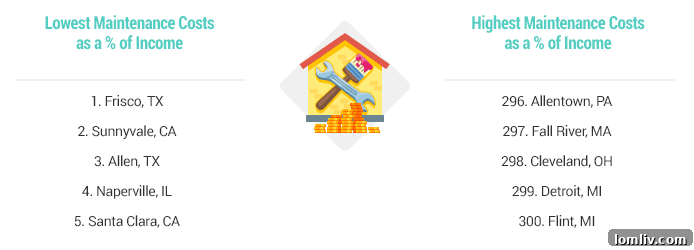
- Maintenance Affordability: Accounts for the costs associated with owning and maintaining a home, such as property taxes, insurance, and utilities, which are significant ongoing expenses for homeowners.
- Unemployment Rate: A low unemployment rate signifies a strong job market, attracting new residents and ensuring stable incomes for existing ones, which directly supports mortgage payments and economic activity.
- Job Growth Rate: Measures the pace at which new jobs are being created, a powerful driver of housing demand as new workers relocate to the area.
- Population Growth: Reflects the influx of new residents, which directly impacts the demand for housing and various services, stimulating economic expansion.
- Quality of Life Metrics: While the original extract focuses on core housing metrics, comprehensive studies like WalletHub’s often implicitly or explicitly factor in aspects like commute times, public services, educational opportunities, and amenities, all of which contribute significantly to a city’s overall appeal and its ability to attract residents.
Reflecting on DFW’s trajectory, Jill Gonzalez further elaborated, “The real estate market in the DFW area was one of the quickest to rebound after the recession, and it shows no sign of slowing down anytime soon. It has become one of the most attractive areas for homebuyers in the country.” This statement encapsulates the resilience and enduring appeal that define the North Texas housing market, positioning it as a consistent leader in national real estate conversations.
Expert Perspectives: Indicators of a Healthy Housing Market
Understanding what constitutes a healthy housing market is crucial for anyone involved in real estate, from first-time homebuyers to seasoned investors. Mariya Letdin, an assistant professor of real estate at Florida State University’s College of Business, outlined five critical indicators that merit close observation for gauging market vitality and making informed decisions.
Professor Letdin’s Top 5 Indicators for Housing Market Health:
Professor Letdin organizes her insights into four main categories, with a fifth crucial overarching principle that emphasizes hyper-locality:
- Low Unemployment: A robust job market is the bedrock of a healthy housing market. When people are employed and earning stable incomes, they are better positioned to afford homes, pay mortgages, and invest in properties. Low unemployment directly translates to higher consumer confidence, sustained demand, and fewer defaults, creating a stable environment for real estate growth.
- Low Vacancy in Apartments: While seemingly focused on rentals, a low apartment vacancy rate is a strong proxy for overall housing demand and population growth. If rental units are scarce, it indicates a significant influx of people into the area. Many of these new residents, particularly professionals and families, will eventually transition from renting to homeownership, further fueling the sales market and maintaining upward pressure on prices.
- Low Supply in Housing (Both Number of Houses and Time on the Market): This dual indicator is perhaps one of the most direct measures of market intensity and competition.
- Limited Inventory: A low number of available houses for sale suggests demand is outstripping supply. This imbalance typically leads to price increases and competitive bidding among buyers, favoring sellers.
- Short Time on the Market: Homes selling quickly indicate strong buyer interest and a seller’s market, where properties are snapped up rapidly, often at or above asking price, due to urgency and competition.
- Proximity to Schools, Amenities, Services, and Retail: The desirability of a location is heavily influenced by its convenience and quality of life offerings. Properties situated near top-rated schools, vibrant retail centers, essential services (like healthcare and efficient transportation), and recreational amenities consistently command higher prices and stronger demand. This factor underscores the timeless importance of “location, location, location” in real estate valuation.
- The Principle of Hyper-Locality: Professor Letdin emphasizes a critical nuance that is often overlooked in broad market analyses: “The question of whether or not to buy depends on the local housing market in each neighborhood. Even within the same city, different neighborhoods will usually go through different cycles and trends.” This highlights that even within a thriving metro like DFW, market conditions can vary significantly from one zip code to another. Factors like specific school district quality, new local developments, community-specific crime rates, and micro-economic trends can create distinct sub-markets. A savvy buyer or investor must conduct due diligence at the neighborhood level rather than relying solely on broader city-wide statistics to make truly informed and successful real estate decisions.
The Enduring Allure of DFW Real Estate: A Look Ahead
The Dallas-Fort Worth metropolitan area has firmly established itself as a national leader in real estate, offering a compelling blend of economic opportunity, quality of life, and robust market fundamentals. Its consistent performance in national rankings is not merely a fleeting trend but a reflection of deep-seated strengths. The region’s diversified economy, continuous job creation across various sectors like technology, finance, and logistics, coupled with a relatively affordable cost of living, continues to attract businesses and residents alike. This synergy creates a sustainable engine for housing demand and appreciation.
Looking ahead, DFW’s real estate market appears poised for continued growth. While market dynamics are always subject to change, the underlying factors that have propelled its success – low unemployment, strong population influx, a pro-business environment, and strategic infrastructure development – remain firmly in place. Investors seeking stability and appreciation, and homebuyers searching for a vibrant community with diverse opportunities, will likely continue to find DFW an exceptionally attractive prospect. However, as Professor Letdin wisely advises, understanding the nuances of individual neighborhoods within this sprawling metroplex will be key to making the most informed and successful real estate decisions in a market that continues to evolve dynamically.