
The landscape of real estate commissions has undergone a monumental transformation following the landmark 2024 National Association of Realtors (NAR) settlement. For every homeowner contemplating selling their property, or a prospective buyer navigating the housing market, a deep understanding of these Realtor commission changes is not just beneficial, but absolutely essential. This pivotal shift has redefined how real estate agents are compensated, introducing greater transparency and flexibility into the negotiation process. While commission rates have always been negotiable, the fundamental structure of who pays what, and how these fees are disclosed, has been dramatically altered. This guide will delve into the intricacies of the new commission model, offering clarity on what to expect as a seller and how to strategize effectively in today’s dynamic real estate environment.
Gone are the days of standardized, often opaque, commission structures. Today, real estate commission rates are highly variable, influenced by a myriad of factors including state regulations, local market dynamics, the specific services offered by an agent, and, crucially, individual negotiation. The central tenet remains that all commissions are fully negotiable, yet the mechanics of this negotiation, particularly concerning buyer agent fees, have seen the most significant overhaul. Understanding these nuances empowers both buyers and sellers to make informed decisions, optimize their financial outcomes, and ensure a smoother transaction process.

Understanding the New Commission Structure: Key Changes
The NAR settlement has introduced distinct changes to how commissions are handled, particularly differentiating between listing agent fees and buyer’s agent compensation. Navigating these distinctions is paramount for anyone involved in a real estate transaction.
- Listing Agent Commission: When you enlist the services of a listing agent to market your property and manage its sale, you will negotiate and agree upon a specific percentage of the final sale price. This fee typically ranges between 1% and 4%. This commission compensates the listing agent for their extensive work, which includes preparing your home for sale, professional photography, crafting compelling listing descriptions, implementing a targeted marketing strategy, coordinating showings, negotiating offers, and overseeing the complex paperwork from contract to closing. The exact percentage can be influenced by market conditions, the agent’s experience, and the level of service package you select.
- Buyer’s Agent Compensation: This area has experienced the most profound changes under the new rules, shifting the responsibility and negotiation dynamics significantly.
- No Automatic MLS Display: One of the most impactful changes is that buyer agent fees are no longer automatically displayed or offered within the Multiple Listing Service (MLS) listings. This means sellers are no longer mandated to offer compensation to the buyer’s agent through the MLS.
- Written Agreement Requirement: Buyers are now required to sign a written agreement with their agent before commencing home tours. This agreement formalizes the relationship, clearly outlining the agent’s responsibilities, the scope of services, and, most importantly, how the buyer’s agent will be compensated. This promotes transparency and ensures buyers fully understand their financial obligations from the outset.
- Buyer Responsibility for Fees: Buyers are now explicitly responsible for negotiating and paying their own agent fees. This can be a direct out-of-pocket expense or integrated into the transaction through various mechanisms, which we will explore further. This change underscores the concept that a buyer’s agent works directly for the buyer, providing dedicated representation throughout the purchasing process.
- Seller Option for Buyer-Agent Compensation: While not mandatory through the MLS, sellers retain the option to offer buyer-agent compensation. However, if they choose to do so, this offering must be handled outside of the MLS listing. It can be advertised directly by the seller’s agent, disclosed in private remarks to buyer agents, or presented as a concession during the negotiation phase of an offer. Many sellers may still choose this route to make their property more attractive to a wider pool of buyers and to facilitate smoother transactions, recognizing the value a buyer’s agent brings to the table.
How Commissions Work in Practice Today: A Scenario
Let’s illustrate these changes with a practical example of selling a $400,000 home in the current market:
- Listing Agent Fees: Assuming you negotiate a listing agent fee of 2.5% to 3%, your payment to your listing agent would be between $10,000 and $12,000. This covers all the services your agent provides to get your home sold at the best possible price.
- Buyer Agent Fees: Under the new rules, sellers are not obligated to pay the buyer’s agent. However, many sellers may still opt to contribute to this fee to enhance their property’s appeal and increase the likelihood of a successful sale. The methods for handling buyer agent compensation are now more varied:
- Offered as a Concession: The seller might offer a concession towards the buyer’s closing costs, which the buyer can then use to cover their agent’s fee. This is often negotiated as part of the purchase agreement.
- Built into the Sale Price: A buyer might request that their agent’s compensation be factored into the overall sale price, meaning the seller effectively pays it through the proceeds of the sale, but it’s structured as part of the buyer’s financing.
- Paid Directly by the Buyer: The buyer could choose to pay their agent’s fee out-of-pocket at closing. This requires the buyer to have sufficient liquid funds available for this expense, in addition to their down payment and other closing costs.
In total, while the combined commissions (listing agent + buyer agent) might still hover around the historical 4%–6% range in many transactions, the negotiation process and the distribution of responsibility are distinctly different. Buyers now bear more direct responsibility for their agent’s compensation, which significantly influences how offers are structured and how real estate transactions unfold. This increased transparency aims to empower both parties with more control over their financial commitments.
Typical Costs to List with a Realtor Beyond Commission
While the agent’s commission is often the largest single expense for a seller, it’s crucial to understand that other costs are involved in listing and selling your home with a Realtor. Budgeting for these additional expenses provides a more accurate picture of your net proceeds.
- National Commission Average (Historical Context): Historically, the combined national commission average ranged between 3% and 6% of the final sale price. On a $400,000 home, this would have translated to $12,000–$24,000. While the total may still fall within this range, the way it’s paid and negotiated has evolved.
- Flat-Fee and Discount Brokerages: For sellers looking to reduce upfront costs, flat-fee or discount brokerage models offer an alternative. These services typically charge a fixed fee or a lower percentage for specific services, such as listing your property on the MLS. While they can lower initial expenses, it’s important to weigh the trade-offs; services are often more limited compared to full-service brokerages, which provide extensive marketing, negotiation, and administrative support. Sellers choosing these options often take on more responsibility themselves.
- Administrative or Transaction Fees: Many brokerages include additional administrative or transaction fees, which can range from $200 to $600. These charges typically cover the overhead associated with processing paperwork, compliance, and maintaining transaction files. It’s essential to clarify these fees with your agent upfront to avoid any surprises.
Negotiating When Listing Your Home: Empowering Sellers

The new real estate landscape places a greater emphasis on negotiation, empowering sellers to customize their agreements with agents. Every aspect of commission and service is negotiable, providing opportunities to tailor the selling experience to your specific needs and financial goals.
- Commission Rates: Don’t assume an agent’s initial quoted rate is set in stone. Many agents are open to adjusting their fees, particularly in highly competitive markets where agents are vying for listings, or when dealing with higher-value homes where a smaller percentage still yields a substantial fee. Factors such as your property’s uniqueness, its price point, and the expected ease of sale can all influence an agent’s willingness to negotiate their commission percentage.
- Service Packages: Real estate services are not one-size-fits-all. Agents may offer various service packages, ranging from basic MLS listings for more independent sellers to comprehensive, full-service marketing campaigns. These premium packages often include professional staging consultations, high-quality photography and virtual tours, extensive open houses, targeted online advertising across multiple platforms, and dedicated administrative support. Clearly define your needs and budget, then discuss with your agent what services are included and if any elements can be added or removed to suit your preferences.
- Buyer-Agent Compensation: A significant point of negotiation for sellers is whether to contribute to the buyer’s agent fee. While some sellers might fear that not offering compensation could limit showings or deter buyers, the NAR guidance explicitly states that agents are not supposed to steer clients based on the commission offered. Instead, a seller’s decision should be based on their market strategy, financial goals, and local market norms. Discuss with your listing agent the potential impact of offering or not offering buyer agent compensation on your specific property and market. You might choose to offer a concession that covers a portion of the buyer agent’s fee, or offer a flat dollar amount, providing flexibility while still attracting agents and buyers.
Seller Costs Beyond Commission: What to Budget For
Selling a home involves more than just Realtor commissions. To accurately calculate your net proceeds, it’s vital to budget for various closing costs and other expenses that naturally arise during a real estate transaction. These costs can vary significantly by state and local area.
- Title, Escrow, and Transfer Taxes: These are often among the largest non-commission expenses.
- Title Insurance: Protects both the buyer and the lender from future claims against the property’s title. The seller typically pays the buyer’s title insurance policy in many states, while the buyer covers the lender’s policy.
- Escrow Fees: Paid to the escrow company (or attorney in some states) for acting as a neutral third party to hold funds and documents until all conditions of the sale are met.
- Transfer Taxes: Also known as deed taxes or stamp taxes, these are fees levied by state or local governments when property changes hands. Depending on your location, these can total several thousand dollars and are often split between buyer and seller, or fully paid by one party.
- HOA Transfer Fees and Local Charges: If your property is part of a Homeowners Association (HOA), you will likely incur specific transfer or document preparation fees. These cover the cost of transferring HOA membership, providing new owners with necessary documents, and updating records. Local governments may also charge recording fees for officially documenting the sale with the county.
- Average Seller Closing Costs: Typically, seller closing costs (excluding commission) range from 1%–4% of the sale price. This percentage can fluctuate based on the specific state and county regulations, the complexity of the transaction, and the negotiated terms with the buyer. It’s crucial to obtain a detailed estimate of these costs from your listing agent or a title company early in the selling process.
Other Costs Sellers Often Overlook: Hidden Expenses
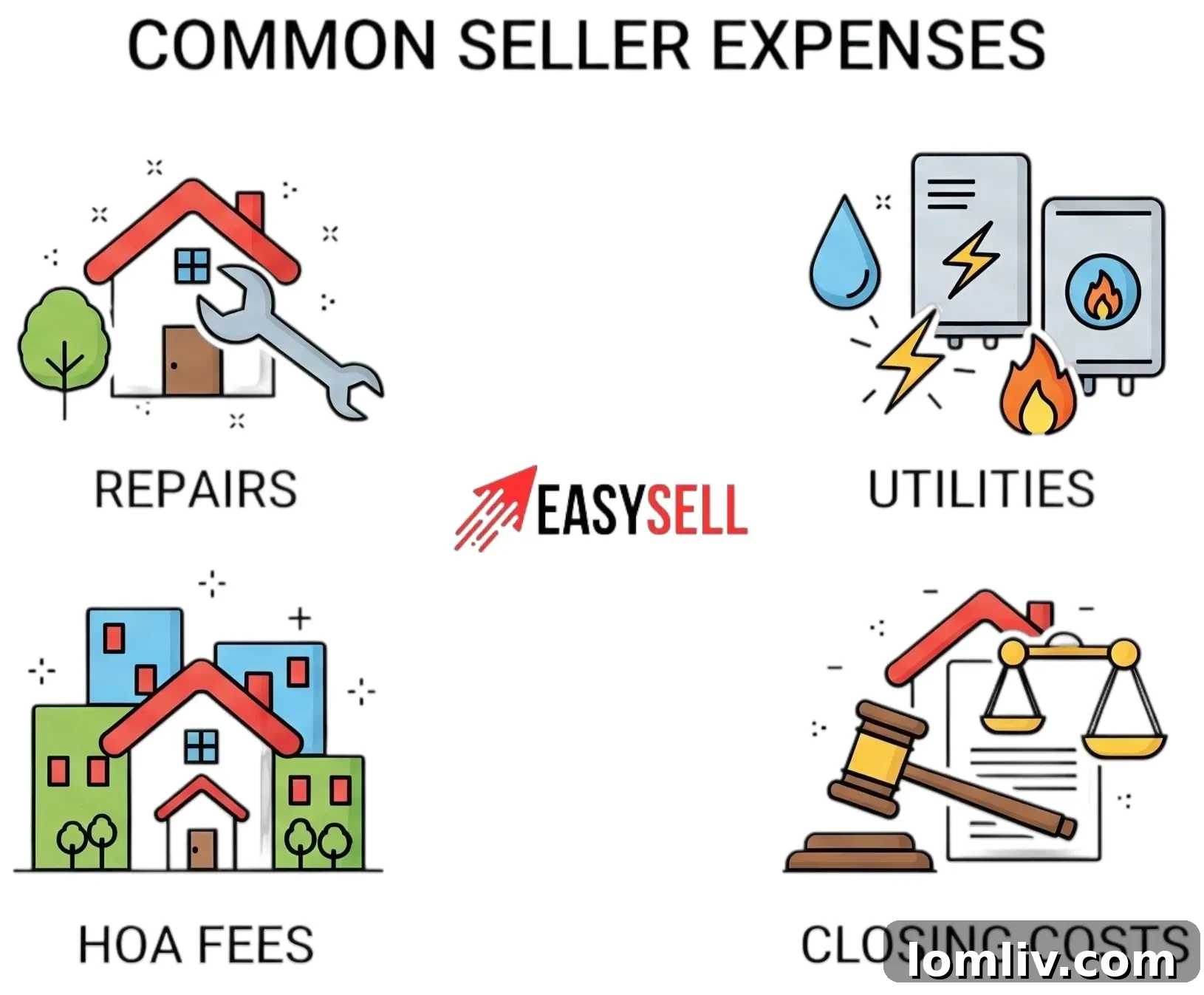
Beyond the more apparent commissions and closing costs, sellers frequently encounter additional expenses that can significantly impact their final net proceeds. Acknowledging and budgeting for these “hidden” costs is essential for a realistic financial plan.
- Repairs and Upgrades: To maximize your home’s appeal and value, pre-listing repairs and upgrades are often necessary. These can range from minor touch-ups like fresh paint and decluttering to more substantial fixes such as roof repairs, HVAC servicing, plumbing work, or electrical updates. While some repairs might be critical for safety or FHA/VA loan compliance, others are strategic investments aimed at increasing buyer interest and potentially securing a higher sale price. These expenses can add up quickly, so consider obtaining professional assessments and estimates before listing. Investing wisely in repairs can offer a strong return on investment by reducing time on market and avoiding price reductions.
- Carrying Costs While on Market: The period your home spends on the market, from listing to closing, is not cost-free. You remain responsible for all ongoing property expenses until the sale is finalized. These carrying costs include:
- Mortgage Payments: Principal and interest payments continue.
- Property Taxes: Accrued and paid, often at closing.
- Homeowner’s Insurance: Essential for protecting your asset.
- Utilities: Electricity, gas, water, internet, etc., to ensure the home is presentable for showings.
- HOA Dues: If applicable, these continue to be paid.
Depending on how long it takes to sell your home, these monthly expenses can easily accumulate into several thousand dollars. Understanding your local market’s average “days on market” can help you estimate this potential cost.
How to Save on Realtor Costs and Maximize Your Net Proceeds
With a clearer understanding of the costs involved, sellers can employ various strategies to save on Realtor fees and associated expenses, ultimately maximizing their net proceeds from the sale.
- Interview Multiple Agents: Don’t settle for the first agent you meet. Interview at least three different real estate professionals. Beyond comparing their proposed commission rates, delve into their marketing strategies, local market expertise, communication styles, and track records. Ask for references and scrutinize their previous sales in your area. A slightly higher commission might be justified if an agent can demonstrate a superior marketing plan that leads to a quicker sale at a higher price, potentially netting you more in the long run.
- Consider FSBO or Direct Sale: Selling your home “For Sale By Owner” (FSBO) or directly to a buyer can significantly reduce or even eliminate Realtor commissions. This approach, however, demands a greater investment of your time and effort. You will be responsible for pricing your home correctly, marketing it effectively, handling all inquiries and showings, negotiating offers, and managing the intricate legal paperwork. This option is best suited for sellers with strong market knowledge, excellent negotiation skills, and ample time to dedicate to the process.
- Using a “Sell My House Fast” Alternative: If your priority is to avoid the time and expense associated with traditional selling – such as making repairs, staging, enduring lengthy market times, or dealing with unpredictable buyer financing – a direct cash offer from an investor or “we buy houses” company can be a viable option. These companies typically purchase homes as-is, allowing you to bypass costly renovations and avoid commissions entirely. While the sale price might be lower than what you’d achieve on the open market, the speed, convenience, and elimination of traditional selling costs can make it an attractive alternative for certain situations. To explore this approach, a quick Google search for “Sell my house fast” in your local area can provide relevant options.
Weighing Realtor Commissions Against Value: A Holistic Perspective
The cost to list your house with a Realtor is far more comprehensive than just the commission percentage. It encompasses a spectrum of expenses including closing costs, necessary repairs and upgrades, and the ongoing carrying costs while your property is on the market. Each of these components will directly reduce your net proceeds from the sale.
To make the most informed and financially advantageous decision, it is paramount to adopt a holistic perspective. This involves diligently understanding every potential cost associated with selling your home, actively negotiating these costs wherever possible, and thoroughly comparing all available selling options—from full-service Realtors to FSBO and direct cash offers. By meticulously evaluating the value proposition of each choice against your personal financial goals and timeline, you can confidently navigate the complexities of today’s real estate market and make a decision that is truly aligned with your best interests. Remember, the cheapest option upfront may not always be the most profitable or least stressful in the long run. Consider the comprehensive value, expertise, and convenience an agent can bring, weighed against their fees and your desired outcome.

Author:
Marc Van Steyn is a licensed REMAX Realtor with 21 years of experience helping buyers and sellers navigate the dynamic real estate markets of Columbus, Ohio. He also maintains a popular YouTube channel, where he shares invaluable tips, local insights, and market trends for individuals and families considering relocating to the vibrant Central Ohio region.