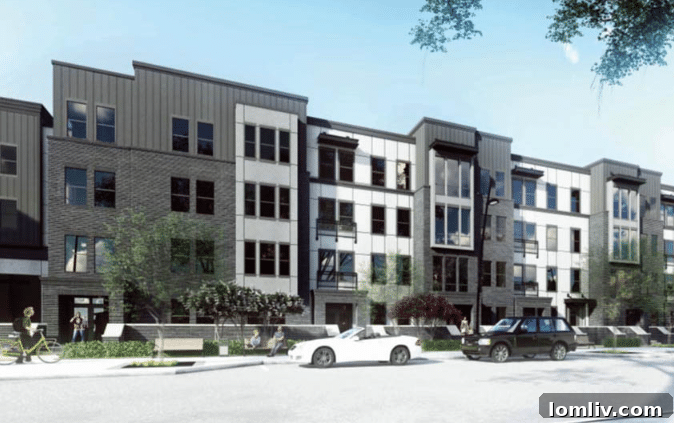
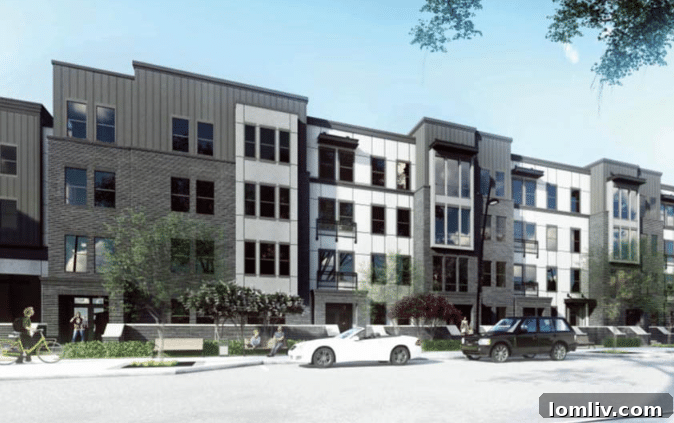
The Dallas City Council recently took a significant step forward regarding the controversial Cypress Creek at Forest Lane project, an affordable housing initiative slated for the Lake Highlands area. On a pivotal Wednesday, City Manager T.C. Broadnax received authorization to proceed with the crucial processes of closing and land acquisition for the development. However, the path was not entirely clear, as a proposed lease agreement for the project was remanded to the Housing Committee for further deliberation, scheduled for May 22.
This decision came after an exhaustive and often impassioned debate within the council chambers. Discussions spanned critical issues, including the pursuit of racial equity in housing distribution, the complex legal ramifications surrounding the project, and the fundamental question of whether Dallas’ District 10 truly requires low-income housing within what is widely considered a high-opportunity area. Ultimately, council members, by an 11-3 vote, opted to defer a final resolution on the project, pushing consideration of a new proposal to June 14. This deferral underscores the deeply divided opinions and the intricate challenges inherent in balancing community needs with development goals in a rapidly growing city like Dallas.

District 10 Councilman Adam McGough emerged as a prominent voice of opposition to the Cypress Creek at Forest Lane project, which developer Sycamore Strategies proposed at 11520 North Central Expressway. Initially, McGough sought to outright deny the development. When that motion failed to garner sufficient support, he proposed an alternative: sending the project to the council’s Housing Committee for more in-depth study and analysis. Despite his efforts and impassioned arguments, neither of his proposals gained the necessary traction to advance, illustrating the strong will of a majority of the council to keep the project moving forward.
McGough articulated his concerns with conviction, emphasizing that his opposition was not merely a “Not In My Backyard” (NIMBY) issue, a common accusation leveled against those who resist local development. Instead, he argued that the process had fundamentally lacked genuine community engagement. “This is not what people like to conveniently say is just a [Not In My Backyard] issue,” McGough stated emphatically. “We should have sat down and had discussions with the community. You have to give people the dignity of being able to voice what’s happening in their community.” He went further, painting a stark picture of the proposed site’s current conditions. “I beg for y’all to come with me and stand with me at this location … I wouldn’t let my wife walk from this location to Stults Road Elementary School. You could stand there today and watch drug transactions happen at the DART station. You have to look at what’s happening on the ground here. Why is it happening so fast? Not one single question has been asked by any council member on this horseshoe about the deed restrictions in a public format.” This powerful testimony highlighted significant safety concerns and, critically, questioned the city’s diligence regarding existing deed restrictions, which later proved to be a central legal hurdle.
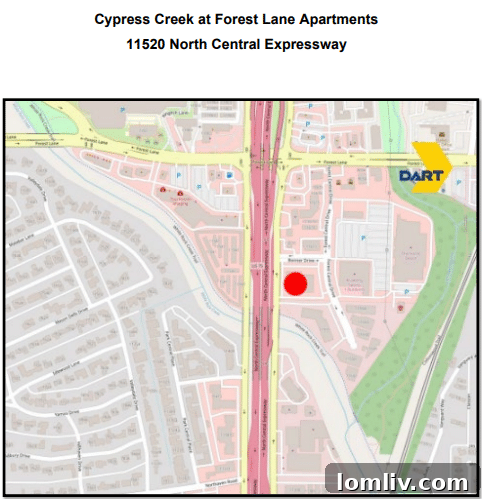
The journey for the Cypress Creek project has been anything but smooth, marked by significant conflict since its initial proposal approximately two years ago. Early in its development, the project appeared to be doomed after it was discovered that existing deed restrictions explicitly prohibited residential development on the site. This legal barrier cast a long shadow, threatening to derail the entire initiative. However, Sycamore Strategies, the determined developer, sought an innovative workaround. They proposed the project as a Public Facility Corporation (PFC) project, a mechanism sometimes used to bypass certain zoning or legal restrictions for developments deemed to serve a public purpose. Despite this creative attempt, city staff ultimately deemed the PFC approach unacceptable, further complicating an already intricate legal landscape and pushing the project back into a state of uncertainty.
Recognizing the intricate legal web surrounding the proposal, council members convened in an executive session on Wednesday. This closed-door meeting was specifically dedicated to receiving legal advice on the project’s various aspects, particularly concerning the deed restrictions and the developer’s proposed solutions. However, even after this session, the council failed to reach a unanimous consensus, indicating the profound complexities and differing legal interpretations at play.
The final vote to defer a resolution until the following month, an 11-3 decision, underscored the lingering disagreements. The three council members who stood in opposition to the deferral were Councilman McGough from District 10, Councilwoman Cara Mendelsohn of District 12, and Councilman Casey Thomas from District 3. Their votes against the deferral reflected a desire for a more immediate or definitive resolution, highlighting the urgency and tension surrounding this critical urban development issue.
Public Comment on Cypress Creek at Forest Lane: Voices of Concern and Support
The public comment portion of the council meeting provided a crucial platform for various stakeholders to voice their perspectives on the Cypress Creek at Forest Lane project. Among the most vocal opponents was William Roth, who owns an adjacent office building. Roth expressed vehement opposition, explicitly stating his intention to pursue legal action against both the city and the developer if the project gains approval. His core argument revolved around the integrity of the existing deed restrictions, which unequivocally prohibit residential development on the proposed site.
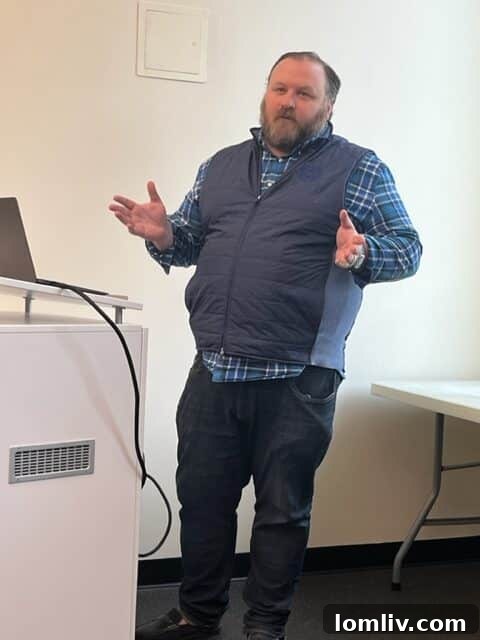
“It is improper to permit a private developer to avoid these binding deed restrictions,” Roth asserted, underlining the legal precedent and the potential for a dangerous bypassing of established property laws. He warned that such an action by the city would be viewed as a “proprietary act” rather than a governmental one, thereby violating the public purpose and potentially nullifying sovereign immunity for the city. This would expose Dallas to significant legal risks. “Sovereign immunity to the city would not apply and all potential causes of action arising from the violation of these deed restrictions would be available to about 150,000 square feet of property owners affected by this violation.” Roth’s threat of a lawsuit from numerous affected property owners introduced a serious financial and legal consideration for the council.
In stark contrast, Zachary Krochtengel, the developer from Sycamore Strategies, passionately advocated for the project, framing it as a vital step toward addressing Dallas’s pressing need for affordable housing. He highlighted a critical data point: District 10, the very location where Cypress Creek is proposed, currently houses less than 1 percent of the city’s total low-income housing units. This statistic underscores a significant imbalance in the distribution of affordable housing across Dallas, often concentrating such developments in historically underserved areas. The Cypress Creek project is designed as a Low-Income Housing Tax Credit (LIHTC) development, a federal program aimed at incentivizing the creation of affordable rental housing.
Krochtengel urged the council to rely on data rather than emotion in their decision-making process. “You’re going to hear a lot of emotions about this proposed development, but the focus of placing affordable housing in Dallas needs to be informed by data,” he emphasized. “There’s no statistical reason this proposed development should not move forward.” He also addressed concerns about the project’s proximity to existing residential areas, noting that the closest single-family homes are situated more than 1,000 feet away, suggesting minimal direct impact on current homeowners.
Brittany Jones, a courageous housing voucher holder, offered a compelling and deeply personal perspective in support of the project. Her testimony shed light on the pervasive stigma faced by individuals relying on housing assistance. “Voucher holders have a stigma and a negative narrative that nobody wants to address,” she explained. Jones described the frustrating reality where, despite personal achievements, the mere presentation of a housing voucher often leads to immediate rejection by landlords. “When I go to an apartment complex and show them my voucher, all my accolades go out the window. We get a voucher, but where we have to stay is in poverty.”

Jones powerfully articulated the transformative potential of projects like Cypress Creek. Locating such a development near major transportation arteries like Highway 75 and Forest Lane would grant residents crucial access to essential services and opportunities. “With Cypress Creek being off 75 and Forest Lane, there are schools, hospitals, churches, and public transportation … you have a better way of life. Nobody wants to give us that. We just want options like everybody else.” Her plea highlighted the critical need for affordable housing not just as shelter, but as a pathway to improved quality of life, access to resources, and true integration into high-opportunity communities.
However, not all public comments were in favor. Rob Stewart, a resident of District 10, raised practical concerns about the site’s immediate surroundings. He pointed out that the proposed location is at least two Dallas Area Rapid Transit (DART) stops away from the nearest grocery store, challenging the notion of convenient access to essential amenities. “It’s more than a mile to the closest playground,” he added, further questioning the area’s suitability for families. Stewart also echoed Councilman McGough’s earlier sentiments regarding safety and crime. “It’s a very dangerous area. There’s prostitution. There’s a lot of drugs. It has been a crime area and a problem area for a long time.” These testimonies collectively painted a complex picture, balancing the undeniable need for affordable housing with legitimate concerns about site suitability, safety, and community impact.
Dallas City Council Feedback: Navigating Policy and Progress
The Dallas City Council’s discussion following public comments revealed a dynamic interplay of policy objectives, political strategy, and civic responsibility. District 7 Councilman Adam Bazaldua emerged as a leading advocate for advancing the Cypress Creek project. He strongly argued that the proposed site, despite its challenges, represents an optimal location for developing mixed-income housing, aligning with the city’s broader goals for equitable development.

Bazaldua strategically proposed the June 14 vote, recognizing that while some members harbored reservations, a majority wished to see the project move forward. “There seems to be some reserve from a couple of members with the language that was just provided,” he acknowledged, indicating an awareness of the ongoing friction. “I know that it’s been said that it would appear to be redundant. However, this motion does contain dates certain so that we know when it will be back before us. It also allows the city manager to go ahead with the deal which will take away the factor of the seller having any reason to back out.” His approach aimed to strike a balance, providing a clear timeline for a definitive decision while simultaneously granting the city manager the authority to secure the land, thereby mitigating the risk of the seller withdrawing from the agreement. “This, to me, looks to be the best of both worlds, from what we’ve heard from [McGough], but also weighing in what is clearly obvious where the will of this body is to push this deal through in the end.” Bazaldua’s motion was a pragmatic step designed to ensure the project’s continued momentum without ignoring dissenting voices entirely.
Adding a crucial financial perspective, District 1 Councilman Chad West clarified the economic advantages of the project for the city. He highlighted that the land for Cypress Creek is being acquired by the developer and subsequently conveyed to the city, effectively insulating the city from direct land acquisition costs. This arrangement represents a significant financial benefit. “So we’re out no money from our end to acquire the land,” West explained, underscoring the fiscal prudence of the deal.

Beyond avoiding upfront costs, West also pointed out that the city stands to generate revenue from the developer for facilitating the housing project on the property. This, coupled with the benefit of adding much-needed mixed-income housing, makes the project economically appealing. “We’re also getting revenue off the developer for putting housing on the property … in addition to getting mixed-income housing on this property.”
West further emphasized the broader context of Dallas’s severe affordable housing crisis, asserting that the city has a fundamental obligation to address this critical need. He argued forcefully against allowing threats of litigation to impede progress on such vital projects. “We as a city have a duty to provide affordable housing,” he declared, framing the issue as a core responsibility of local government. “We need to make it easier, not harder, as a city for people to build affordable housing. This is exactly the kind of situation where we’re making it harder. If we keep beating them up time after time after time for trying to give us what we’re asking for, they’re going to stop doing it.” West’s impassioned plea underscored the need for a more supportive regulatory environment for affordable housing developers, warning that excessive hurdles could deter future projects and exacerbate the housing crisis.
In a related but separate development, another significant affordable housing initiative in the Lake Highlands area also faced a postponement. A proposal to transform a former extended-stay hotel into permanent supportive housing, specifically for voucher-based residents, was moved to a May 24 discussion. This parallel deferral highlights the ongoing, complex, and often contentious nature of affordable housing debates across various fronts within the city of Dallas, reflecting the profound challenges and deeply held beliefs that shape urban development in one of the nation’s fastest-growing metropolitan areas.