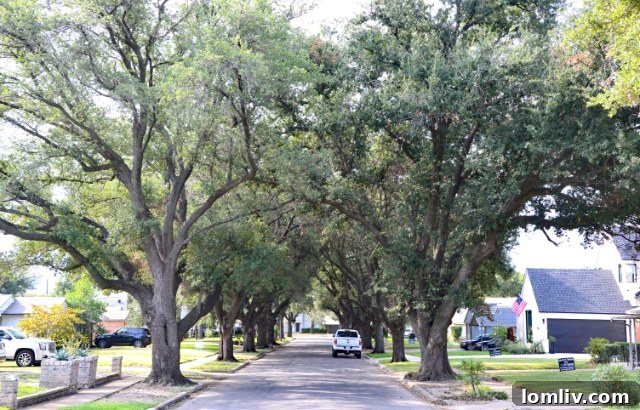
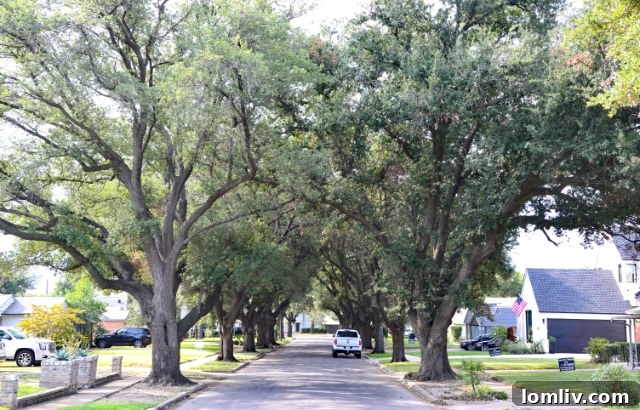
The urban landscape of Dallas, like many growing metropolitan areas, faces a critical balance between development and preserving natural assets. Amidst this dynamic growth, the significance of urban trees transcends mere aesthetics, emerging as foundational pillars for environmental health, economic vitality, and community well-being. This perspective is championed by figures like Ryan Behring, a member of the Zoning Ordinance Advisory Committee, who views street trees not just through an environmental lens but also as crucial economic drivers.
Behring, far from being a conventional “tree hugger,” articulates a compelling argument for the proactive integration of trees into Dallas’s urban planning. Since 2016, he has been a consistent advocate for leveraging the City’s Urban Reforestation Program to launch a comprehensive, city-wide tree-planting initiative. His insights underscore a truth often overlooked: a robust urban forest is a tangible asset, directly contributing to real estate values and fostering sustainable economic development. While his initial comments didn’t make it into a specific story, the profound importance of this topic warrants its own exploration.
“Street trees should be near the top of the City of Dallas and private development priorities in urban development for their environmental and air quality benefits, let alone the myriad other advantages,” Behring shared with daltxrealestate.com. “There is tons of research on how they enhance real estate value, in addition to improving environmental conditions, air quality, overall life satisfaction, and providing essential shade.”
Despite the undeniable benefits, the City of Dallas’s Urban Reforestation fund has seen little recent activity. However, there’s a growing recognition of the existing tree infrastructure’s value. In a significant move, the Dallas City Council recently voted to designate 86 trees as “historic.” This critical designation means these venerable trees can only be removed with explicit City Council approval or in cases of severe public safety risk, offering a layer of protection to some of Dallas’s most significant natural landmarks.
Among the newly designated historic trees are some of Dallas’s most iconic natural treasures: the majestic Big Spring bur oak, a significant grove of trees nestled within Dealey Plaza, a collection of 35 resilient post oak trees at Pioneer Plaza Park, a culturally important Cherokee Park tree located at Dallas Heritage Village, the historically rich California Crossing Comanche Marker tree, and the impressive Moore Park Big Tree Grove. These designations highlight a renewed commitment to preserving the city’s arboreal heritage.
A Tangible Difference: Sparking Community and Economic Growth Through Trees
The vision for a greener Dallas is not entirely new. Between 2015 and 2017, Behring played a pivotal role in leading the GrowSouth AmeriCorps program. During this period, he collaborated with then-Mayor Mike Rawlings to rekindle interest and momentum in the city’s reforestation program, particularly focusing on the southern sectors of Dallas. GrowSouth was conceived as a strategic marketing effort aimed at attracting investors to the southern part of the city, and tree planting was seen as a vital component of this revitalization.

“We envisioned this as a powerful way for neighborhood associations to unite and effect a positive, tangible difference within their communities,” Behring recalled, painting a picture of “fall Saturday mornings filled with coffee, doughnuts, and the camaraderie that comes from making a difference.” The reforestation program quickly evolved into a powerful bonding opportunity for these associations, fostering a sense of collective pride and accomplishment. Through these concerted efforts, Behring’s team successfully planted approximately 150 trees, demonstrating the program’s immediate and local impact.
Now a managing partner at Re:Studio Architecture, Behring emphasizes that GrowSouth’s initial focus was broader than just trees. “It was about identifying investors eager to contribute to the southern part of the city,” he explained. “Our role was akin to ‘boots on the ground’ – community liaisons bridging the gap between City Hall and the neighborhoods of Southern Dallas.” This crucial work allowed Behring to connect with key figures such as city arborist Phil Erwin and members of the Urban Forest Advisory Committee, the body responsible for overseeing the reforestation program. These connections proved vital in understanding the existing framework and potential for future initiatives.
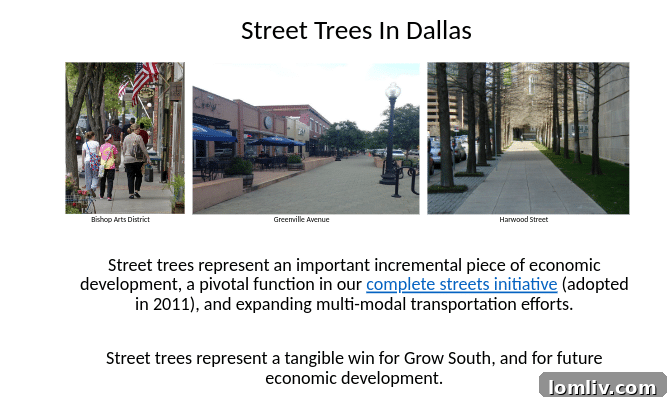
Despite these promising beginnings, the momentum behind Dallas’s reforestation efforts has regrettably waned over the years. Behring observes a recurring pattern in city priorities: “Dallas is always looking for the next big thing, whether it’s a convention center project or the bullet train, endeavors that involve billions of dollars.” He contrasts this with the more grounded, yet equally vital, issue of urban trees, which often gets relegated to election-cycle talking points, much like the persistent concern of potholes. “That’s where trees are truly fascinating to me because I believe that for a mere $500-a-tree investment, they can be planted, watered diligently for three years, and after that, they become remarkably self-sufficient, offering decades of benefits.” This long-term, low-cost investment, he argues, yields disproportionately high returns.
The belief in the power of incremental, consistent investment is shared by other Dallas community leaders. Oak Cliff business owner David Spence, along with various passionate residents, has long championed street trees, often funding planting initiatives out of their own pockets. Similarly, developer Monte Anderson advocates for a philosophy of incremental investment—consistently executing small, impactful actions within a localized area to generate sustainable results. “They’re all articulating the same fundamental message,” Behring notes, “that these smaller, consistent efforts demonstrably improve real estate value and enhance the overall quality of urban life.”
The environmental urgency of this issue cannot be overstated. Arborist Steve Houser, a former chair of the Urban Forest Advisory Committee, emphasizes that Dallas cannot effectively tackle critical challenges such as climate change, the urban heat island effect, or deteriorating air quality “unless we can significantly increase the number of trees in the ground and diligently protect existing trees.” Houser further laments the lack of formalized programs for parkway plantings, suggesting that such initiatives are vital. “We are currently lobbying to restore the Mowmentum [median planting program] funds, which could provide crucial support for median irrigation systems, ensuring the long-term health of these planted areas.”
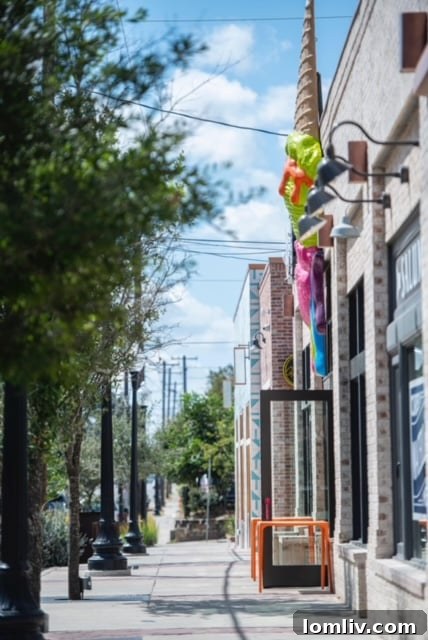
So, what exactly is required to fully revitalize Dallas’s urban reforestation efforts and ensure their sustained success? Behring posits that the answer lies in a consistent, deeply committed public-private coalition of leadership. This coalition would need to be underpinned by a “water-tight” vision for maintenance – a deliberate pun highlighting the crucial role of adequate watering in the early years of a tree’s life. He stresses the importance of community engagement: “The most effective method we’ve discovered is a bottom-up, people-powered buy-in from adjoining property owners.” This grassroots involvement fosters ownership and long-term care. Behring estimates that, with consistent leadership and community participation, a comprehensive program would require an investment of $500 to $1,000 per tree, covering planting and maintenance over the recommended initial three-year establishment period.
Crucially, the city already possesses a significant resource for this endeavor: approximately $5 million currently sits untouched in the city’s reforestation fund. Behring notes that to his knowledge, this fund has remained dormant for years, representing a tremendous missed opportunity. He argues that efforts should be strategically concentrated in urban districts, particularly those characterized by extensive concrete surfaces where the urban heat island effect is most pronounced. Furthermore, areas with accessible water sources, such as spigots or hydrants available via private property, should be prioritized to ensure the young trees receive the necessary care. “With a $5 million investment already available, we could strategically plant between 5,000 and 10,000 trees,” Behring calculates, envisioning a substantial and visible transformation of Dallas’s urban canopy.
Trees as Catalysts: Luring Economic Development and Enhancing Housing Values
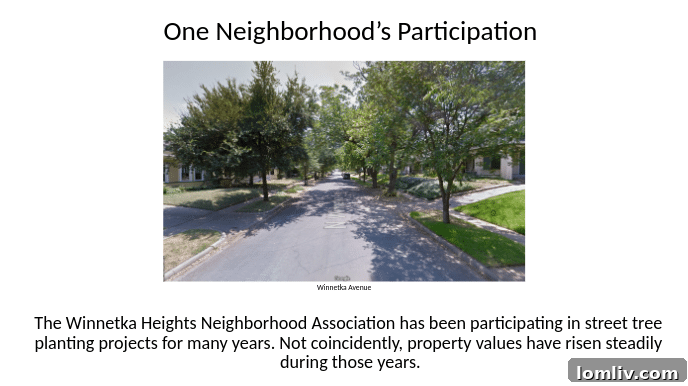
The correlation between mature street trees and desirable urban environments is undeniable. Behring points out that many of Dallas’s most coveted and historically established neighborhoods are distinguished by their lush, tree-lined streets. These mature canopies contribute significantly to the character, comfort, and perceived value of an area, making them attractive to both residents and businesses. “I reside near Winnetka Heights in Oak Cliff,” Behring shares, “and I frequently choose to walk its streets, partly due to the refreshing shade, superior air quality, the human-scaled nature of the street, and the distinctive architectural character.” This personal anecdote underscores the multifaceted appeal that a well-treed street creates for pedestrians and residents alike.
He elaborates on a broader principle: “Generally, investments in quality of life consistently yield tangible increases in real estate value.” This pattern is evident across Dallas, with other highly desirable neighborhoods boasting similar arboreal qualities sprinkled throughout Old East Dallas, Uptown, and various parts of North Dallas. Many of these neighborhoods, characterized by their leafy streets, have experienced significant appreciation in property values over the last decade, further reinforcing the economic argument for urban greening. The presence of mature trees signals a stable, well-maintained community, which is a key factor for potential homeowners and investors.
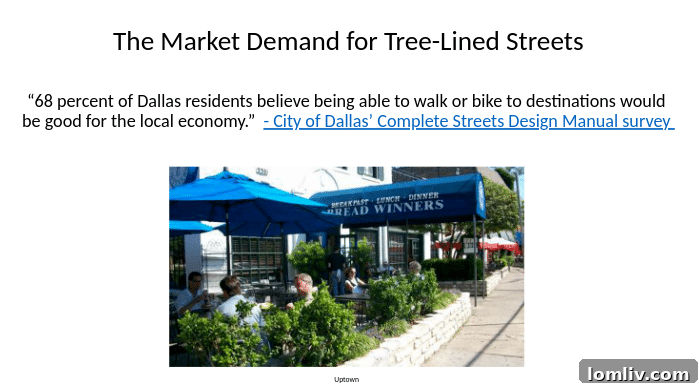
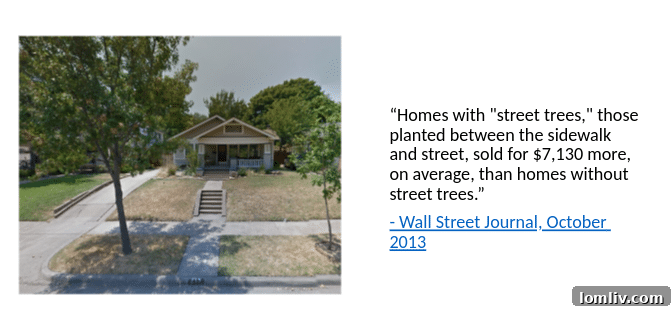
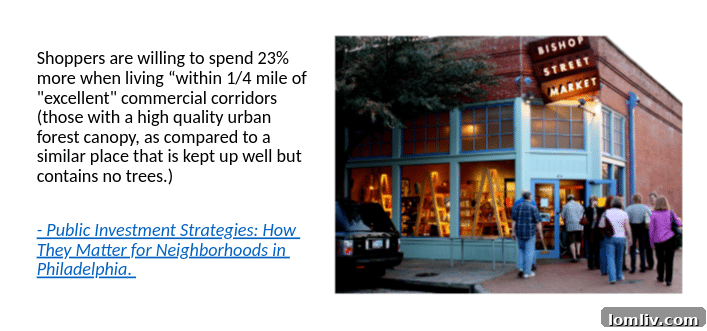
Beyond residential areas, commercial districts that make deliberate investments in street trees also tend to reap substantial economic rewards. Behring’s research indicates a direct link between tree-lined commercial avenues and increased consumer engagement: shoppers spend more time in these districts and, consequently, more money. This finding is supported by broader economic studies. For instance, a notable 2013 Wall Street Journal study provided concrete data, revealing that homes situated on streets adorned with trees sold for an average of $7,130 more than comparable properties without them. This powerful statistic quantifies the financial impact of a well-developed urban canopy, illustrating its role as a silent, yet highly effective, value enhancer.
Behring draws an insightful parallel to behavioral economics: “Think of it as the reverse broken-window theory.” Instead of focusing on the decay that broken windows represent, this approach emphasizes the positive ripple effect of consistent, small, and tangible investments. “Invest in small, tangible-win programs consistently over time – programs that a community can actively participate in – and community pride will flourish, while blight will recede,” he advises. The implication is clear: nurturing the urban forest is a powerful form of community building. “If nothing else,” he concludes, “we’ve collectively made ourselves better neighbors through shared effort and a common goal of enhancing our surroundings.”
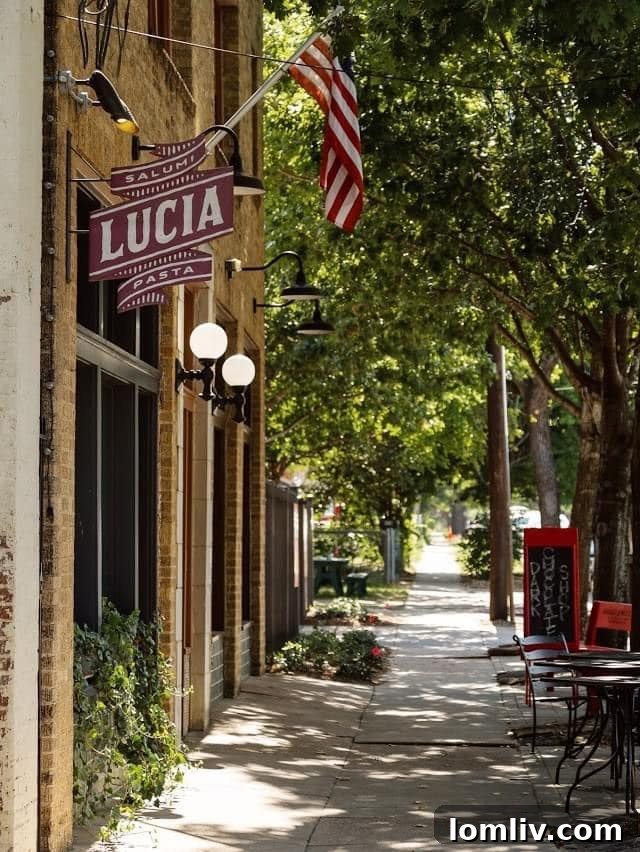
District 1, where Behring resides, serves as a commendable model for the diligent maintenance of urban street trees. Neighborhoods like Winnetka Heights benefit immensely from their green infrastructure, strategically positioned along the gridded street system connecting to bustling commercial arteries such as West Davis, Tyler Street, and Kings Highway. These tree-lined paths not only enhance the visual appeal but also contribute significantly to the functionality and desirability of the area.
“As an architectural designer, one of my primary considerations is the scale of the right-of-way,” Behring explains. He highlights a common urban challenge: the often-large and intimidating scale of city streets. “Mature street trees possess a remarkable ability to humanize our often large, inhumane streets, making them feel smaller, more inviting, and consequently, making the walking experience and the adjacent real estate significantly more desirable.” This transformation from impersonal thoroughfare to welcoming promenade is a testament to the power of thoughtful urban forestry.
This perspective aligns perfectly with the principles espoused by city planner and author Jeff Speck, who meticulously outlines four fundamental elements crucial for an optimal urban walking experience: a walk should be useful, safe, comfortable, and interesting. Behring succinctly summarizes the integral role of trees in achieving this urban ideal: “Mature street trees generally contribute positively to each of these four essential elements.” By providing shade, improving air quality, buffering noise, and adding natural beauty, urban trees are not just an amenity but a fundamental component of creating livable, thriving, and economically robust cities like Dallas.