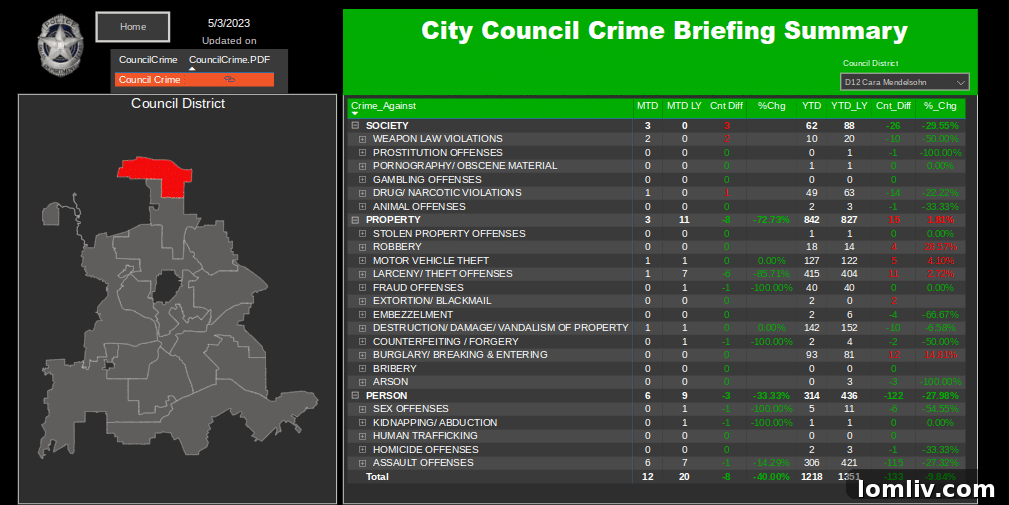
Dallas City Council District 12, nestled in the vibrant northern reaches of Dallas, stands out for several compelling reasons. Beyond its unique geographical footprint, being the only district where a segment of its residents lives outside Dallas County, it boasts an impressive array of community strengths. It proudly holds the distinction of having the second-most affordable housing units across all districts, a crucial factor in fostering a stable and diverse population. Furthermore, District 12 is tied for the highest diversity scores in terms of racial and ethnic makeup, reflecting a rich tapestry of cultures that contribute to its dynamic character. These unique attributes paint a picture of a thriving, inclusive community that residents are proud to call home.
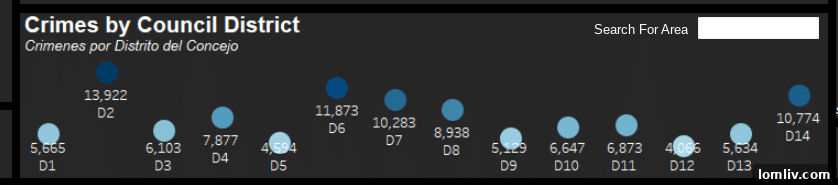
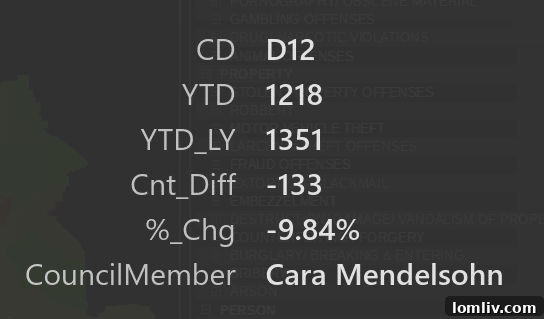
Perhaps its most remarkable achievement, and a testament to its community spirit, is its status as the district with the fewest crime incidents among all council districts. This impressive track record has only improved, with crime incidents dropping by nearly 10 percent since the previous year. This consistent decline in criminal activity underscores the effectiveness of local initiatives and the strong commitment to public safety shared by its leadership and residents.
Councilwoman Cara Mendelsohn, a dedicated advocate for District 12, was re-elected last month in a landslide, notably running unopposed. Her re-election speaks volumes about the trust and confidence her constituents place in her leadership, particularly in maintaining the district’s exceptional quality of life and safety standards. Her unwavering commitment to the community’s well-being is a cornerstone of District 12’s ongoing success.
While District 12 clearly offers an enviable living environment, Councilwoman Cara Mendelsohn is far from complacent. She understands that criminals do not adhere to geographical boundaries when targeting potential victims, whether it’s breaking into a vehicle or assaulting someone after a night out. This pragmatic approach drives her continuous efforts to enhance public safety, acknowledging that vigilance is key even in the safest areas.
Mendelsohn highlights the prevalent crime categories in the district, stating, “The highest category of crime is assault, followed closely by car thefts, car burglary, and vandalism.” These insights are crucial for residents to understand the specific risks and tailor their preventative measures accordingly. By focusing on these key areas, law enforcement and community programs can implement targeted strategies to further reduce incidents.
Drawing on her practical wisdom, the Councilwoman offers what she affectionately calls “mom advice” for residents aiming to keep District 12 at the forefront of public safety. Her simple yet profound recommendations include: “Resolve disagreements with words not fists, always lock your car and house, and don’t leave any valuables in your car, even in a ‘safe’ area or if you’ll only be gone for a few minutes.” These guidelines emphasize personal responsibility and common-sense precautions, proving that even small actions can collectively create a significant impact on community security.
Understanding Crime Trends and Prevention in Dallas District 12
The Dallas Police Department’s crime dashboard provides vital statistics, though recent online access was temporarily disrupted when city servers were targeted by cyber terrorists last month. Despite this temporary setback, the latest available data, approximately a month old, offers a clear picture of crime in District 12. So far this year, the district has reported over 300 assaults and 127 car thefts. Encouragingly, assaults have seen a significant decrease of 27 percent compared to the same period last year. Vehicle theft, while still a concern, has only risen by a modest 4 percent. These figures demonstrate a positive trend in violent crime reduction, while also highlighting areas where continued focus on property crime prevention is necessary.
At the heart of District 12’s successful public safety initiatives is dedicated law enforcement. Dallas Police Sgt. Ed Lujan, a veteran of three decades in law enforcement, has served as a Neighborhood Patrol Officer in District 12 for the past two years. His extensive experience and deep understanding of community policing make him an invaluable asset to the district.
Sgt. Lujan’s personal story is a powerful testament to his resilience and commitment. He was nearly killed in 2015 when a motorist deliberately ran him over three times outside a Dallas nightclub. In a remarkable display of courage and gratitude, he now competes in triathlons, dedicating his efforts to honor the first responders who saved his life. The assailant responsible for the attack was rightfully sent to prison for aggravated assault on a public servant, ensuring justice was served. This personal ordeal has undoubtedly deepened Sgt. Lujan’s resolve and empathy in protecting the community.
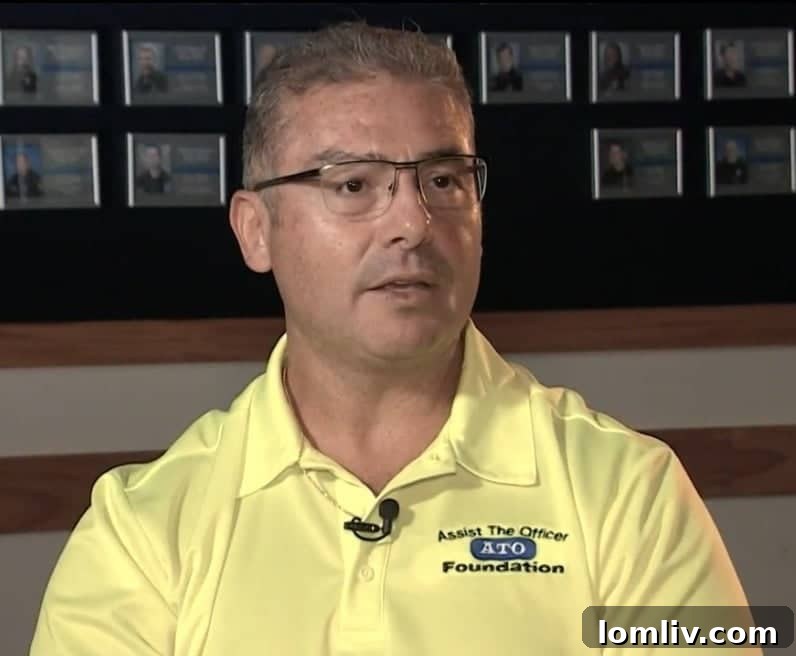
Speaking to daltxrealestate.com, Sgt. Lujan firmly believes that strong community engagement and unwavering transparency are the primary reasons behind District 12’s impressively low crime rate. He emphasizes the importance of open and honest communication, stating, “It’s just being honest and saying, ‘Hey, this is the situation.’” This straightforward approach fosters trust and collaboration between residents and law enforcement.
He cites homelessness as a key area where transparency and community partnership are vital. “One of the main topics is homelessness. We tell them exactly what the police can do on our side. There’s a plan in motion. If the citizens can help us by not giving [the homeless] money and giving the money to an established nonprofit like the Red Cross, that helps us out. It helps us relocate them and get them jobs. That’s just one example.” This approach not only addresses immediate concerns but also works towards sustainable solutions for vulnerable individuals, showcasing a compassionate yet strategic approach to complex social issues.
The police sergeant strongly advocates for residents to report any type of suspicious behavior, regardless of whether violence is involved or if a suspect is immediately visible. He clarifies the process, explaining, “There are ‘no-leads’ reports that are assigned to a no-leads detective. If they request [Physical Evidence Section], they go out there and take prints. That’s where we identify most of our suspects, through physical evidence like fingerprints.” He advises patience and cooperation with officers, stressing, “I would suggest waiting for the police. Time is very important to people nowadays, but a lot of cases are closed because we can get a single fingerprint. It’s important to wait for those detectives to arrive and see if they can get fingerprints.” This highlights the critical role of forensic evidence in solving crimes, even when initial clues are scarce.
Sgt. Lujan acknowledges that many crime prevention tips boil down to common sense, such as being aware of one’s surroundings and avoiding distractions like cell phones. However, he stresses that these seemingly small measures can significantly impact safety. “Crime is about opportunity,” he asserts. He illustrates this point with a practical example: “If you leave your gym bag in the backseat, you know it’s just a gym bag, the suspect doesn’t know there’s no wallet in it.”
To mitigate such opportunities, he suggests adopting the effective “lock, take, and hide” model. This simple mantra encourages residents to secure their property, remove valuables, and conceal anything left behind. Furthermore, leveraging technology can significantly enhance security: “Use the apps on your cell phone to notify you if your house or your car is being messed with.” Environmental factors also play a crucial role. He advises residents to “Park in lighted areas. If the lights are down in your neighborhood, put in a 311 request to get the lights fixed.” These proactive steps empower residents to take an active role in their own safety and contribute to a more secure community environment.
Navigating Transportation Challenges and Enhancing Public Safety
Public safety extends beyond crime statistics to encompass the daily lived experiences of residents. Councilwoman Mendelsohn’s radar is keenly tuned to critical issues such as street conditions, pedestrian safety, the persistent challenge of homelessness, and crime patterns around Dallas Area Rapid Transit (DART) stations. These interconnected concerns form a comprehensive approach to ensuring the well-being of District 12 residents and visitors.
Mendelsohn has been actively involved in the city’s ongoing disputes with DART, particularly concerning the equitable distribution of excess sales tax revenue and the extensive construction, excavation, and concrete pouring projects scheduled for every rail crossing in the district this summer. These infrastructure improvements, while necessary, pose temporary disruptions and require careful oversight to minimize impact on daily life and safety.
The urgency of rail crossing safety was tragically underscored in mid-May when a Garland teen was struck and killed by a DART train. Councilwoman Mendelsohn swiftly informed her constituents, expressing the community’s profound grief and concern. “Our community took a deep breath as we prayed for … comfort and peace, knowing dangerous at-grade crossings will pose a life-threatening risk for our children,” she stated, highlighting the emotional impact and the need for enhanced safety measures at these critical junctures.
Adding another layer of complexity, Sgt. Lujan points out that DART, much like other law enforcement agencies, is grappling with significant staff shortages. This presents a challenge for patrolling and securing the extensive public transit network. He acknowledges their efforts, stating, “They’re putting the manpower in areas where they see higher crime. They’re doing the best they can.” This context helps residents understand the operational constraints faced by DART police and encourages greater personal vigilance when using public transit.

Beyond rail safety, traffic enforcement and road safety are perpetual concerns for District 12 residents. Sgt. Lujan frequently hears complaints about drivers speeding and disregarding traffic laws. He suggests leveraging technology to address this, recommending smartphone applications that monitor speeding or prevent drivers from texting while their vehicle is in motion. He even uses one provided by his own insurance company, underscoring its practicality. The officer’s advice extends to pedestrian safety, particularly concerning children: “Just be cautious about the kids. Kids have no perception of how far away a car is. Be conscious once school is back in session and even now when you’re driving near a rec center or something. It’s very important to be mindful of that.” This crucial reminder encourages drivers to exercise extreme caution, especially in residential areas and near community hubs where children are likely to be present.
Redistricting: Shaping District 12’s Future and Sustaining Safety Efforts
The landscape of Dallas’s political representation underwent a significant shift on May 6, when new redistricting boundaries were officially approved for all 14 City Council districts. This comprehensive process was undertaken with dual objectives: to balance population numbers across districts and to ensure that connected communities remained intact. For District 12, these changes involved both gains and losses in terms of constituent areas.
Councilwoman Mendelsohn elaborated on the impact of these changes: “District 12 had too many people and some were moved to District 11.” This adjustment was necessary to equalize population sizes in accordance with the latest census data. However, the redistricting also brought about a reunion for some areas: “A few homes from District 11 that were moved out of District 12 ten years ago were rejoined with District 12. We know all areas north of LBJ are very connected.” This strategic realignment aims to better reflect the organic social and economic ties that bind these northern Dallas communities.
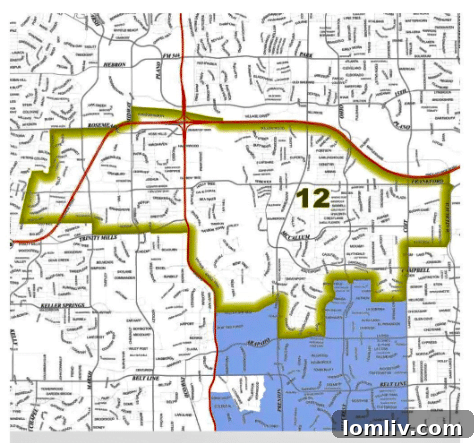
Under these new boundaries, approximately 10 percent of District 12’s residents now live within Dallas County and the City of Dallas, a detail that underscores the district’s diverse administrative ties. Significantly, several new Dallas County neighborhoods have been incorporated into District 12. These include prestigious communities such as Bent Tree, Preston Trails, Windsor Place, Glen Abbey, Saddlebrook, and Kensington Square. The integration of these areas brings new residents and perspectives, further enriching the district’s communal fabric and potentially introducing new public safety considerations for the Dallas Police Department.
Dallas Police Chief Eddie Garcia’s comprehensive Violent Crime Reduction Plan advocates for “hot spot” policing, concentrating resources in high-crime areas. However, Sgt. Lujan emphasizes a nuanced approach for District 12, stressing the paramount importance of his team’s visibility throughout the entire district. He argues that crime is not confined to specific socioeconomic zones, occurring just as readily in affluent, well-lit neighborhoods as it might in darker, abandoned buildings. This philosophy underscores a preventative and omnipresent police presence.
Drawing on a sobering example, Lujan reflects, “Everybody knows that Allen is safe, but it took one event with mass casualties and now everyone is scared of going around there.” This powerful observation highlights that no area is immune to unforeseen dangers and reinforces the need for constant vigilance. He continues, “What if it happened to us? I wouldn’t say there’s one particular area [in District 12] that the police department focuses on. We try to be as visible as possible. We use our crime-fighting techniques every day in different locations. We’re hands-on and that is what makes the police department a great place to work. Every day is a different day.” This underscores a proactive, dynamic, and community-oriented policing strategy that prioritizes widespread engagement over concentrated ‘hot spot’ patrols in a low-crime district.
For residents eager to engage directly with law enforcement regarding their concerns or to establish a neighborhood crime watch, Sgt. Lujan is readily accessible. He encourages citizens to reach out to him by email. This direct line of communication is vital for fostering trust and ensuring that community voices are heard and acted upon.
Furthermore, Councilwoman Mendelsohn’s District 12 newsletter serves as an invaluable resource, providing timely information on traffic issues, public meetings, and various city council matters. Residents are encouraged to sign up here to stay informed and actively participate in their local governance.
This comprehensive overview marks the 13th installment in our ongoing series dedicated to neighborhood crime across Dallas City Council districts. We invite you to share your experiences: Have you or someone you know been the victim of a crime in a Dallas neighborhood or shopping center? Please reach out to us and let us know about your experience by emailing [email protected]. Your insights help us better understand the challenges facing our communities and inform future reporting.