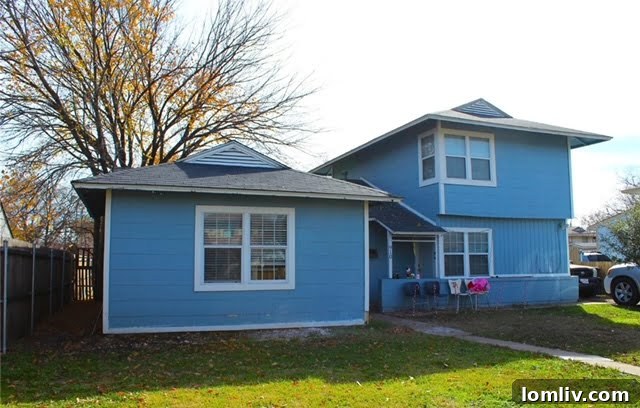
The burgeoning metropolitan area of North Texas, particularly Dallas, is grappling with a severe and escalating affordable housing crisis, a reality acknowledged by every member of the Dallas City Council. While there’s unanimous agreement on the existence and urgency of the problem, significant divergences emerge when it comes to pinpointing the most effective and politically viable solutions. This critical challenge impacts the economic stability of countless residents and threatens the long-term social equity and growth of one of the nation’s fastest-growing cities.
A recent mid-December meeting of the City Council’s Housing and Homelessness Solutions (HHS) Committee brought these differing perspectives into sharp focus. The committee convened to discuss a proposal centered on reducing minimum lot sizes—a strategic move aimed at fostering greater residential density within the city. However, what was intended as a constructive conversation quickly devolved, with critics characterizing the discussion as a direct assault on the cherished character and stability of Dallas’s established single-family neighborhoods. This sentiment underscores the deep divisions and sensitivities surrounding urban planning initiatives that touch upon property values, community identity, and quality of life.
Committee briefings typically draw a limited audience, with public comments being a rarity. Yet, the gravity of the minimum lot size debate spurred an unusual turnout. HHS Chair Jesse Moreno, recognizing the profound public interest, made an exception, allowing several speakers to address the panel, each for a concise minute. Intriguingly, all initial comments voiced strong opposition to any reduction in minimum lot sizes, reflecting a prevailing concern among many residents about potential negative impacts. It was only after a comprehensive staff presentation and several hours of spirited exchange among the elected officials that proponents of minimum lot size reduction were given the opportunity to articulate their perspectives, highlighting the contentious and polarized nature of the issue.
Adding another layer of complexity to an already tense gathering was the conspicuous absence of Councilman Chad West, the primary author of the five-signature memorandum that had formally requested the briefing. The meeting’s unfortunate timing, scheduled just days before Christmas, coincided with West’s pre-planned family vacation, a fact known to both the mayor and Chairman Moreno when the date was set. This absence inadvertently weakened the immediate advocacy for the proposal, leaving its supporters somewhat disadvantaged in the initial stages of the debate.
Further compounding the situation, three of the four other council members who had co-signed the pivotal memo—Jaime Resendez, Paula Blackmon, and Jaynie Schultz—were also not in attendance. This left Councilman Adam Bazaldua as the sole signatory present to champion the initiative. What officials repeatedly emphasized was not a rigid proposal, but rather a preliminary “conversation” about potential strategies. Bazaldua was tasked with the challenging role of navigating the discussion and defending the concept of increased residential density amidst considerable skepticism and opposition, underscoring the political hurdles such planning reforms often face.
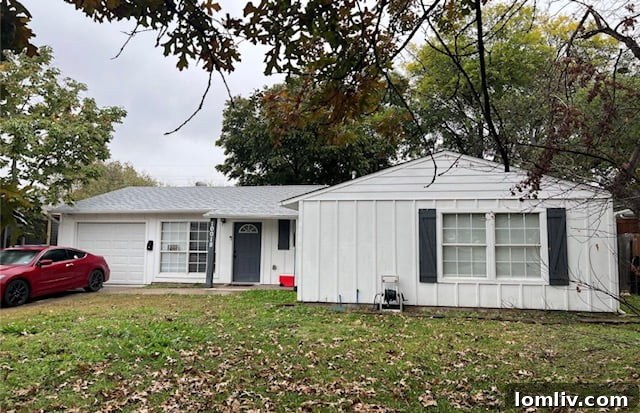
The concept of reducing minimum lot sizes is frequently presented by some city officials as “just one tool in the toolbox”—a versatile instrument among many designed to address the multifaceted housing crisis. Proponents argue that such a measure could be selectively applied in specific, underdeveloped areas, thereby fostering new construction and diversifying housing options without encroaching upon the established character of existing single-family neighborhoods. The goal is to strategically allow for the development of duplexes, triplexes, and other multi-unit dwellings in areas ripe for growth, creating a wider range of potentially affordable housing choices. However, this perspective clashes with the views of other City Council members who, during the Dec. 19 HHS meeting, voiced strong doubts about their constituents’ willingness to embrace such changes, fearing backlash and a perceived erosion of neighborhood integrity.
This fundamental disagreement poses a critical question for Dallas: If the city is unwilling or unable to embrace greater residential density, which is often a prerequisite for generating more, smaller, and inherently more affordable homes, then what viable alternatives remain to extricate Dallas from its deepening unaffordable housing crisis? The dilemma highlights a core tension between preserving existing urban fabrics and adapting to the urgent demands of a growing, diverse population struggling to find accessible housing within the city limits. Without innovative and impactful solutions, the housing crisis is poised to intensify, threatening Dallas’s inclusive growth and economic vitality.
The Soaring Cost of Housing: Unaffordable Housing in Dallas
The stark reality of Dallas’s housing market was laid bare in a comprehensive Dec. 1 memorandum issued by Assistant City Manager Majed Al-Ghafry. This crucial document outlined pivotal findings from the 2023 Dallas Market Value Analysis (MVA), an essential planning tool last updated in 2018. The MVA serves as a diagnostic instrument, shedding light on the evolving dynamics of the city’s real estate landscape and providing data-driven insights for policy formulation. Its updated findings underscore a significant shift in housing affordability across Dallas, indicating a market that has become increasingly challenging for many residents.
The 2023 MVA revealed several critical trends and changes since its last iteration. Firstly, the characteristics of various clusters and market types within Dallas have undergone substantial transformations. Notably, home sale prices have surged dramatically across the board, with the most pronounced increases observed in those market types that recorded the lowest sale prices in 2018. This trend suggests a widespread escalation in values, pushing even previously affordable areas out of reach for a growing segment of the population.
Secondly, the analysis indicated positive shifts in market categories for areas like West Dallas and Cedar Crest, which have seen an upward trajectory since 2018. Encouragingly, the report found no neighborhoods in decline, suggesting a general appreciation of property values across the city. While this indicates a robust real estate market from an investment perspective, it concurrently exacerbates the affordability challenge for potential homebuyers and renters.
Crucially, the report highlighted that the ratio of home sale prices to incomes has grown significantly at every price point across the city. This widening gap undeniably makes Dallas less affordable for residents aspiring to purchase a home. As property values climb at a rate that far outstrips wage growth, the dream of homeownership becomes increasingly distant for many working families and individuals within the Dallas metropolitan area.
Furthermore, a distressing finding was the considerable reduction in areas within Dallas that remain genuinely affordable for most Dallas household homebuyers. Specifically, households earning the median income of approximately $58,200 (according to the American Community Survey 2017-2021) now face significantly fewer options. This scarcity of affordable housing for median-income earners forces many to either commute from distant, more affordable suburbs or to contend with housing costs that consume an unsustainable portion of their income, impacting their overall financial stability and quality of life.
The MVA also brought to light a critical social equity issue: the lack of affordability disproportionately affects Dallas’s Hispanic and Black households. This disparity is primarily attributed to existing income inequalities among different racial and ethnic groups, which are further compounded by the rapidly appreciating housing market. Such trends risk widening socioeconomic gaps and perpetuating historical inequities within the city’s communities.
Finally, the report confirmed an alarming increase in displacement pressure, particularly in most areas surrounding Downtown Dallas. West Dallas, South Dallas, and Deep Ellum were specifically identified as hotspots where rising housing costs and redevelopment initiatives are pushing long-time residents out of their communities. This displacement erodes community ties, cultural heritage, and forces vulnerable populations into less desirable and often less accessible areas.
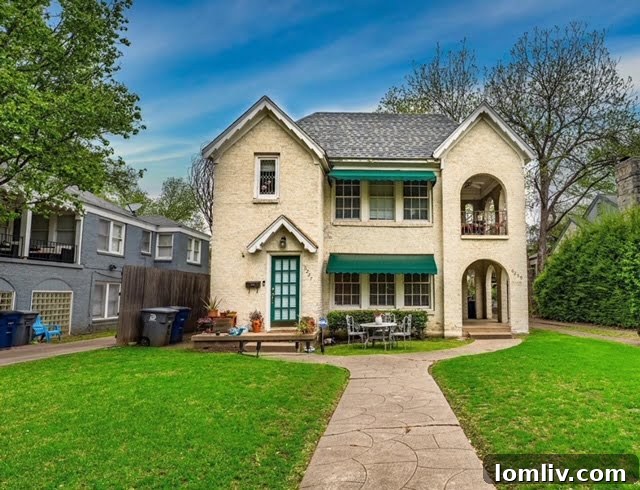
As Al-Ghafry emphasized, the MVA is an indispensable resource utilized by various Dallas departments, including Housing and Neighborhood Revitalization, and Planning and Urban Design. These departments rely on its granular data to inform their strategic planning, allocate resources effectively, and develop targeted interventions designed to address specific market needs and challenges.
“The MVA is far more than just a data compilation; it is a dynamic tool for neighborhood revitalization and strategic investment,” Al-Ghafry explained. “It guides interventions not only to where there is an undeniable need for them but also, crucially, to places where strategic public investment can act as a catalyst, stimulating private market activity and capitalizing on larger, coordinated revitalization efforts across the city.” This strategic approach aims to foster sustainable growth and ensure that development benefits all segments of the Dallas community.
A National Epidemic: Nationwide Housing Unaffordability
The housing affordability crisis is not a challenge unique to Dallas; it mirrors a profound and widespread issue gripping the entire United States. This national trend was robustly documented in a Dec. 21 report released by ATTOM Data Solutions, a leading curator of land, property, and real estate data. Their comprehensive analysis painted a sobering picture: “median-priced single-family homes and condos remain less affordable in the fourth quarter of 2023 compared to historical averages in 99 percent of counties around the nation with enough data to analyze.” This near-universal decline in affordability signals a systemic problem impacting communities from coast to coast, far beyond specific urban centers.
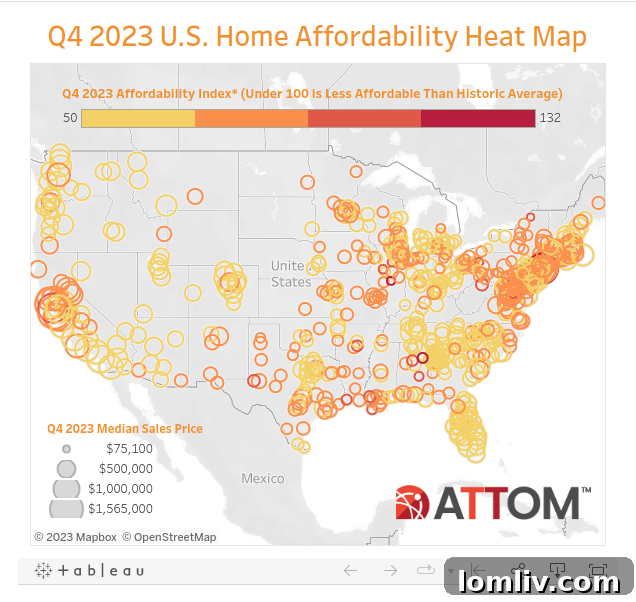
The report’s findings further underscore the severity of the situation by comparing current affordability levels to past periods. Both historical and current affordability metrics are considerably worse than they were just a year ago, and alarmingly, they are far weaker than the conditions observed in 2021. This rapid deterioration within a relatively short timeframe highlights the accelerating pace of the affordability crisis, driven by a confluence of factors including rising interest rates, stubbornly high home prices, and a persistent shortage of housing inventory. The situation represents a significant regression in housing accessibility for a broad swath of the American population, challenging the long-held ideal of homeownership.
A key driver behind this widespread unaffordability is the growing disparity between housing costs and income growth. The ATTOM analysis revealed that home prices are escalating at a faster pace than wages in fully half of the 580 U.S. counties included in their extensive study. This alarming trend is particularly relevant to North Texas, as it encompasses major metropolitan areas like Dallas County and Harris County, Texas. When wages fail to keep pace with the rising cost of housing, the financial burden on residents intensifies, making it increasingly difficult for individuals and families to secure stable, affordable accommodation within their communities.
The financial strain is quantified by the report: an annual wage exceeding $75,000 is now required to comfortably cover the major costs associated with median-priced homes purchased during the fourth quarter of 2023. This threshold applies to a staggering 332, or 57.2 percent, of the 580 markets analyzed. In stark contrast, the report grimly notes that only a mere 11 percent of the reviewed counties boast average annual wages high enough to meet this new financial benchmark. This significant gap between required income and actual average earnings illustrates the systemic challenge faced by most American households in today’s housing market.
To further contextualize the national challenge, the report estimates that the income needed to afford a median-priced home across the U.S. stands at $86,404. This figure represents a substantial 20.5 percent more than the latest average national wage. Such a considerable discrepancy means that the typical American household, earning the average wage, simply cannot afford the typical American home without facing severe financial stress or making significant compromises. This creates a barrier to wealth creation, limits economic mobility, and puts immense pressure on household budgets.
The geographical distribution of these affordability challenges is also illuminating. The 20 highest annual wages required to afford typical homes are predominantly concentrated on the highly competitive East and West Coasts. Leading this list is San Mateo County, California, situated just outside San Francisco, where a staggering annual income of $392,418 is necessary to afford a median-priced home. This highlights the extreme market pressures in desirable coastal regions, often driven by high-paying tech industries and limited land availability. Conversely, the report identifies Cambria County, Pennsylvania, located east of Pittsburgh, as having the lowest annual wage requirement to afford a median-priced home in the fourth quarter of 2023, at a comparatively modest $19,978. These extremes showcase the vast regional disparities in housing affordability across the nation, underscoring that while the crisis is nationwide, its intensity and specific manifestations vary significantly.
For Dallas, these national trends serve as a critical backdrop, illustrating that the city’s housing challenges are not isolated but are part of a broader, deeply entrenched economic and social phenomenon. Addressing Dallas’s affordable housing crisis therefore requires not only targeted local policies but also an understanding of the larger market forces at play. The future prosperity and inclusivity of Dallas hinge on its ability to navigate these complex challenges and implement sustainable solutions that ensure housing remains accessible for all its residents, fostering a vibrant and equitable community for generations to come.