The urban landscape of Dallas is rapidly evolving, bringing with it a complex set of challenges, particularly in the realm of housing affordability and accessibility. In response, the Dallas City Council has embarked on developing a comprehensive 10-year housing policy, an ambitious undertaking designed to shape the city’s residential future. However, this critical initiative has encountered a significant hurdle: a perceived lack of robust public feedback.
Recently, the Dallas City Council expressed concern regarding the Housing and Neighborhood Revitalization staff’s efforts to gather sufficient community input for this pivotal policy. The reasons behind this struggle remain a subject of debate. Are residents simply disengaged from civic processes, perhaps feeling their contributions won’t influence policy outcomes? Or has the city fallen short in its public outreach, failing to effectively communicate the policy’s importance and create accessible avenues for feedback? These questions underscore the fundamental challenge of fostering genuine public participation in urban planning, especially for issues as personal and impactful as housing.
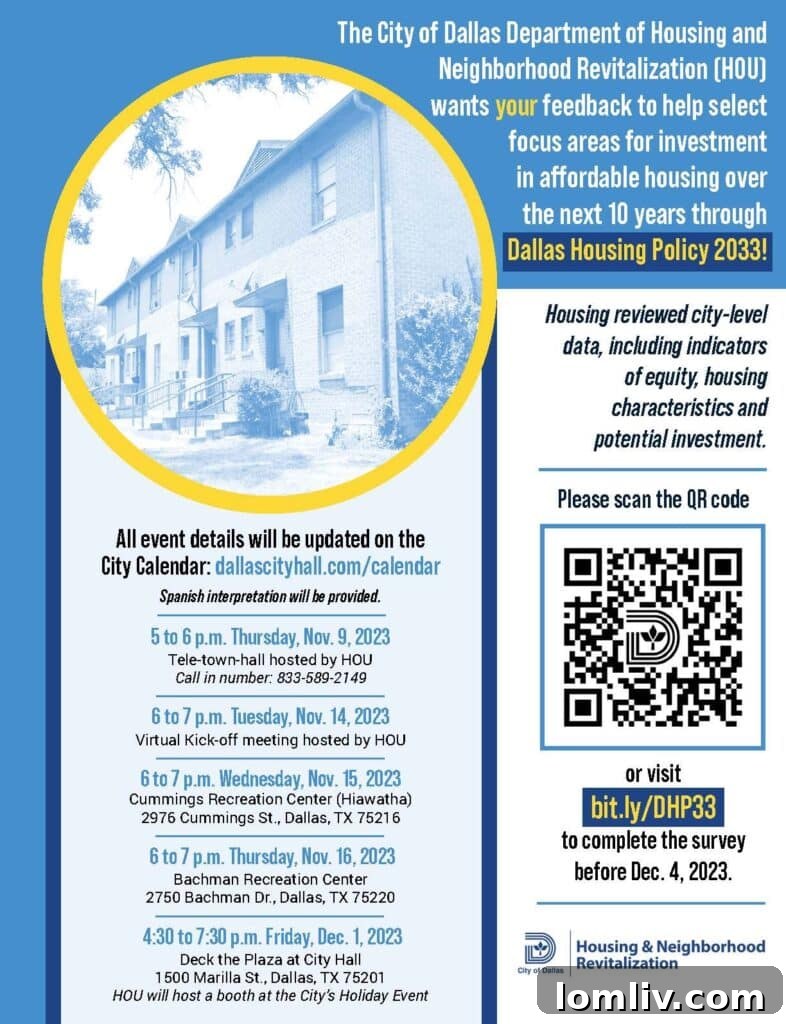
Recognizing the imperative for greater community involvement, the housing staff made renewed efforts earlier this month to engage the public. These initiatives included a city-wide telephone town hall meeting, a virtual kickoff event to introduce the policy, and two in-person workshops designed to facilitate direct dialogue. The results of this public engagement drive, along with an assessment of the overall process, are scheduled for review before the City Council’s Housing and Homelessness Solutions Committee on January 22nd. This forthcoming briefing will be crucial in determining the path forward for the Dallas Housing Policy and ensuring it truly reflects the needs and aspirations of its residents.
This concentrated effort to re-engage the public comes at a time of transition within the city’s housing leadership. Less than two months prior, David Noguera, the Director of Housing and Neighborhood Revitalization, resigned from his post to accept a position with the U.S. Department of Housing and Urban Development in Miami. In the interim, Cynthia Rogers-Ellickson has stepped into the role of interim director, tasked with steering the department through this crucial phase of policy development and community outreach. Such leadership changes can sometimes disrupt momentum, making consistent and effective public engagement even more vital to maintain continuity and public trust.
To bolster its capacity for public engagement, the City of Dallas partnered with California-based TDA Consulting. This collaboration underscores the complexity of designing effective outreach strategies that resonate with diverse communities. A key focus for Dallas leaders, and a primary objective of this public engagement, is to gather residents’ perspectives on identifying specific target investment areas for affordable housing. These areas will be crucial for directing resources and interventions to where they are most needed, ensuring equitable development across the city.
Initial insights from a poll conducted during the November 9th telephone town hall meeting shed light on residents’ priorities. A significant portion of participants indicated that their top priorities for target investment areas are those struggling with affordable housing in poor condition, as well as areas where there’s a pressing need for affordable homeownership opportunities. This suggests a strong community desire to both preserve existing affordable housing stock and expand avenues for residents to achieve homeownership. Comparatively, about 27 percent of participants selected areas needing affordable rental housing, and 15 percent pointed to areas simply lacking affordable housing. These results provide valuable initial data, highlighting specific community concerns and helping to refine the focus of the Dallas Housing Policy.
Shaping Dallas Housing Policy 2033: A Vision for Affordability and Equity
The “Dallas Housing Policy 2033” is not merely a document; it’s a strategic roadmap designed to tackle the city’s housing challenges over the next decade. Assistant Housing Director Thor Erickson articulates the core ambition of this policy: to enhance affordability across the entirety of Dallas. This overarching goal recognizes that housing stability is fundamental to a thriving city, impacting everything from economic growth to public health.
Erickson elaborated on the specific objectives, stating, “We are tasked with selecting three to five equity strategy target areas for investment to preserve and produce affordable housing. We are committed to continuous engagement and will continue to seek resident participation to develop neighborhood revitalization strategies within the selected areas.” This statement underscores a dual approach: preserving existing affordable homes, often critical to maintaining neighborhood character and preventing displacement, and actively producing new units to meet growing demand. The emphasis on “equity strategy” means intentionally directing resources to areas that have historically been underserved or disproportionately affected by housing disparities, aiming to correct past imbalances and foster more equitable outcomes.
Further insights from the telephone town hall revealed a broader understanding of housing needs beyond just new construction. A poll indicated that a significant 49 percent of respondents identified home repair and preservation as the greatest housing need in their communities. This highlights the critical importance of maintaining the existing housing stock, preventing decay, and ensuring homes remain safe and habitable. In a separate, yet related, poll, an overwhelming 64 percent of respondents emphasized that improvements to streets, roads, and transportation infrastructure are most needed to support quality housing. This connection between housing and surrounding infrastructure is vital, as accessible transportation and well-maintained public spaces contribute significantly to the livability and value of a neighborhood, directly impacting residents’ quality of life and access to opportunities.
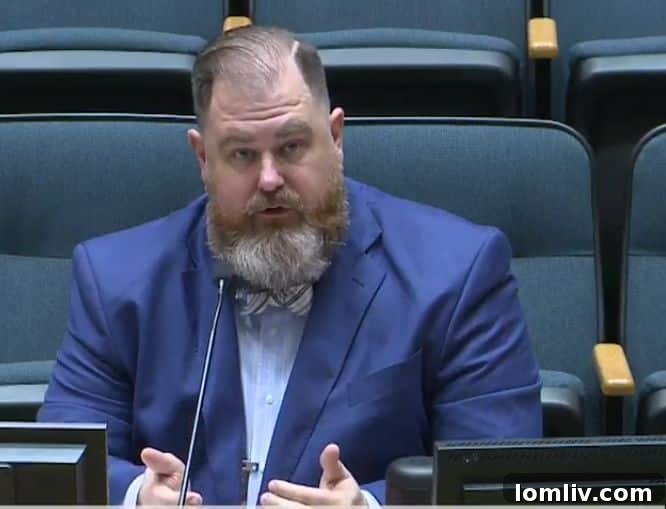
When discussing the types of housing the city typically invests in for affordable housing initiatives, Erickson explained a focus on “real property” – encompassing traditional homes and apartment complexes, rather than manufactured homes. However, he quickly added an important nuance: “However, those are still liveable homes that have a place in the city of Dallas. As we understand the targeted areas more and where manufactured homes make sense from a land use policy and perspective for the city, we’ll consider alignment of where different housing typologies align within all areas of the city of Dallas.” This demonstrates an evolving perspective within the department, acknowledging the potential role of diverse housing types, including manufactured homes, in addressing the affordable housing crisis, particularly in areas where they are contextually appropriate and meet community needs.
At the core of the policy’s objectives is a clear definition of affordability. Erickson clarified that affordability is defined as a household contributing less than 30 percent of their income towards their rent or mortgage. This widely accepted benchmark is crucial because spending more than this threshold can lead to housing cost burdens, forcing families to make difficult trade-offs between housing and other essential needs like food, healthcare, and transportation. By adhering to this definition, the city aims to ensure that its affordable housing initiatives genuinely improve the financial stability and well-being of Dallas residents.
Strategic Reinvestment: Identifying Target Areas for Impact
The process of identifying “Target Areas For Reinvestment” is a meticulous, data-driven endeavor, guided by the expertise of Area Redevelopment Manager Jasmine Bazley and her team. Bazley explained that city staff conducts a thorough review of various data points to pinpoint potential investment areas. These indicators include metrics of equity, which assess fairness in resource distribution and opportunity; comprehensive community characteristics, examining demographics, social services, and amenities; detailed housing characteristics, evaluating the condition, age, and type of existing housing stock; an analysis of historical disparities, recognizing past injustices and their lasting impact on neighborhoods; and an assessment of current market conditions, understanding supply and demand dynamics, and property values. This holistic approach ensures that investment decisions are well-informed and targeted for maximum positive impact.
Bazley emphasized that while these intricate factors, along with potential partnership opportunities with developers and community organizations, will significantly influence the selection of target areas, the city’s commitment to public input remains paramount. “The city also wants the public to weigh in on which areas need a hand up,” she stated. This commitment ensures that technical data is balanced with the lived experiences and insights of the residents themselves, leading to policies that are both analytically sound and socially responsive.
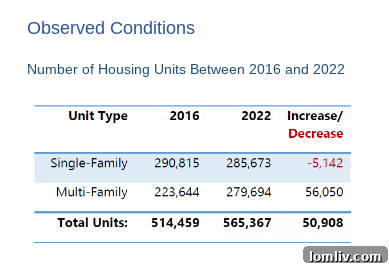
Reinforcing the need for data-driven decisions, a recent city audit conducted by City Auditor Mark Swann provided critical insights into Dallas’s housing inventory trends. The audit revealed a notable decrease of 5,142 units in single-family housing, representing a 1.77 percent reduction from 2016 through 2022. Conversely, the city experienced a significant increase of 56,050 multifamily housing units, a substantial 25.06 percent rise during the same period. These figures highlight a clear shift in Dallas’s housing landscape, leaning towards higher-density residential development.
In response to these findings, City Auditor Mark Swann issued several key recommendations to improve the city’s housing data management and policy formulation:
- Assign clear responsibility for maintaining and consistently reporting the City’s housing units’ data. This ensures accuracy and accountability in tracking crucial housing statistics.
- Establish definitive City definitions for the terms “single-family housing unit” and “multifamily housing unit.” Clear definitions are essential for consistent data collection, reporting, and policy application.
- Assign responsibility for accurately calculating and monitoring the City’s housing affordability index. A reliable affordability index is a vital tool for assessing the effectiveness of housing policies and understanding the economic burden on residents.
Crucially, city management agreed to all three recommendations, signaling a commitment to improving data integrity and analytical capacity, which are foundational for effective and equitable housing policy implementation.
Looking to the future, Thor Erickson shared an encouraging update with attendees at a public meeting on the housing policy: over 20,000 affordable housing units are currently in the pipeline. “Many of those are apartments,” he noted, indicating a continued trend towards multifamily development to meet the city’s growing population and demand for rental options. However, he also highlighted opportunities for homeownership, stating, “There are homeownership opportunities available throughout different communities in Dallas where developers have taken advantage of our land bank or land transfer program in order to achieve affordable housing.” These programs are instrumental in making land available and more affordable for developers committed to building homes within reach of lower and middle-income families.
Erickson concluded by outlining the strategic vision for the new policy: “Through our new housing policy and selecting our target areas, we hope to be able to recruit developers to be able to build the type of housing that’s needed and supports the community within these target areas.” This forward-looking approach emphasizes not just building units, but building the *right* type of housing in the *right* locations, ensuring that new developments align with community needs and contribute positively to neighborhood revitalization. The success of Dallas’s housing future hinges on this collaborative effort between city leadership, dedicated staff, developers, and, most importantly, the engaged residents whose voices are essential in shaping the city they call home.