The Elusive Costco Dallas: Why the Warehouse Giant Hasn’t Landed in the Big D
For years, the prospect of a Costco Dallas store has been a tantalizing dream for countless residents within the city limits. The anticipation builds with every rumor, only to be met with repeated disappointment. Many Dallasites yearn for the convenience and value that a local Costco would offer, but the wholesale retailer has consistently sidestepped opportunities to establish a presence in the heart of the city. This ongoing saga leaves many asking: why is it so difficult for Costco to open in Dallas, and what does it mean for the future of retail development in one of Texas’s largest metropolitan areas?
A History of Near Misses: The Dallas Costco Dilemma
The journey to bringing a Costco Dallas location to fruition has been fraught with challenges, marked by several high-profile attempts that ultimately fell through. Each proposal sparked considerable excitement among local consumers, only to end in frustration as viable sites proved elusive or negotiations stalled. This pattern has created a deep sense of longing and bewilderment among a significant portion of the Dallas population who are eager to experience the Costco shopping experience without the trek to neighboring suburbs.
The Coit and North Central Expressway Disappointment
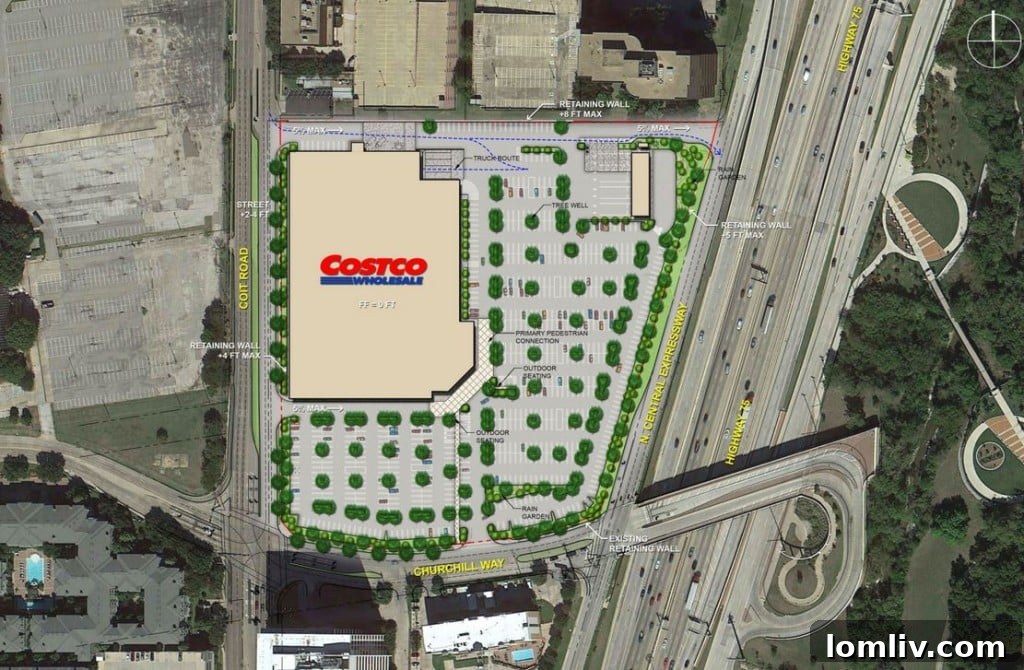
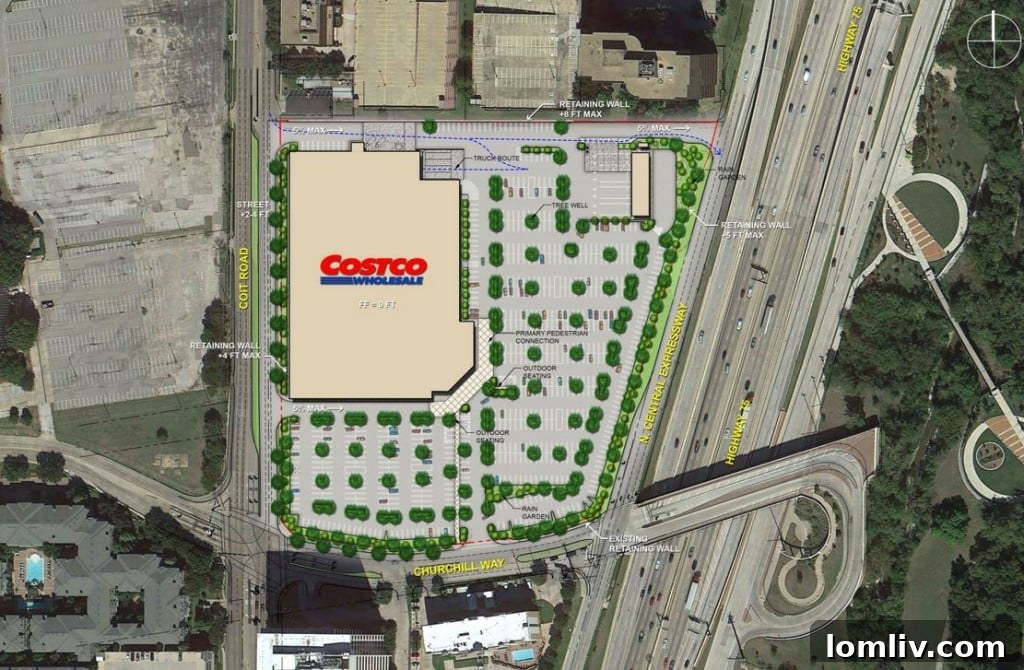
One of the most recent and prominent examples of a failed attempt involved a highly anticipated site at Coit Road and North Central Expressway. This location, once eyed as the potential home for the very first Costco inside Dallas city limits, generated substantial buzz. Reports indicated that the proposed site, owned by the Texas Department of Public Safety (DPS), was considered ideal due to its accessibility and visibility. However, despite initial enthusiasm, negotiations reportedly faltered over the asking price. According to insights from DMN’s Maria Halkias, the cost of the property was simply too high for Costco’s preferred acquisition model, leading the retail giant to ultimately pass on the opportunity. This setback was a significant blow to the hopes of many, reinforcing the perception that finding suitable and affordable land in Dallas for a large-scale warehouse club is a formidable task.
Other Notable Failed Ventures
The Coit and North Central Expressway incident was not an isolated event. Earlier, there were reports of Costco executives sniffing around the old Steakley Chevrolet location. This site, with its ample space, also seemed promising at the time, igniting another wave of anticipation among local shoppers. However, like the Coit property, this potential deal also failed to materialize, adding to the growing list of near misses. These repeated instances underscore a fundamental disconnect between Dallas’s fervent consumer demand and Costco’s stringent site selection criteria, highlighting the complexities involved in urban retail expansion for a company of Costco’s unique operating philosophy.
Costco’s Strategic Blueprint: Value, Patience, and Prudent Expansion
To understand why a Costco Dallas store has remained out of reach, it’s crucial to delve into Costco’s distinct corporate philosophy and expansion strategy. Unlike some retailers that might engage in aggressive land acquisition or prolonged legal battles to secure prime locations, Costco operates with a deeply embedded principle of value and efficiency, extending even to its real estate decisions.
Brian Whelan, senior vice president of Northwest Atlantic Partners, the firm advising Costco on new store locations, has acknowledged the keen interest from Dallas residents. While he declined to comment on specific Dallas ventures, he affirmed that “Texas continues to be an important part of our expansion plans” during a recent panel discussion sponsored by the International Council of Shopping Centers in Dallas.
Whelan further elaborated on Costco’s unique position, stating, “Dallas fits its criteria for opening a store, but the company feels no pressure to do it. It doesn’t matter that Dallas has the two groups he said Costco requires: an affluent customer base and lots of small businesses. Small businesses represent 50 percent of Costco’s sales.”
Prioritizing Value Over Expediency
Costco’s corporate DNA is intrinsically linked to delivering exceptional value to its members. This commitment isn’t limited to product pricing; it permeates every aspect of their operations, including real estate acquisition. The company makes it clear that it will not overspend on land or get entangled in costly, protracted legal and zoning disputes, a strategy that Sam’s Club, for instance, employed for its Cityplace store. Instead, Costco prefers to wait for a truly “good deal” on a property that aligns perfectly with their financial models and operational requirements. This patient, methodical approach means that if a site is priced too high, or involves excessive regulatory hurdles, Costco is prepared to walk away, even from highly desirable markets like Dallas.
Key Criteria for Site Selection
Despite Dallas’s undeniable appeal, Costco adheres to a rigorous set of criteria for new store openings. The company specifically targets areas with:
- An Affluent Customer Base: Costco’s business model thrives on bulk purchases and membership fees, making areas with a higher disposable income a natural fit. Dallas, with its thriving economy and diverse demographics, certainly meets this criterion.
- A Strong Presence of Small Businesses: Perhaps surprisingly to some, small businesses constitute a significant portion—reportedly 50 percent—of Costco’s total sales. These businesses often purchase supplies, equipment, and inventory in bulk, making them crucial anchors for a Costco store’s profitability. Again, Dallas, a hub for entrepreneurship, easily satisfies this requirement.
The fact that Dallas seemingly checks all these boxes yet still lacks a store highlights that while these factors are necessary, they are not sufficient. The overarching factor remains the availability of suitable land at an acceptable price point.
Immunity to Pressure: A Lucrative Business Model
Another critical aspect of Costco’s strategy is its ability to operate without feeling external pressure to open in specific markets. The company’s average store generates an impressive $140 million to $150 million annually, regardless of its location. This consistent, high-performing revenue stream across its existing portfolio gives Costco immense leverage. They don’t *need* Dallas; they will open in Dallas when the conditions are perfect for *them*. This confidence allows them to be highly selective, prioritizing long-term financial viability over short-term market entry.
Avoiding Sam’s Club Saturation
Costco also employs a strategic approach to competition, particularly with its main rival, Sam’s Club. The company explicitly states it is not looking for direct competition with Sam’s Club. This might explain why Dallas, a market already well-served by numerous Sam’s Club locations, presents a different kind of challenge for Costco. A market saturated with a direct competitor could dilute potential profits and member acquisition, making it less attractive for Costco’s expansion plans. Therefore, while Dallas has the consumer base, the existing competitive landscape could also be a subtle deterrent, influencing Costco’s cautious approach to establishing a foothold within the city.
The Frustration of Dallas Residents and the “Costco Fix”
The absence of a Costco in Dallas city limits is a constant source of frustration for thousands of residents. For dedicated Costco members, the lack of a local option means making regular pilgrimages to suburban locations. Many Dallasites currently find themselves driving considerable distances, typically to stores in Plano or Duncanville Cedar Hill, just to get their “Costco fix.” This inconvenience isn’t just about distance; it’s about time, fuel costs, and the general hassle of navigating busy highways for routine shopping trips. The demand is undeniable, and the inconvenience is palpable, leaving many to wonder if their beloved bulk retailer will ever truly call Dallas home.
The economic impact of a new Costco store for Dallas would also be significant. Beyond the convenience for consumers, a new location would bring hundreds of jobs, increase local tax revenues, and potentially stimulate further retail development in its vicinity. It would also offer small businesses within Dallas an easier path to access wholesale goods, aligning with Costco’s strong emphasis on supporting business-to-business sales.
Looking Ahead: Is There Still Hope for a Dallas Costco?
Despite the historical challenges, the hope for a Costco Dallas location continues to burn brightly. The city’s growth, coupled with its evolving real estate landscape, might eventually present the ideal opportunity that Costco has been waiting for. Perhaps a new development, a redeveloped industrial site, or a unique public-private partnership could unlock the perfect parcel of land at an attractive price. The ongoing dialogue between developers, city planners, and retail strategists suggests that while progress has been slow, the conversation is far from over.
Ultimately, the ball remains in Costco’s court. While Dallas has demonstrated its readiness and immense desire for a store, Costco’s disciplined approach means they will only proceed when the financial and logistical stars align perfectly with their unique business model. Until then, Dallas residents will continue their drives to the suburbs, holding onto the hope that one day, their long-awaited warehouse retail giant will finally establish roots within the vibrant confines of the Big D.
Where do you think Costco should move in within Dallas city limits to finally meet the demand?