Exploring Iconic 1980s High-Rise Living in Dallas: A Journey Through Architectural Heritage
Dallas, a city known for its dynamic skyline and vibrant real estate market, saw a significant boom in high-rise residential construction during the 1980s. This era introduced a distinct architectural style and a particular brand of luxury living that continues to captivate residents and enthusiasts today. As we delve into the second wave of these remarkable buildings, prepare to be transported back to a time of bold designs, generous spaces, and innovative features that shaped the urban fabric of Dallas. From the unique stories behind their construction to the enduring allure of their exclusive residences, these 1980s high-rises offer a fascinating glimpse into a pivotal decade for Dallas architecture. Join us as we continue our journey, exploring some of the most notable and historically rich high-rise condominiums that define this iconic period.
Park Plaza: A Testament to Enduring Design
4500 Roland Ave.
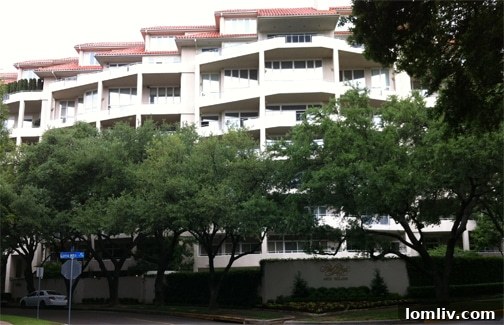
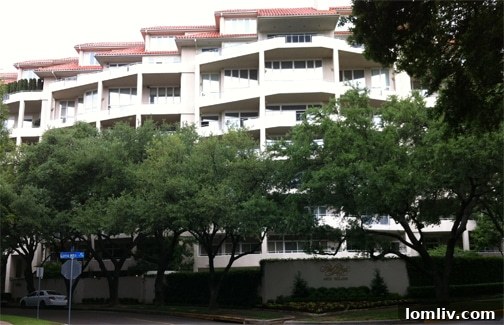
The Park Plaza, an exclusive 46-unit building located at 4500 Roland Avenue, holds a unique place in Dallas’s high-rise history. Its demographics reveal a strong appeal to a mature audience, with a significant 76 percent of its residents filing for over-65 tax exemptions. This demographic concentration speaks volumes about the building’s serene environment, luxury amenities, and perhaps the long-term desirability that allows residents to age gracefully within its confines.
Perhaps the most intriguing tale surrounding the Park Plaza is its origin story, earning it the moniker of a “cannibal building.” Local lore suggests that an older structure on the site was ingeniously stripped down to its steel skeleton and then meticulously reconstructed into what is now the Park Plaza. This extraordinary undertaking was reportedly a strategic move to circumvent stringent changes in Highland Park building codes, which would have otherwise restricted the height and footprint of a completely new construction. This architectural “renovation” rather than a “rebuild” allowed developers to preserve the valuable existing zoning advantages, thereby avoiding potentially prohibitive costs, permitting complexities, and increased taxation that a new-build would incur. It’s a fascinating example of adaptive reuse driven by regulatory necessity, creating a modern building that subtly carries the legacy of its predecessor.
Locationally, Park Plaza boasts an enviable position. It’s just a stone’s throw from a Whole Foods Market, a significant draw for residents seeking convenience and access to gourmet groceries and health-conscious options. Units within Park Plaza are notably spacious, typically spanning 2,000 square feet and upwards, offering expansive living areas rarely found in newer constructions. The building also features four magnificent penthouses, each boasting breathtaking, unobstructed views of the downtown Dallas skyline. While the primary orientation of most units capitalizes on these spectacular downtown vistas, its proximity to the Dallas North Tollway does raise considerations regarding potential noise. However, for many residents, the convenience and luxury far outweigh such minor concerns, and perhaps, as the humorous observation suggests, by a certain age, one’s hearing might indeed be battery-powered, mitigating the issue entirely.
Beyond its unique construction history and prime location, Park Plaza represents a distinctive chapter in Dallas’s luxury high-rise narrative. It offers a blend of historical ingenuity, spacious living, and a community tailored for those seeking comfort and sophistication in their golden years, all while maintaining a visual connection to the city’s vibrant core.
The Douglas: Pinnacle of 1980s Luxury and Innovation
8181 Douglas Ave.
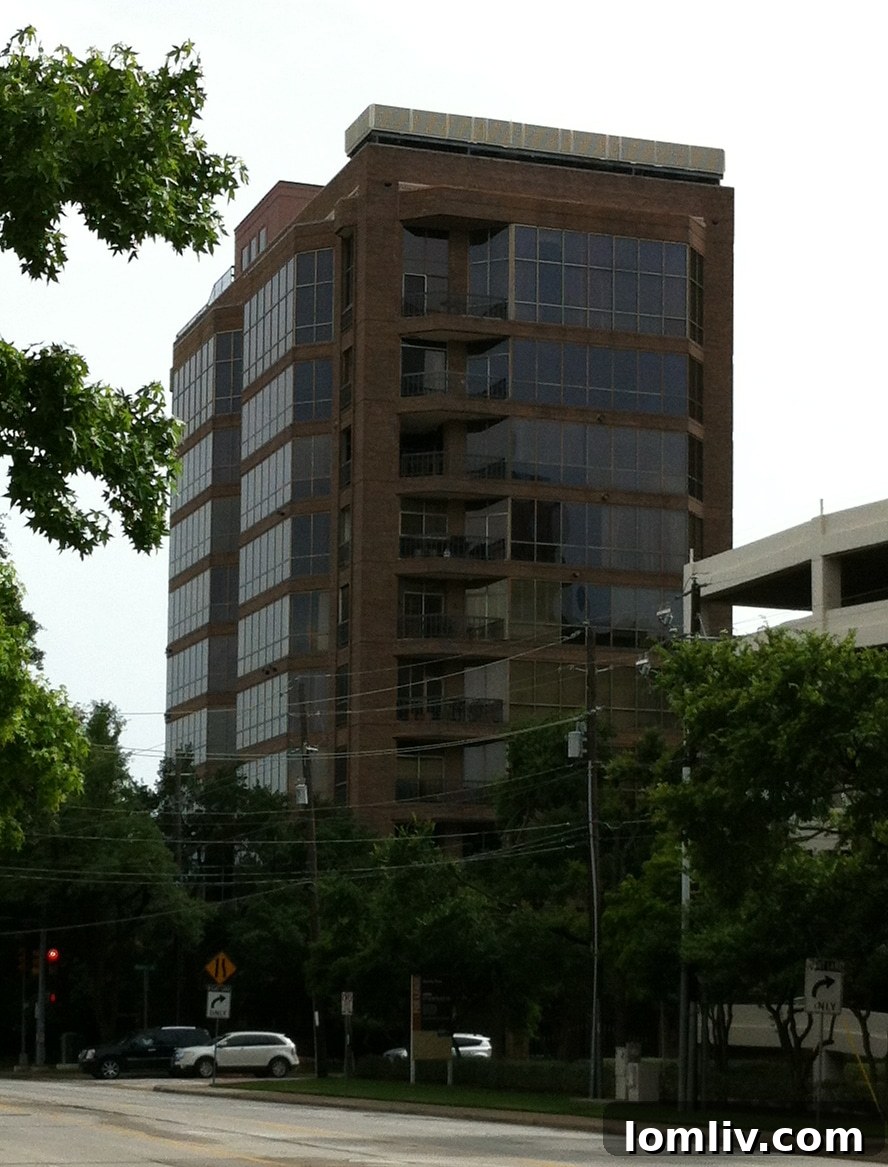
The Douglas, an exclusive 14-unit residential tower located at 8181 Douglas Avenue, emerged as a beacon of luxury and innovation in 1980s Dallas. Historically, it stands out for pioneering gas cooking in a Dallas residential high-rise, a significant amenity at the time that offered superior culinary precision and quickly became a highly sought-after feature for gourmet enthusiasts. This focus on high-end conveniences underscored The Douglas’s commitment to providing an unparalleled living experience from its inception.
The units within The Douglas are celebrated for their monumental scale, ranging from a generous 1,350 square feet to an astonishing 18,270 square feet. This latter, truly expansive residence, exemplifies the ‘OMFG’ scale of luxury living, alongside a pair of entire-floor units each measuring 7,125 square feet. These dimensions speak to an era where space and grandeur were paramount, catering to an elite clientele desiring palatial homes within an urban high-rise setting.
One of the most notable residents of The Douglas was Darwin Deason, the colorful founder of ACS (Affiliated Computer Services). Mr. Deason famously owned the colossal 18,270-square-foot manse. Initially, D Magazine reported his condo as occupying the entire 9th floor, totaling 7,125 square feet. However, Dallas Central Appraisal District (DCAD) records from 2009 revealed a fascinating expansion: Mr. Deason acquired the entire floor directly above his existing residence. This acquisition didn’t merely double his living space; the total swelled to an impressive 18,271 square feet. This suggests a complex, multi-level customization, possibly incorporating a significant portion of the building’s upper structure. While aerial images of the building hint at a structure occupying a large part of the roof – potentially mechanical systems or elevator housings – it sparks intriguing speculation about whether the top-floor unit might have incorporated some form of exclusive roof access, further amplifying its unique appeal and functionality as a truly singular urban estate.
The Douglas, with its limited number of units and “pacemaker pricing,” firmly established itself as a premier address. Its exclusivity meant that opportunities to glimpse inside these magnificent residences were, and remain, rare. The building’s architectural integrity and its pioneering amenities, coupled with its roster of influential residents, cement its status as a significant landmark of 1980s Dallas luxury high-rise development. It represents a bold statement in architectural design and upscale living, where generous spaces, innovative features, and an air of exclusivity were the defining characteristics.
The Shelton: Reimagined Elegance on Luther Lane
5909 Luther Lane
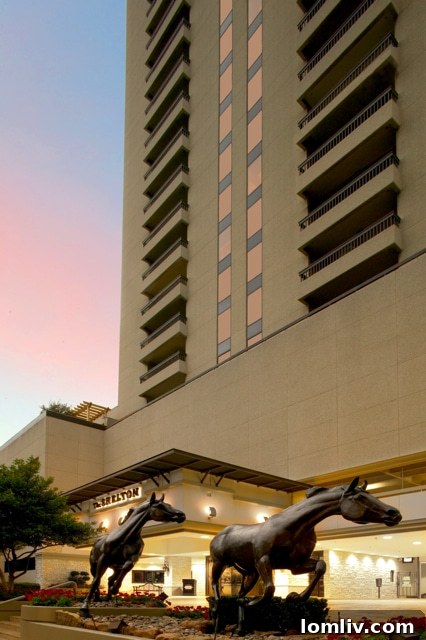
The Shelton, situated at 5909 Luther Lane, stands as another enduring testament to 1980s high-rise architecture in Dallas, albeit one that has undergone significant transformation. The building has experienced several ownership changes throughout its history, culminating in a substantial $12 million renovation between 2006 and 2007. This comprehensive overhaul breathed new life into both the public areas and individual residences, modernizing the building while respecting its original character.
Characteristic of its era, The Shelton’s original design featured balconies that often encroached into the unit footprints. While offering valuable outdoor space, this design choice sometimes resulted in less fluid or intuitive floor plans compared to contemporary open-concept layouts. The 1980s often prioritized a greater number of smaller, more defined rooms over fewer, more expansive communal areas, a trend visible in The Shelton. While some may find this layout less appealing today, it also offers opportunities for distinct functional zones within a residence. The building’s prime location directly adjacent to the Dallas North Tollway presents a dual experience: captivating views and a dynamic urban backdrop from within the units, yet a potentially noisy environment on the patios and balconies, a trade-off common in bustling city centers.
One peculiar design detail noted in some units at The Shelton is the “wonky” shower sills, elevated approximately 12 inches from the ground. This unusual step-up, while not universal across all units, represents a design quirk that could have ideally been addressed during the extensive 2006 renovation. However, such elements often speak to the challenges of large-scale renovations where certain original structural components might be deemed too costly or complex to modify comprehensively. The good news, as experienced by many homeowners, is that such issues are typically fixable, allowing for customized improvements.
In a delightful and perhaps unexpected observation, a recent visit to The Shelton revealed a real-life resident pushing a stroller. This seemingly small detail carries significant weight, challenging the common perception that high-rise living is solely the domain of empty nesters or single professionals. It signals a subtle but important shift, indicating that The Shelton, and potentially other high-rises, are adapting to accommodate diverse family structures, including those with young children. This evolving demographic adds another layer of vibrancy to the building’s community, showcasing its adaptability and broad appeal beyond the typical high-rise resident profile.
The Shelton, with its rich history of renovations and its evolving resident base, exemplifies the journey of a 1980s high-rise navigating the demands of modern urban living while retaining its unique Dallas character.
The Claridge: Sophistication with a Twist
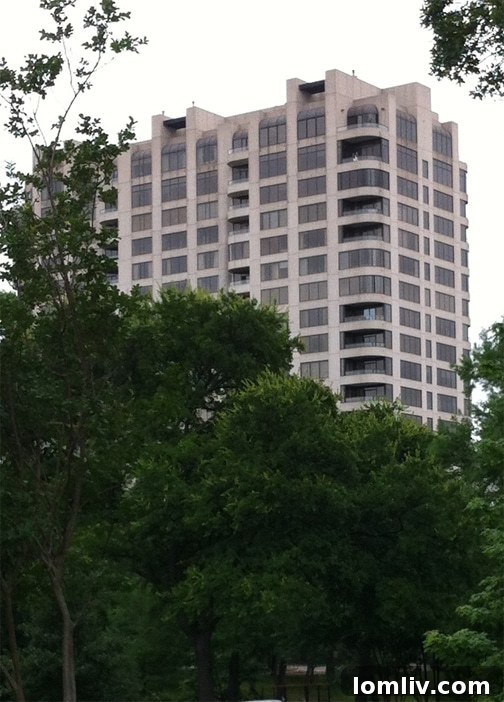
3510 Turtle Creek
The Claridge, prominently situated at 3510 Turtle Creek, often presents a curious first impression for newcomers due to its address. While it carries the prestigious “Turtle Creek” designation, the building itself is not directly on the famous waterway but is rather bounded on two sides by Lemmon Avenue. This geographical nuance, which might seem minor, actually impacts its perceived prestige and potentially the ambiance, particularly for amenities like the pool area, which might experience more noise from the busy thoroughfare. The contrast between the upscale allure of “Turtle Creek” and the more utilitarian “Lemmon Avenue” provides a subtle but interesting tension, highlighting the intricate dynamics of urban branding and location.
Upon entering The Claridge, one is immediately greeted by a lobby resplendent with elegance. It is lavishly adorned with polished marble and glittering crystal chandeliers, creating an atmosphere of timeless sophistication that speaks to the building’s luxury ethos. This grand entrance sets the tone for the residences within, which are characterized by their expansive proportions. Units at The Claridge are notably large, featuring equally generous bathrooms and ample walk-in closets, reflecting the 1980s’ penchant for spacious and comfortable living. These interiors provide a canvas for elegant decor, appealing to those who appreciate grandeur and personal space.
A significant trend observed in The Claridge is the enclosure of the majority of its balconies. This architectural modification has transformed what were once open outdoor spaces into additional usable interior square footage. This conversion often results in interiors boasting captivating curved walls of nearly floor-to-ceiling glass, creating a seamless connection with the urban environment while offering enhanced sound insulation and climate control. This ’80s greenhouse effect, while potentially leading to increased solar gain, provides residents with a bright, airy, and more easily decoratable space. Given the building’s position between the two segments of Lemmon Avenue, it’s often theorized that higher units benefit from greater tranquility, rising above the street-level din to offer a more peaceful living environment.
The Claridge attracts a discerning caliber of owners, and its units are frequently maintained to an exceptionally high standard. This means that opportunities to acquire a unit specifically for extensive renovation, beyond personal enjoyment, can be challenging in a tight market. However, for those who appreciate classic elegance and impeccable upkeep, The Claridge is a true gem. Many units require no immediate updates, allowing non-renovators to move in and enjoy the refined atmosphere from day one. This makes The Claridge a highly desirable option for those seeking turnkey luxury in a building that masterfully blends 1980s grandeur with enduring appeal.
The Centrum: A Story of Resilience and Transformation
3111 Welborn St.
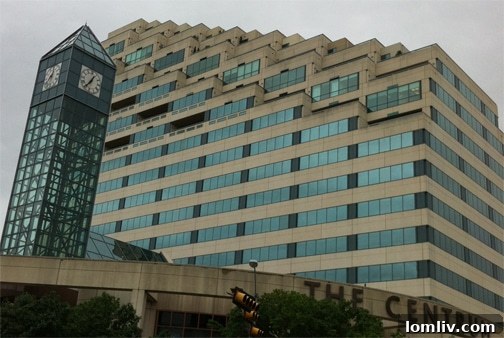
The Centrum, located at 3111 Welborn Street, embodies a narrative of resilience and transformation within Dallas’s high-rise landscape. For many, including this author, it represents “the one that got away” – a property that, despite initial aspirations, followed a winding path. The building’s journey has indeed been bumpy, starting its life as a rental property for several years before a challenging transition into a condo development, with many units proving difficult to sell. This eventually led to the developer, who undertook a significant renovation in the mid-2000s, being compelled to auction off unsold units. Further compounding its early challenges, the Homeowners Association (HOA) was embroiled in a legal dispute with the builder for years over patio drainage issues that caused flooding in some units. Fortunately, these issues have since been resolved, and residents now report proper drainage, marking a new chapter of stability for The Centrum.
Architecturally, The Centrum is distinctive, with its lower floors dedicated to office space and the upper, stair-stepped floors housing just 31 exclusive condominiums. This mixed-use design, common in many urban centers, integrates residential living with professional environments. The ground floor has historically hosted various restaurants, achieving varying degrees of success. A nostalgic highlight was Stephan Pyles’ renowned Star Canyon, which once graced the Oak Lawn and Cedar Springs corner. This iconic eatery was celebrated for its indulgent, eponymous margaritas and the legendary Heaven-and-Hell cake, dishes that remain culinary benchmarks. Since Chef Pyles’ departure, restaurant success at the location has been more intermittent. Today, Mattito’s occupies the spot, contrasting its vibrant cantina décor against the sleek 1980s granite finishes of the building. This building also gained notoriety for having housed the infamous Robert Durst between alleged murders, adding a layer of compelling, albeit somber, historical context.
Unlike some of its amenity-rich counterparts, The Centrum is not characterized by a plethora of shared facilities such as pools or tennis courts. However, the true appeal lies within the units themselves, which are exceptionally well-appointed. The building offers two comfortable guest suites, two spacious 1,240-square-foot one-bedroom units, and a diverse mix of two- and three-bedroom condominiums. Crowning the building are two multi-level penthouses, offering expansive views and luxurious living. Outdoor space is a significant draw, with each unit featuring at least one private patio, and the end units on each “stair step” benefiting from both a patio and an open-air terrace, providing residents with generous opportunities for outdoor enjoyment and stunning vistas.
The mid-2000s renovation of The Centrum was nothing short of stellar. Units were outfitted with approximately $20,000 worth of premium Sub-Zero and Wolf appliances, complemented by custom Downsview cabinetry and convenient in-unit washer/dryer hookups. A minor stylistic quibble, common in that renovation era, was the prevalent use of trendy vessel sinks. Interestingly, even un-renovated units still exhibit the unique ’80s gray melamine glamour, offering a glimpse into the building’s original aesthetic. Currently, unit 1302 is on the market, showcasing breathtaking downtown views, a testament to the enduring appeal of The Centrum’s residences and its prime location.
Conclusion: The Enduring Legacy of 1980s Dallas High-Rises
Our journey through Dallas’s 1980s high-rise residential landscape reveals a fascinating period of architectural ambition and evolving luxury. This era, characterized by distinctive design elements such as the widespread use of granite, marble, and often “popcorn” ceilings and melamine finishes, nevertheless produced buildings of remarkable quality and generous spatial proportions. While some design choices, like the preference for more, smaller rooms over expansive open-plan layouts, and the initial integration of balconies into unit footprints, might differ from contemporary tastes, many of these units boast workable floorplans that are highly adaptable to modern living. Even seemingly anachronistic features like bay windows can be creatively integrated into updated designs, proving the enduring versatility of these structures.
The high-rises discussed—Park Plaza, The Douglas, The Shelton, The Claridge, and The Centrum—each tell a unique story of innovation, transformation, and adaptation. They collectively represent a significant chapter in Dallas’s urban development, showcasing a commitment to upscale living that continues to attract residents. As we conclude our exploration of this vibrant decade, it’s worth noting that the subsequent 1990s saw a comparatively reduced pace of high-rise construction, with only six notable buildings emerging. This sextet ranged dramatically in style and luxury, from the opulent Mansion Residences to the more apartment-like Wyndemere, and the expansive, wall-to-wall bedded bedrooms of the enormous Renaissance. This diversity signals a continuous evolution in Dallas’s residential high-rise offerings, each decade adding new layers to the city’s impressive skyline. Stay tuned as we prepare to uncover the distinctive characteristics of 1990s high-rise living in Dallas.
Engage with Dallas Real Estate History
Do you have a personal HOA story to share, or perhaps some unique high-rise history from Dallas? We are eager to hear your insights and experiences. Realtors, if you have a compelling listing—whether it’s a diamond in the rough awaiting renovation or a beautifully reimagined residence—we invite you to feature it. Ever considered hosting a Candy’s Dirt Staff Meeting at your exceptional property? Please don’t hesitate to reach out. We even accept marriage proposals (once they are legally recognized in Texas)! Share your stories, listings, or proposals with Jon at [email protected]. We look forward to connecting with you and continuing to explore the rich tapestry of Dallas real estate.