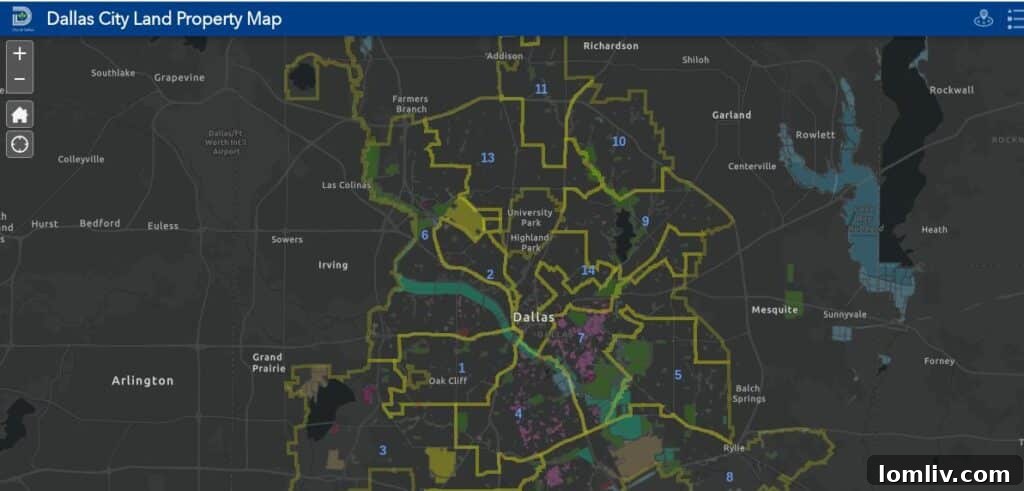
Dallas, a rapidly expanding metropolitan hub, finds itself at a pivotal juncture concerning the future of its vast 50,000 acres of city-owned real estate. Despite repeated assurances from city officials promising a “deep dive” into repurposing these significant assets, a clear, unified strategic vision remains elusive. This critical lack of direction is further complicated by the fact that three distinct panels are currently evaluating the city’s extensive property portfolio, each potentially operating with different priorities and objectives.
The sheer scale of Dallas’s publicly owned land presents both immense opportunities and complex challenges. From undeveloped parcels to existing municipal buildings, parks, and strategically located plots, these assets hold the key to addressing some of the city’s most pressing issues, including economic development, housing shortages, and the long-term solvency of its pension fund. However, without a cohesive framework, these opportunities risk being fragmented or even overlooked amidst conflicting interests.
The three prominent entities tasked with assessing Dallas’s real estate — the Trust for Public Land, the Ad Hoc Committee on Pensions, and the Dallas Economic Development Corporation — embody the diverse and often competing interests at play. Each organization approaches the city’s property holdings from a unique perspective, making the path to a unified strategy particularly arduous. Understanding these differing agendas is crucial to appreciating the complexities inherent in Dallas’s urban planning and asset management.
Conflicting Agendas: Navigating Dallas’s Real Estate Dilemma
The Trust for Public Land, as its name suggests, typically advocates for the conservation of land for public parks, recreational spaces, and environmental preservation. Their involvement suggests a strong emphasis on maintaining and expanding Dallas’s green infrastructure, which is vital for the city’s quality of life and ecological health. While undeniably valuable, this agenda might conflict with other priorities, particularly those seeking to monetize land for financial gain or dense urban development.
In stark contrast, the Ad Hoc Committee on Pensions faces an urgent and substantial challenge: a daunting $3 billion deficit within the city’s pension fund. For the board members overseeing this fund, the primary imperative is often to identify revenue streams, and the liquidation of city-owned real estate represents a significant potential source of funds. This creates considerable pressure to sell assets, potentially prioritizing short-term financial gains over long-term strategic development or conservation efforts. However, a significant portion of city-owned real estate comprises parkland, which officials have emphatically stated is “significant” and cannot be touched. This constraint immediately limits the available pool of assets for sale, intensifying the search for other viable properties and solutions.
Adding another layer to this intricate puzzle is the Dallas Economic Development Corporation (EDC). The EDC’s core mission revolves around fostering economic growth, attracting businesses, creating jobs, and expanding the city’s tax base. While these goals are essential for Dallas’s prosperity, they do not necessarily align with the urgent need for affordable housing, which many council members champion. When questioned during an October 23 GPFM meeting about the EDC’s approach to evaluating land for potential housing opportunities, board president John Stephens made it clear: “We’re not there yet, and quite frankly, I don’t know that we will go there.” This statement highlights a significant disconnect in priorities, with housing falling outside the immediate scope of the EDC’s economic development objectives, despite its critical importance to the city’s social and economic fabric.
The varying perspectives of these influential groups underscore the urgent need for a unified strategic vision for Dallas’s city-owned real estate. Without a comprehensive plan that balances conservation, financial stability, economic growth, and social needs like housing, the city risks haphazard development, missed opportunities, and continued friction among stakeholders.
Repurposing for Progress: The “Dallas Book of Real Estate” Initiative
The ongoing discussion around city-owned real estate continues to be a prominent item on the agenda for the Government Performance and Financial Management (GPFM) Committee, chaired by Council member Chad West. During a November 14 discussion, Assistant City Manager Robert Perez outlined the initial steps toward establishing a more structured approach. Department directors are soon expected to submit a detailed inventory of city-owned parcels under their purview. This ambitious undertaking, dubbed the “Dallas Book of Real Estate,” aims to create an exhaustive catalog of all properties, detailing their current use, condition, and potential.
Perez emphasized that a governance committee comprising executive leaders will meticulously examine this inventory, evaluating both land and existing office spaces for potential opportunities. Recognizing the complexity introduced by multiple groups assessing the city’s real estate, Perez confirmed that input from each evaluating body would be integrated. He also stressed a heightened level of scrutiny for this new inventory process. Unlike previous efforts where land might simply be noted as “held for a future project,” this iteration demands granular details: “what’s the five-year plan, is it a funded project, what is the project, and things of that nature.” This detailed requirement signifies a shift towards more proactive and accountable asset management.
Furthermore, the initiative will extend to a comprehensive review of existing leases. The goal is to identify opportunities to consolidate lease spaces into existing city facilities that may have vacant capacity. Such consolidation could lead to significant cost savings, improve operational efficiency, and reduce the city’s carbon footprint. However, Perez cautioned that the creation and execution of a full strategic plan for these vast holdings would realistically take two to three years, a timeline that raises concerns among some council members eager for immediate action.
Council member Chad West voiced a strong desire for a long-term vision—a codified procedure that could endure beyond the current administration, ensuring continuity and stability regardless of political changes. He advocated for a plan developed in conjunction with taxpayers and private industry, emphasizing that strategic asset management should not be an internal city staff affair alone but a collaborative effort reflecting broader community interests. This approach would foster greater transparency, build public trust, and ensure the plan’s resilience over time.
Immediate Action vs. Long-Term Strategy: “Low-Hanging Fruit”
While the prospect of a comprehensive, multi-year strategic plan is appealing for its thoroughness, Council members Paula Blackmon and Cara Mendelsohn urged for a more immediate approach, focusing on “low-hanging fruit.” Mendelsohn articulated the frustration many feel: “Honestly I think we’re too in the weeds on this topic, but we’ve been brought to this topic because it really hasn’t been addressed. We are sitting on way too many underperforming assets. We need to pay our pension. We need to develop housing and we need parks. I think you’ve heard from many of the council members those three priorities.”
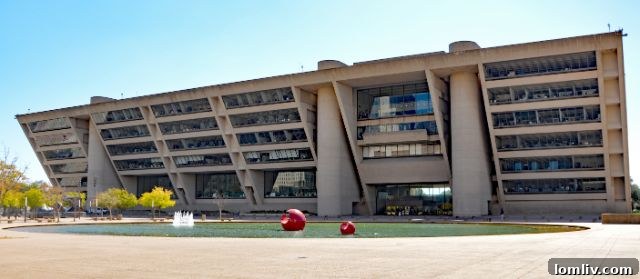
Mendelsohn suggested that instead of attempting to tackle the entire 50,000-acre portfolio at once, the city could begin with readily identifiable properties that are either vacant or underutilized. The Oak Cliff Municipal Center (OCMC) emerged as a prime example. With Development Services and other city staff relocating to Stemmons Freeway, the OCMC building is set to be vacated, presenting an immediate opportunity for repurposing or sale. This “low-hanging fruit” approach offers the potential for quick wins—generating revenue, addressing specific needs like housing, and demonstrating tangible progress to the public and the pension fund board.
Mendelsohn’s proposition extends beyond just identifying properties; she calls for rapid appraisals and a serious conversation about the pension fund’s needs based on potential asset sales. She also highlighted the need to address any existing policies that might “inhibit action,” suggesting that bureaucratic hurdles or outdated regulations could be slowing down progress. This perspective underscores the tension between the meticulous, long-term planning championed by administration officials and the urgent, results-oriented demands of some council members facing immediate budgetary and social pressures.
Repurposing City-Owned Property for Housing: Addressing the Crisis
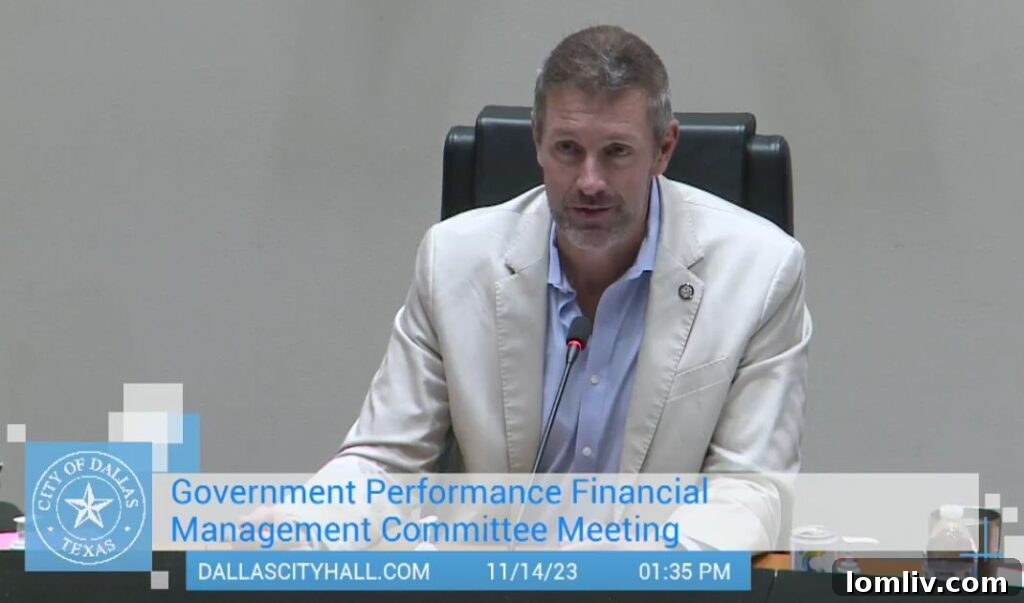
The need for housing, particularly affordable housing, remains a critical priority for many Dallas leaders. During the November 14 GPFM meeting, Council member Chad West referenced a parallel discussion from a Housing and Homelessness Solutions Committee meeting earlier that day. He articulated a core concern: “One of the concerns that came up was that there’s no goal, no number we’re working toward in our housing gap. Child Poverty Action Lab told us what we need to build, how many [homes] we need. Our Housing Policy 2033 doesn’t have a vision in it for what we need to build.”
West’s powerful statement points to a significant flaw in current planning: the absence of concrete, measurable targets for housing development. Without a clear understanding of the housing deficit—how many units are needed, and for which income levels—it becomes exceedingly difficult to leverage city-owned real estate effectively. He stressed that a strategic group should align the available real estate with the identified housing gap, asking: “Here’s our available real estate; how much can we use to fill that gap?” The current lack of this crucial data and a strategic plan to integrate it hinders meaningful progress.
Councilman Jesse Moreno, who chairs the housing committee, expressed enthusiasm for the discussion, noting that some parcels for housing development have already been identified. He echoed the sentiment for expedited action, stating, “I don’t want to wait two years to proceed, especially when we have outside experts willing to help us.” This highlights the readiness of some city leaders and external partners to move forward with tangible housing projects, suggesting that the primary impediment might be the lack of a centralized, binding strategy rather than a shortage of will or resources.
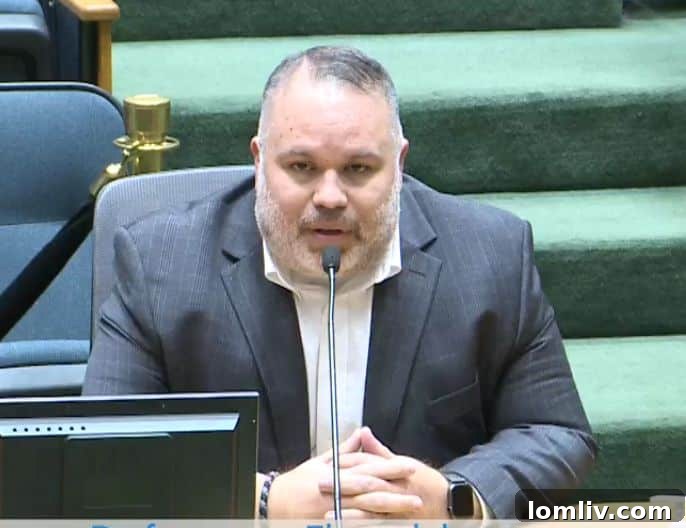
Assistant City Manager Robert Perez further elaborated on potential pathways, drawing on City Manager T.C. Broadnax’s prior experience in Tacoma, Washington. Perez envisions incorporating “some of the best practices that are utilized in other cities into that administrative directive.” He acknowledged the existence of “quick hits” or immediate opportunities, such as the aforementioned Oak Cliff Municipal Center, which he identified as “a good project for us to look at.”
Beyond immediate sales or conversions, Perez hinted at innovative multi-use projects, including the redevelopment of fire stations and recreation centers to incorporate housing. This approach aligns with modern urban planning trends that seek to maximize land use and create integrated, vibrant communities. Such projects could potentially be programmed into the 2024 bond, leveraging public funds to attract private investment through public-private partnerships. The OCMC, along with other departmental priorities, is poised to be a key focus in this interim strategy, paving the way for more comprehensive redevelopment efforts.
Ultimately, Dallas stands at a crossroads. The enormous potential of its city-owned real estate can only be fully realized through a unified, transparent, and actionable strategic plan. This plan must reconcile the diverse demands of financial solvency, economic growth, environmental preservation, and social equity, particularly in addressing the critical housing shortage. By embracing both immediate, high-impact projects and a robust, long-term vision developed with broad stakeholder input, Dallas can transform its vast land holdings into a powerful engine for sustained prosperity and community well-being, creating a legacy that benefits generations to come.