

Dallas Residents Speak: Infrastructure and Crime Prevention Top 2023 Survey Priorities
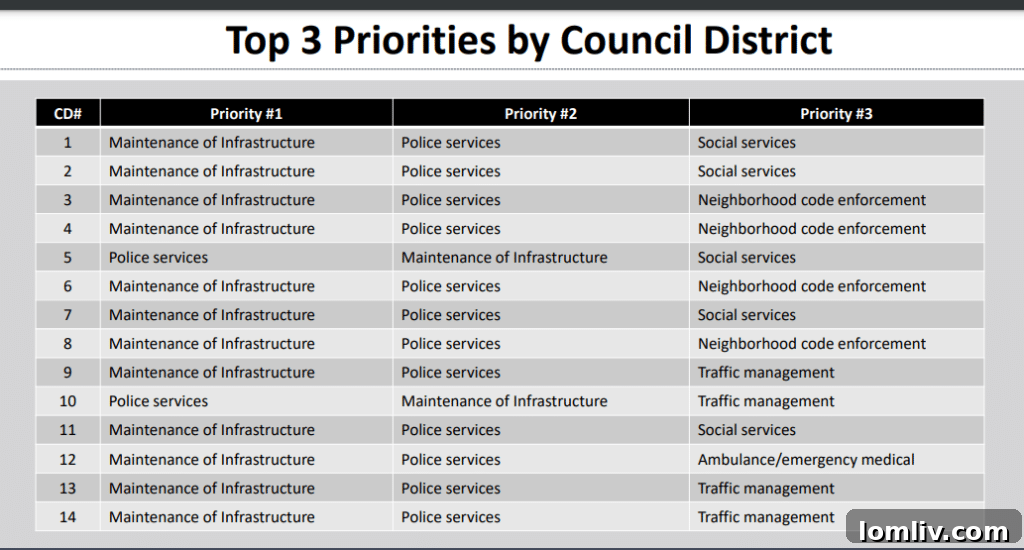
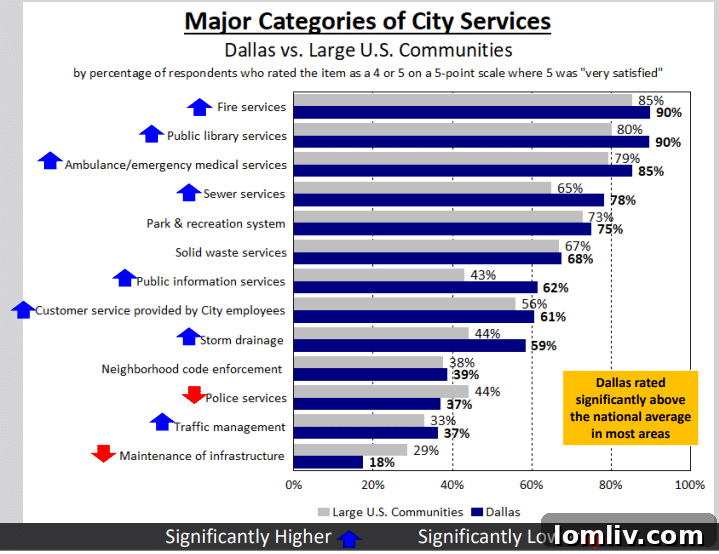
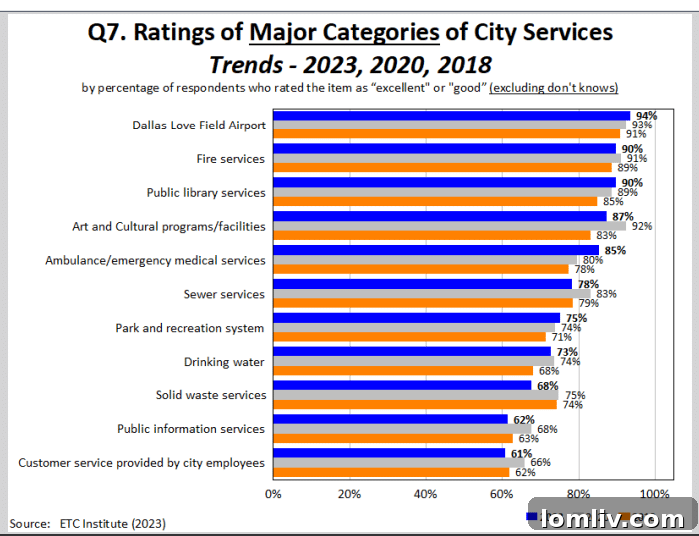
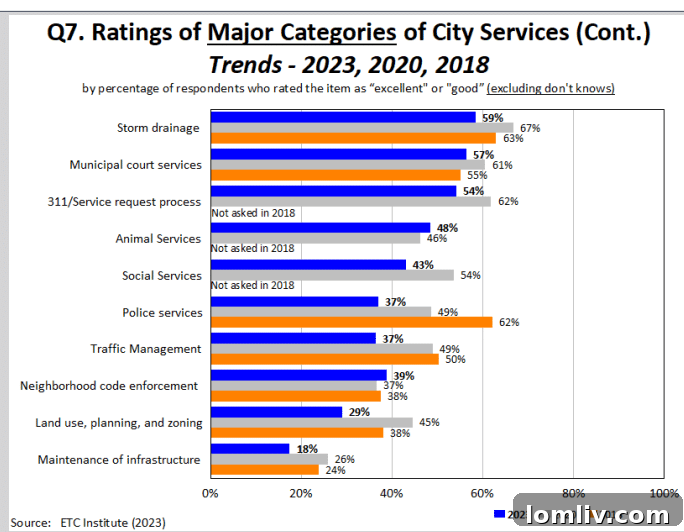
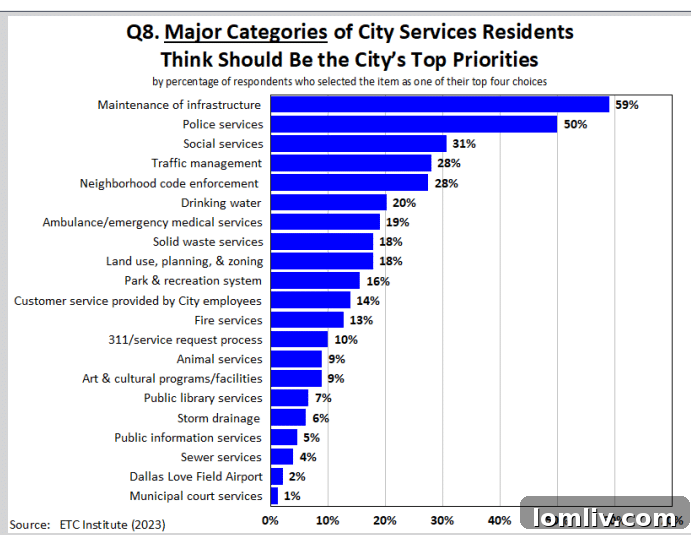
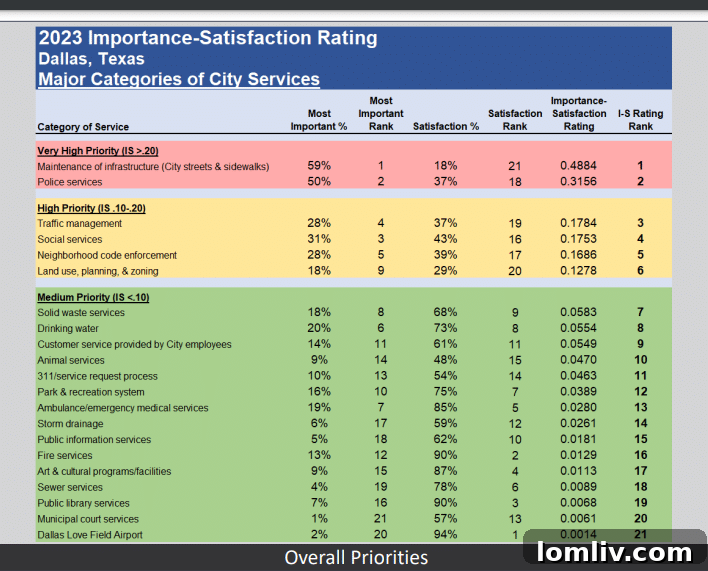
Understanding the needs and priorities of its residents is paramount for any thriving metropolis. In Dallas, this critical insight comes from the rigorous Dallas Community Survey, a vital tool the city utilizes to gauge public sentiment and direct strategic planning. City officials recently unveiled the findings from the 2023 iteration of this comprehensive survey, highlighting key areas of focus for the municipal government. Among the Dallas residents who participated, infrastructure development and robust crime prevention emerged as the overwhelming top priorities, signaling a clear directive for city leaders to enhance foundational services and ensure public safety across the rapidly growing urban landscape.
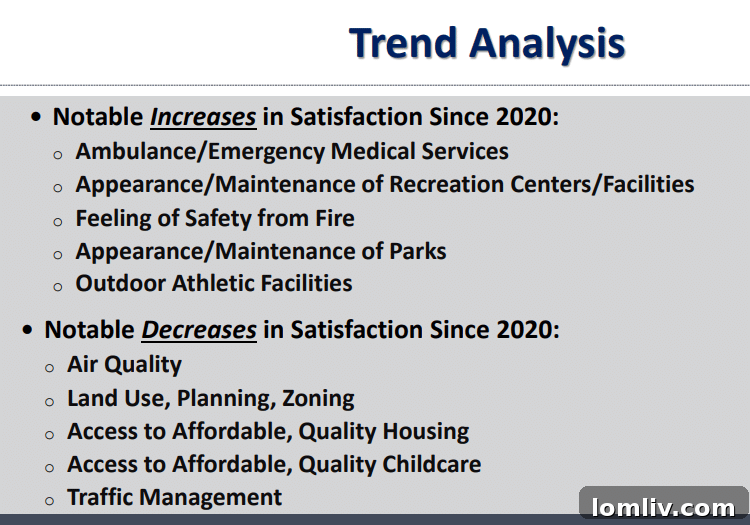
While these core concerns garnered significant attention, the survey also revealed a notable decrease in local satisfaction regarding access to quality affordable housing. Interestingly, despite affordable housing charting as a high-priority issue in many cities nationwide, it did not ascend to the top three concerns for any of Dallas’ 14 distinct City Council districts. This unexpected finding underscores the unique demographic and socio-economic dynamics at play within Dallas, prompting a deeper look into how local perceptions shape municipal agendas. The insights gleaned from this survey are more than just statistics; they are a direct reflection of the community’s voice, offering a roadmap for sustainable growth and improved quality of life for all Dallasites.
The Pulse of the City: Unpacking the Dallas Community Survey’s Purpose and History
The 2023 Dallas Community Survey serves as a cornerstone of transparent and responsive governance. Its primary objectives are multifaceted: to systematically assess the quality and efficiency of city services, to accurately determine the prevailing community priorities, to meticulously track the city’s performance over time against resident expectations, and ultimately, to pinpoint actionable opportunities for continuous improvement. This strategic approach ensures that municipal efforts are directly aligned with the concerns and aspirations of those they serve.
Dallas boasts a rich history of proactive community engagement through these surveys, having conducted them 11 times over the past 18 years. This consistent data collection allows the city to identify long-term trends, measure the impact of past policies, and adapt its strategies effectively. The most recent survey prior to 2023 was conducted in 2020, providing valuable comparative data points to understand shifts in public sentiment post-pandemic and amidst evolving urban challenges. This regular feedback loop is indispensable for maintaining a dynamic and adaptive governance model.
Mayor Eric Johnson emphasized the critical value of this initiative, stating, “More information is better when trying to figure out the needs of our residents from their perspective.” He further articulated the forward-looking aspect of these findings: “I think this is a great thing to do. I think in the back of our minds we need to be thinking about how we want to address some of these [issues in the] budget versus [the 2024] bond.” This statement highlights the strategic importance of the survey results in guiding crucial financial decisions and resource allocation, ensuring that investments truly reflect the pressing needs identified by the community. For those seeking a more in-depth review of the council presentation, including the full spectrum of survey results, comprehensive documentation is available here.
Methodology and Reach: How Dallas Gathers Resident Insights
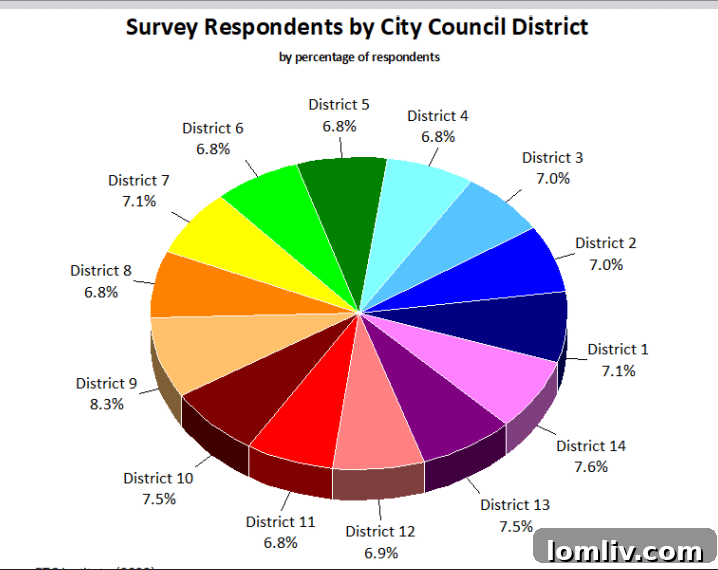
The integrity and representativeness of any community survey are crucial to its effectiveness. For the 2023 Dallas Community Survey, approximately 1,475 residents completed the questionnaire, ensuring a robust sample size. This translates to an average of more than 100 responses for each of Dallas’ 14 distinct City Council districts. With each district comprising approximately 91,000 residents, according to 2022 redistricting data, the survey provided a meaningful snapshot of localized concerns and priorities across the diverse neighborhoods of Dallas.
To ensure impartiality and professional execution, the City of Dallas partnered with the ETC Institute, a renowned firm specializing in community surveys and data analysis. This collaboration came at a cost of $46,500, an investment deemed essential for acquiring reliable and actionable insights into resident satisfaction and priorities. ETC Institute’s expertise helps in crafting survey questions, managing data collection, and providing objective analysis, ensuring the findings are both credible and valuable for city planning. Further details on the survey’s release and its initial findings were also covered by local news outlets, as highlighted in a related article here. The meticulous methodology employed underscores Dallas’ commitment to evidence-based decision-making, ensuring that the community’s voice is heard, understood, and integrated into the city’s strategic framework.
Top Concerns: Infrastructure and Public Safety Take Center Stage
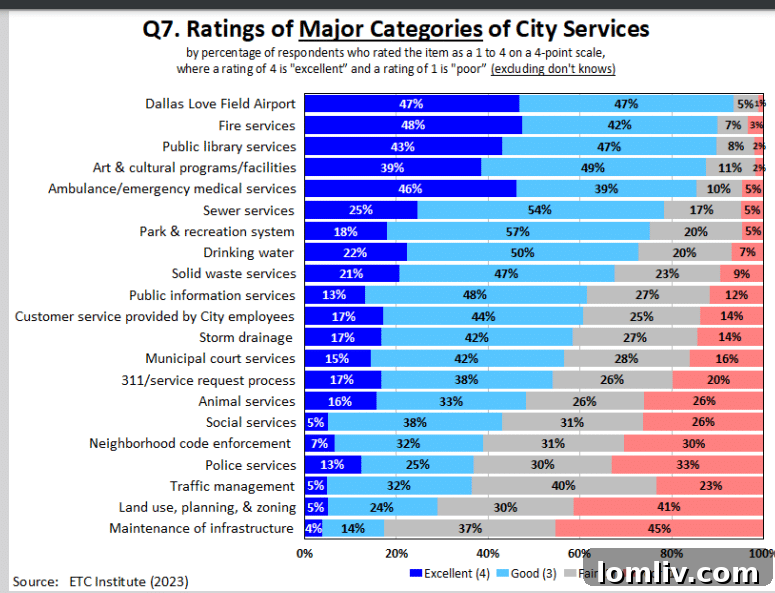
The latest Dallas Community Survey has unequivocally identified infrastructure and crime prevention as the leading concerns for a significant portion of the city’s residents. This prioritization is not uncommon for major metropolitan areas, where the demands of maintaining a robust urban environment and ensuring the well-being of a large population are constant challenges. Residents frequently experience the direct impact of infrastructure quality in their daily lives, from the condition of their roads and sidewalks to the reliability of public utilities and the accessibility of public transportation. These foundational elements are crucial for economic vitality, smooth urban functioning, and the overall quality of life.
The emphasis on crime prevention, or public safety, is equally understandable. A safe community is fundamental for fostering trust, promoting economic activity, and encouraging civic participation. Residents naturally prioritize feeling secure in their homes, neighborhoods, and public spaces. This concern encompasses a wide range of issues, including visible police presence, rapid response times, effective crime deterrence programs, and initiatives to address both violent and property crimes. The survey’s findings highlight the community’s expectation for the city to invest substantially in these two core areas, recognizing their direct influence on daily living and future prosperity. This clear mandate provides the Dallas City Council and city departments with precise targets for allocating resources and developing new initiatives aimed at tangible improvements in these critical sectors.
Affordable Housing: A National Issue with Local Nuances
In an era where discussions surrounding housing accessibility dominate national headlines and urban planning debates, the findings from the Dallas survey present a curious anomaly. While it is rare for a council briefing not to touch upon housing, Wednesday’s presentation starkly revealed that, for the small sample of respondents, public safety and infrastructure—such as addressing potholes—outranked housing opportunities as immediate priorities. This outcome challenges national trends where affordable housing routinely emerges as a top-tier concern across the United States, particularly in rapidly growing cities experiencing significant demographic shifts and rising living costs.
Jason Morado, a Project Manager from the ETC Institute, who spearheaded the survey, acknowledged the general pattern, stating, “Affordable housing has really become a high priority, especially over the past year or so, across the country.” However, when pressed to elaborate on why housing did not achieve similar top-tier status in Dallas’ survey, he had limited additional insights specific to the city’s unique situation. This divergence suggests that while Dallas residents recognize the broader issue of housing, their immediate, day-to-day concerns are more directly tied to tangible civic services and personal safety. It might also indicate that residents perceive current city efforts or the market dynamics around housing differently than in other locales, or perhaps other issues are simply felt more acutely in their daily lives. The challenge for city leaders now lies in understanding this local nuance and communicating existing and future housing strategies in a way that resonates with and addresses the underlying concerns of the community, even if not explicitly ranked as a top three priority.
The Growing Shadow: Homelessness and Quality of Life Concerns
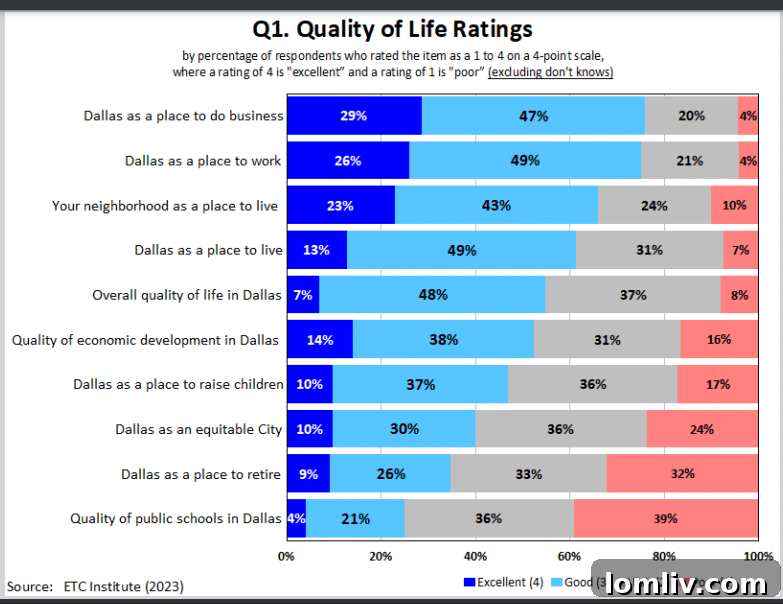
While affordable housing didn’t crack the top three, a closely related issue—homelessness—showed a dramatic increase in resident concern, underscoring a significant shift in public perception over the past decade. District 12 Councilmember Cara Mendelsohn highlighted the alarming trend: in 2014, 40 percent of respondents viewed homelessness as a major problem. This number surged to 64 percent in 2018, and in the current 2023 survey, a staggering 75 percent of Dallas residents now identify homelessness as a significant challenge. Jason Morado from ETC Institute acknowledged this substantial jump, noting, “There could be a lot of reasons for that. It’s something that’s been a trend in a lot of large communities.” This rapid increase in concern suggests that the visual and social impacts of homelessness are becoming more prevalent and deeply felt across the city.
Further emphasizing this growing unease, District 13 Councilwoman Gay Donnell Willis observed that residents are now more concerned with homelessness, alongside aggressive panhandling and general litter, than they have been in previous surveys. These issues collectively contribute to a perceived decline in the quality of public spaces and overall urban experience. Councilwoman Willis aptly summarized the sentiment, stating, “Maybe it didn’t hit the top priority list, but we all need to give that consideration.” This rising concern, while not always manifesting as a singular ‘top priority,’ clearly indicates a widespread desire for the city to address the complex social and environmental factors that affect the daily lives and perceptions of safety and cleanliness for Dallas residents. The interconnectedness of homelessness, public behavior, and urban tidiness demands a comprehensive and empathetic approach from city leadership.
Perception vs. Reality: Navigating Public Safety in Dallas
The 2023 Dallas Community Survey also sparked a vital discussion about the intricate relationship between public perception and objective data, particularly concerning public safety. Councilmember Cara Mendelsohn eloquently articulated this challenge, suggesting that survey results can often reflect a community’s feelings rather than strict statistical reality. “I think it’s really important to do this; however, it’s also about a person’s perception as opposed to actual data,” she remarked. Mendelsohn provided a compelling example from her own district: “The perception in my district was that people felt very unsafe. I think it was the highest percentage of people who felt unsafe, but data-wise, my district is the safest. Sometimes just asking the question versus reality doesn’t always align.” This discrepancy highlights the powerful influence of individual experiences, media narratives, and community conversations on how residents perceive their immediate environment, even when contradicted by official crime statistics.
Councilwoman Willis further expanded on the utility of the survey, noting that beyond understanding residents’ current sentiments, the results also guide city leaders in enhancing communication about existing programs or developing innovative new initiatives. She pointed to specific areas of concern: “I know there were concerns about public safety in the violent crime category, and we have our violent crime plan.” She also highlighted another critical area: “Another one that really jumped out was around property crime. I would say that’s something we’re going to need to give a hard look at with regard to programs next year.” This demonstrates how the survey, even with its perceptual biases, directly informs strategic planning for law enforcement and community safety programs.
City Manager T.C. Broadnax affirmed the commitment to utilizing this data, stating that department directors would incorporate the insights as needed when crafting new programs. “We reach out and work with the departments, particularly if there are issues and challenges we can identify to try to figure out how they can improve,” Broadnax explained. He acknowledged the enduring challenge of perception: “In some respects, perception is something that you’ve always got to chase, and it’s day-to-day. We try to focus on areas where we know there may be challenges. The survey helps us and we use it that way, beyond budget. We will look at this as a part of our budget process.”
Adding another layer to the perception versus reality debate, District 6 Councilman Omar Narvaez directly addressed the impact of misinformation during the recent municipal election campaign. He proudly declared a significant achievement: “Two years in a row, we’re the only major city in the entire nation that violent crime across the board has gone down and is continuing to go down.” Narvaez expressed optimism for the future, adding, “If we keep this trajectory, we could go down a third year in a row.” He contrasted this positive data with what he described as perpetuated falsehoods: “That’s not what’s being perpetuated. What gets perpetuated by a lot of folks is that we’re 400 officers short and crime is on the rise.” Narvaez lauded Chief Eddie Garcia’s leadership, emphasizing, “Chief Eddie Garcia has done a phenomenal job of changing that trajectory here and we have to give our police officers that support.” This robust defense underscores the city’s effort to not only combat crime effectively but also to proactively manage public perception with accurate data, fostering a more informed and reassured citizenry.
Conclusion: A Responsive Dallas, Built on Community Insights
The 2023 Dallas Community Survey serves as a powerful testament to the city’s dedication to responsive governance and continuous improvement. By providing a clear, resident-driven mandate, the survey has underscored the critical importance of robust infrastructure and comprehensive crime prevention efforts as top priorities for Dallas residents. While the findings also highlighted nuanced perspectives on issues like affordable housing and the escalating concern over homelessness, they collectively offer an invaluable dataset for city leaders.
The candid discussions surrounding the disconnect between public perception and statistical reality, particularly in the realm of public safety, further emphasize the complexity of urban governance. Dallas is committed to addressing these challenges head-on, leveraging survey data not only for budget allocations but also for developing targeted programs, enhancing public awareness, and fostering a deeper sense of community well-being. The proactive engagement with residents, through instruments like this survey, ensures that Dallas remains a city that listens, adapts, and strives to build a better future for all its inhabitants. As Dallas continues its trajectory of growth and development, the insights gained from its residents will remain the guiding force, ensuring that the city’s evolution is both strategic and deeply rooted in the needs of its people.