Dallas Real Estate Heats Up: Navigating an Overheating Market on the National Bubble Watch
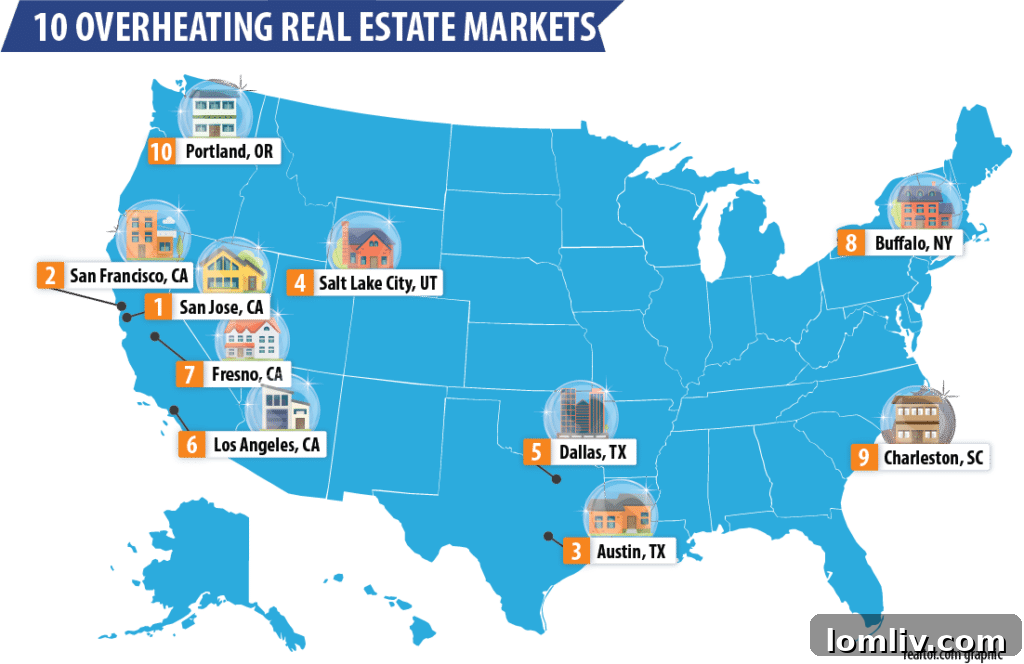
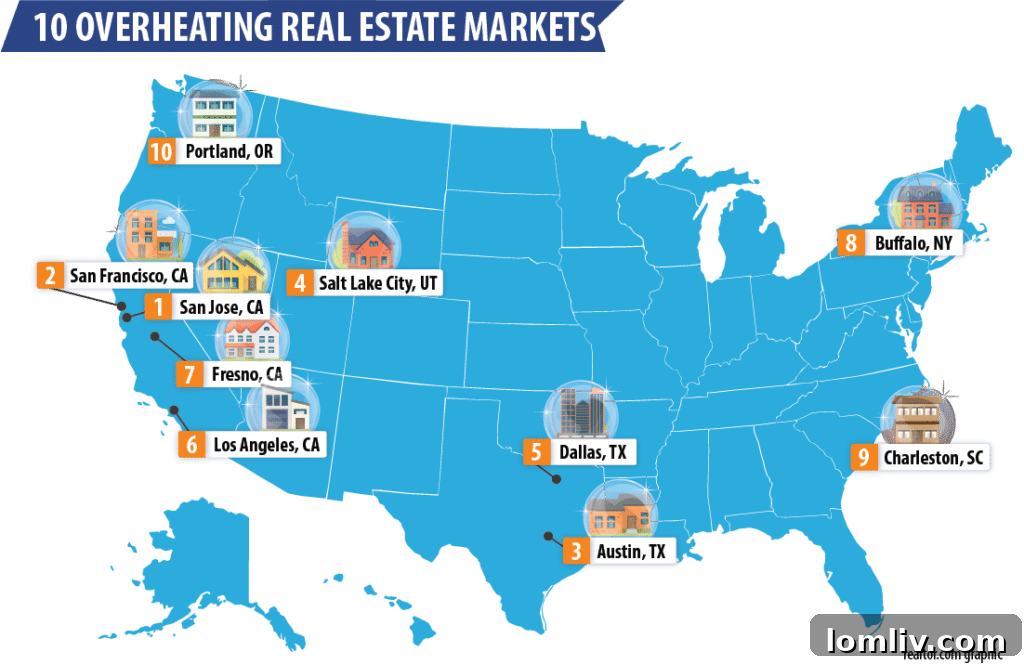
In a surprising turn of events that has caught the attention of real estate experts nationwide, Dallas, Texas, has officially been recognized as one of the country’s Realtor.com’s top 10 “overheating real estate markets.” This significant designation places the dynamic North Texas metropolis ahead of traditionally robust markets like Los Angeles and Fresno, California, marking a notable shift in the national housing landscape. This achievement is particularly striking given that just last year, many pundits predicted a downturn for the Dallas market, primarily due to fluctuations in global oil prices. However, Dallas has not only defied these expectations but has also emerged as a beacon of growth, raising both excitement and concern among market observers.
Understanding the “Bubble Watch”: Lessons from the Coasts
While Dallas’s ascent is a recent phenomenon, other cities have long been under the microscope for their escalating property values. Topping Realtor.com’s “bubble watch” list are familiar names: San Jose and San Francisco. These iconic California cities have consistently served as poster children for overpriced housing, characterized by astronomical prices driven by a booming tech industry, limited land supply, and relentless demand. For years, analysts have closely monitored these markets, with an underlying question echoing in every discussion: when will the bubble finally pop? The term “bubble watch” itself implies a precarious balance, where rapid appreciation threatens to detach home values from fundamental economic realities, setting the stage for a potential market correction.
What Defines a Real Estate Bubble and Why is it Dangerous?
The concept of a real estate bubble is central to understanding the risks in an overheating market. A housing bubble occurs when the prices of residential real estate rapidly increase, driven by speculative demand rather than intrinsic value. This surge is often fueled by low interest rates, relaxed lending standards, and a pervasive belief that prices will continue to climb indefinitely. However, when the bubble bursts, the consequences can be severe. Buying a home in such an environment means paying a premium price that may not be sustainable. If the market experiences a downturn or ‘tanks,’ property values can plummet, leaving homeowners in a perilous financial position. The most immediate danger is being “underwater” on a mortgage, meaning the outstanding loan amount is greater than the current market value of the home. This scenario was a painful lesson learned by millions during the Great Recession, where homeowners faced foreclosure, bankruptcy, and immense financial hardship if they were forced to sell their properties in a depreciated market.
Dallas’s Economic Resilience: A Deep Dive into Growth Drivers
Realtor.com’s comprehensive analysis, which scrutinized the 50 largest U.S. home markets, considered critical risk factors such as the rate of home price increases, inventory levels, median wages, and new home construction. Dallas’s inclusion on the “overheating” list is a testament to its robust economic performance. Despite a period where the local oil industry experienced significant challenges, home prices in the Texas city impressively ballooned by 9 percent last year alone. This resilience can be primarily attributed to Dallas’s diversified economy and its growing appeal as a corporate relocation hub. The report specifically highlighted major corporate moves, such as Toyota’s decision to relocate its North American headquarters from California to nearby Plano. This trend isn’t isolated; a continuous influx of companies expanding or moving their operations to the Dallas-Fort Worth metroplex has brought with it a wave of new jobs, boosting population growth and creating a sustained demand for housing across all price points.
The strategic advantages of North Texas, including its central location, favorable business climate, lower cost of living compared to coastal cities, and a well-developed infrastructure, have made it an irresistible magnet for both businesses and individuals seeking new opportunities. This sustained economic activity acts as a powerful engine for the housing market, ensuring that demand consistently outpaces supply, thus driving property values upward. However, the critical question remains: when will this rapid appreciation reach its peak? Will home prices continue their “stairway to heaven” indefinitely, or is there an inevitable plateau in sight?
The Tipping Point: Affordability and Market Dynamics
According to experts like Jonathan Smoke, chief economist at Realtor.com, the primary factor that will eventually slow or halt price increases in these 10 hot U.S. markets is affordability. The market will naturally adjust when prospective buyers can no longer afford the properties, effectively reaching a financial saturation point. This means that a sustained lack of jobs, stagnating incomes, or rising interest rates that diminish purchasing power will inevitably temper demand. When the cost of homeownership, including mortgage payments, property taxes, and insurance, becomes insurmountable for a significant portion of the population, the pace of sales will decelerate, and price growth will inevitably cool.
Segmented Market: Luxury vs. Entry-Level Homes
Interestingly, early indicators of this affordability crunch are already visible, particularly within different segments of the North Texas housing market. Real estate agents are reporting a noticeable slowing in the luxury home market. Properties priced at $2.5 million and above are currently experiencing longer days on the market, sitting for extended periods as the pool of eligible buyers shrinks or exercises more caution. Conversely, homes priced below $500,000 continue to be in high demand, often “flying off the shelves” shortly after listing. This bifurcation highlights a critical dynamic: while the entry-level and mid-range markets are still highly competitive due to strong underlying demand from a broader buyer base, the top-tier luxury segment, which is often more sensitive to economic shifts and investor sentiment, is beginning to show signs of softening. This could serve as a bellwether for broader market adjustments down the line.
North Texas Market Metrics: Unprecedented Growth and Bidding Wars
The overall picture for North Texas median home sales prices reveals an extraordinary trajectory. Current median prices are now an astonishing 80 percent higher than they were during the trough of the Great Recession. This dramatic recovery and subsequent boom have fundamentally reshaped the local real estate landscape. This rapid appreciation is the primary driver behind the intense bidding wars that have become commonplace for moderately priced homes. Buyers are often forced to offer above asking price, waive contingencies, and make quick decisions in a fiercely competitive environment. Such conditions, while beneficial for sellers, put immense pressure on buyers, particularly first-time homeowners, who find themselves struggling to enter the market.
Localized Insights: Inside the Loop and Beyond
Local market data further underscores this trend. According to Steve Brown, a respected real estate analyst, the median price of a preowned single-family home sold in North Texas reached an all-time high of $237,000 in June, a figure representing properties transacted through real estate agents. For those looking closer to the urban core, “inside the loop” areas, the median price approaches $300,000, reflecting the premium associated with prime locations and greater access to amenities and employment centers. These figures paint a clear picture of a market that has experienced unprecedented growth, pushing affordability thresholds and intensifying competition.
A Glimpse Behind the Headlines: The Agent’s Perspective
While headline figures scream “hot market,” the reality on the ground can be more nuanced, especially in specific segments. One seasoned real estate agent recently shared a revealing anecdote from Highland Park, an affluent Dallas neighborhood. “I did an exercise yesterday,” she recounted. “I pulled ALL sales in Highland Park from the last 365 days on homes between 5000 – 7000 square feet. In all of last year, there were 30 sales in HP with this criteria. At the current time, there are 34 active listings between 5000 – 7000 square feet! That’s MORE THAN SOLD ALL LAST YEAR. What’s even more telling is that there are only 3 properties in this category pending, and the average days on the market for those three homes are 233 days!” This stark contrast highlights a growing disconnect: sellers are continually hearing and reading that real estate is hot and prices are up, yet their high-end properties are sitting on the market for significantly longer periods. The agent’s challenge is clear: “How do we show the reality?”
Seller Psychology vs. Market Reality
This situation speaks volumes about seller psychology. It’s plausible, as the agent muses, that the surge in listings is precisely because sellers have absorbed the news of a booming market and perceive this as the opportune moment to sell high and “cash out big.” This phenomenon, driven by market sentiment rather than immediate need, can lead to an oversupply, particularly in segments where demand is less elastic. When a significant number of properties flood the market simultaneously, it shifts the balance from a strong seller’s market to one where buyers gain more leverage, forcing price adjustments or extended selling times. The agent’s candid admission, “I don’t know how long it will take for this market to turn around,” underscores the uncertainty and the delicate balance between inflated expectations and the tangible realities of buyer demand and affordability. If properties aren’t moving, despite high asking prices, a market correction, where prices align with what buyers are willing and able to pay, becomes increasingly probable.
The Road Ahead: Navigating Uncertainty in North Texas Real Estate
The Dallas real estate market is undeniably at a fascinating crossroads. While strong economic fundamentals and population growth continue to fuel demand, the increasing pace of price appreciation and localized inventory surges in certain segments raise legitimate questions about sustainability. The dichotomy between the red-hot entry-level market and the cooling luxury sector offers a complex picture, hinting at a potential market rebalancing rather than a uniform bubble pop. For prospective buyers, understanding these nuances is crucial for making informed decisions. For sellers, particularly in higher price brackets, aligning expectations with current market realities, rather than past headlines, will be key to successful transactions.
Conclusion: Staying Informed in a Dynamic Market
As North Texas continues to navigate its status as an “overheating” real estate market, staying informed and adaptable is paramount. The prevailing sentiment among some top agents suggests that “last year was the year to sell, not this year,” indicating a belief that the peak might have already passed for certain property types. Whether this perspective holds true for the entire market, or if Dallas continues its upward trajectory, remains to be seen. Inquiring minds want to know, and the answer will ultimately be shaped by the interplay of economic growth, interest rates, affordability, and the collective decisions of thousands of buyers and sellers. The Dallas real estate story is far from over, and its next chapter promises to be just as dynamic as its recent past.