Dallas Housing Market Heats Up: A Deep Dive into North Texas Real Estate Trends
The Dallas-Fort Worth metropolitan area continues to be a hotbed for real estate activity, with a housing market that defies national trends in several key segments. Particularly, properties priced under $1.5 million are experiencing unprecedented demand, often leading to fierce bidding wars and sales prices significantly above asking. This intense competition underscores a robust seller’s market, fundamentally reshaping property values across the region. A recent example from Devonshire perfectly illustrates this phenomenon: a home reportedly sold for $50,000 over its list price, fueled by a bidding war involving three to five eager buyers, many of whom were offering cash. This willingness to pay above appraisal values ensures that current sales prices will set new benchmarks for subsequent transactions, propelling the market upward in a seemingly relentless climb.
Dallas Soars: A National Leader in Home Price Appreciation
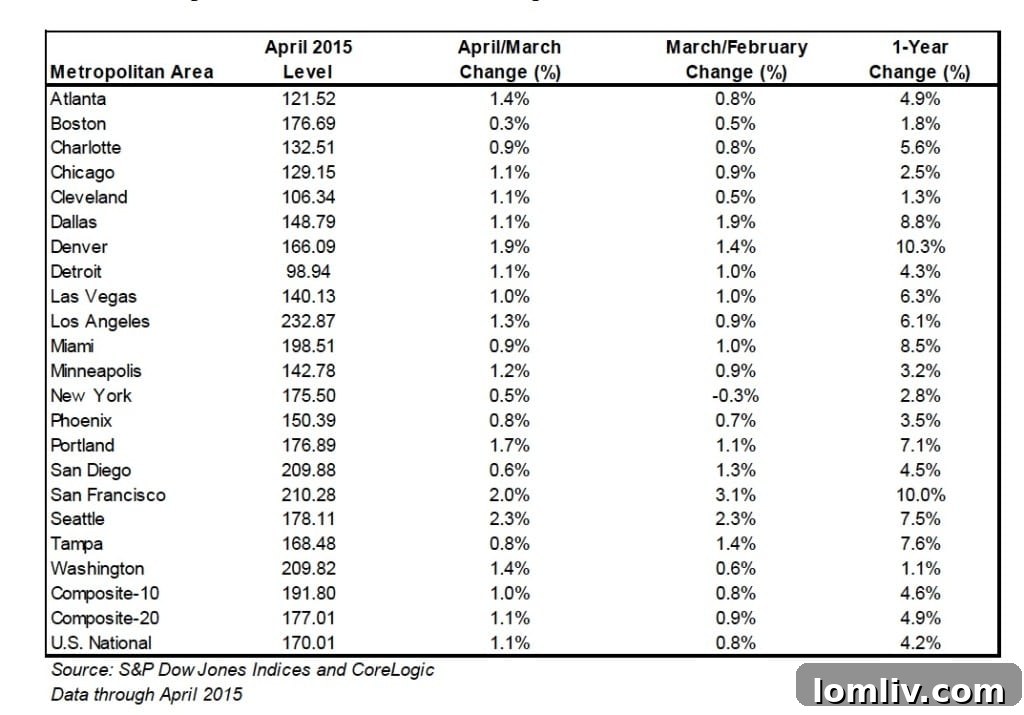
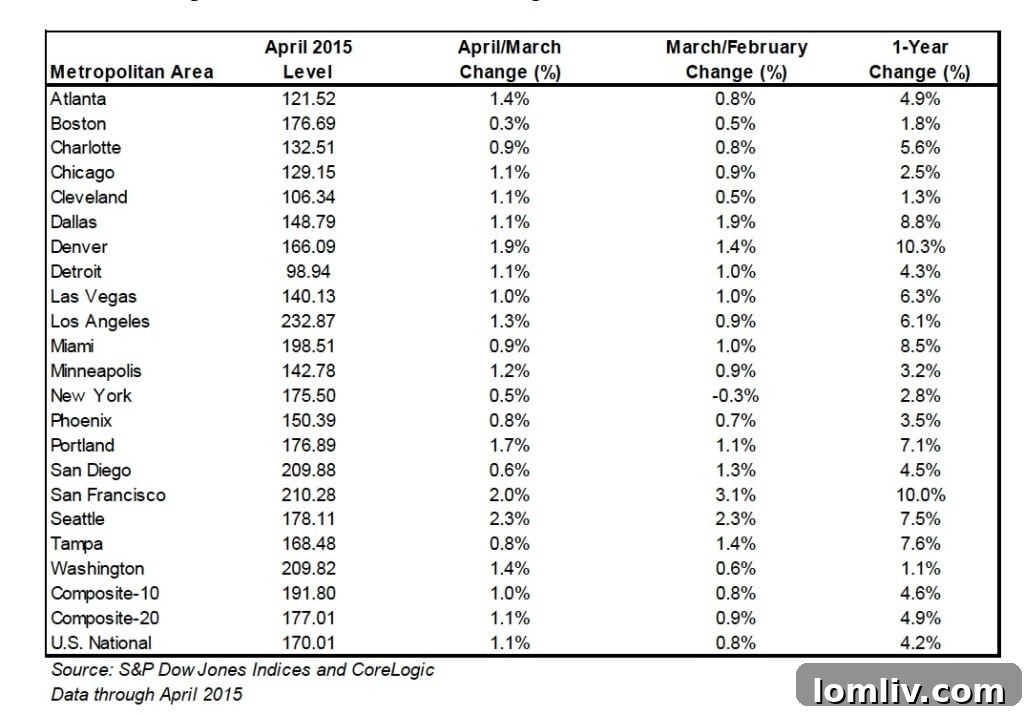
The latest Standard & Poor’s/Case-Shiller Home Price Index data paints a vivid picture of Dallas’s burgeoning real estate landscape. According to the new report, May saw Dallas home prices surge by an impressive 8.8%. This growth rate is more than double the nationwide gain observed in April, highlighting Dallas’s exceptional market performance compared to other major U.S. cities. In fact, Dallas proudly secured the third-highest home price increase in the entire country, a remarkable achievement. At 8.8%, Dallas was just behind Denver, which saw a 10.3 percent rise, and San Francisco, at 10 percent. This puts Dallas firmly on the map as one of the most dynamic and rapidly appreciating housing markets in the United States, attracting attention from investors and homebuyers alike.
This rapid appreciation is not a fluke but rather a reflection of several underlying economic and demographic factors. Dallas continues to attract a significant influx of new residents, drawn by its robust job market, diverse industries, and favorable business environment. Major corporations are relocating their headquarters and expanding operations in the DFW metroplex, creating thousands of new jobs and increasing the demand for housing. This sustained population growth, coupled with a relatively tight inventory of available homes, creates a perfect storm for price escalation, especially in the more accessible price points.
“Home prices continue to rise across the country, but the pace is not accelerating,” says David M. Blitzer, Managing Director and Chairman of the Index Committee at S&P Dow Jones Indices. “Moreover, consumer expectations are consistent with the current pace of price increases.
Unpacking Consumer Confidence: Are Buyers Willing to Pay Any Price?
The expert commentary from David M. Blitzer suggests a fascinating dynamic: while home prices are rising, the *pace* of acceleration has stabilized. Furthermore, consumer expectations seem to align with these ongoing price increases. But what does this truly mean for the average buyer in Dallas? Does it imply that consumers are simply resigned to “paying through the nose” for a home in this competitive environment? It’s a complex question, especially when considering the broader economic context.
While salaries in certain sectors are indeed keeping pace with the rising cost of living, the gap between average wage growth and home price appreciation remains a significant challenge for many. This disparity is particularly acute for renters, who are already grappling with steadily increasing rental costs. The dream of homeownership often feels out of reach when the primary obstacle is saving for a substantial 20% down payment. Each rent increase eats into potential savings, creating a vicious cycle that makes entry into the housing market increasingly difficult for first-time buyers and those on more modest incomes. This pressure is further exacerbated by the allure of long-term investment and the fear of being priced out of the market entirely, driving many to make aggressive offers despite the high costs.
A Market in Record Territory: Beyond Pre-Recession Peaks
The Dallas area housing market is currently operating at an unprecedented level. Home prices have not only recovered from the downturn of the last great recession but have also soared to new record highs. For moderately priced homes – those typically falling within the high five-figure to mid-six-figure range – prices are now an astonishing 15 percent above the peak levels observed during the “insane housing market” period that preceded the economic collapse. This demonstrates the immense strength and resilience of the Dallas real estate sector, which has outpaced historical benchmarks and continues its upward trajectory.
This sustained growth has significant implications for both current homeowners and prospective buyers. Existing homeowners are seeing substantial increases in their property equity, contributing to overall household wealth. However, for those aspiring to enter the market, especially younger generations or families new to the area, the record-high prices present a formidable barrier. The perception of value and affordability has shifted dramatically, requiring buyers to adjust their expectations and financial planning to navigate this competitive landscape successfully.
The Layered Landscape: A Deep Dive into Dallas’s Diverse Price Segments
The Dallas housing market, while broadly strong, reveals distinct dynamics across various price segments. Understanding these nuances is crucial for both buyers and sellers trying to position themselves strategically.
The Hot Zone: $150,000 to $1.5 Million
This segment continues to be the undisputed “hot zone” of the Dallas market. Homes within this broad range are quite literally “flying off the shelves.” Characterized by intense buyer demand, limited inventory, and swift transactions, properties here frequently attract multiple offers. Bidding wars are common, and buyers often resort to all-cash offers or waiving contingencies to stand out. This part of the market caters to a wide demographic, from first-time homebuyers to growing families and even investors looking for solid returns. The speed and competition in this segment are what primarily drive the overall market’s upward momentum.
Strong & Steady: $1.6 Million to $3 Million
Moving into the upper-middle and lower-luxury tiers, the market remains strong, but with a slightly different rhythm. Homes in the $1.6 million to $3 million range experience robust sales, but the pool of potential buyers naturally shrinks. These buyers are typically more discerning, seeking specific features, locations, and amenities. While bidding wars might be less frequent than in the lower price points, properties that are well-maintained, strategically located, and offer desirable upgrades still command strong prices and sell relatively quickly. This segment reflects a healthy market for those seeking premium homes without venturing into ultra-luxury territory.
Luxury’s Threshold: $3.1 Million to $7 Million
The $3.1 million to $7 million range represents a significant threshold in the Dallas luxury market. Seven million dollars seems to be a key “magic cutoff number” for higher net-worth individuals who are actively seeking new, high-end luxury homes. Buyers in this segment are often looking for bespoke properties, expansive lots, advanced smart home technology, resort-style amenities, and prime locations in exclusive neighborhoods. While the buyer pool is even smaller here, the demand for truly exceptional properties remains consistent. Sales are driven by quality, design, and exclusivity, with buyers willing to invest in homes that offer a distinct lifestyle and superior craftsmanship.
Elite & Exclusive: $10 Million and Above
At the pinnacle of the Dallas market, homes priced at $10 million and above typically experience a “softer” market. Sales in this ultra-luxury segment are fewer and far between, reflecting the extremely limited number of buyers with the means and desire for such exclusive estates. These transactions are often highly private and can take longer to finalize. However, this segment is also prone to significant outliers, showcasing the potential for extraordinary sales when a truly unique property meets the right buyer. A notable example is the reported sale of 9806 Inwood Road, which fetched approximately $5 million over its asking price. Such a sale highlights that for truly exceptional, one-of-a-kind properties in prime locations, traditional market rules can sometimes be suspended, leading to record-breaking transactions driven by immense personal value or investment potential.
The Horizon Ahead: Interest Rates and the Future of the Dallas Market
The burning question on everyone’s mind within the real estate industry, especially in dynamic markets like Dallas, pertains to the influence of interest rates. At a recent National Association of Real Estate Editors (NAREE) conference in Miami, industry experts conveyed a strong consensus: higher interest rates are anticipated to “definitely cool the jets” come fall. This forecast suggests a potential shift in market dynamics, moving away from the frenetic pace witnessed over the past year.
But will it truly materialize in Dallas? The impact of rising interest rates is multifaceted. Higher rates directly increase the cost of borrowing, making mortgages more expensive for potential homebuyers. This could reduce purchasing power, particularly for those at the lower end of the market, and potentially lead to a decrease in demand. For an overheated market like Dallas, a cooling period might mean fewer bidding wars, a slight increase in inventory as homes stay on the market longer, and perhaps a more balanced environment between buyers and sellers. However, given Dallas’s persistent population growth, strong job market, and continued corporate relocations, it’s possible that while the pace might temper, outright price declines could be limited. Instead, we might see a stabilization of price growth rather than a significant contraction. The underlying demand for housing in North Texas remains robust, meaning any “cooling” might feel more like a gentle adjustment than a sharp downturn. The market will undoubtedly be watching economic indicators closely to see how this crucial factor shapes the future of Dallas real estate.