Texas Luxury Real Estate: Beyond the Oil Price Narrative
As the new year unfolds, a familiar narrative often dominates headlines: plummeting oil prices signal a downturn for the Texas economy, inevitably dragging its real estate market into decline. While this generalized sentiment might hold some truth for specific energy-centric markets like Houston and Midland, where cooling trends are indeed observed, painting the entire state with such a broad brush overlooks the vibrant nuances of its diverse economy and robust luxury property sector. Even prominent figures like T. Boone Pickens are adapting their strategies, highlighting a market in evolution, not collapse.
The media frequently plays the “oil prices down equals sucky real estate” card, suggesting that lower oil prices universally hurt the Texas economy and, by extension, its real estate. Certainly, in areas heavily reliant on the oil and gas industry, such as Houston and Midland, the markets are experiencing a notable cooling. Real estate commentators, including Steve Brown from the Dallas News, have highlighted these shifts from events like the Builders Show in Las Vegas, with some high-end agents corroborating a discernible slowdown in luxury segments within these specific cities.
A Contrasting Tale: Texas vs. Other Luxury Havens
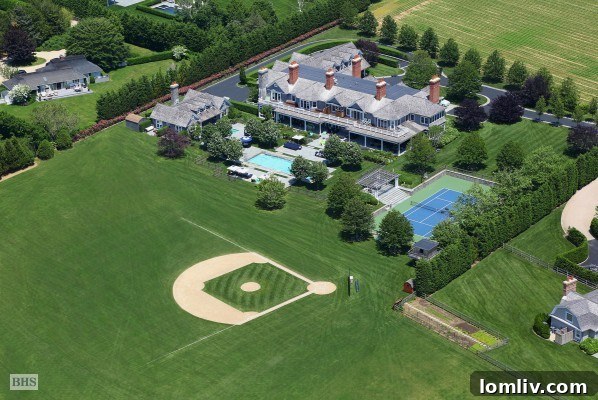
However, is this a universal truth across the Lone Star State? A closer look reveals a more complex picture. For instance, consider the Hamptons on the East Coast, a traditional playground for Wall Street titans. According to a report from appraiser Miller Samuel Inc. and brokerage Douglas Elliman, sales of luxury homes there tumbled a significant 16% in the third quarter from the previous year, with only 52 transactions recorded. Concurrently, the inventory of properties in the top 10% of the market by price surged by 34% to 292. This paints a clear picture of a cooling market in a well-established luxury locale.
In stark contrast, the Dallas-Fort Worth (DFW) metropolitan area tells a remarkably different story. January alone saw significant high-profile transactions, such as the sale of Thomas O. Hicks’ 25.5-acre estate to Andy Beal, who has publicly stated his intention not to subdivide the property. Furthermore, golf sensation Jordan Spieth’s purchase of Hunter Dehn’s home underscores continued activity at the apex of the market. These transactions, often driven by unique personal or investment motivations, are indicative of a buoyant high-end sector.
DFW’s Resilience: A Deep Dive into Luxury Sales
The numbers further solidify DFW’s robust performance. According to reports, sales of homes priced at $1 million or more in DFW increased by over 12% in 2015, following an impressive 15% rise in 2014. This rate of increase for luxury home sales in DFW was approximately double the overall growth observed in pre-owned home purchases, demonstrating a particularly strong appetite for high-value properties. The year 2015 was, by all accounts, an exceptionally strong period for Dallas luxury real estate, marked by numerous significant sales.
A parade of notable transactions illustrates this vitality: golfer Lee Trevino, for instance, downsized to a new home on Park Lane in Dallas, after his sprawling 10,000-plus square foot estate at 4906 Park Lane at Sunnybrook found a circling buyer. Developments like The Creeks at Preston Hollow, expertly marketed by Jonathan Rosen and Christy Berry, saw half of its multi-million dollar properties (in the $5 million-plus range) successfully sold. High-rise luxury also flourished: Museum Tower edged closer to 50% occupancy, welcoming a new famous resident from Walnut Hill Lane, while The Ritz Residences and The House were nearing sell-out status.
Individual masterpieces also found eager buyers. Jarrad Barnes of Dave Perry Miller sold the magnificent $15 million estate at 4700 St. Johns, a fortress-like residence built by Saad Chehabi. The stunning $15 million Justin Leonard house at 3700 Euclid also successfully closed. Even the historic Hal Thompson masterpiece at 3800 Beverly, owned by Joseph and Alisha Sinocola, reportedly entered contract after its aggressive initial asking price of $14 million was adjusted. The secondary home market, encompassing exquisite ranches, was equally robust. Kyle Crews at ABA and Concierge Auctions successfully sold Timbercreek Ranch at Lake Cypress Springs, with John Goff’s Eagle Mountain Lake house potentially next in line. Even the iconic Mary Kay Mansion finally sold and closed, an event that, though it technically finalized in early January 2016, reflected the strong momentum of late 2015.
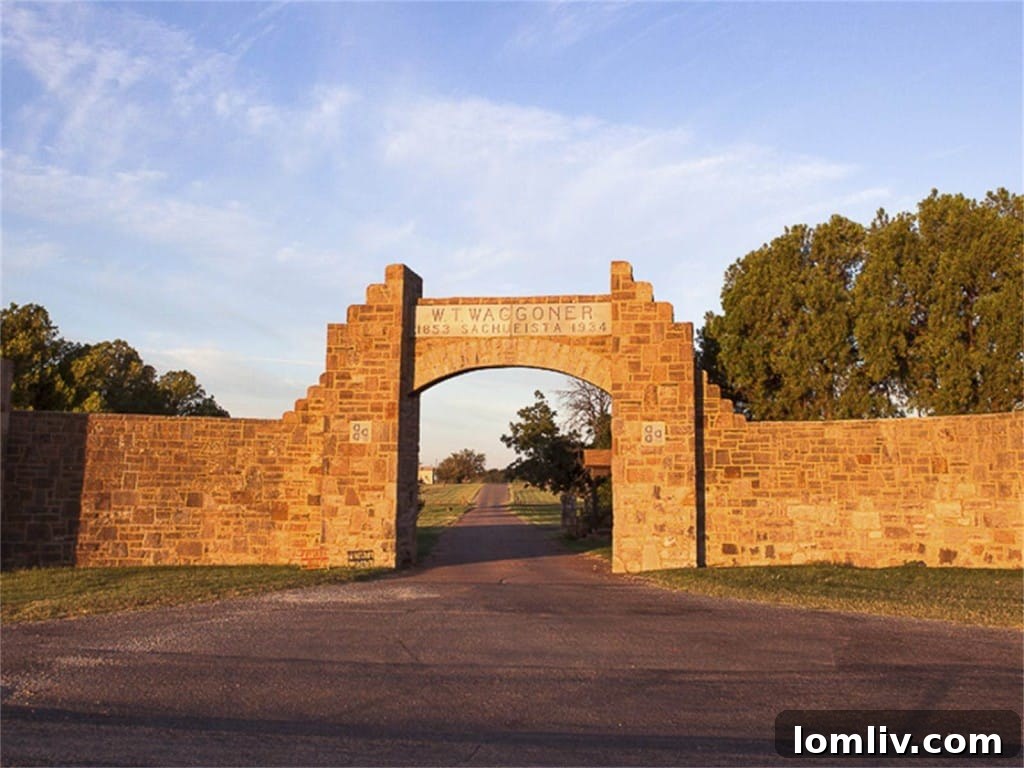
Further underscoring the scale of Texas real estate, the monumental $725 million Waggoner Ranch is also anticipated to be under contract in 2016, a testament to the enduring appeal and value of significant land holdings in the state.
The Distinctive Nature of Luxury Real Estate
Understanding the high-end luxury real estate market requires a unique perspective. As James Gaines, a respected expert from Texas A&M, aptly puts it: “you cannot give it the same barometer you give $500,000 real estate or even $1.2 to $3 million properties. It’s a different animal.” This segment caters to a far smaller, significantly more discerning pool of buyers. Their pickiness stems from their ability to simply purchase land and commission their dream property, rather than settling for existing inventory. A top Hawaiian Life agent once shared insights on selling to the ultra-wealthy: open houses, with potential buyers “schlepping through Sunday from 2 to 4 in their Lears,” are not the method. Luxury real estate is a distinct ballgame, where buyers, supported by multiple assistants and advisors, value their time immensely and often conduct their initial property searches digitally on iPhones and iPads.
The T. Boone Pickens Paradox: Selling & Buying Distressed Ranches
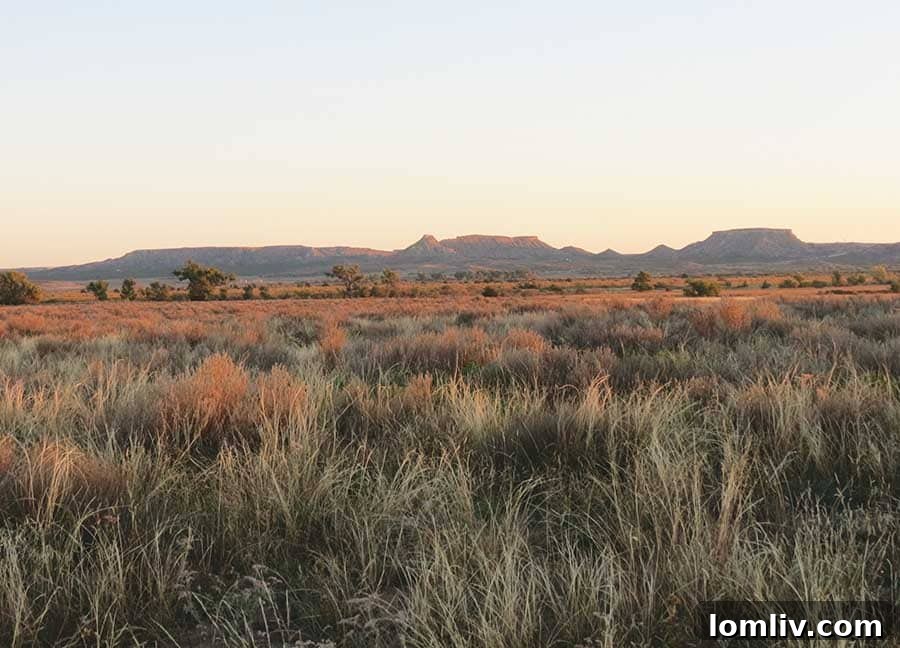
One article that presented a challenge to reconcile was a recent New York Times piece focusing on T. Boone Pickens’ new fund, described as a “Tommy Vu approach to buy up distressed ranches.” What the reporter notably failed to mention was the concurrent reality of T. Boone Pickens himself selling off a portion of his expansive Mesa Vista Ranch – over 16,000 acres in its east division, priced at more than $20 million. This particular property, acquired by Pickens in 1971, has grown into roughly 68,000 acres, spanning 24 miles of Canadian River bottomland and featuring diverse topography. Despite divesting part of his personal holdings, his partner maintains that the fund is actively “cleaning house” on distressed ranch sales, indicating a strategic rather than desperate move.
“Right now, you’re seeing the first signs of panic,” said Mr. Ellis, who started Sporting Ranch Capital, based in Dallas. In 2012, the group, which is backed by the Texas billionaire T. Boone Pickens, opened its first private equity fund to buy and restore ranch property throughout the West, including Colorado, Idaho, Utah and New Mexico.”
This statement suggests a market ripe for acquisition. However, it’s important to differentiate. They haven’t precisely acquired Alice Walton’s ranch, for example. It appears Mr. Ellis and his backers are targeting ranches on the brink of foreclosure, properties owners wish to divest quickly and discreetly, much like homes needing swift sales due to personal circumstances such as death or divorce.
Now, Mr. Ellis is raising a $100 million, Texas-only ranch fund. The first fund focused on restoring and enhancing ranch property to improve hunting and fishing habitats, but the new fund is aimed at scooping up $15 million to $25 million “trophy ranches” from owners who want to sell quickly and quietly. “When you make your giant hit down here, you buy a ranch and a jet,” Mr. Ellis said. “The ranch goes first because your jet goes with your obituary.”
Allen Crumley, who heads the ranch sales division at Fort Worth’s Williams Trew, offers a crucial counterpoint: the very fact that these entities are acquiring land suggests a fundamental belief in its future appreciation. This investment strategy underscores confidence in the long-term value of Texas land, irrespective of current market fluctuations.
David Burgher of Briggs Freeman Sotheby’s emerged as a solitary voice of reason in this unfolding narrative:
“Strong oil prices didn’t hurt, but it’s not the only thing driving prices,” said Mr. Burgher, who said he had not seen a significant decline in land prices.
Brian Sharpe, an investment specialist with U.S. Trust in Houston, echoed a similar sentiment, acknowledging that falling oil prices “aren’t going to help ranch prices.” However, he questioned whether land prices would necessarily mirror crude’s decline.
“remains to be seen. Not only is the economy more diversified, he said, but there are areas within oil and gas, namely refiners, that have not been hit as hard. “I’m not sensing any panic or abnormal stress,” he added.”
It bears repeating: this perspective comes from someone deeply embedded in Houston, a city often considered highly sensitive to energy markets, further lending credence to the idea of nuanced stability.
Data-Backed Resilience: Insights from Texas A&M
The core of this optimistic outlook is supported by robust data. Statistics from the Real Estate Center at Texas A&M University confirm the absence of widespread panic or abnormal stress in the state’s real estate market. Prices per acre increased consistently throughout the first three quarters of 2015, with preliminary numbers for the fourth quarter indicating that the median price per acre reached new highs. Charles Gilliland, a research economist with the Real Estate Center, noted, “I don’t think there’s any way we will be unscathed, but there are things that make it different than in the past.” He also observed that the significant quarterly increase correlated with a drop in typical acreage, suggesting that smaller ranches were driving these sales.
So, why the fuss? Part of it serves as excellent publicity for Sporting Ranch Capital, a Dallas-based firm, which is entirely understandable. Furthermore, the initial media narrative often follows an inverted pyramid structure, emphasizing a thesis the writer intends to prove – in this case, that declining oil prices are negatively impacting Texas ranch land. For example, a recent email stated, “Oil is $33. Markets are in turmoil. The timing couldn’t be more perfect,” continuing, “Oil has continued its slide since, settling below $29 on Monday. Although many in his state fret about the implications of cheap oil, Mr. Ellis sees it as an opportunity to buy another crucial asset: ranch land.”
However, as one delves deeper into such articles, it becomes evident that not everyone subscribes to this singular thesis. The first fund, initiated in 2012, was already acquiring ranches not only in Texas but also in Colorado, Idaho, Utah, and New Mexico. The current heightened activity reflects an opportunistic moment, acknowledging that some owners, especially of vast ranches, might find themselves overextended, necessitating a quicker sale.
Expert Forecast: A “New Normal” for Texas Real Estate
To gain the most accurate perspective, a conversation with James Gaines, chief economist at the Texas A&M Real Estate Center and a trusted voice on Texas real estate, is invaluable. He confirmed that while oil has indeed slowed down markets in Midland and Houston, it is premature to ascertain the full statewide impact. Dr. Gaines explained, “Oil prices go down, there’s an immediate short-term impact. But the multiplier and other ancillary impacts take a while to hit — like one to three years. We will know more by the mid to end of 2016.”
Frankly, Dr. Gaines admitted he anticipated a cool-down might manifest sooner. Yet, Texas concluded 2015 having experienced its best economy and its most robust real estate market ever, with an astounding approximately 300,000 sales. He cautioned against drawing misleading comparisons: “If we start comparing 2016 to 2015, it’s going to look, well, like it’s down. But comparing the market to 2015 is an unnatural comparison.”
Recalling his prediction of a “new normal” market, rather than the “steroidal” growth seen in 2015, Dr. Gaines affirmed this outlook. He forecasts a period of less economic growth for Texas, declining from over 4% to approximately 1%. Job growth rates are also expected to gradually decrease in 2016, influenced by energy sector job losses, the national economy, and the strength of the dollar. The true extent of the impact, however, remains contingent on how low oil prices ultimately go, coupled with other upcoming economic news. When asked about the most economically promising places to live in Texas this year, he pointed to Dallas-Fort Worth and potentially Austin.
Consumer Benefits & Market Cyclicality
Therefore, expect a wave of writers leaning towards a “Debbie Downer” narrative regarding the real estate market. Indeed, the frenetic pace might be subsiding, the stock market is reacting to low oil prices and significant issues in China (where capital flight is driving Chinese buyers to acquire substantial U.S. and Canadian properties), and oil prices are undeniably low. Yet, from a consumer standpoint, cheaper gas means filling a tank for $25 instead of $55, instantly making one feel a little wealthier. This might translate into small luxuries, like an extra Starbucks coffee (benefiting SBUX stock), or more significantly, less hesitation for buyers to purchase homes requiring longer commutes. Homeowners might also feel less constrained about running their swimming pool heaters a bit longer. For the average consumer, the immediate pinch of higher energy costs is significantly reduced.
While acknowledging that the market is inherently cyclical and we’ve been riding a strong upward wave since 2014, a complete collapse is unlikely. “I think the housing market will slow down a bit in 2016,” Dr. Gaines concluded. “It’s not going to fall off a cliff, though.” Becky Frey, one of Briggs Freeman Sotheby’s top producers, notes, “I have a lot of clients who are thinking of selling this year or next, and then maybe renting for a couple years.” However, a critical difference from previous downturns is the anticipated scarcity of inventory.
The I-35 Firewall: Texas’s Economic Shield
Jobs remain a crucial determinant. Mitchell Schnurman, a columnist for the Dallas News, aptly refers to the I-35 corridor as the “biggest defense for the Texas economy.” Rob Kaplan, the new president of the Federal Reserve Bank of Dallas, concurs that this trend is likely to persist.
Three major metros along the interstate corridor — Dallas, Austin and San Antonio — keep adding jobs even as oil prices plunge. And their gains may be enough to offset the energy shock.
At least they were last year, and that’s likely to continue, said Rob Kaplan, the new president of the Federal Reserve Bank of Dallas.
Houston and Fort Worth, a big manufacturing town, managed to grow just slightly in 2015, increasing jobs by less than 1 percent. Oil-dominated economies in Midland, Odessa and Longview had net declines in employment.
The bright spots were Dallas, Austin and San Antonio, which together created 168,000 jobs — the exact net gain for the entire state. While Dallas slipped in manufacturing, it grew strongly in professional services; trade, transportation and utilities; and leisure and hospitality.
Health care was also a strong contributor to job growth as more Texans got insurance through Obamacare and Medicaid.
The I-35 firewall kept Texas in positive territory for the year, and some businesses, such as restaurants and theaters, benefited from low gasoline prices. But cheap oil was a drag on growth in the state.
This “I-35 firewall” of diversified metropolitan areas – Dallas, Austin, and San Antonio – continues to generate substantial job growth, effectively cushioning the statewide economy from the adverse effects of cheap oil. These cities are thriving in sectors like professional services, trade, transportation, utilities, leisure, hospitality, and healthcare. This robust diversification is the true bedrock of Texas’s economic resilience, suggesting that while the energy sector faces challenges, the broader real estate market, particularly in its diversified urban centers, is poised for a more stable and nuanced future than often portrayed.