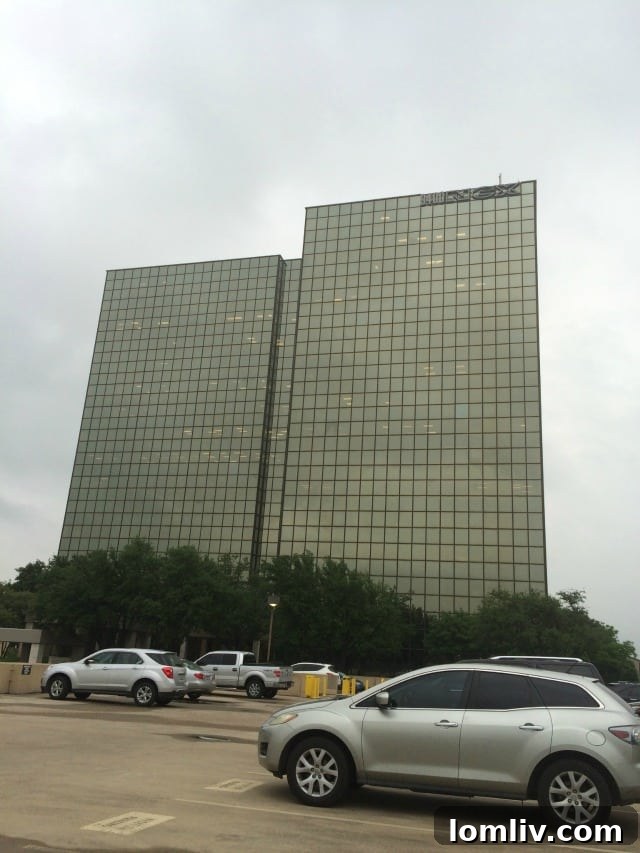
Dallas ISD’s Landmark Acquisition: A Deep Dive into the 9400 N. Central Expressway Purchase
The Dallas Independent School District (DISD) recently embarked on a significant strategic move, with its Board of Trustees casting a decisive 5-3 vote to acquire the prominent building located at 9400 N. Central Expressway. This pivotal decision marks a new era for DISD, aiming to consolidate numerous district departments currently scattered across various leased properties throughout Dallas County into a single, centralized headquarters. This long-anticipated move promises to usher in unprecedented levels of operational efficiency and collaboration for the district.
A Strategic Move Towards Operational Excellence
For decades, DISD’s administrative functions have been fragmented, with departments operating from disparate locations. This decentralization has presented numerous challenges, including inefficiencies in inter-departmental communication, increased operational costs associated with multiple leases, and logistical hurdles for staff and stakeholders alike. The purchase of the 9400 N. Central Expressway building directly addresses these issues, providing a unified hub designed to foster greater synergy and streamline district-wide operations.
The Vision: Consolidation and Collaboration
The core motivation behind this acquisition is the vision of bringing hundreds of DISD employees under one roof. This marks a monumental shift, as it’s been over half a century since the district last had a single, consolidated headquarters. The new facility is expected to transform how DISD operates, encouraging face-to-face collaboration, reducing travel time between offices, and ultimately leading to more agile and responsive administrative support for schools and students.
While the debate surrounding the $46.5 million price tag was extensive, as documented in various public forums and reports like this Dallas News education blog entry and the Board meeting proceedings, the focus has now shifted to the long-term benefits. Proponents argue that the investment is not merely about real estate, but about enhancing the district’s capacity to serve its community more effectively, creating a state-of-the-art environment conducive to modern educational administration.
Financial Prudence and Future Growth
The 9400 N. Central Expressway building, constructed in 1979, offers substantial space for current operations and future expansion. The district’s financial projections highlight the acquisition’s long-term economic advantages. Initially, DISD plans to honor the leases of the 55 existing tenants within the building, generating immediate revenue while gradually transitioning its own departments. This phased approach minimizes disruption and maximizes financial return during the consolidation period.
According to projections presented to the Board, DISD anticipates significant operational savings beginning as early as 2018, estimated at around $3.8 million. These savings are expected to escalate dramatically, reaching approximately $28 million by 2021, as the district fully occupies the building and phases out costly external leases. This strategic financial planning underscores the district’s commitment to responsible stewardship of taxpayer money, transforming what appears to be a large upfront expenditure into a substantial long-term saving and asset accumulation.
Demystifying Property Valuation: DCAD Appraisal vs. Fair Market Value
The discussion surrounding the 9400 N. Central Expressway purchase brought a critical, often misunderstood, aspect of real estate to the forefront: the distinction between the Dallas County Appraisal District (DCAD) appraisal value and a property’s fair market value. During the Board meeting, members Bernadette Nutall and Joyce Foreman notably questioned the $46.5 million purchase price, juxtaposing it with the DCAD appraised value of the property, which stood at approximately $23,790,000. This discrepancy, though seemingly stark, is a common point of confusion for many property owners and the public.
The Core Difference: Taxation vs. Transaction
It is imperative to understand that these two values serve entirely different purposes and are derived through distinct methodologies. As Dallas Realtor Brian Davis with Dave Perry-Miller Real Estate eloquently explains, “The DCAD value is simply the number the government uses to determine how much to charge the owner in property taxes. Fair market value represents a reflection of the realistic amount of money a buyer and seller can expect to exchange in a property transaction based on current market conditions.”
The DCAD appraisal value is primarily a tool for mass appraisal, used by the government to assess property taxes uniformly across a district. It often relies on historical data, broad market trends, and standardized formulas, and may not always reflect the dynamic, real-time value of a property in a competitive market. Its purpose is fiscal, not transactional.
Fair market value, conversely, is the most probable price a property would bring in an open and competitive market under all conditions requisite to a fair sale, with the buyer and seller each acting prudently, knowledgeably, and typically uninfluenced by undue stimulus. This value is determined by a willing buyer and a willing seller, taking into account current market demand, recent comparable sales, the property’s condition, location specifics, and potential for future income (especially relevant for commercial properties). A comprehensive article in the New York Times offers a great explainer on this very difference, reinforcing that:
‘What we’re talking about is a moving target,’ said J. P. Vaughn, the publisher of Creative Real Estate Online. Ms. Vaughn explained that in addition to market value — homes are also described by their appraised value, their assessed value and by values calculated using automated-valuation models. Market value, Ms. Vaughn said, is defined as the price at which a house will sell within a reasonable period of time. Using that definition, the house in the example would have a market value of $420,000.
This distinction is crucial for public understanding, ensuring that significant investments like the DISD headquarters purchase are evaluated using appropriate financial metrics rather than tax-centric valuations.
The Complexities of Commercial Property Valuation
The nuances of property valuation become even more pronounced when dealing with commercial real estate. Our own expert, Jon Anderson, took a deep dive into appraisals and DCAD valuations, particularly highlighting the challenges in the commercial sector:
One thing I haven’t touched on, and it’s huge, is commercial property. Talk about a complete black hole. Almost everything is private. Even if DCAD could access it, there’s no commercial MLS to centralize data. As a result, the commercial contribution to overall tax revenues is almost certainly the most inaccurate and results in the lowest ratios of market value to DCAD valuation. If commercial property was taxed accurately, residential tax rates would likely plummet.
Anderson’s observation sheds light on why commercial property valuations, especially for a large, multi-tenant building like 9400 N. Central Expressway, often deviate significantly from DCAD figures. The lack of transparent, centralized commercial sales data makes it difficult for appraisal districts to capture true market values, leading to potential under-taxation of commercial properties. This discrepancy can indirectly place a heavier tax burden on residential homeowners. For a sophisticated buyer like DISD, relying solely on DCAD values would be a misstep; a thorough fair market appraisal conducted by independent experts is essential to determine a just and equitable purchase price.
A Vision for Dallas ISD’s Future
By most expert accounts, the acquisition of 9400 N. Central Expressway, even at its $46.5 million price point, represents a sound and strategic investment for the Dallas Independent School District. It provides the necessary infrastructure for long-term growth, improved operational efficiencies, and a unified identity for its administrative core.
The meticulous planning for the transition, including honoring existing tenant leases and projecting substantial future savings, demonstrates a fiscally responsible approach. If all proceeds as anticipated, the district is set to finalize the purchase of the building within approximately two months. Following some necessary preparations and renovations, DISD employees are projected to begin moving into their new, consolidated headquarters by December 2016. This timeline underscores the district’s eagerness to capitalize on the benefits of centralization and embark on a new chapter of enhanced service delivery to the Dallas community.
This landmark acquisition by Dallas ISD is more than just a real estate transaction; it’s a statement of commitment to modernizing operations, fostering a collaborative work environment, and making judicious financial decisions that will benefit the district for generations to come. It also serves as a crucial reminder for all stakeholders about the fundamental differences in property valuation methods, emphasizing the importance of informed analysis in public discourse.