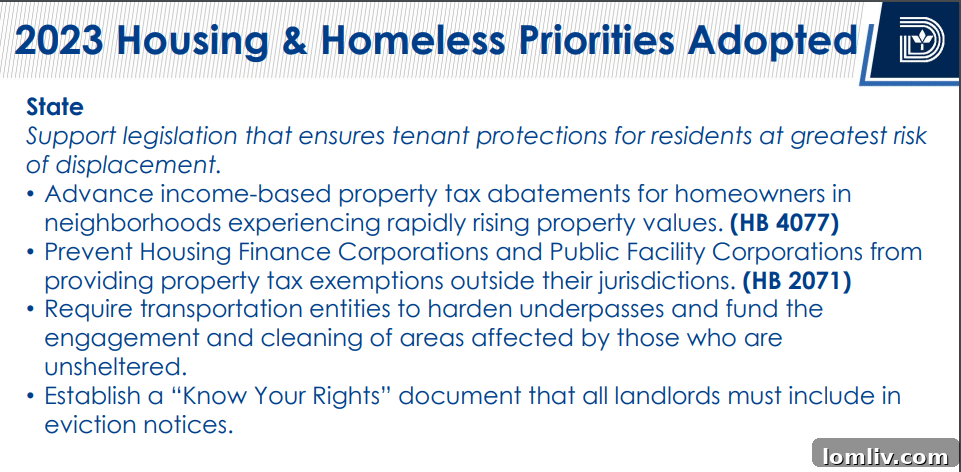
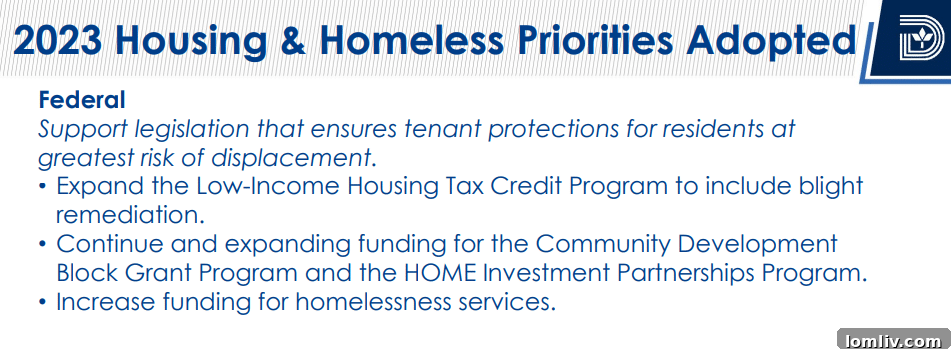
The city of Dallas is actively shaping its legislative agenda for the upcoming 2025 session, with a significant focus on crucial housing-related issues. These priorities aim to enhance housing stability, protect vulnerable residents, and ensure equitable access to essential services across the city. Key initiatives include safeguarding rental subsidies against landlord discrimination, implementing robust tenant protections to eliminate exploitative “junk fees,” and securing vital funding for emergency homeless shelters. These efforts underscore Dallas’s commitment to addressing the pressing challenges within its housing landscape and fostering a more inclusive community for all residents.
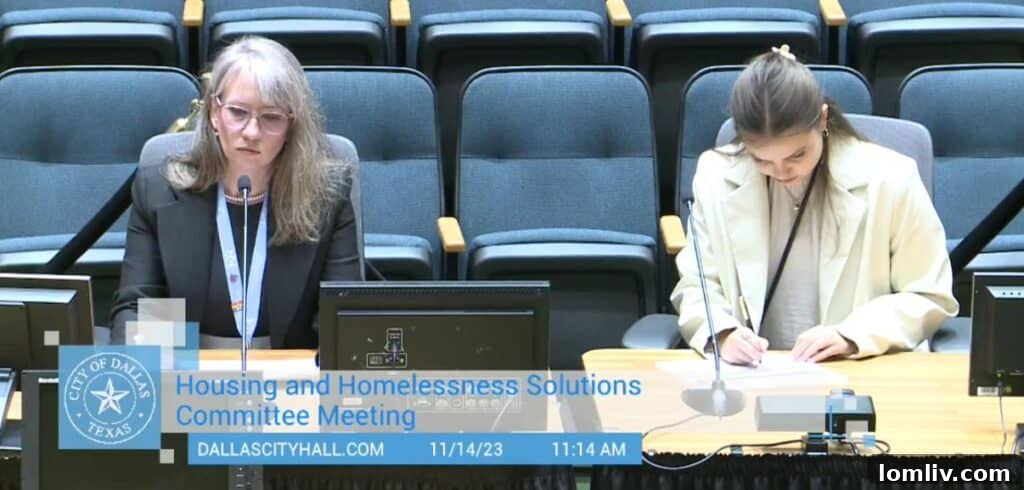
During a pivotal November 14 meeting of the City Council’s Housing and Homelessness Solutions Committee, Carrie Rogers, Director of Government Affairs, presented an insightful overview of the proposed state and federal legislative priorities. Her presentation highlighted the multifaceted approach Dallas intends to take in advocating for its residents. Rogers, a prominent figure in municipal government affairs, articulated the strategic importance of these discussions in formulating effective policy recommendations that resonate at both state and national levels.
Rogers emphasized that the legislative priorities document is not a static blueprint but rather a dynamic, “living, breathing” framework. This adaptable nature allows for continuous refinement and optimization over the coming year, ensuring that the city’s advocacy efforts remain responsive to evolving needs and challenges. “We are actively engaged in comprehensive research and ongoing communication with our department directors,” Rogers explained, “to gather additional intelligence and solidify the foundational support for these critical programs.” This collaborative process ensures that all legislative proposals are thoroughly vetted and backed by robust data and expert insights.
Supporting Rogers in this intricate process is Linley Youderian, Senior Governmental Affairs Coordinator. Youderian underscored the fundamental role of the City Council’s adopted legislative agenda. This comprehensive guide serves as an indispensable tool for city staff and council members as they engage in vital advocacy efforts. Whether lobbying lawmakers in Austin, the state capital, or collaborating with federal representatives in Washington, D.C., this agenda ensures a unified and coherent message, amplifying Dallas’s voice on key policy discussions that impact housing, homelessness, and broader community well-being.
Securing Essential Funding for Emergency Homeless Shelters
A significant portion of the committee meeting was dedicated to the critical issue of funding for emergency homeless shelters, a topic that deeply affects the Dallas community and its surrounding regions. Councilwoman Cara Mendelsohn raised a pertinent question regarding the prioritization of state funding for sheltering homeless individuals who originate from outside Dallas city limits. Her inquiry highlighted a long-standing challenge where Dallas, due to its robust resources and infrastructure, frequently serves as the primary provider of emergency shelter for unsheltered individuals from neighboring cities and counties.
Carrie Rogers elaborated on this complex dynamic, explaining that Dallas often bears a disproportionate burden in providing humanitarian aid. Consequently, the Office of Government Affairs strongly advocates for pursuing dedicated state funding. “Given that we consistently accommodate a substantial number of unsheltered people from beyond our municipal boundaries,” Rogers stated, “securing state-level financial support is not just desirable, but essential for sustaining these vital services and ensuring fairness to Dallas taxpayers.”
Councilwoman Mendelsohn further articulated her position, emphasizing the need for Dallas to seek “cost recovery” mechanisms from other municipalities. She argued that while Dallas remains committed to providing shelter, the financial responsibility should not fall solely on Dallas taxpayers, especially when neighboring jurisdictions could and should contribute. “I firmly believe we should provide shelter,” Mendelsohn affirmed, “but it is unjust for our taxpayers to bear the entire financial weight when other cities have the capacity to participate in and share that burden.” Her comments reflect a growing sentiment within the council for more equitable regional solutions.
Adding to the discussion, Councilwoman Gay Donnell Willis suggested a more nuanced approach, advocating for the establishment of clear thresholds. These thresholds would guide decisions on whether to establish an emergency shelter, permanent supportive housing, or temporary housing solutions for individuals from other areas. Willis acknowledged the contributions of some neighboring municipalities but noted that their efforts might be “a little tepid in the face of what we are encountering.” She stressed that while any assistance is appreciated, it “doesn’t necessarily get you off the hook because Dallas is really doing a lot of heavy lifting.” Dallas’s extensive resources, while beneficial, inadvertently attract a broader population in need. Willis underscored the importance of ensuring that as Dallas continues its vital work, it also carefully considers strategies for “cost recovery or some sort of compensation that would help us” to alleviate the strain on city resources.
In response to the discussions on regional responsibility, Rogers informed the committee that her staff is actively exploring alternatives to state legislation, specifically investigating the feasibility of establishing interlocal agreements with other governmental entities. These agreements could provide a more localized and direct mechanism for sharing the financial and logistical responsibilities associated with homelessness services. Such cooperative frameworks would enable Dallas to formalize partnerships and secure contributions from neighboring cities and counties, ensuring a more sustainable and collaborative regional response to homelessness.
Councilman Jesse Moreno, who chairs the Housing and Homelessness Solutions Committee, reiterated Dallas’s compassionate stance, affirming that the city would not turn its back on unsheltered individuals, regardless of their origin. However, he echoed the sentiment of his colleagues regarding the need for broader support. “If we are going to take on this significant responsibility,” Moreno emphasized, “we absolutely require the robust support and partnership of our neighboring cities and the county.” This collective statement from the committee highlights the complex balance between humanitarian duty and fiscal responsibility, advocating for a united regional effort to tackle homelessness effectively.
Addressing Diverse Legislative Priorities Related to Housing Stability
Beyond the critical issue of emergency shelter funding, the City Council’s Housing and Homelessness Solutions Committee also delved into several other significant housing-related legislative priorities designed to foster a healthier and more diverse housing market in Dallas. These discussions reflect the city’s comprehensive approach to ensuring housing stability and affordability across various demographic segments.
Councilman Chad West brought attention to a noticeable deficiency in Dallas’s housing landscape: the scarcity of condominium sales. He specifically tasked the Government Affairs team with investigating the underlying causes of this trend. “I have consistently heard that the lack of condominiums is a significant issue, primarily due to stringent insurance requirements imposed at the state level,” West explained. “This feedback has come from multiple, unrelated developers, indicating a systemic problem. It’s clear that condominiums, a crucial form of dense, often more affordable housing, are not as prevalent in Texas as they should be.” He suggested that the team initiate their research by engaging with key industry stakeholders, specifically recommending “The Real Estate Council” as a valuable starting point to uncover insights from the development community. Understanding and potentially mitigating these regulatory hurdles could unlock a new avenue for housing development, offering more diverse options for Dallas residents.
Another crucial area of discussion revolved around tenant protections, with Councilwoman Mendelsohn requesting a clear separation of legislative priorities concerning a “right-to-cure period” for tenants facing eviction and the issue of delays intentionally created by renters during eviction proceedings. Mendelsohn unequivocally expressed her support for the “right-to-cure period.” This vital tenant protection allows individuals who may have genuinely overlooked a rent payment to rectify the situation promptly upon receiving notice, thereby preventing an unnecessary eviction. “I am very much in favor of having a right-to-cure period,” she stated. “If a tenant has simply missed paying rent and receives a notice, allowing them to immediately submit payment would negate the need for an eviction. This is a matter of fairness and preventing undue hardship.”
However, Mendelsohn drew a distinct line when it came to renters who create deliberate delays in eviction processes, often by falsely claiming access to funds. She argued that existing regulations and state laws already govern these situations, underpinned by the contractual agreement between tenant and landlord. “Creating a delay by claiming to have the money when, in reality, you may not, is a different matter,” she clarified. “Such regulations are already well-established and outlined, and a contract exists between the tenant and the landlord, backed by state law. I am not in favor of creating additional mechanisms that encourage or facilitate such delays, but I am strongly in favor of a genuine right-to-cure period that offers a fair chance to remedy simple oversights.” This nuanced approach seeks to protect vulnerable tenants from immediate eviction due to minor errors while ensuring that the legal eviction process remains efficient and fair to landlords when deliberate delays occur.
Carrie Rogers concluded the discussion by outlining the structured timeline for these legislative proposals. The comprehensive list of priorities will undergo thorough review and presentation to each relevant council committee throughout December. This committee-level scrutiny ensures that every aspect of the proposed agenda is meticulously examined and refined by specialized experts and council members. Following these detailed committee reviews, the consolidated legislative agenda will be presented to the full City Council in January for final deliberation and adoption. This methodical process underscores Dallas’s commitment to thoughtful, impactful policymaking that addresses the critical housing and homelessness challenges facing its growing community, paving the way for a more stable and equitable future for all residents.