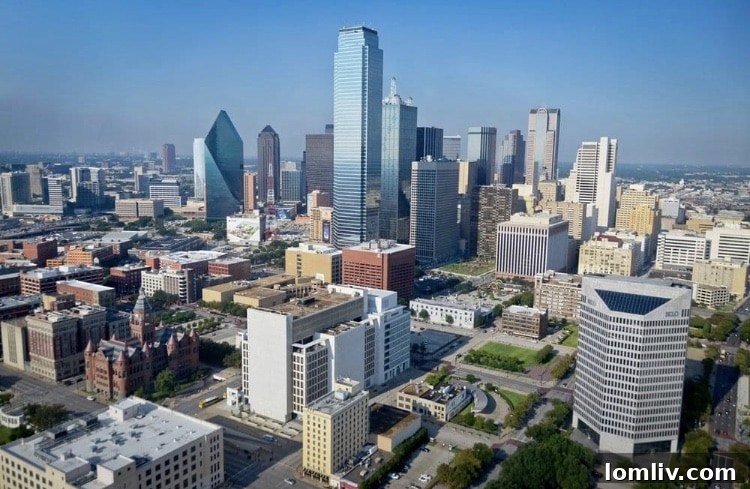
Dallas, a city perpetually on the cusp of growth and innovation, is embarking on a monumental journey to modernize its foundational urban planning and design frameworks. This ambitious undertaking involves a complete overhaul of a 35-year-old development code, the meticulous drafting of a comprehensive future land use map, and the much-needed digitization of countless paper records. It’s an intricate and demanding process, but according to Julia Ryan, the city’s Director of Planning and Urban Design, the anticipated benefits for residents, businesses, and developers will be profound and enduring.
Julia Ryan, a seasoned municipal planning expert with 15 years of experience, primarily honed in Fort Worth, was appointed to lead Dallas’s Planning and Urban Design Department approximately a year ago. She stepped into a role characterized by significant challenges: a legacy of antiquated policies and procedures, a conspicuous absence of a cohesive plan to guide future land use, and a painfully slow bureaucratic process for zoning cases, often stretching from application to city council approval over eight or nine months.

Shaping Dallas: A Vision for Predictability and Equity
“The ultimate goal here is to instill predictability and foster greater transparency across our urban landscape,” Ryan articulated, underscoring the department’s core objectives. “We want individuals and businesses to have increased confidence in the land uses throughout the city. A key focus is to prevent the inappropriate juxtaposition of industrial developments next to residential neighborhoods. For the average Dallas resident, who is simply striving to manage their daily life, commute to work, raise a family, and run errands, we are committed to safeguarding and enhancing their quality of life.” Ryan further elaborated on the broader implications of these reforms, emphasizing the crucial principles of equity and efficiency. “While the future land use map serves as an indispensable macro-level tool, our reforms also consider the micro-scale impact on every person simply trying to live their life within our city.”
Achieving these ambitious targets will significantly improve the development process in Dallas. Once these goals are realized, Ryan projects that developers should anticipate a rezoning application turnaround time of approximately four months, aligning with standard industry benchmarks. This stands in stark contrast to the current protracted timelines, promising a more agile and responsive planning environment.
Streamlining Operations: A Path to Greater Efficiency
A substantial portion of this streamlining effort could materialize through the creation of a centralized “one-stop shop” for development-related services. This strategic consolidation would involve relocating the Planning and Urban Design (PUD) offices, Development Services, and Economic Development divisions from their current scattered locations in Dallas City Hall and the Oak Cliff Municipal Center to a single, newly designated facility situated off the Stemmons Corridor in Northwest Dallas. While Ryan acknowledged being aware of discussions regarding such a move, she clarified that, as of now, there has been no official confirmation regarding the specifics or timeline of this significant relocation. Should it come to fruition, this physical consolidation is expected to foster better inter-departmental collaboration and provide a more cohesive and efficient experience for applicants.
Addressing the Complexities of Dallas Zoning and Rezoning
The challenges confronting Dallas’s planning department are multifaceted and deeply entrenched, yet Ryan assured that viable solutions have been identified. Notably, the city’s proposed budget for the upcoming fiscal year, commencing October 1, includes dedicated funding allocations to support these critical problem-solving initiatives. At the forefront of these issues, and arguably the most heavily scrutinized, is the city’s intricate zoning system.
The Burden of Planned Developments (PDs)
The prevailing sentiment regarding Dallas’s zoning framework was vocally articulated earlier this month by Phil Crone, Executive Officer of the Dallas Builders Association. Crone emphasized the urgency of reform, stating to Daltxrealestate.com, “We absolutely need to fix our zoning problems. Having more than 1,200 [planned developments] is frankly absurd. The more we can effectively simplify zoning and broaden what can be built by right, the better equipped we will be to prevent future permitting backlogs from occurring. More significantly, it offers an opportunity to finally put an end to the exclusionary history of zoning that, regrettably, continues to be written in our city’s development narrative.”
A Planned Development, commonly referred to as a PD, is meticulously defined in the city’s Zoning 101 document as a specific district designed to tailor land uses and development regulations for a particular area. While intended to offer flexibility, the proliferation of PDs has created a complex web of individualized rules, making the overall system opaque and cumbersome.
Embracing “By-Right” Development for Clarity
Ryan further clarified the concept of “by-right” development, illustrating it with a straightforward example: if a developer intends to construct a single-family neighborhood in a parcel of land already designated with an R-5 zoning classification, they would ideally not be required to undergo a separate, lengthy rezoning process. However, the current reality in Dallas, burdened by an overwhelming number of PDs, means that rezoning is almost invariably a prerequisite for nearly any new development project. This forces developers into a complex, time-consuming, and often unpredictable application cycle, even for projects that might otherwise align with basic residential land uses.
Beyond the structural issues of zoning, the city has faced persistent challenges in both attracting and retaining highly qualified staff within its planning department. “It takes a minimum of six months to adequately train new staff members,” Ryan explained, highlighting the steep learning curve. “The work is incredibly complicated, highly technical, and inherently variable. We often struggle to find experienced planners who can seamlessly adapt to the unique and intricate ‘Dallas way’ of zoning. This work is also mentally demanding, and our teams have been consistently tasked with an unrelenting volume of cases.”
To address these critical human resource issues, the city’s Human Resources Department has proactively engaged in efforts to improve pay equity and refine job classifications for PUD staff, initiatives that Ryan confirmed have already shown positive results. Additionally, the department is actively focusing on ensuring that employees are assigned appropriate and manageable workloads, a vital step towards fostering a sustainable and productive work environment. Currently, the department operates on an annual budget of $6.7 million and, when fully staffed, comprises approximately 55 dedicated employees.
Digitization: A Leap Towards Modern Efficiency
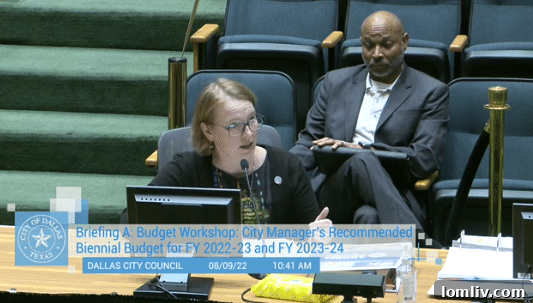
A pivotal component of expediting and enhancing the efficiency of planning processes involves the implementation of electronic zoning services. Ryan conveyed this crucial point to District 1 Councilman Chad West during an August 9 budget hearing. “Currently, all of our processes are predominantly paper-based, which inevitably leads to a significant amount of wasted time simply moving physical documents from one location to another,” she noted. This antiquated paper-driven system has been a significant contributor to the two-year backlog currently plaguing the permitting department, a situation that Councilman West succinctly captured during the hearing: “If you want to review a PD, you literally have to enter a physical room filled with boxes. It’s absolutely ridiculous.” The transition to digital platforms promises to revolutionize these workflows, offering instantaneous access to information and drastically reducing processing times.
Overhauling Dallas’s Development Code: A Foundation for the Future
The city’s existing development code, a document originally drafted in 1965 and last updated in 1987, is another cornerstone of Dallas’s planning challenges. “We are striving to build a modern, forward-thinking city, yet instead of undergoing a comprehensive overhaul of our development code, we have consistently opted to merely build upon this outdated existing foundation,” Ryan lamented. “This approach has resulted in a series of ‘Band-Aid’ code amendments that have only served to introduce greater complexity into the system. The pervasive PD system, in particular, has created a multitude of problems. Our objective is to transition towards a base zoning framework rather than relying so heavily on PDs—establishing consistent, standardized requirements and setbacks that remain uniform whether you’re in an R5 zone in one part of town or an R5 in another.”
To effectively navigate this complex process, the department received a $2 million allocation in a mid-year adjustment, earmarked for securing a specialized consultant. This expert guidance will be instrumental in ensuring the code is simplified to the extent that ordinary citizens and developers alike can readily comprehend its provisions, without the necessity of hiring an attorney or possessing an advanced degree in zoning law. Ryan emphasized the urgency of this simplification: “People should not have to sift through thousands of pages of convoluted regulations to determine the required number of parking spaces or the specific setback for a particular sub-PD. When you hear about 1,100 PDs in Dallas, you are essentially talking about 1,100 distinct and often contradictory zoning documents, each with its own set of rules and nuances.”
Incremental Reforms and Strategic Priorities
The revision of the development code will be a carefully managed, incremental process, Ryan clarified. “What holds significant importance for me are the quick, impactful fixes we can integrate into the zoning code to immediately streamline the zoning process,” she stated. “Anyone who has attempted to decipher a zoning code or a PD document can attest that it is rarely a straightforward or pleasant experience. Our goal is to enhance clarity, make it more visually intuitive, and ensure accessibility. We are not merely undertaking a wholesale rewrite of the entire code from scratch; instead, we intend to strategically begin by addressing the most confusing and problematic areas, delivering tangible improvements early in the process.”
The city’s official budget overview unequivocally designates the development code overhaul as a critical strategic priority. The document starkly outlines the historical consequences of the current system: “Over many years, this antiquated approach to zoning has directly led to the alarming proliferation of over 1,100 Planned Development Districts, creating a fragmented patchwork of individually customized and inherently unpredictable development standards across the entirety of the city.” It further elaborates on the ambitious scope of the reform: “The comprehensive reform of the city’s development codes, specifically Chapters 51, 51A, and 51P, is actively underway. The aim is to develop a modern, updated, and user-friendly development code that is streamlined, consistent, demonstrably clear, and fully aligned with all existing city plans and policies. This extensive code reform will encompass a general modernization to provide enhanced clarity, substantially improve overall functionality, and achieve a greater sensitivity to the existing and future fabric and distinct character of the City of Dallas. This focused effort will primarily target those portions of the development code that are either deficient, demonstrably outdated, overly complex, or that otherwise unnecessarily inhibit beneficial development and growth.”
Shaping Tomorrow: The Future Land Use Map (ForwardDallas)
Beyond the immediate complexities of zoning and the development code, Dallas is actively investing in its long-term vision through the creation of a robust future land use map. Public meetings are strategically scheduled for the fall, providing vital platforms for community engagement and feedback on ForwardDallas, the city’s comprehensive future land use framework. A draft of this pivotal new document is anticipated to be presented to the city council by late next year, marking a significant milestone in Dallas’s urban evolution. This forward-looking map will serve as an essential visual guide, clearly delineating what types of development are considered compatible and appropriate for specific areas throughout the city.

“For instance, if we have a vacant parcel of land adjacent to an established residential neighborhood, and an industrial entity expresses interest in developing there, our current policies often lack the necessary teeth to restrict such development effectively,” Ryan explained, highlighting a critical deficiency. “With the forthcoming technical analysis embedded within the future land use map, we will be empowered to definitively state, ‘That particular use is simply not recommended for this specific location,’ thereby providing clear guidance and enforcement capabilities.”
A central pillar of this new framework is the principle of environmental justice—a commitment to strategically prevent the placement of industrial uses in close proximity to residential areas, safeguarding the health and well-being of communities. Ryan reflected on the historical context: “When examining some of the historical approaches to zoning in Dallas, much has been accomplished through fragmented deed restrictions, resulting in a system heavily reliant on discretionary zoning. I am not entirely certain how we reached this point where we lack a robust future land use plan or a development code that furnishes us with the essential tools needed to operate with true efficiency. I firmly believe that where we are headed, and what we are striving to achieve, is a fundamental reconsideration of how we repair and fortify this entire system. We are committed to adopting a big-picture perspective, focusing on long-term sustainability and equitable growth.”
With the necessary budget allocated to these transformative initiatives, Ryan expressed optimism about the path ahead. “It is paramount that the community fully comprehends the objectives we are pursuing, and it is equally important for us to engage in continuous dialogue with them throughout this entire process, fostering open and transparent communication. I am genuinely hopeful that this will evolve into a truly exciting and productive discussion, laying the groundwork for a more predictable, transparent, and equitable Dallas for generations to come.”