
Phillip W. Shepherd Sr.: The Visionary Architect Who Redefined Dallas’s Skyline

Dallas mourned the passing of one of its most influential architectural figures, Phillip W. Shepherd Sr., who died on Thursday, July 11, 2019, at the age of 77. Confirmed by a long-time family friend to Daltxrealestate, Shepherd’s death marked the end of an era for a city whose modern landscape he so profoundly shaped. His legacy, etched into the very fabric of Dallas’s most iconic neighborhoods, continues to inspire and define the city’s architectural identity, making him a true icon in the realm of urban development and design.
A Foundation Built on Vision: Early Life and the Launch of PWS Architects
Born and raised in the close-knit community of Graham, Texas, Phillip W. Shepherd Sr. carried a deep appreciation for his Texan roots throughout his illustrious career. This connection to the state’s heritage would later become a hallmark of his architectural philosophy. He pursued his passion for design at Texas Tech University, graduating with a degree in architecture in the transformative 1960s. This period was a crucible of innovation in architecture, moving beyond mid-century modernism towards new expressions of form and function.
Armed with a robust education and a clear vision, Shepherd wasted no time in establishing his own firm, PWS Architects, in 1963. From its inception, PWS Architects was not merely a design studio; it was a testament to Shepherd’s ambition to create structures that were not only aesthetically pleasing but also deeply integrated into their cultural and historical contexts. He envisioned buildings that would stand the test of time, becoming integral parts of the communities they served, rather than just transient additions to the urban sprawl. This foundational principle guided PWS Architects through decades of groundbreaking work, earning the firm a reputation for excellence and thoughtful design.
Shaping Uptown: The Transformative Influence on Dallas’s Core
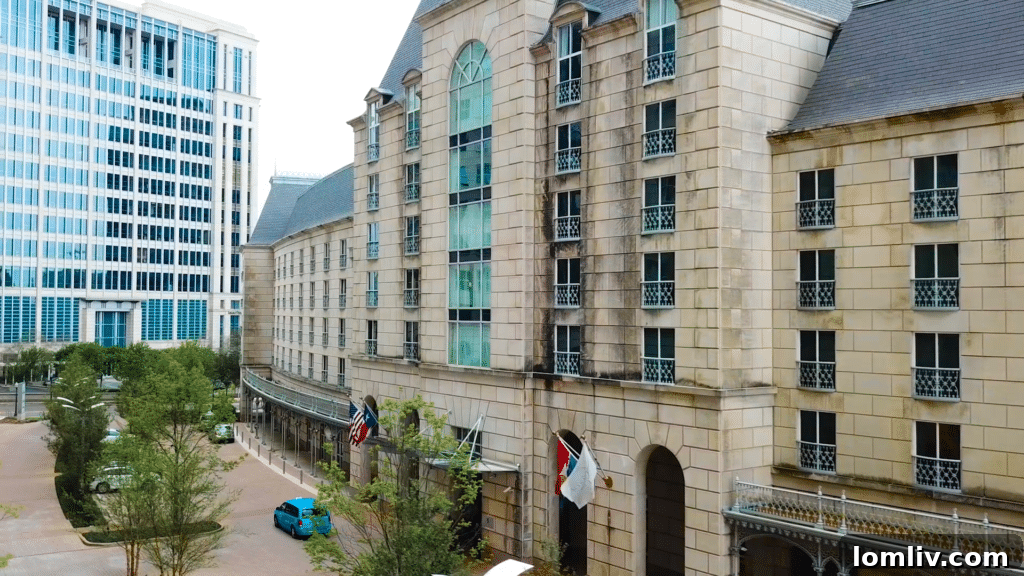
It is virtually impossible to survey the contemporary landscape of Uptown Dallas without encountering the indelible mark left by Phillip W. Shepherd Sr. His influence is so pervasive that it’s difficult to find a corner of this vibrant district that doesn’t bear the imprint of his genius. Shepherd’s extensive and diverse portfolio includes some of Dallas’s most enduring mainstays, projects that not only redefined luxury and urban living but also set new standards for architectural excellence. Among his most celebrated contributions are the iconic Crescent Hotel and the exquisitely designed Mansion on Turtle Creek, both testaments to his profound impact on the city’s development.
Shepherd’s approach to architecture in Dallas was distinctly collaborative. He frequently partnered with other leading architects and builders, fostering a synergistic environment that resulted in structures which eloquently honored Texas history while simultaneously injecting a distinctly contemporary flair. This delicate balance allowed him to craft places where residents and visitors alike could work, live, and play, all within environments that felt both deeply rooted in the past and vibrantly connected to the future. His vision extended beyond individual buildings; he meticulously planned how his creations would interact with the surrounding urban fabric, ensuring that each project contributed meaningfully to the cohesive growth and aesthetic appeal of Dallas.
The Crescent Hotel: A Masterpiece of Blended Heritage and Modernity
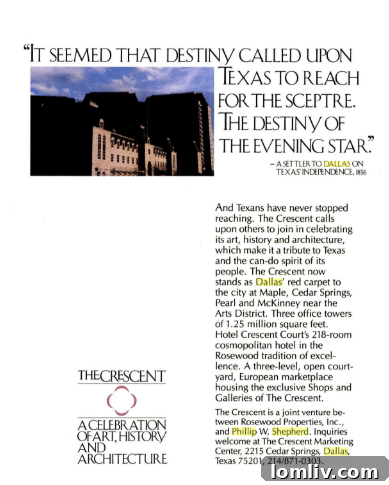
Perhaps no single project encapsulates Phillip W. Shepherd Sr.’s architectural philosophy more perfectly than The Crescent. This landmark development, a luxurious mixed-use complex encompassing a five-star hotel, office towers, and high-end retail, stands as a monument to his design principles. In an insightful interview with Dr. Gary McCaleb of Abilene Christian University in the early 1980s, Shepherd articulated his vision for The Crescent with remarkable clarity.
“We wanted something that was not a glass box, that ended up having some connotations of Texas history… that still had heritage, but still had a contemporary feeling,” Shepherd explained. This statement reveals his profound commitment to creating buildings with character and a sense of place, a stark contrast to the often-generic steel and glass structures dominating urban landscapes elsewhere. The Crescent, with its distinctive postmodern design, evokes historical Texan architecture through its brick and stone façades, intricate detailing, and elegant proportions, while its modern functionality and amenities ensure its relevance in the contemporary world. It was designed to be a timeless addition to Dallas, a place that would foster community and provide a luxurious experience for its occupants and visitors, forever altering the perception of Uptown Dallas as a prime destination.
A Look Towards the Future: Uptown and the Arts District
Shepherd’s forward-thinking perspective extended beyond individual projects to the broader urban context. In that same pivotal interview, he spoke with palpable enthusiasm about the burgeoning Uptown and Arts District areas. At the time, these districts were on the cusp of significant transformation, eagerly anticipating the realization of the Dallas Area Rapid Transit (DART) system and the completion of the Dallas Museum of Art building. His anticipation underscored a deep understanding of urban planning and the symbiotic relationship between infrastructure, culture, and architectural development. He recognized the potential for these areas to become vibrant cultural and economic hubs, a vision he actively contributed to through his designs, laying the groundwork for the dynamic Dallas we know today.
The foresight of architects like Shepherd was crucial in steering Dallas’s growth, ensuring that its expansion was not just about building more structures, but about creating a cohesive, attractive, and functional city. His enthusiasm for the future of Dallas was infectious, and his projects served as anchors around which these ambitious urban developments could flourish, demonstrating his holistic approach to city-building.
Interview with Phillip Shepherd on The Portal to Texas History.
The Mansion on Turtle Creek and Other Distinguished Collaborations
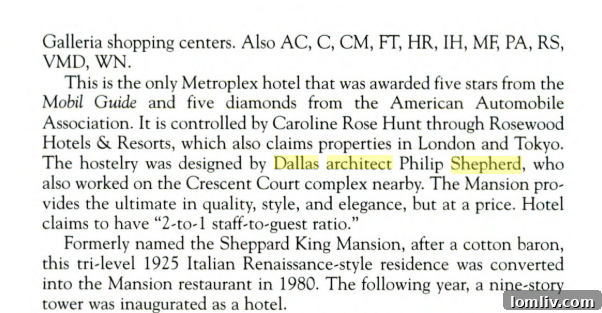
Beyond The Crescent, Phillip W. Shepherd Sr.’s influence on Dallas’s luxury landscape is perhaps most evident in his work on The Mansion on Turtle Creek. Originally a private estate built in 1925, Shepherd was instrumental in its transformation into one of the most exclusive and celebrated hotels in the world. His design philosophy here was to preserve the mansion’s original Spanish Revival grandeur while subtly integrating modern amenities and sophisticated elegance. This delicate balance ensured that the building retained its historic charm and character, becoming a beacon of timeless luxury that continues to draw discerning guests and diners from around the globe. The Mansion on Turtle Creek stands as a testament to his ability to breathe new life into existing structures, honoring their past while securing their future as cherished landmarks.
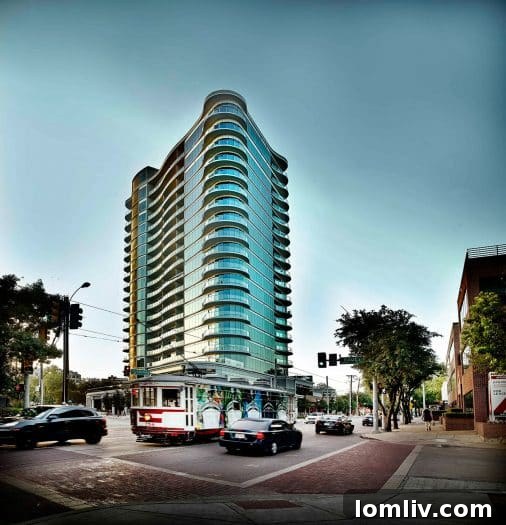
Shepherd’s collaborative spirit also extended to groundbreaking contemporary projects, such as One Uptown. This sleek, high-rise luxury residential tower was a collaboration with Humphreys & Partners, showcasing his versatility and willingness to embrace diverse architectural styles when appropriate. One Uptown, with its modern aesthetics and premium finishes, exemplifies his capacity to contribute to cutting-edge urban developments that cater to the evolving needs of a dynamic city. His ability to work effectively across different scales and styles, from historic renovations to bold new constructions, underscores his comprehensive understanding of architectural design and urban planning.
Accolades and a Lasting Legacy in Architecture
Phillip W. Shepherd Sr.’s exceptional work did not go unnoticed on a national and international stage. His projects were frequently featured in prestigious publications, cementing his reputation as a leading figure in contemporary American architecture. His designs graced the pages of the New York Times, Architectural Digest, and Architectural Record, bringing national attention to Dallas’s burgeoning architectural scene. Locally, his contributions were highlighted in the Dallas Morning News and the Dallas Business Journal, acknowledging his profound impact on the city’s economic and aesthetic development.
Throughout his career, Shepherd received numerous awards for design excellence, celebrating his innovative approaches and the timeless quality of his creations. These accolades were not merely acknowledgments of individual projects but served as a testament to his consistent pursuit of architectural integrity and his unwavering commitment to enhancing the urban environment. His legacy extends beyond the physical structures he designed; it lies in the philosophical approach he championed – one that prioritized context, history, and a forward-looking vision, demonstrating that architecture can be both beautiful and meaningful. He taught a generation of architects that great design transcends trends, creating spaces that resonate with human experience and contribute positively to the collective memory of a city.
Family and Enduring Influence
Phillip W. Shepherd Sr. is survived by his beloved children: Phillip Jr., Stephanie, Francesca, and Barrett, who carry forward his legacy of dedication and impact. He is also survived by his brother, Steve Shepherd, and brother-in-law, Oliver Roberts. His family remembers him not only as a visionary architect but also as a guiding force whose passion for design and community left an indelible mark on their lives.
The passing of Phillip W. Shepherd Sr. leaves a void in the Dallas architectural community, but his contributions continue to define the city’s character. His ability to blend historical reverence with modern innovation created a unique architectural language that will forever shape how Dallas is perceived. His buildings stand as monuments to his ingenuity, his foresight, and his unwavering belief in the power of architecture to enrich lives and transform cities. Dallas will forever be grateful for the visionary spirit of Phillip W. Shepherd Sr., whose work ensures that its skyline tells a story of elegance, heritage, and progress.