Preserving Dallas Heritage: Navigating Development and Landmark Status
Over the past year, my involvement with the local civic landscape at 1500 Marilla has offered a series of enlightening “firsts.” From observing the dedicated, often unpaid members of the Planning Commission to attending pivotal full council sessions, each experience has provided unique insights into urban governance. Recently, I found myself unexpectedly immersed in a meeting of the Dallas Landmark Commission. While navigating the intricacies of Dallas City Council chambers often comes with its own set of frustrations, the convenience of free Wi-Fi remains a small, appreciated bonus.
The Dallas Landmark Commission: A Glimpse Behind the Scenes
Today’s agenda alone spanned an astonishing 420 pages. Delving into such a voluminous document can feel like an overwhelming task, a testament to the meticulous detail required in safeguarding the city’s architectural heritage. The vast majority of this agenda is dedicated to what might appear, on the surface, to be minor details: specifying paint colors for historic structures, approving window restoration techniques, deliberating on fence constructions, addressing brick repair, and refining landscaping plans. Every seemingly small decision requires official approval from the Landmark Commission when it pertains to a protected structure. Adding to the sheer volume are comprehensive photographic evidence, precise paint chip samples, and detailed architectural drawings accompanying every proposed modification. While these rigorous processes are undeniably crucial for maintaining the integrity of Dallas’s historic properties, for an outside observer, the sheer volume of “piddly” matters can be quite staggering.
Fortunately, many of these granular decisions and extensive deliberations are handled in pre-meeting work sessions. This streamlined approach ensures that when the Landmark Commission convenes for its main session, it can focus on more substantive issues, preventing what would otherwise be an almost unmanageable public meeting. Without this preparatory work, tackling the full 420-page agenda in a single public sitting would undoubtedly test the patience and endurance of everyone involved, requiring an extraordinary amount of time and focus.
The Rosenfield Home: A Race Against Time
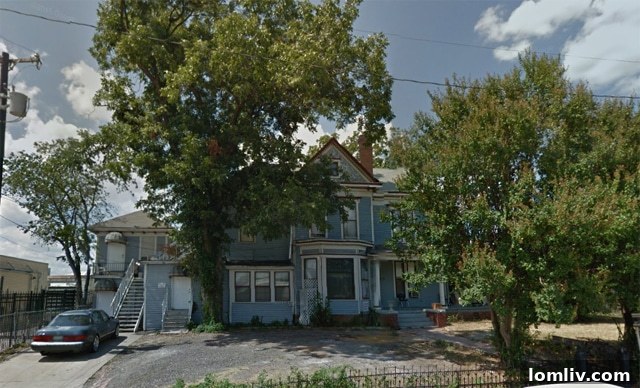
One of the most significant issues brought before the commission involved the fate of the former Rosenfield home, located at 1423 W. Griffin in The Cedars. This dilapidated 1880s residence garnered significant public attention when Time-Warner Cable announced plans to demolish it to expand their existing neighboring hub and parking facilities. The City of Dallas intervened, placing the home’s future in the hands of today’s Landmark Commission meeting. As is often the case with such high-profile preservation battles, behind-the-scenes negotiations have been ongoing since the situation was first brought to public awareness by Robert Wilonsky of theDallas Morning Newson January 9th.
In an effort to be a “good neighbor,” Time-Warner Cable proposed a solution: they offered to cover the estimated $140,000 cost for the relocation of the Rosenfield home. They even committed to placing a commemorative plaque at the original site. While the Dallas Heritage Village lacked the funds to take on the structure, a new site just nine blocks away was identified as a potential new home. Time-Warner expressed a desire to complete the move before March 8th, while also indicating flexibility for reasonable delays. However, should these plans fall through, Time-Warner would be compelled to seek a demolition permit, an outcome that, by all accounts, no party involved truly desires.
The proposed solution appeared straightforward, yet it harbored a crucial complication. Granting the Rosenfield home official landmark status, while seemingly beneficial for preservation, would ironically introduce a significant amount of bureaucratic red tape for its relocation. Imagine the 420-page agenda mentioned earlier; a landmarked home would be subject to countless similar detailed approvals for any future modifications or moves. This process could severely complicate and delay Time-Warner’s efforts to facilitate the home’s relocation.
Understanding this logistical challenge, the Commission made a pragmatic decision: they postponed placing the home on the official landmark list. This strategic move provided Time-Warner the necessary breathing room to finalize the relocation agreement without the added burden of landmark status regulations. This decision underscored a nuanced approach to preservation, prioritizing the immediate practical solution over an immediate, but potentially counterproductive, official designation.
However, even this seemingly logical resolution was not without its vocal dissenters. Several individuals and organizations, including Preservation Dallas, expressed a strong desire for immediate landmark status, arguing for the home’s intrinsic historical value despite the logistical implications for its move. Multiple speakers rose to passionately articulate the home’s historical significance. While the sentiment was understood, the repetition of identical facts by different voices eventually risked diminishing the impact rather than strengthening the argument. One speaker, in particular, presented a puzzling perspective. She emphasized the importance of preserving the area’s Jewish heritage, a cause she admitted only becoming aware of after reading about the Rosenfield home in the past month, despite claiming to drive past it daily. This raises a common question in preservation efforts: how recently discovered facts suddenly become paramount, much like an item on Antiques Roadshow transforming from a forgotten garage sale acquisition into a cherished heirloom once its monetary value is revealed.
Ultimately, the Commission’s decision reflected the pressing circumstances of the day. By deferring landmark status, they granted Time-Warner and the property owner the necessary window to forge a viable relocation plan, free from immediate regulatory entanglement. Should these efforts prove unsuccessful, alternative measures for the preservation of the Rosenfield home could then be explored. In this particular instance, the early reporting and advocacy of Robert Wilonsky played a significant role in bringing the issue to light and facilitating a path forward.
The Meadows Building: An Icon at a Crossroads
A New Chapter for Energy Square and The Meadows
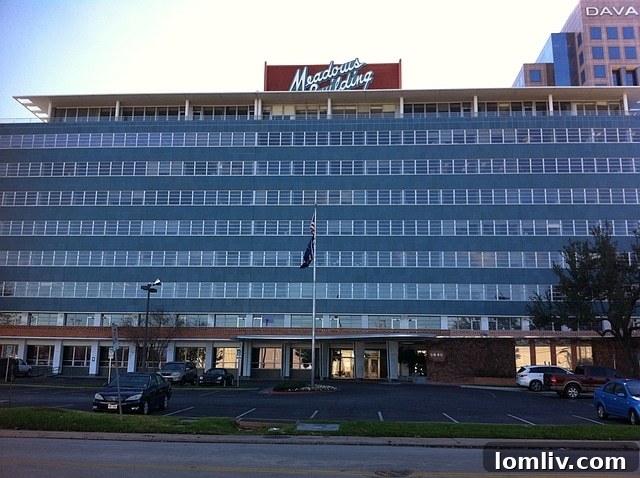
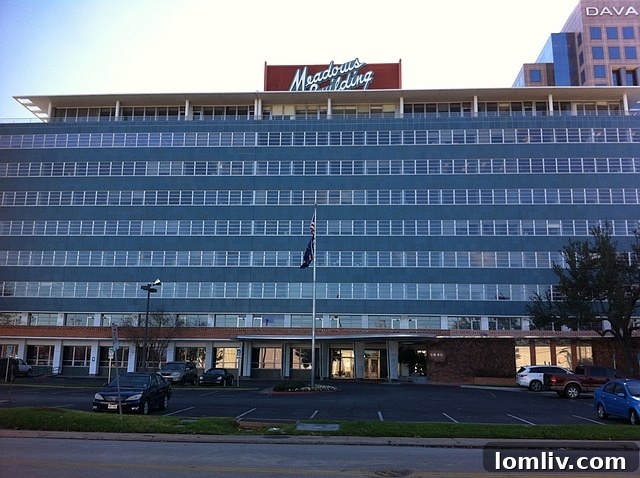
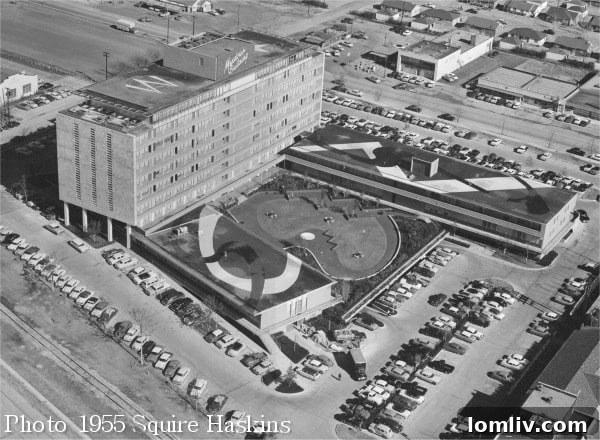
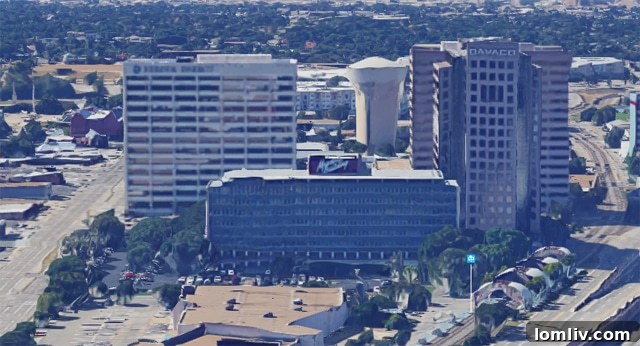
Last summer marked a significant shift in Dallas’s real estate landscape when Chicago-based GlenStar Properties, in partnership with USAA, finalized the acquisition of the 10.3-acre Energy Square development. This extensive property includes the less architecturally distinct Reeder Energy and Davaco buildings. Following this, in a separate but equally significant transaction last October, GlenStar acquired the iconic Meadows Building along with its 3.8 acres of land from its California owners. This combined 14.1-acre tract now forms a substantial development area, strategically bounded by Central Expressway, Greenville Avenue, University Boulevard, and Milton Street.
The Energy Square property, encompassing approximately 1 million square feet, reportedly commanded a sale price close to $150 million. This represented a considerable return for the previous owners, who had purchased the property for $95 million in 2011 and invested an additional $9 million in renovations, including some buildings achieving LEED Gold certification in 2013. The rapid turnover and appreciation of such a large-scale property underscore the dynamic nature of Dallas’s commercial real estate market.
The Enduring Appeal of The Meadows Building
The Meadows Building itself is a truly special architectural gem. Even to an observer less familiar with Dallas’s architectural history, its distinct design is immediately noticeable. A quick online search reveals numerous accolades and testimonials praising its aesthetic and innovative design. Its directory often features a high concentration of architects, professionals who are notably discerning about the quality and design of their office environments. This speaks volumes about the building’s inherent appeal and its standing within the architectural community.
However, despite its architectural merits, The Meadows Building has endured a challenging history. A significant section was unfortunately removed and sold in 1985 to make way for the Davaco box-like structure. Furthermore, an unplanned security desk was later installed in the main lobby, unfortunately marring the building’s original, carefully conceived design. Reports also suggest that for the past 12 years, the previous owner did little to significantly enhance or maintain the property, contributing to its current state which, while still iconic, shows signs of neglect and alteration.
GlenStar’s Vision and the Annex Dilemma
The Price of “Progress”
Enter GlenStar Properties, often perceived as a “white knight” for properties in need of revitalization. Yet, in the realm of commercial real estate, every ambitious development comes with a cost. For The Meadows Building, this cost, as proposed by GlenStar, involves the demolition of its remaining original two-story annex wing along Greenville Avenue. This decision, regrettably common in many urban redevelopments, is primarily driven by the need for additional parking facilities. It seems counterintuitive that despite Energy Square already being dotted with numerous above-ground parking structures, the Davaco building, in particular, now faces a perceived parking deficit. This apparent incongruity only makes sense when viewed through the lens of GlenStar’s broader development strategy.
GlenStar proudly presented its successful redevelopment of the Chicago Board of Trade to the Landmark Commission, where they transformed the ground floor into vibrant retail and restaurant spaces. Given The Meadows Building’s excellent proximity to DART public transit and the higher rental revenues generated by retail and restaurant tenants, it is highly probable that GlenStar envisions a similar mixed-use transformation for The Meadows and the broader Energy Square complex. As early as last July, discussions also included plans for multi-family residential units. This raises a crucial question: is The Meadows destined to become a residential condominium complex, potentially topped with upscale restaurants featuring expansive patios, fundamentally altering its original character?
Indeed, it is reasonable to suspect that GlenStar’s long-term vision is to transform the entire Energy Square into another bustling DART-accessible destination, much like the successful Mockingbird Station. To achieve this ambitious vision, robust parking infrastructure is deemed essential, and as such, GlenStar contends that The Meadows must sacrifice its remaining annex wing in the name of “progress.”
The “Greater Good” Argument and Lack of Transparency
Unsurprisingly, GlenStar is quick to rationalize the proposed demolition of the annex by highlighting the comprehensive benefits and improvements they plan for other parts of the expansive site. This invocation of the “greater good” often serves as a point of contention in preservation debates. It echoes similar situations, such as Starwood Hotels’ controversial plans in Hawaii, where they held renovations of other properties hostage to force coastal zoning changes. In that instance, it took several years for the Honolulu city council to ultimately reject their demands, leaving Starwood to eventually renovate the “hostage” properties anyway. This historical precedent serves as a cautionary tale for such arguments.
What remains conspicuously absent from GlenStar’s current presentation are concrete, detailed plans outlining their specific intentions for The Meadows Building. While they state that these comprehensive plans are 45-60 days away, it is plausible that this timeframe will be spent refining models and coloring in the lines of an already formulated grand strategy. It is highly unlikely that GlenStar, having invested nearly $200 million in a property located 802 miles from their Chicago headquarters, would proceed without a clear, well-defined master plan already in place. The lack of immediate transparency naturally raises concerns among preservationists and the community alike.
One can only hope that GlenStar is astute enough to have gauged the prevailing sentiment within the commission meeting, which appeared to lean against their current proposal. Perhaps they will utilize these upcoming 45-60 days to develop a robust Plan B, one that thoughtfully preserves what remains of The Meadows complex. After all, with a sprawling 14-acre tract at their disposal, creative and alternative development plans that honor historical integrity are undoubtedly achievable, provided there is a genuine willingness to explore them.
The Commissioner’s Stance and Future Outlook
As the day concluded, the Landmark Commissioners voted to forward GlenStar’s petition to the designation committee. Significantly, two of the Landmark Commissioners are also members of this influential committee, and both clearly articulated their strong reservations about approving the demolition of the annex building. In a move that suggests ongoing negotiation and persuasion, GlenStar extended an invitation to these commissioners for a site tour, an event that will undoubtedly be accompanied by considerable efforts to sway their opinions. The future of The Meadows Building, therefore, remains uncertain, a delicate balance between development ambitions and the imperative of historic preservation. The coming weeks will be crucial in determining whether this architectural landmark will be further altered or if a more harmonious path can be found.