

The role of City Manager stands as the cornerstone of effective municipal governance, demanding a leader capable of navigating complex administrative challenges while upholding the public trust. The process of identifying and hiring such a pivotal figure should ideally be a streamlined and transparent affair. Dallas has traversed this path before, most recently seven years ago when T.C. Broadnax was appointed, marking a significant moment in the city’s administrative history. His tenure, while impactful, has now drawn to a close, ushering in a new, critical phase for Dallas.
In a development that has captured the city’s attention, T.C. Broadnax officially announced his resignation last week, with his departure effective June 3. This announcement has ignited a fervent discussion among elected officials regarding the succession plan for the city’s highest-ranking administrative post. While there is a universal desire for a thorough and intentional search, the Dallas City Council finds itself at a crossroads, revealing distinct approaches and priorities in the quest to find Broadnax’s replacement.
The community’s response to this transition has been immediate and vocal, reflecting a deeper underlying concern about the city’s direction. For a comprehensive look at how residents and stakeholders are processing this change, our related article, “‘Dallas is Broken’: Community Reacts to City Manager’s Departure And The Shade of It All,” offers valuable insights.
‘Dallas is Broken’: Community Reacts to City Manager’s Departure And The Shade of It All
The path forward began to unfold this week as Dallas City Council members convened on Monday as part of the Ad Hoc Committee on Administrative Affairs. This initial gathering represented the first formal steps towards issuing a request for proposals (RFP) for a qualified executive search firm. Such a firm will be tasked with identifying a pool of highly qualified candidates to lead Dallas into its next chapter.
However, the unity expected in such a crucial process was quickly challenged. A separate, “dueling” meeting was independently scheduled for Tuesday at 1 p.m., initiated by Council Members Jaime Resendez, Jaynie Schultz, and Adam Bazaldua. The agenda for this special meeting mirrored Monday’s discussions but notably included an additional point: a debate on potentially naming Deputy City Manager Kimberly Bizor Tolbert to the interim post. This immediate divergence in approach highlights the multifaceted dynamics at play within the council regarding urgency, preferred candidates, and adherence to established protocols.

The potential for a quorum at Tuesday’s special meeting remained uncertain, largely due to Mayor Eric Johnson’s clear stance. Mayor Johnson had previously requested that all discussions concerning the city manager replacement be exclusively handled by the Administrative Affairs Committee. Reinforcing this directive, the Mayor did not attend Monday’s committee meeting and confirmed his absence from Tuesday’s special session, signaling a preference for established procedural pathways over hastily called gatherings. This highlights a critical tension between different factions of the council regarding proper governance and decision-making processes.
Chair of the Administrative Affairs Committee, Tennell Atkins, underscored the importance of adhering to proper process and procedure. “I know we have another special-called meeting tomorrow but we might be able to resolve this today if we work together,” he stated on Monday, advocating for a consolidated and cooperative approach to this vital municipal decision. His comments reflect a deep-seated belief in structured governance and the avoidance of political maneuvers that could complicate an already sensitive transition.
Despite Atkins’ call for unity, a undercurrent of frustration was palpable among some council members during Monday’s session. Implied criticisms suggested that aspects of the process thus far had been handled without sufficient transparency or behind closed doors. District 2 Councilman Jesse Moreno articulated this sentiment, emphasizing the need for a focused and principled approach: “My hope is that we stay focused on the process and procedures and not allow personalities to get in the way.” This statement echoes a desire for impartiality and a commitment to objective decision-making, free from personal agendas or political infighting. The integrity of the search process hinges on addressing these concerns directly.
To ensure continued progress and maintain momentum, Atkins announced that another Administrative Affairs Committee meeting is scheduled before the council’s upcoming recess for spring break, which runs from March 11-22. This commitment to continuous engagement aims to keep the process moving forward despite internal disagreements. Following the extensive two-hour meeting on Monday, the committee adjourned into a closed session, a common practice for sensitive personnel discussions, though one that sometimes fuels concerns about transparency.
Defining the Future: Scope of Services and Stakeholder Engagement for the Dallas City Manager Search
A critical component of the executive search involves defining the comprehensive “Scope of Services” for prospective firms. Human Resources Director Nina Arias and Director of Procurement Danielle Thompson presented a draft document outlining these essential services. This document detailed the expectations for a search firm, including candidate recruitment, vetting, and advisory services. Notably, the draft named four executive search firms, among them Affion Public, the very firm responsible for bringing T.C. Broadnax to Dallas seven years ago. The inclusion of Affion Public raises questions about whether the council seeks continuity in its search methodology or if it is exploring fresh perspectives and expanded networks for candidate sourcing. Despite the importance of this document, a request for it from Daltxrealestate.com to Arias did not immediately yield a response, highlighting potential gaps in information flow.
Understanding Mayor Eric Johnson’s strategic approach to this transition is key. For further context on his plan and decision not to participate in the special meeting, our previous coverage provides essential details:
Dallas Mayor Eric Johnson Announces Plan to Replace City Manager T.C. Broadnax, Won’t Attend Special Meeting Feb. 27
The draft document on the search firm’s scope went beyond mere recruitment, intricately covering vital areas such as stakeholder engagement, robust community input, and the integration of diversity, equity, and inclusion (DEI) best practices. These elements appear to be significant priorities for a broad spectrum of council members, reflecting a desire for a city manager whose vision aligns with Dallas’s diverse demographic and progressive values. Arias highlighted the potential for a local advisory committee to be established, which would offer recommendations and invaluable community-specific input throughout the search, ensuring that local voices are heard and considered in this monumental decision. This approach aims to cultivate a sense of ownership and trust among Dallas residents.
District 13 Councilwoman Gay Donnell Willis offered a strategic perspective on the timing of public involvement. She suggested that public engagement initiatives could run concurrently with the search firm’s efforts to identify qualified candidates at a national level. This parallel process, she argued, would allow the city to maximize efficiency without compromising the depth of community involvement. Willis further elaborated on the dual nature of the search process: “The search process … gives us time to be developing our criteria, what we believe the next city manager should be, and designing our public engagement process.” She meticulously outlined the two critical components a search firm would utilize in the marketplace: the “nuts-and-bolts job description” provided by HR, detailing duties and responsibilities, and a “marketing package” designed by the search firm. “That’s where the city has an opportunity to offer our personality and our vision,” Willis emphasized, underscoring the importance of conveying Dallas’s unique identity and aspirations to potential candidates.
To maintain a structured and responsive process, Atkins requested that all council members provide their suggestions and priorities regarding the search and the ideal candidate profile to city staff by March 8. This consolidated feedback is crucial for refining the RFP and ensuring the search firm understands the collective vision of the council. District 12 Councilwoman Cara Mendelsohn, a vocal advocate for transparency, expressed concerns about the opacity of past processes. She explicitly requested that all council input regarding both the selection of the search firm and the eventual hire of a new city manager be formally documented and put in writing. Her demand for written records reflects a commitment to accountability and a desire to prevent any perception of undue influence or backroom dealings.
Navigating the Path Forward: Procurement and Timeline for the City Manager Search
The timeline for securing a new Dallas City Manager has emerged as a significant point of contention among council members, highlighting a fundamental difference in strategic approaches. Councilwoman Willis expressed an ambition to have a new manager in place by November, indicating a desire for a relatively swift transition. However, Councilwoman Mendelsohn strongly countered this proposition, asserting that not only will the hiring process likely extend beyond nine months, but it critically should take longer. Her argument rests on the profound importance of the position: “This is the most important job, not just at City Hall but in our entire city,” Mendelsohn declared. “We need to follow actual process and procedure and not rush to just get it filled. It’s quite clear this is going to take at least a year.” This debate underscores the tension between the perceived urgency of filling the vacancy and the necessity of a thorough, unhurried selection process that ensures the best possible leadership for Dallas’s future.
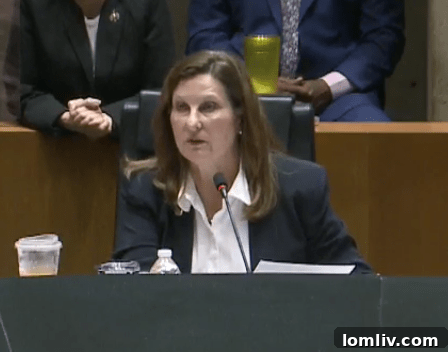
From a procedural standpoint, Procurement Director Thompson confirmed that a request for proposals (RFP) for a search firm could be issued as early as March, pending formal council approval. This initial step sets the stage for engaging external expertise. Atkins, emphasizing the council’s ultimate authority, reiterated, “We are the policymakers; it’s up to us,” asserting that the Dallas City Council holds the power to dictate the pace and direction of this critical hiring process. This statement highlights the democratic oversight inherent in municipal leadership decisions.
However, Thompson also provided a pragmatic perspective on the bureaucratic realities involved. She explained that contracts, particularly for high-profile executive searches, do not merely pass through HR and Procurement departments. They also require meticulous review by the City Attorney’s Office, an entity that operates on its own established timelines and protocols. This layering of administrative checks and balances, while crucial for legal compliance, invariably extends the overall duration of the process, adding a layer of complexity to the council’s desired timeline.
Mendelsohn seized upon this explanation to articulate her broader critique of City Hall’s operational inefficiencies. She argued that the process is unnecessarily cumbersome and self-imposed. “This is exactly what’s wrong with City Hall,” she stated emphatically. “I’m sorry. This doesn’t have to be sequential. Many of these things … can happen concurrently. We’ve built this bureaucracy to take this long.” Her comments point to a systemic issue, suggesting that the city’s internal structures themselves are a barrier to efficient governance. Mendelsohn concluded with a powerful call for reform: “This is exactly what I hope our next city manager will work mightily to reinvent.” Her vision for the next leader extends beyond mere administration to include a transformative mandate to streamline processes, enhance efficiency, and ultimately, improve public service delivery in Dallas.
The journey to selecting Dallas’s next City Manager is clearly complex, marked by differing opinions on process, urgency, and the ideal candidate profile. From navigating political divisions and ensuring transparent stakeholder engagement to streamlining bureaucratic hurdles, the Dallas City Council faces a multifaceted challenge. Yet, within these challenges lies an immense opportunity to define the city’s future leadership. The ultimate success of this search will hinge on the council’s ability to unite, commit to a clear, ethical process, and ultimately choose a leader who can not only manage the city’s extensive operations but also inspire innovation and foster a more efficient, responsive, and accountable City Hall for all Dallas residents.