In a landmark decision last month, the City of Dallas approved significant amendments to its Code of Ethics, fundamentally altering the standard of proof required to investigate and prosecute allegations against city officials and board members. This pivotal change, enacted despite initial objections from a minority of council members, signals a robust commitment to enhancing accountability and transparency within Dallas municipal governance. The unanimous final approval underscores a broader consensus on the necessity of these reforms, positioning Dallas in alignment with a majority of other major U.S. municipalities that employ a less stringent evidentiary standard for administrative ethics cases.
The core of the reform involves transitioning from the demanding “clear and convincing evidence” standard to the more commonly used “preponderance of evidence.” This shift is designed to streamline the process of addressing ethical misconduct, making it easier for the city’s Inspector General to substantiate claims and hold public servants accountable. For years, Dallas operated under a higher burden of proof, which, while intended to protect officials from frivolous complaints, often presented a significant hurdle to effective enforcement of ethical guidelines. This updated approach aims to strike a better balance, ensuring integrity without creating an insurmountable barrier to investigations.
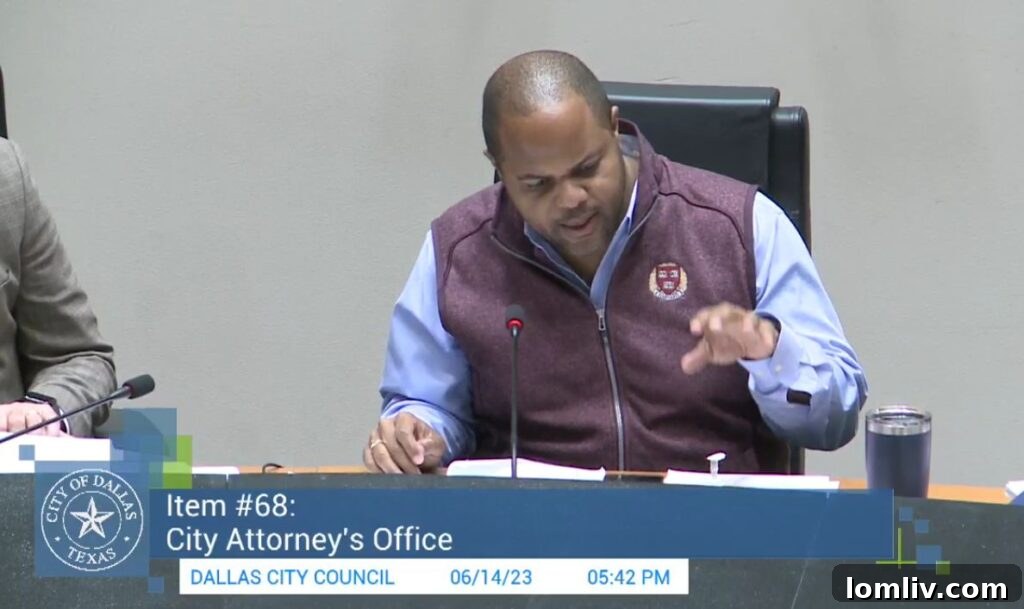
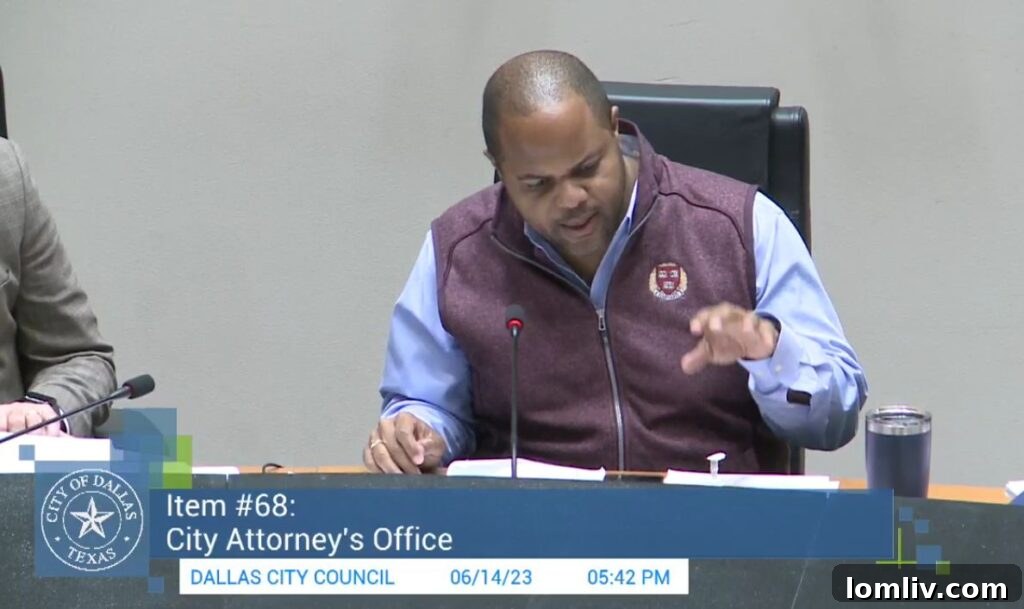
Mayor Eric Johnson, a typically reserved participant in council debates, made a rare and passionate intervention to advocate for the amendment. He articulated a strong belief that rejecting the proposed changes would not only cast a negative light on the city but also disappoint its residents. Mayor Johnson emphasized that the initiative was not merely about appeasing public opinion but about truly representing the citizens’ desire for an accountable government. He stated, “I think it will be reported unfavorably and I think the residents of the city will be disappointed in us. This isn’t about chasing public opinion. This is about representing people. I think they want their government to be one that they feel like is interested in rooting out its own bad apples.” His words highlighted the importance of proactively addressing internal issues to foster greater public trust and maintain the city’s reputation for ethical leadership.
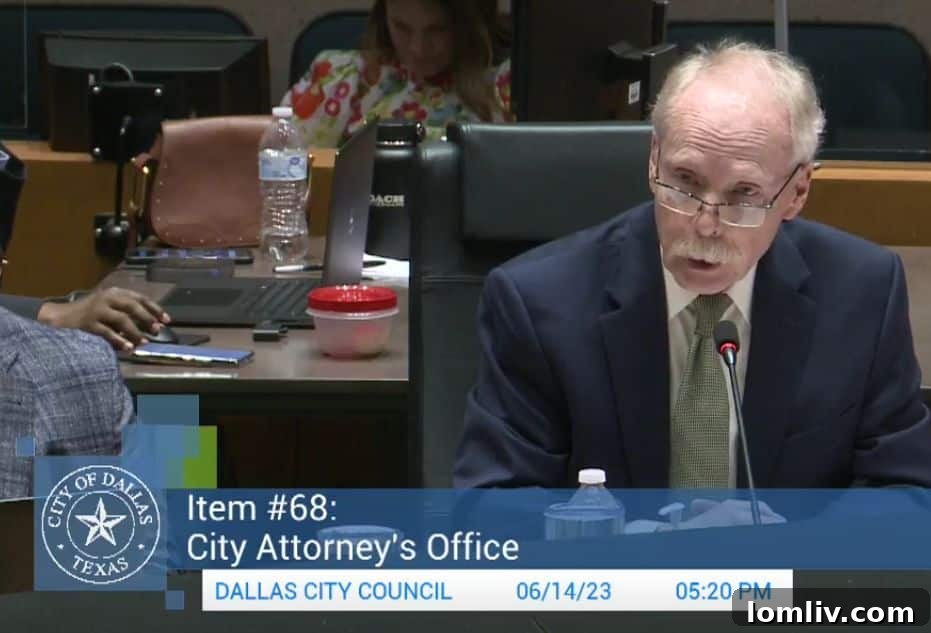
However, the transition was not without its critics. Concerns were voiced by several council members, including attorneys Chad West and Paul Ridley, who argued that lowering the standard of proof could inadvertently jeopardize the careers and reputations of public officials through unsubstantiated or politically motivated allegations. They advocated for retaining the “clear and convincing evidence” standard, which they believed provided a necessary safeguard. Councilmember Ridley articulated his position clearly: “I believe that the current standard of proof, clear and convincing evidence, which has traditionally been the standard of proof for all ethics complaints in Dallas, should be retained. That is to ensure that the reputations and careers of people who are the subject of complaints are not unduly threatened or damaged by less than clear and convincing evidence. Clear and convincing evidence means a firm conviction of the truth of the matter. I think it’s important that we judge ethics complaints on that standard.” Their arguments emphasized the delicate balance between robust accountability and protecting individuals from potentially ruinous, yet unproven, accusations.
The debate underscored the legal nuances between the two standards of proof. “Clear and convincing evidence” is a higher standard than “preponderance of evidence” but lower than “beyond a reasonable doubt,” typically used in criminal cases. It requires a firm belief or conviction in the truth of the facts asserted, meaning the evidence must be highly probable. This standard is often applied in civil cases involving significant interests, such as terminating parental rights or allegations of fraud, where the stakes for individuals are exceptionally high. For public officials, an ethics violation can not only lead to removal from office but also irreparably damage their professional standing and personal lives, making the evidentiary threshold a critical safeguard.
Enhancing Oversight: The Inspector General’s Office and the New Ethics Code
The approved changes to the Dallas Code of Ethics, ratified during a June 14 council meeting, extend beyond merely altering the burden of proof. They encompass crucial updates in language and refined definitions addressing a range of ethical considerations, including conflicts of interest, appropriate campaign activities, and the disclosure of confidential information. These comprehensive revisions aim to modernize the code, which was last amended in December 2021, ensuring it remains relevant and effective in fostering ethical conduct among city personnel. The meticulous review and updating of these definitions are vital for clarity and consistency in enforcement, providing clearer guidelines for officials and simplifying the investigative process for the Inspector General’s office.
Inspector General Bart Bevers provided crucial context and data supporting the amendment, drawing from extensive research into practices nationwide. Bevers highlighted that the “preponderance of evidence” standard is the prevailing benchmark for most Inspector General offices across the United States in administrative cases. His research involved contacting IG offices in 17 different states and one within the federal system, revealing a compelling pattern: “All 38 offices use the preponderance of evidence for administrative cases. If you lower the standard, it’s going to make it easier to prove cases and you’re going to see more substantiated cases.” This comparative analysis firmly positioned Dallas’s move as a step toward aligning with best practices in municipal ethics enforcement, suggesting a more efficient and effective system for addressing misconduct.

Bevers further elaborated on the anticipated positive impact of the lower standard, predicting not only an increase in substantiated cases but also a significant behavioral change among city officials. He posited that the increased likelihood of successful prosecution would serve as a powerful deterrent, encouraging greater adherence to ethical guidelines. For over two decades, Dallas has operated under the more stringent “clear and convincing” standard. During this period, Bevers noted that five council members were convicted of felonies related to ethics violations, indicating that serious misconduct, while eventually prosecuted, still occurred. The argument is that the previous standard might have allowed other less severe, but still significant, ethical breaches to go unaddressed due to the difficulty in meeting the high evidentiary bar.
Councilwoman Cara Mendelsohn echoed the sentiment of enhancing public trust through improved accountability. She shared her personal motivation for entering public service, stemming from a lack of trust in government, and emphasized the role of officials as models for the city. “I felt like good people have to step up to run, and we have to be that model for the city,” she stated. Mendelsohn views this ethics reform as a critical component in building a government that residents can trust, fostering transparency, and reinforcing belief in the integrity of the city’s processes and its leadership. Her perspective highlights the reform as a foundational element for restoring and maintaining public confidence in Dallas’s municipal operations.
The Practical Impact: Preponderance of Evidence Versus Clear and Convincing Evidence
Understanding the practical implications of shifting the burden of proof is crucial. When a complaint is lodged with the Inspector General’s office, a thorough investigation is initiated. Under the previous “clear and convincing evidence” standard, the IG’s office needed to gather evidence that established a “firm conviction of the truth” that a violation occurred knowingly. If sufficient evidence was believed to exist, the matter would then proceed before a five-member Ethics Advisory Commission, appointed by the council.
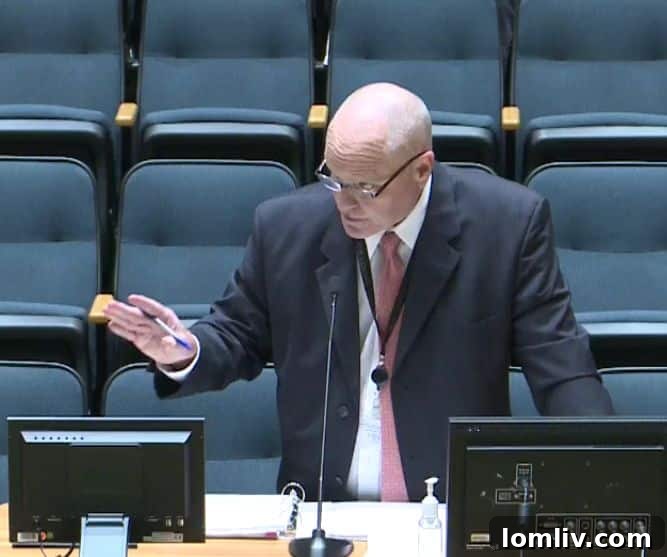
The statistics provided by Inspector General Bevers clearly illustrate the impact of the higher standard. From March 2022 to March 2023, the IG’s office received approximately 300 ethics complaints. Out of this substantial number, only one case was formally filed under the “clear and convincing” standard. More strikingly, Bevers revealed that about a dozen cases last year could not advance because the evidence, while suggestive of misconduct, did not meet the rigorous “clear and convincing” threshold. This figure underscores the operational challenges faced by the IG’s office and suggests that many potentially legitimate concerns were left unaddressed due to the high evidentiary bar. The new “preponderance of evidence” standard, which only requires that it is “more likely than not” (a 51% probability) that a violation occurred, is expected to significantly increase the number of actionable cases.
It is important to note that the recently approved code changes will apply only to new cases submitted after their effective date. Bevers clarified that complaints previously filed under the older, more stringent standard would not be reopened or reassessed under the new rules. This ensures legal consistency for past investigations while allowing the new framework to apply prospectively, establishing a clearer and more efficient path for future ethics oversight. This forward-looking application prevents potential retroactive complications and allows the city to build a new track record under the revised guidelines for accountability in Dallas.
The measure garnered strong support from additional council members, including Paula Blackmon and Gay Donnell Willis, who joined Mayor Johnson and Councilwoman Mendelsohn in advocating for the adoption of the “preponderance of evidence” standard. Their collective support reflected a shared vision for a more transparent and accountable local government. This broad backing highlights a growing consensus within the council that enhancing the ability to investigate and prosecute ethics violations is essential for maintaining public trust and fostering an environment of integrity.
Mayor Johnson encapsulated the significance of this decision as an opportunity for the council to leave a lasting legacy of improved governance. He framed it as a moment of reckoning, where elected officials had to decide on their stance regarding transparency and ethical conduct, not just for the residents of Dallas, but also for external stakeholders. He stressed the importance of conveying a message of unwavering ethical commitment to businesses considering investment in Dallas. “This is one of those things where you have to make a decision about where you stand on this issue in terms of how important you think it is to convey to all the residents of Dallas — and people who don’t live in Dallas but are thinking about doing business with Dallas,” Johnson asserted. He concluded by stating, “We, I think, should … really be the vanguard of any discussion when it comes to behaving ethically and honorably.” This reform positions Dallas not just as a city committed to internal integrity but as a leader in ethical municipal governance, setting a precedent for others and assuring a foundation of trust for all interactions with the city.