In a powerful display of community unity and strategic foresight, over 75 influential organizations across Dallas have united with a singular, ambitious goal: to persuade the Dallas City Council to allocate a substantial $200 million towards critical housing initiatives within the upcoming 2024 bond election. This monumental collaboration underscores a pressing recognition of Dallas’ evolving housing landscape and the urgent need for robust, long-term solutions.
This formidable alliance, known as the Dallas Housing Coalition, is guided by a diverse and dedicated steering committee. Key figures driving this initiative include seasoned consultant Bryan Tony, alongside Ashley Brundage, the Executive Director of Housing Stability for the United Way of Metropolitan Dallas. Ashley Brundage brings a wealth of experience and a deep understanding of housing challenges, making her an invaluable asset to the coalition’s efforts. The coalition itself is a broad church, encompassing a wide array of stakeholders from builders and developers to vital nonprofits and key financial institutions. This comprehensive representation ensures that the proposed solutions are well-rounded and address the multifaceted nature of the housing crisis in Dallas.
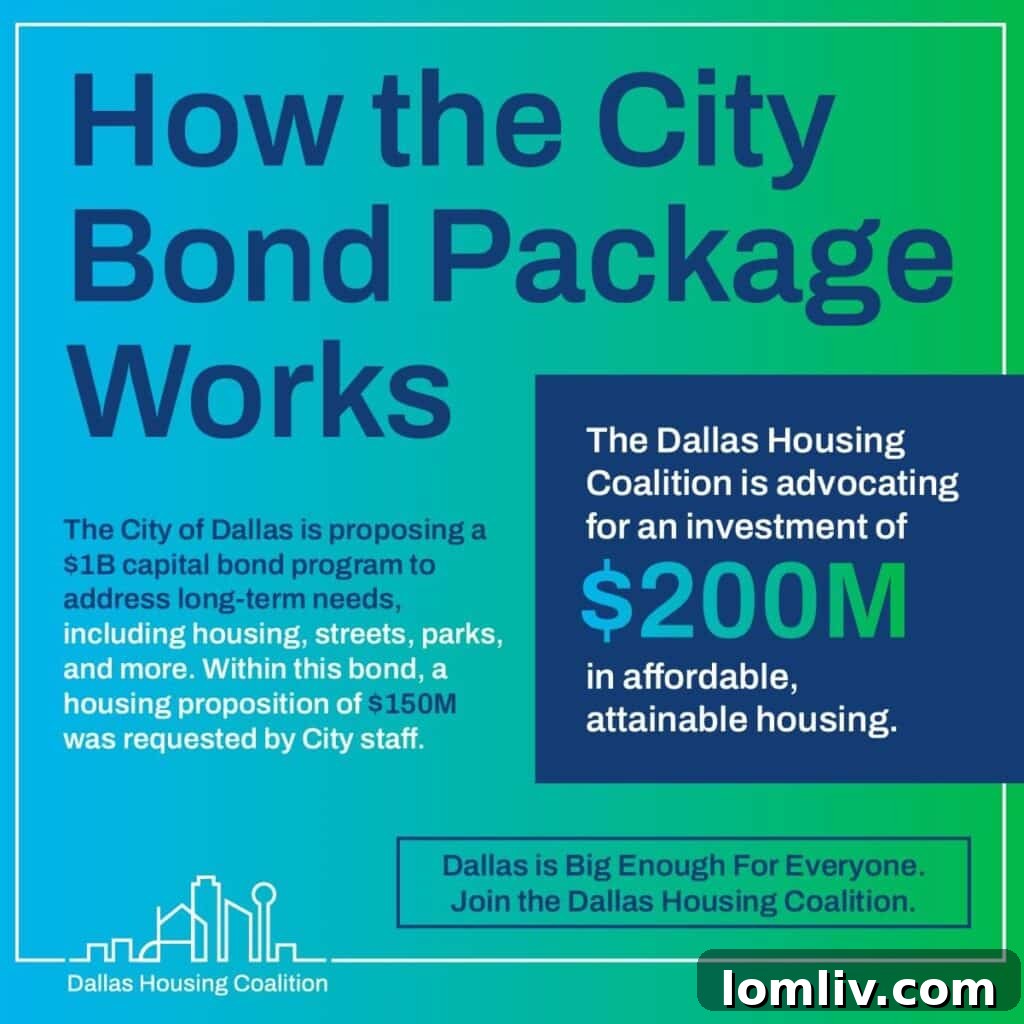
While the Dallas Housing Coalition may, in due course, broaden its scope to champion other significant community causes and projects, its current focus remains acutely sharpened on one paramount objective: securing increased funding for housing within the crucial upcoming bond election. This laser-like precision is strategic, aiming to maximize impact and ensure that housing, a fundamental pillar of community well-being, receives the attention and investment it desperately requires. The city of Dallas is currently contemplating a substantial $1 billion bond package, which aims to address a wide spectrum of essential urban needs. These include critical infrastructure improvements for streets, enhancements for parks and recreational areas, vital flood control measures, initiatives for economic development, solutions for homelessness, and the much-needed renovation of critical public facilities. The final slate of recommended projects, including the proposed housing allocation, is slated to be presented to Dallas voters for approval in May 2024, making the coalition’s advocacy efforts timely and indispensable.
Understanding the Pivotal 2024 Bond Election in Dallas
The 2024 bond election represents a significant opportunity for Dallas to invest in its future, and housing is undeniably a cornerstone of this vision. To meticulously manage this extensive process, a dedicated Community Bond Task Force, along with its various subcommittees, has been actively meeting since May. These diligent groups are committed to a comprehensive review and will continue their work until a detailed recommendation is formally presented to the Dallas City Council by the end of this year. This meticulous process ensures that all aspects of the bond program are thoroughly evaluated, taking into account the diverse needs and priorities of the Dallas community.
Bryan Tony, a central figure in the Dallas Housing Coalition, brings a wealth of relevant experience to this advocacy. Through his insightful consulting work with Dallas Area Habitat for Humanity and his prior impactful tenure as director of public policy for The Real Estate Council, Tony possesses an intimate understanding of effective housing advocacy. He observed that while previous housing advocacy groups in Dallas had demonstrated considerable effectiveness, they regrettably tended to dissolve over time. This historical context provides valuable lessons, informing the Dallas Housing Coalition’s current strategy to build a sustainable and enduring force for change in the city’s housing landscape.
“The single most immediate and substantial challenge we recognized we could collaboratively address was the need for significant public funding, specifically through the 2024 bond program,” Tony articulated, highlighting the coalition’s strategic entry point. He further emphasized the critical foundational work underway: “Currently, our primary focus is on firmly establishing our credibility and ensuring the long-term sustainability of the Dallas Housing Coalition as a newly formed, vital organization.” This deliberate approach aims to build a robust and lasting platform for housing advocacy, ensuring its impact extends far beyond the current bond election cycle.
To effectively engage and educate the public, the coalition is leveraging its official website and active social media channels. These platforms serve as crucial tools for demystifying complex housing terminology, clearly explaining concepts such as affordable housing, attainable housing, and the critical benchmark of 30 percent of the area median income (AMI). By breaking down these concepts, the coalition aims to foster a more informed public discourse and garner widespread support for their initiatives.
Dispelling Myths and Building Support for Affordable Housing
A significant component of the Dallas Housing Coalition’s strategy involves actively challenging and correcting prevalent misconceptions surrounding affordable housing. Bryan Tony elaborated on this vital effort: “We are committed to narrative storytelling to effectively debunk many of the enduring myths that unfortunately surround affordable housing developments.” He underscored the importance of evidence-based communication, stating, “Extensive research consistently demonstrates that there is no negative impact on property values when what some might perceive as affordable housing is constructed in proximity. Furthermore, studies definitively show no increase in crime rates associated with such developments.” The coalition aims to shift public perception by emphasizing the profound positive impacts of stable housing. “We want to ensure that residents understand the direct consequences of housing instability on crucial aspects like public safety and overall health,” Tony added, connecting housing directly to broader community well-being.
Tony also highlighted the readiness of the development community to contribute to the solution. He pointed out that developers are demonstrably willing to construct more affordable housing units, provided they receive appropriate regulatory or financial incentives. This willingness from the private sector is a key factor, indicating that a collaborative approach involving both public funding and private initiative can significantly accelerate progress. “While this $200 million alone is certainly not a panacea, it represents a crucial and long-overdue piece of the larger housing puzzle,” Tony asserted. He further lamented the historical oversight, stating, “Dallas has regrettably neglected to invest adequately in housing through previous bond programs, making this current allocation profoundly important for rectifying past omissions and setting a new course for the city’s future.”
The funds, if secured, would be strategically allocated to address a spectrum of critical housing needs. Tony detailed these essential areas, explaining that the investment would ideally go towards bolstering fundamental housing infrastructure, supporting vital home repair initiatives, facilitating the comprehensive rehabilitation of aging apartment complexes, and providing crucial gap financing or development assistance for new projects. He emphasized the current limitations: “Housing initiatives in Dallas primarily rely on federal funds, such as the HOME program and Community Development Block Grants (CDBG), to disburse funds. The stark reality is that these federal allocations are simply insufficient to meet the expansive needs of our growing city.” The proposed $200 million local bond funding would provide a vital, additional revenue stream, specifically tailored to Dallas’ unique housing challenges.
Dallas is Big Enough For Everyone: Addressing the Housing Crisis
The issue of homelessness, a visible and often heartbreaking challenge in Dallas, is fundamentally a stark symptom of the deeper, pervasive housing crisis confronting the city, as explained by Bryan Tony. “Dallas is currently grappling with a substantial deficit in housing supply across all income levels, and a glaring lack of diversity in the types of housing products available on the market,” he observed. This imbalance creates significant strain, impacting individuals and families from various economic backgrounds. The coalition’s vision is inclusive and comprehensive: “We advocate for the development of more single-family homes, vital missing-middle housing options, and crucially, increased availability for individuals and families who rely on rental accommodations.” Tony highlighted a key demographic reality: “Dallas is presently a majority rental city, with approximately 55 percent of its residents renting their homes. A significant portion of these renters are unfortunately housing-cost burdened, meaning they spend an unmanageable percentage of their income on housing, leaving little for other essential needs.”
The economic realities underscore the urgency of the situation. The median income in Dallas currently stands at $58,200. In stark contrast, the average home price has soared to $405,000. This widening gap makes homeownership an increasingly distant dream for many Dallas residents, contributing to housing instability and economic insecurity. Ashley Brundage, an active member of the Community Bond Task Force and a driving force within the Dallas Housing Coalition, articulated her motivation for joining the cause: “I joined the Dallas Housing Coalition because it has become undeniably clear that Dallas is rapidly becoming unaffordable for a significant portion of its long-standing residents.” She further emphasized the financial strain, stating, “Based on the standard household budget allocation of 30 percent for housing, the average Dallas household falls short by a staggering $90,500 of what it requires to realistically purchase a home in the city.”
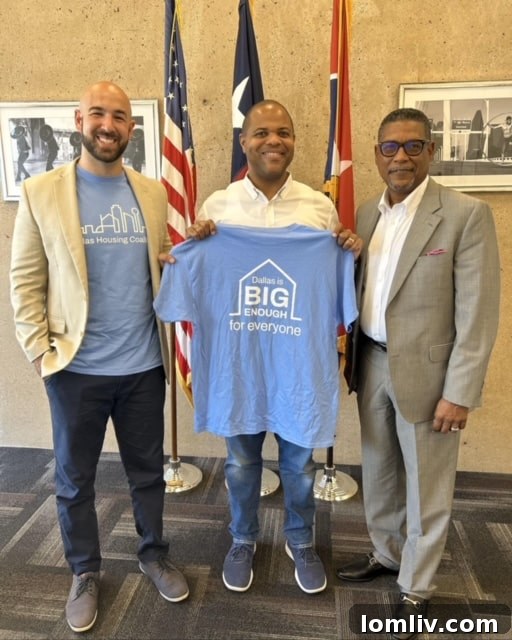
The Dallas Housing Coalition’s deeply resonant motto, “Dallas is big enough for everyone,” encapsulates its inclusive vision for the city’s future. This isn’t merely a slogan; it’s a guiding principle for equitable growth and development. “We need to not only strategically close the existing rental gap but also proactively plan for our future growth,” Tony stressed, recognizing that Dallas continues to be a magnet for new residents. “We are fully aware that people are continuously choosing to relocate to the vibrant Dallas region. Our ambition is to ensure Dallas remains a premier urban center and doesn’t play second fiddle to its surrounding suburbs due to housing inadequacies. We must plan comprehensively and foresightfully for Dallas’ projected growth.” Housing staff projections reinforce this urgency, indicating that Dallas needs to develop or refurbish an impressive 100,000 affordable homes by the year 2033 to adequately meet the escalating housing demand. “This collective of organizations, the Dallas Housing Coalition, has come together with a unified voice to advocate resolutely for this crucial $200 million allocation in the upcoming bond. Our ultimate goal is to ensure that every resident has a dignified and stable place to call home within our thriving city,” Tony concluded, highlighting the profound human impact of their efforts.
The Dallas Housing Coalition’s concentrated efforts in the lead-up to the 2024 bond election mark a critical juncture for the city’s housing future. By bringing together a diverse array of stakeholders, actively dispelling myths, and clearly articulating the comprehensive needs, the coalition aims to secure not just funding, but a fundamental shift in how Dallas approaches and prioritizes housing. The envisioned $200 million would serve as a catalyst, sparking initiatives that address the immediate housing crisis while simultaneously laying the groundwork for sustainable, equitable growth that truly ensures Dallas is big enough for everyone.