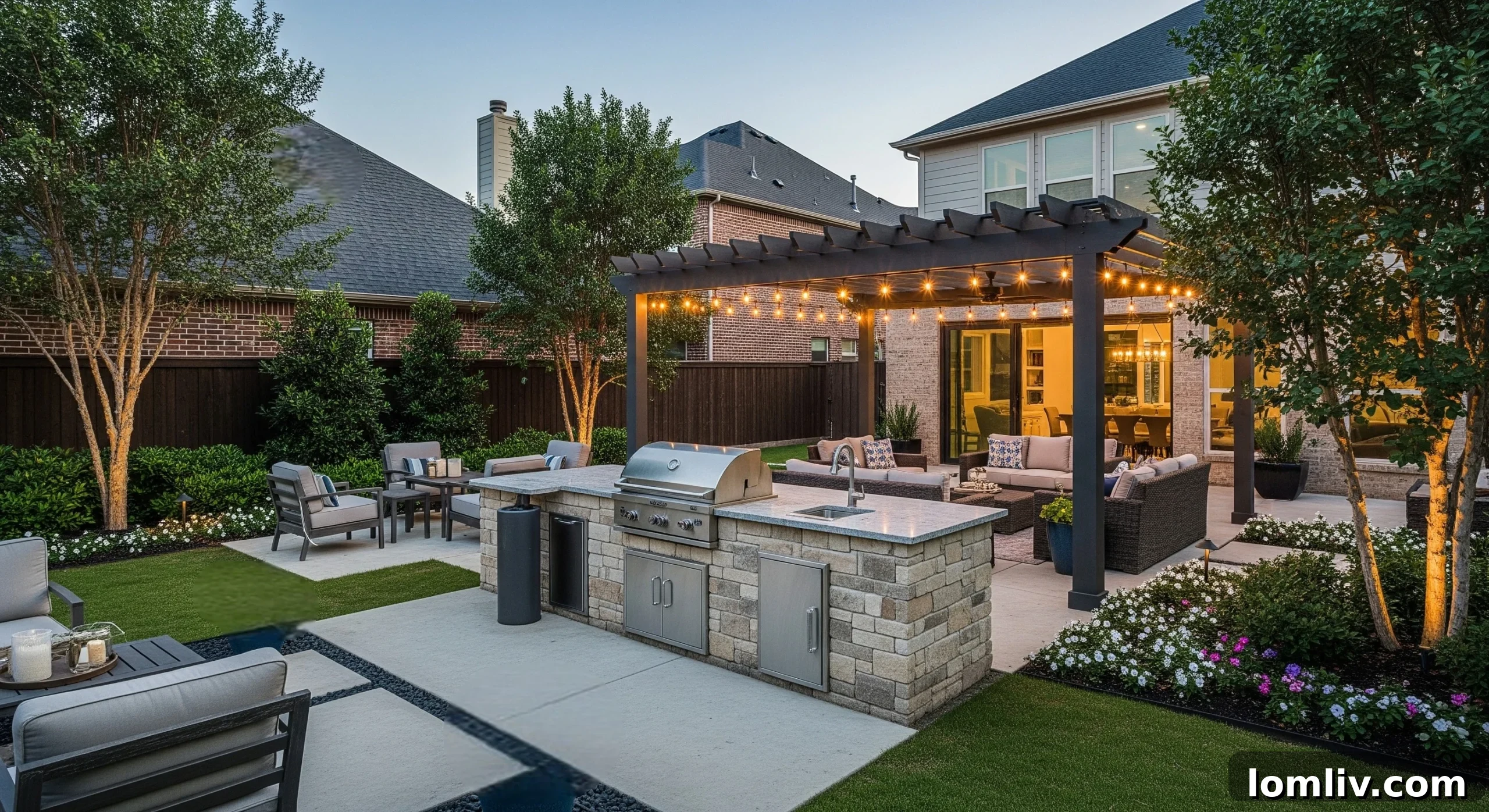
There’s a special kind of magic in the air when the aroma of sizzling ribs mingles with a Dallas sunset. For homeowners in the Lone Star State, and particularly in the vibrant city of Dallas, the backyard isn’t just a yard – it’s an extension of the home, a canvas for creating cherished memories. Transforming your outdoor space into a full outdoor kitchen isn’t just a trend; it’s a lifestyle upgrade, especially with Dallas’s enviable weather allowing for year-round al fresco entertaining.
An outdoor kitchen transcends the simple addition of a grill or a mini-fridge on your patio. With thoughtful planning and expert execution, it becomes the beating heart of your backyard oasis. Imagine it: a central hub for family gatherings, a sophisticated setting for hosting friends, and one of the most effective ways to significantly boost your home’s market value. It’s an investment in both your quality of life and your property’s future.
If you’re contemplating this exciting venture, or perhaps you’re already deep in the inspiration rabbit hole on Pinterest, allow me to guide you through the essential steps. Drawing from extensive research and a few valuable lessons learned firsthand (including some memorable missteps), this comprehensive guide will help you build the outdoor kitchen of your dreams, tailored perfectly for Dallas living.
Crafting Your Dallas Outdoor Kitchen: Expert Design Tips
Designing an outdoor kitchen isn’t just about aesthetics; it’s about functionality, durability, and maximizing your investment. A well-designed outdoor kitchen can profoundly impact your home’s appeal and value in the Dallas market, potentially increasing it by up to 30%. Here are the foundational principles to consider:
- Maximizing Return on Investment (ROI): Focus on features that offer the best blend of utility and appeal. Essential elements typically include a high-quality, weather-resistant grill, ample and durable countertops for prep and serving, a reliable outdoor-rated refrigerator, and thoughtfully arranged, comfortable seating. These core components ensure usability and broad appeal.
- Year-Round Enjoyment in Dallas: Dallas’s climate is a distinct advantage, offering nearly perpetual outdoor living. This means your outdoor kitchen isn’t just for summer weekends; it’s a year-round asset. Invest in a design that accounts for both scorching summers and cooler winter evenings, ensuring comfort and utility in every season.
- Harmonious Flow and Style Integration: The layout of your outdoor kitchen should promote effortless movement and interaction. More importantly, it should seamlessly integrate with your home’s architectural style and existing landscape design. Whether your home is modern, traditional, or rustic, the outdoor kitchen should feel like a natural extension, not an afterthought.
- The Imperative of Quality Materials and Low Maintenance: The longevity and aesthetic appeal of your outdoor kitchen depend heavily on your material choices. A scorched cabinet or a rusty refrigerator won’t impress potential buyers or your guests. Prioritize materials known for their resilience against Dallas’s weather extremes, from intense sun to occasional freezes, to minimize maintenance and ensure lasting beauty.
- Lifestyle-Centric Planning: Think about how you intend to use the space. Is it primarily for intimate family dinners, large social gatherings, or quiet relaxation? Your lifestyle will dictate the size, features, and overall ambiance of your ideal outdoor kitchen.
Assessing Your Unique Outdoor Space in Dallas
Before you even think about purchasing a built-in smoker or pulling out the measuring tape, conduct a thorough assessment of your backyard. Understanding the nuances of your specific space is critical for a successful outdoor kitchen design.
Ask yourself key questions: How much usable space do you truly have? What is the prevailing wind direction during peak grilling seasons (a crucial lesson I learned through many smoky encounters)? How does the afternoon sun hit your yard, and at what angles throughout the year?
In Dallas, sun exposure is a significant factor. South-facing yards, in particular, can become intensely hot. Planning for natural shade or installing structures like pergolas, gazebos, or retractable awnings is essential to make the area comfortable and usable during the sweltering Texas summers. Consider the following practical aspects:
- Existing Structures: Evaluate your current patio or deck space. Can it accommodate the footprint of your desired kitchen? Are there any existing features like retaining walls or trees that can be integrated or need to be worked around?
- Proximity to Indoor Kitchen: How close do you want your outdoor kitchen to your indoor one? A closer proximity can simplify plumbing and electrical extensions and make food transport easier, especially for multi-course meals.
- Natural Gathering Zones: Observe where friends and family naturally congregate in your yard. Designing the outdoor kitchen in or near these popular zones will enhance its functionality and appeal as a social hub.
- Utility Access: Identify the nearest access points for water, gas, and electricity. This will directly influence the complexity and cost of utility extensions.
Ultimately, a smart, efficient layout that respects the flow and limitations of your space matters far more than simply maximizing size.
Designing Your Dream Outdoor Kitchen Layout: Where Function Meets Flow
Now, let’s get to the exciting part: designing the actual layout. The goal is to make outdoor cooking as convenient and enjoyable as indoor cooking. This means adhering to the fundamental principle of the “kitchen work triangle” – a concept that ensures efficient movement between the three primary zones: the grill, the refrigeration, and the dedicated prep space.
Choosing the right layout depends on your available space, entertaining style, and desired features. Here are the three most common outdoor kitchen layout types, each with its own advantages:
| Layout Type | Best For | Pros | Considerations |
|---|---|---|---|
| Straight Line | Compact patios, narrow spaces, budgets | Simple, space-saving design; cost-effective due to fewer turns; quicker installation. Excellent for basic grilling setups. | Limited counter space; less distinct work zones; may require more movement for multi-tasking. |
| L-Shape | Medium-sized backyards, corner placements | Offers more generous counter space; naturally separates prep and cooking zones; provides comfortable bar seating options. | Requires a corner or ample space for two walls; slightly higher cost than straight line due to additional cabinetry/countertops. |
| U-Shape or Island | Large yards, frequent entertainers, focal points | Maximum functionality with an all-in-one workstation; ample counter space; ideal for multiple chefs; creates a natural gathering point. | Most expensive option; requires significant space; complex utility extensions for island configurations. |
When finalizing your layout, always envision how people will move through the space. Ensure clear pathways for foot traffic, easy access to all appliances, and comfortable zones for both cooking and socializing. An uncluttered and intuitive flow enhances the entire outdoor cooking and dining experience.
Choosing the Right Outdoor Kitchen Appliances for Dallas Weather
This is where many homeowners, myself included, can get a little overzealous. My first outdoor fridge, for instance, barely survived a mild Texas spring, proving that “outdoor-rated” is a non-negotiable term. Investing in brands renowned for their outdoor durability, such as Fire Magic, will save you headaches and money in the long run.
Here are the key appliances that form the backbone of any functional outdoor kitchen:
- Built-in Grill: The centerpiece of your outdoor cooking area. Consider your preferred fuel source:
- Gas Grills (Propane or Natural Gas): Offer instant heat, precise temperature control, and easy cleanup. Ideal for frequent use.
- Charcoal Grills: Provide a distinctive smoky flavor that many connoisseurs crave. Requires more time to heat up and clean.
- Hybrid Grills: Combine the convenience of gas with the flavor of charcoal.
- Pellet Grills/Smokers: Excellent for low-and-slow smoking, offering consistent results and ease of use.
- Ceramic Grills (Kamado-style): Versatile for grilling, smoking, roasting, and even baking, with excellent heat retention.
Crucially, ensure it’s specifically weather-rated for outdoor installation.
- Outdoor-Rated Refrigerator: This is not an indoor fridge. Outdoor models are built to withstand temperature fluctuations, humidity, and the demands of being outdoors. They are essential for keeping ingredients fresh and beverages chilled.
- Sink and Faucet: If you have access to a water line and drainage, a sink is a game-changer for food preparation and cleanup, eliminating countless trips inside. Consider both hot and cold water hookups for maximum convenience.
- Side Burners or Warming Drawers: Side burners offer versatility for cooking sauces, boiling corn, or sautéing vegetables, while warming drawers keep cooked food at the perfect temperature until serving.
For those looking to elevate their outdoor culinary experience, consider these optional but highly sought-after upgrades:
- Pizza Oven: A fantastic addition for entertaining, allowing you to craft delicious artisanal pizzas in minutes.
- Ice Maker: Perfect for keeping drinks cold during hot Texas summers, especially when hosting larger gatherings.
- Kegerator/Beverage Center: Ideal for beer enthusiasts or anyone who loves having a dedicated drink station.
- Outdoor Dishwasher: For the ultimate convenience in cleanup, especially if your outdoor kitchen is a primary cooking zone.
- Built-in Trash Bins: Keep your space tidy and free from pests.
Selecting Durable Materials: Built to Last in Texas Weather
While a new outdoor kitchen looks pristine on day one, its true test lies in its ability to endure over time. Dallas experiences a wide range of weather conditions – from intense, prolonged heat and humidity to sudden thunderstorms, occasional hail, and even brief freezing temperatures. Choosing the right materials is paramount to ensure longevity and minimize maintenance.
Here’s a breakdown of recommended materials that can stand up to Texas extremes:
- Countertops: These surfaces will bear the brunt of food prep, hot dishes, and spilled drinks.
- Granite: Highly durable, heat-resistant, and available in a wide array of colors and patterns. Requires sealing, typically annually.
- Quartzite: Offers the aesthetics of marble with superior durability, making it an excellent choice for outdoor use. Also benefits from periodic sealing.
- Concrete: Customizable in terms of color and finish, incredibly robust, and can be poured in place for seamless designs. Requires professional sealing to prevent staining.
- Porcelain Slabs: Extremely resistant to heat, UV fading, scratches, and stains. Non-porous and very low maintenance.
- Cabinetry: Outdoor cabinetry needs to withstand moisture, sun, and temperature changes without warping, fading, or rusting.
- Stainless Steel (Marine Grade 316): The gold standard for outdoor kitchens. Resistant to rust, corrosion, and extreme temperatures. Avoid cheaper grades (like 304) as they will rust in humid climates.
- Teak: A naturally oily hardwood that is highly resistant to rot, pests, and moisture. Develops a beautiful silver patina over time if left untreated, or can be periodically oiled to retain its warm color.
- HDPE (High-Density Polyethylene): A marine-grade polymer that is impervious to water, fading, and cracking. Extremely low maintenance and comes in various colors.
- Stucco or Stone Veneer: Often used for the structural base, providing a robust, attractive, and low-maintenance finish that can match your home.
- Flooring: Your outdoor kitchen flooring should be slip-resistant, durable, and complementary to the overall design.
- Textured Concrete: Durable, affordable, and can be stained or stamped to mimic other materials.
- Stone Pavers: Offer a natural, elegant look. Permeable options can help with drainage.
- Porcelain Tile: Extremely hard, dense, and resistant to stains, scratches, and frost.
- Travertine: A natural stone that remains cool underfoot, but requires sealing and can be softer than other stones.
Steer clear of untreated wood for cabinetry or countertops unless you are committed to frequent staining and maintenance. Similarly, cheap, low-grade stainless steel will quickly show signs of rust and corrosion, diminishing the appeal and longevity of your investment.
Planning for Essential Plumbing and Electrical Needs
This might not be the most glamorous part of the outdoor kitchen planning process, but it is arguably the most critical for safety, functionality, and compliance. Neglecting proper utility installation can lead to dangerous hazards, costly repairs, and legal issues. Take it from someone who learned that a DIY extension cord zip-tied to a pergola will definitely not pass code – and can be quite shocking.
Professional installation is non-negotiable for all gas, electrical, and plumbing extensions. Expect the following key considerations:
- Gas Line Extension: For built-in gas grills, side burners, or fire pits, a dedicated gas line must be run from your home’s main supply. This involves trenching and connecting to appropriate shut-off valves and regulators. This work absolutely requires a licensed plumber or gas technician.
- Electrical Outlets and Wiring: Any outdoor appliance (refrigerator, ice maker, lighting, ceiling fans, sound systems) will require dedicated electrical circuits. All outdoor outlets must be Ground Fault Circuit Interrupter (GFCI) protected to prevent electrical shocks, especially in areas exposed to moisture. Wiring must be buried underground in conduit or properly protected. You’ll likely need to add multiple GFCI electrical outlets strategically throughout the kitchen.
- Water and Drainage Lines: If you’re incorporating a sink, you’ll need both hot and cold water supply lines, as well as a drainage line to carry wastewater away. This often involves trenching from existing utility points. Proper drainage is also crucial around the kitchen area to prevent standing water and moisture damage to cabinetry and appliances.
- Permits and Inspections: Almost all plumbing, gas, and electrical work for an outdoor kitchen requires permits and subsequent inspections by local authorities. These ensure that installations comply with Dallas city codes and safety standards.
While the initial cost for professional utility installation might seem substantial, it is a vital investment in safety and long-term functionality. Skipping this step often leads to far more expensive and dangerous problems down the road.
Incorporating Lighting and Heating Features for Year-Round Comfort
To truly maximize the usability of your outdoor kitchen beyond sunset and during cooler months, strategic lighting and heating solutions are essential. These elements transform your outdoor space from a daytime amenity into an inviting, comfortable haven at any hour or season.
Thoughtful lighting design serves both functional and aesthetic purposes:
- Task Lighting: Essential for safety and precision during food preparation and grilling. LED strip lighting installed discreetly under countertops and range hood lights above the grill provide excellent illumination.
- Ambient Lighting: Creates a welcoming atmosphere. Pendant lights above bar seating, string lights woven through a pergola, or flush-mounted ceiling lights under a covered patio can set a relaxed mood.
- Accent Lighting: Highlights architectural features, landscaping, or decorative elements. Solar-powered path lights, uplighting on trees, or recessed lighting in stone walls add depth and visual interest.
- Dimmable Options: Allow you to adjust the brightness to suit different moods and activities, from bright prep work to soft dinner ambiance.
For warmth, especially on those crisp Dallas evenings, consider these heating options:
- Built-in Patio Heaters: Often mounted on walls or ceilings, these provide targeted heat and are integrated seamlessly into the design.
- Overhead Infrared Heaters: Highly efficient and effective at warming specific zones, making them ideal for dining or lounge areas within your outdoor kitchen.
- Freestanding Propane Heaters: Offer flexibility in placement and are easy to move as needed.
- Fire Pits or Fireplaces: Beyond providing significant warmth, these features are powerful aesthetic elements that add a captivating focal point and considerable resale appeal to your home. They create a natural gathering spot for conversation and relaxation.
Dallas nights, particularly in the fall and winter, can get quite chilly. Planning for adequate lighting and heating ensures your outdoor kitchen remains a comfortable and desirable destination throughout the entire year.
Enhancing Aesthetics with Thoughtful Décor and Landscaping
Once the functional components of your outdoor kitchen are in place, it’s time to infuse it with personality and style. This is where your space transcends mere utility and becomes truly inviting – a place that whispers, “Yes, I have a state-of-the-art grill, but stay for the unparalleled vibes.”
Thoughtful décor and seamless integration with your existing landscape are key to creating a cohesive and appealing outdoor living area:
- Architectural Harmony: Ensure the finishes and materials of your outdoor kitchen complement your home’s architecture. Matching stone veneers, paint colors, or trim details creates a unified and elegant look that enhances curb appeal.
- Greenery and Natural Elements: Introduce plants to soften hard lines and add vibrancy. Vertical planters or herb gardens near the prep area are both functional and beautiful. Potted plants, hanging baskets, or strategically placed shrubs can define zones and add a touch of nature.
- Define Zones with Outdoor Rugs: Outdoor-rated rugs can effectively delineate different areas, such as the dining zone from the lounge area, adding warmth, texture, and a touch of indoor comfort to your outdoor space.
- Comfortable and Durable Seating: Invest in high-quality outdoor furniture that is both comfortable and built to withstand the elements. Choose materials like synthetic wicker, aluminum, or treated wood, paired with weather-resistant cushions. Arrange seating to encourage conversation and relaxation, fostering long, lazy hangs.
- Shade Structures: Beyond their functional necessity in Dallas, pergolas, umbrellas, or retractable awnings are significant design elements. A well-placed pergola adorned with string lights or climbing vines creates a magical ambiance, especially in the evenings, making the space perfect for gatherings.
- Color Palette and Accessories: Select a color scheme that ties into your home and landscape. Use outdoor-rated throw pillows, serving trays, and decorative lanterns to add pops of color and personal flair.
- Art and Mirrors: Consider weather-resistant outdoor art or mirrors to add visual interest and make smaller spaces feel larger.
The goal is to create an outdoor environment that feels intentionally designed, cohesive, and deeply welcoming, inviting guests to linger and enjoy.
Budgeting for Your Outdoor Kitchen Project in Dallas
Understanding the financial commitment is crucial before embarking on your outdoor kitchen journey. In the Dallas metroplex, most homeowners can expect to spend between $10,000 and $50,000 for a quality, functional outdoor kitchen. However, high-end, custom projects featuring extensive amenities, premium materials, and complex utility installations can easily exceed $75,000.
The typical costs for an outdoor kitchen project in Dallas generally break down as follows:
- Appliances: $5,000 – $15,000. This range varies significantly depending on the brand, number of appliances (grill, refrigerator, side burner, pizza oven, ice maker), and their features. High-end grills alone can cost several thousand dollars.
- Countertops & Cabinetry: $8,000 – $20,000. This category is influenced by material choice (granite, quartzite, stainless steel, HDPE), the complexity of the design (straight vs. U-shape), and the overall linear footage. Custom cabinetry will be on the higher end.
- Plumbing & Electrical: $4,000 – $10,000. This covers trenching, running new gas, water, and drainage lines, installing GFCI outlets, and ensuring everything meets local codes. The distance from existing utility hookups significantly impacts this cost.
- Flooring & Structure (Pergolas, Covers): $5,000 – $12,000. This includes paving, concrete work, and the construction of overhead shade structures or roofing. Material choice and size are key cost drivers here.
- Permits & Labor: $1,000 – $5,000+. This includes the cost of obtaining necessary permits and the labor charges for contractors, electricians, and plumbers.
- Finishing Touches (Lighting, Heating, Seating, Landscaping): $2,000 – $10,000+. This variable cost depends on the extent of decorative elements, quality of outdoor furniture, and elaborate landscaping.
To help keep costs within budget, consider these strategies:
- Simplified Layout: A straight-line design is generally more cost-effective than an L-shape or U-shape, as it requires less material and simpler utility runs.
- Proximity to Utilities: Building the kitchen closer to your house where existing gas, water, and electrical lines are readily accessible can significantly reduce trenching and extension costs.
- Phased Approach: If budget is a major concern, consider building your outdoor kitchen in phases. Start with the essentials (grill, counter, fridge) and add luxury features like pizza ovens or elaborate seating areas later.
- DIY vs. Professional: While some aspects can be DIY (e.g., painting, basic landscaping), critical elements like utility hookups and structural work should always be handled by licensed professionals to ensure safety and compliance.
Remember that this is an investment that enhances both your lifestyle and your home’s value, so allocate your budget wisely to ensure quality and longevity.
Navigating Local Building Codes and Permits in Dallas
This is a non-negotiable step that many homeowners overlook, often leading to costly delays, fines, or even the requirement to dismantle parts of the project. Yes, Dallas, like most municipalities, has specific building codes and permit requirements for outdoor kitchens.
Failing to obtain the necessary permits means your project will not be inspected to ensure it meets safety and structural standards. This can lead to serious issues, including:
- Safety Hazards: Improper electrical or gas line installations pose significant risks of fire, carbon monoxide poisoning, or electric shock.
- Fines and Stop-Work Orders: If city inspectors discover unpermitted work, you could face hefty fines and be issued a stop-work order until permits are acquired, potentially causing lengthy delays.
- Resale Issues: Unpermitted additions can complicate home sales, as buyers and their lenders may require proof that all structures are up to code. You might be forced to get permits retroactively or disclose the unpermitted work, potentially devaluing your home.
- Insurance Coverage: Your home insurance might not cover damages or liabilities arising from unpermitted structures or installations.
You will most likely need permits for the following aspects of your outdoor kitchen:
- Electrical Installation: For all new wiring, outlets, and lighting.
- Gas Line Installation: For connecting built-in grills, side burners, or fire pits to your natural gas supply.
- Plumbing Extensions: For adding a sink, water lines, and drainage.
- Structural Additions: For constructing pergolas, arbors, roofs, or any other permanent overhead structure that is part of your outdoor kitchen.
- Concrete Slabs or Extensive Masonry: Depending on the size and depth, these may also require permits.
The best course of action is to either visit the City of Dallas Planning and Development Department website for detailed requirements or, better yet, hire a reputable contractor who is experienced with outdoor kitchen projects in Dallas. A good contractor will guide you through the permit application process, submit all necessary plans, and ensure all work is up to code and inspected properly. This ensures peace of mind, safety, and protects your investment.
Maintenance Tips for Enduring Beauty and Longevity
One common misconception is that outdoor kitchens, being outside, are inherently low maintenance. The truth is, while built for durability, they require regular care to combat the elements and maintain their pristine condition. Neglecting maintenance, as I learned when a Texas storm ravaged my uncovered grill, can lead to premature wear and significant repair costs.
Adopting a proactive maintenance routine will ensure your outdoor kitchen remains a beautiful and functional asset for years to come:
- Cover Your Appliances: This is paramount. Invest in high-quality, custom-fit covers for your grill, refrigerator, and any other exposed appliances when they are not in use. This protects them from sun, rain, dust, and debris.
- Regular Cleaning:
- Grill: Clean grates after every use. Perform a deeper clean of the interior and exterior components (burner covers, drip trays) at least weekly or bi-weekly during grilling season.
- Countertops: Wipe down counters immediately after use to prevent stains, especially from acidic foods or drinks. Use appropriate cleaners for your specific material (e.g., granite cleaner, mild soap and water).
- Sinks & Faucets: Clean regularly to prevent mineral buildup and ensure smooth operation.
- Cabinetry: Wipe down stainless steel cabinets with a stainless steel cleaner to prevent smudges and corrosion. For other materials, follow manufacturer recommendations.
- Seasonal Inspections: At the beginning and end of each season (or quarterly), conduct a thorough inspection:
- Check for any signs of rust on metal components, especially stainless steel. Address surface rust immediately with appropriate rust removers.
- Inspect plumbing for leaks and electrical connections for any frayed wires or damage.
- Look for cracks in countertops or masonry, and seal as needed.
- Ensure all drains are clear of debris.
- Protect from the Elements: Beyond covers, consider a small shed or integrated storage for loose accessories. During prolonged periods of extreme weather (e.g., severe winter freezes, major storms), disconnect water lines and consider bringing smaller, portable appliances indoors if possible.
- Pest Control: Keep food scraps and spills to a minimum to deter insects and rodents. Ensure trash bins are tightly sealed and emptied regularly.
By treating your outdoor kitchen with the same care and attention you give your indoor kitchen, you will preserve its appearance, extend its lifespan, and ensure it’s always ready for your next culinary adventure.
A Worthwhile Investment: Elevating Your Dallas Lifestyle and Home Value
Building a custom outdoor kitchen is more than just a home improvement project; it’s an investment in a lifestyle. In Dallas, where outdoor living is cherished for much of the year, a thoughtfully designed and well-executed outdoor kitchen stands as one of the most effective ways to significantly enhance your home’s value and appeal. It transforms a simple backyard into a dynamic and highly desirable extension of your living space.
With proper planning, an emphasis on durable materials suited for Texas weather, and a layout that seamlessly supports both culinary endeavors and lively entertaining, you will create a space that is both immensely practical and endlessly enjoyable. The tangible benefits are clear: countless memorable gatherings, delicious al fresco meals, and an elevated daily living experience. And when the time comes to sell your home, prospective buyers in Dallas consistently view a well-designed, maintained outdoor kitchen as a major bonus, often distinguishing your property in a competitive market and yielding a strong return on your investment.
If you’re ready to embark on this exciting journey, Starfire Direct offers a comprehensive range of everything you need, from state-of-the-art grills and inviting fire pits to expert advice to guide you every step of the way. Just remember those crucial Dallas-specific tips: plan for ample shade, choose materials built to endure, and perhaps always keep a backup bottle of propane on hand – just in case inspiration strikes for an impromptu cookout!