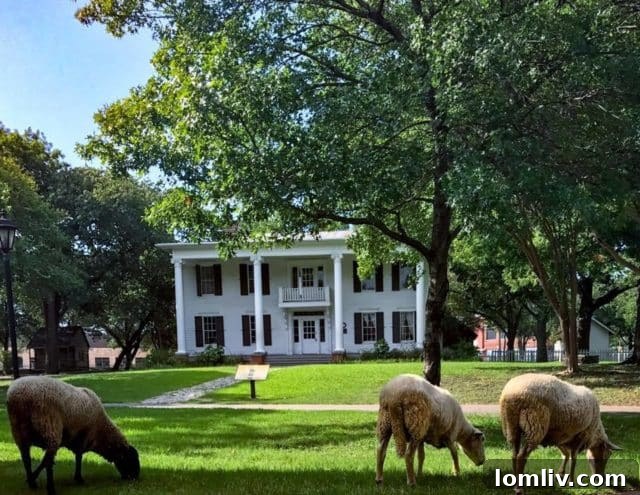
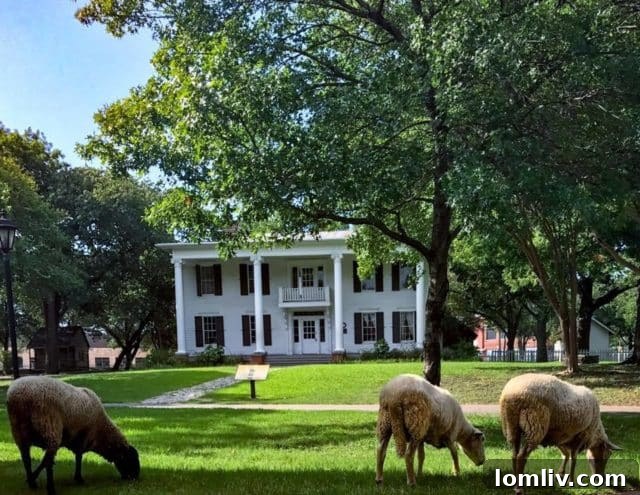
The recent announcement by the Dallas Heritage Village regarding the indefinite closure of the historic Blum House for essential repairs and rehabilitation has ignited widespread curiosity and, inevitably, a flurry of speculation. Concerns have emerged not only about the fate of the Blum House but also the broader health and operational status of the Dallas Heritage Village, a vital cultural institution situated within Old City Park. To address these pressing questions and dispel rumors, we sat down for an in-depth conversation with Melissa Prycer, Executive Director of Dallas Heritage Village. Our interview delved into the intricacies of maintaining historic structures, the current state of the Blum House, and the significant evolution of the organization’s funding landscape since its establishment.
Daltxrealestate: Unlike typical homes that require standard maintenance, these structures are living museum pieces, demanding a distinct approach to their upkeep and rehabilitation. Does this unique requirement contribute significantly to the higher costs associated with their preservation?
Prycer: “Absolutely, that’s a fundamental truth for every single structure within Dallas Heritage Village. We simply cannot purchase materials ‘off the shelf’ from a standard hardware store. When we need to replace historic wood, for instance, it invariably requires special milling to match the original dimensions and profiles. We are fortunate to have a strong relationship with Davis-Hawn Lumber, who generously provide us with a discount, yet the custom work still incurs significant costs for them, which naturally translates to our budget. There are many misconceptions surrounding historic preservation, but perhaps the most pervasive is the belief that we can simply source siding or other components for our historic homes from a place like Home Depot. The reality is far more complex.
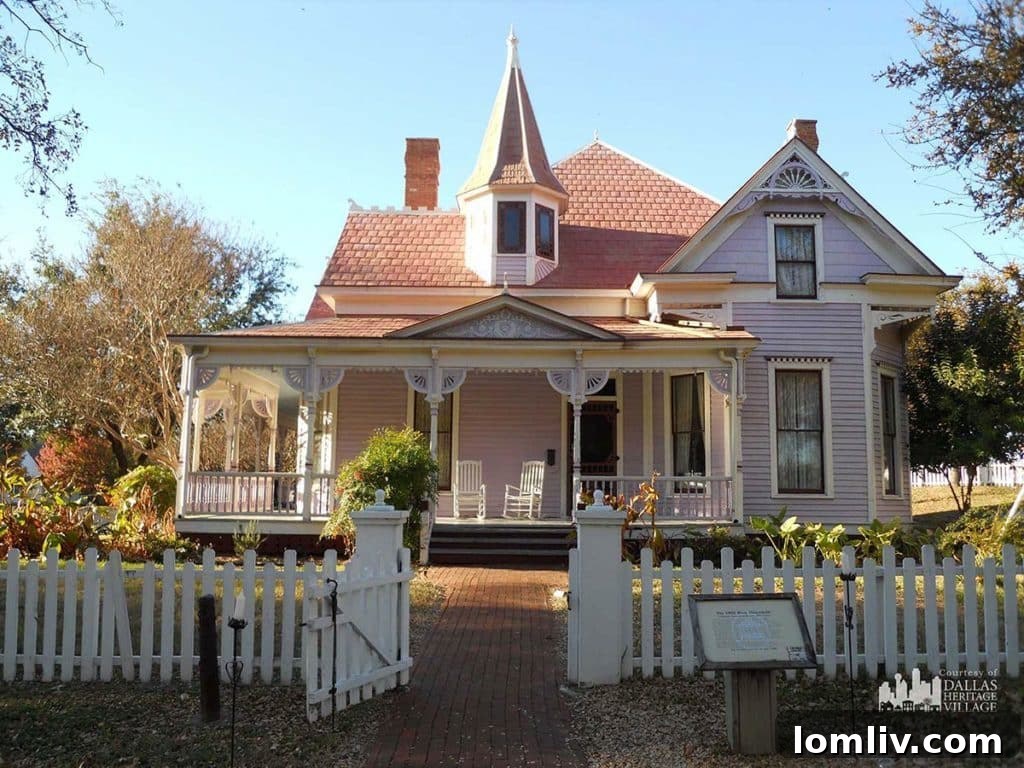
Even basic lumber available today often doesn’t match the historical dimensions required for our buildings. This challenge is magnified when you consider a house like the Blum House, which boasts incredibly intricate ‘gingerbread’ decorative work and unique porch spindles, each contributing to the escalating cost. Another example is the roof; it features metal shingles that interlock, a design that is not commonly used today, making sourcing and repair particularly difficult.
We work extensively with Ron Siebler, our primary preservation contractor, who often highlights the unique challenges. When the Blum House was originally moved, it was transported in three separate pieces and then meticulously ‘stitched’ back together. Reassembling such a structure, especially one built with unconventional materials from its era, adds another layer of complexity. Despite its unusual nature, this distinctiveness is a crucial educational point, and we are committed to preserving it. The good news, however, emerged from our research: we discovered that reproduction metal shingles are available. This was a significant relief, as there was a genuine concern we might not be able to find period-appropriate replacements at all.”
Daltxrealestate: So, the core distinction is that typical renovation prioritizes cost-efficiency and modern aesthetics, whereas historic preservation is fundamentally driven by adherence to period-appropriateness and authentic materials?
Prycer: “Exactly. From a purely financial standpoint, historic preservation is inherently not going to be as cost-effective as modern construction or renovation. However, we cannot simply view these projects through a narrow ‘dollars and cents’ lens. Our responsibility extends beyond mere economics; we must also consider the invaluable educational value these structures provide and their intrinsic historical significance as part of our collective heritage. These buildings are not just assets; they are educational tools and irreplaceable artifacts.”
Daltxrealestate: Following our initial story last week, a recurring question we received was, “How could the Blum House’s condition deteriorate to this extent?”
Prycer: “The Blum House arrived at the Village around 1982 and was officially dedicated in 1983. While we have certainly conducted maintenance on it over the decades since then, it’s easy to forget just how long ago 1983 truly was. I often find myself gauging time based on my own life; I was quite young in 1983 and am now 40. This means the last major renovation work on the house occurred nearly four decades ago. Throughout the years, we’ve diligently performed routine upkeep – things like painting, porch repairs, and ramp maintenance. However, elements like roofs have a finite lifespan. This is a challenge we encounter repeatedly across our collection of buildings. Most of these structures had their roofs repaired or replaced when they were originally moved to the Village. Given that the last building was relocated in 1990, the majority of our roofs are now reaching the natural end of their operational lives. This widespread aging infrastructure necessitates significant, timely investment to prevent further deterioration.”
Daltxrealestate: How does this challenge translate into practical terms for your budget and financial planning?
Prycer: “During the 1970s and 80s, when Dallas Heritage Village was actively expanding and relocating buildings to the site, the City of Dallas generously funded approximately 80 percent of our annual operating budget. Our founding generation – including staff and board members – could never have imagined a scenario where that contribution would shrink to closer to 15 percent, which is precisely where we find ourselves today. This dramatic shift in funding is arguably the most significant factor impacting our ability to maintain these historic assets. A promise was effectively made between the Dallas County Heritage Society and the City of Dallas, but due to various factors, the city has been unable to uphold its side of that commitment. It’s crucial to understand that this isn’t an issue unique to Dallas Heritage Village; the entire city is grappling with substantial deferred maintenance issues across numerous facilities.
And that’s the other point I genuinely wish more people would recognize. In recent months, there have been numerous stories about the Juanita Craft House, the persistent bucket catching water for decades at Music Hall, and the state of the Kalita Humphreys Theater. All these buildings are owned by the City of Dallas and are theoretically supposed to be maintained by the City. However, the Office of Cultural Affairs, which oversees many of these assets, has been chronically underfunded for years. This systemic issue explains how we arrived at this critical juncture. The City of Dallas appears to have a strong appetite for acquiring property but a much weaker commitment to its ongoing maintenance, a sentiment shared by few. To be fair, maintenance is rarely a ‘sexy’ topic for public funding. But the bottom line is clear: we are reaching a crisis point, not just here at Dallas Heritage Village, but across cultural facilities throughout the city. The indefinite closure of the Blum House serves as a stark warning about the very real consequences of continually deferring essential maintenance.”
Daltxrealestate: How exactly is DHV’s agreement with the city structured? We understand that you’re responsible for the park’s operation, and the city for its maintenance, but what are the practicalities of this arrangement?
Prycer: “We are indeed fortunate that our management agreement with the City of Dallas is structured in a way that allows us to allocate a portion of our annual city funding specifically for maintenance. This critical flexibility means we get to choose our own contractors. Over many years, we’ve cultivated strong relationships with multiple contractors who possess specialized expertise in historic structures. For example, our HVAC technicians have been working on Dallas Heritage Village buildings even longer than my 15 years here. They intimately understand the nuances of our historic buildings, the quirks of their systems, and the unique challenges they present. Because we can select our contractors, we ensure fair pricing and, crucially, we bypass the often lengthy and cumbersome city bureaucracy to get work done. This autonomy ultimately saves us significant money and time in the long run.
This is a privilege not afforded to every cultural facility in the city. Some organizations are mandated to conduct their repairs through the city’s equipment and building services. Unfortunately, those departments often lack the specialized expertise required to properly handle historic buildings, as that isn’t their primary focus when hiring staff. This discrepancy is a significant part of the problem. While the city’s bid process exists for good reasons, applying those same rules to historic structures becomes incredibly challenging, primarily because a very limited pool of contractors is truly qualified to perform this highly specialized work. The delicate nature of preservation requires a level of skill and understanding that goes far beyond general construction.”
Daltxrealestate: We’ve extensively covered the shortage of skilled construction workers in our stories. I imagine that talent pool shrinks even further when you’re specifically seeking individuals specializing in historic homes. Does this shortage concern you?
Prycer: “Oh, absolutely, it’s a major concern. Ron Siebler, our esteemed preservation contractor who has overseen numerous significant projects here since around 2012 or 2014, has made a concerted effort to train individuals in traditional carpentry skills. This is because, unlike modern construction, you can’t simply use a nail gun on many of our historic elements; work often requires hand-nailing, which is a slower, more meticulous process. Not everyone is willing or able to commit to that level of craftsmanship and patience. While we do have some truly excellent contractors in the city capable of this work, we face another unique challenge: our major preservation projects, like the Blum House restoration, are often considered ‘small’ in scope for many larger construction companies. For example, a firm like Phoenix 1, which is undertaking massive projects like the municipal building downtown, wouldn’t bid on the Blum House restoration because a $650,000 project simply isn’t worth their time or resources. This creates a supply and demand imbalance, making it harder to find the right expertise for our specific needs.”
Daltxrealestate: Okay, let’s pivot slightly, as this was another common question we received after your initial announcement: the issue of fleas. Someone suggested there was a feral cat colony at the Village and attributed the fleas to them. Would you like to address that?
Prycer: “Certainly. Here’s the accurate situation: we do have feral cats residing here at the Village. However, it’s important to clarify that they are a managed colony. They are treated, spayed, fed, and taken to the vet when necessary. These cats serve a crucial role as ‘working cats’ because, given our proximity to downtown, rodent populations can become an issue. The cats effectively keep the rodents in check. So, while we have a well-maintained feral cat colony, they are not the source of our current flea problem.
The real challenge we’ve been facing is with raccoons. They are the actual culprits behind the fleas. The Blum House is a pier-and-beam structure, and unfortunately, the skirting around the house has developed numerous openings over time. Raccoons exploit these gaps to go underneath the house and establish dens, which inevitably leads to flea infestations. This is yet another deferred maintenance issue. We haven’t had the necessary time or funding to thoroughly identify and seal all these access points to prevent raccoons from sheltering there. In the meantime, we are actively attempting to trap and relocate the raccoons, but addressing the underlying structural issue is key to a long-term solution.”
Daltxrealestate: Another pivot, as we’re addressing the public’s questions. Let’s discuss the funds you’ve allocated for other projects, such as the co-working space. Many people have asked why that money couldn’t simply be redirected to the Blum House.
Prycer: “That’s an excellent and frequently asked question. The money allocated for the Cedars TIFF (Tax Increment Reinvestment Zone) could only be used for projects that directly supported the economic development of the surrounding neighborhood. While I can certainly argue that museum exhibit buildings indirectly contribute to economic development, that argument simply doesn’t align with the strict criteria for TIFF funding. So, we had to think creatively about how we could leverage that money in a way that met its specific requirements.
Dallas Heritage Village currently encompasses 26 acres, significantly more than the original 13 acres of parkland. Over the years, the society acquired surrounding parcels of land, some of which still had existing homes. One such house, located on Park Avenue, was an original Cedars home on its authentic site. There are two houses side-by-side, both currently in use. The Park Avenue house historically served as education space and office space, but for the past several years, it has unfortunately been relegated to storage. The house next door is where some of our staff offices operate. This particular Park Avenue house is deteriorating rapidly and is actually in worse condition than the Blum House.
Several years ago, we conducted a comprehensive review of all our buildings to determine their highest and best use. We saved that Park Avenue house for last because of its severe state and the knowledge that its restoration would be incredibly expensive. However, we also recognized that no one would donate hundreds of thousands of dollars simply for storage space. This led us to explore the possibility of leasing out office space within that building. Coincidentally, at that same time, there was extensive discussion within the broader Dallas arts community about the critical need for affordable office space for nonprofit organizations. We observed rents in the Cedars neighborhood escalating rapidly, even though this area has historically been a hub for artists and nonprofits seeking affordable spaces. Our thought was, ‘We have this space; what if we could offer more stable, affordable rent to help keep some of these vital organizations rooted in the neighborhood?’ That strategic decision led us to seek TIFF funding specifically for the restoration of that Park Avenue house. Therefore, the Blum House, being an exhibit building rather than a commercial space, would never have qualified for those particular funds.”
Daltxrealestate: What are some of the primary challenges you encounter when trying to raise money specifically for the maintenance of historic structures?
Prycer: “One of the biggest challenges in fundraising for preservation is a common misconception among the public: people often believe that once a house is ‘saved’ through a restoration, the work is simply ‘done.’ The reality, however, is that preservation is an ongoing, never-ending process. We frequently encounter sentiments like, ‘We saved that house 30 years ago — why do we need to do all this work again for the same house?’ To put it in perspective for our visitors, we often ask, ‘How much do you spend annually on maintaining your own home?’ Then, we tell them to multiply that figure by 30, because that’s how many historic structures we are responsible for maintaining here at Dallas Heritage Village. The scale of the challenge is immense.
Moreover, ‘maintenance money’ is notoriously difficult to raise. It’s not a glamorous cause like building a new wing or acquiring a new exhibit. Donors, understandably, are often more attracted to tangible, visible projects. It’s also hard money for the city to allocate because they, too, are facing budgetary constraints. The complexities and financial demands are far greater than most people realize, and it is definitely not a matter of simply needing $35,000 to fix a major issue; the costs are orders of magnitude higher.”
Daltxrealestate: Let’s discuss the master plan you published in 2017. How does the closure of the Blum House, and its urgent needs, impact that long-term vision, if at all?
Prycer: “Interestingly, the Blum House closure doesn’t fundamentally alter our 2017 master plan. The impetus for developing that new master plan stemmed from two primary factors. We previously had a master plan from around 2007, and we unfortunately initiated Phase One right as the Great Recession began – timing, as they say, is everything. That earlier plan envisioned a visitor’s center facing Harwood Street. At the time, we believed any significant development south of Highway 30 would naturally extend down Harwood due to the Farmer’s Market, creating a ripple effect that made a Harwood-facing entrance sensible.
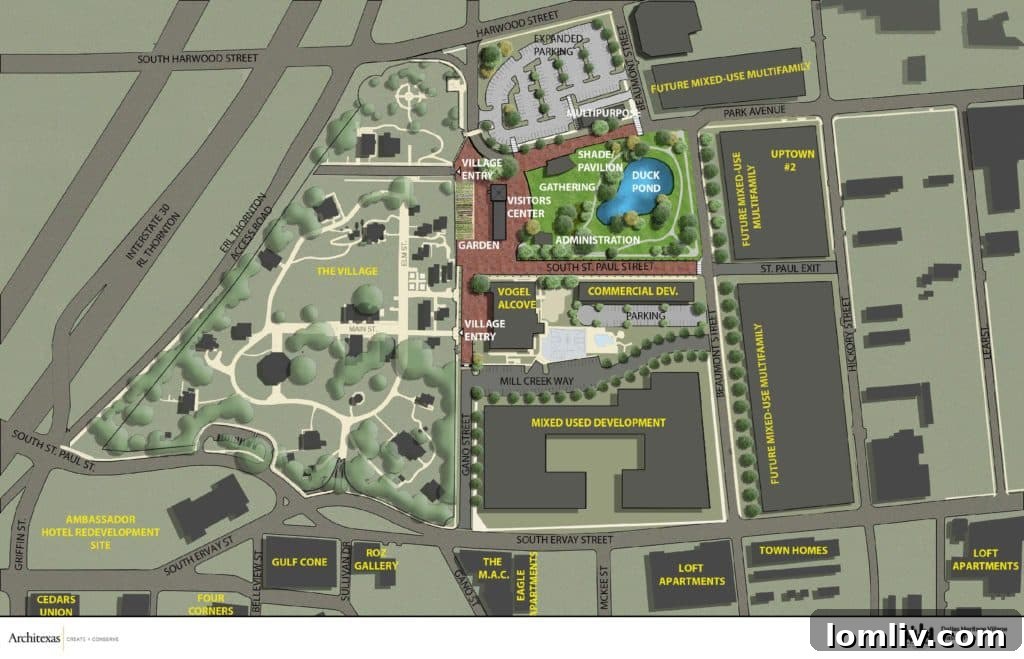
I became Executive Director in March 2014, but having served as Director of Education for the preceding decade, I’ve witnessed profound changes in this neighborhood firsthand. Soon after I took on the Executive Director role, major properties along Ervay Street began to sell, accompanied by impressive redevelopment plans. We quickly realized that our existing master plan for the future — particularly our desperate need for a new visitor’s center — was no longer viable. We couldn’t afford to turn our backs on the vibrant new developments emerging along Ervay Street. That was the first key reason for a new plan.
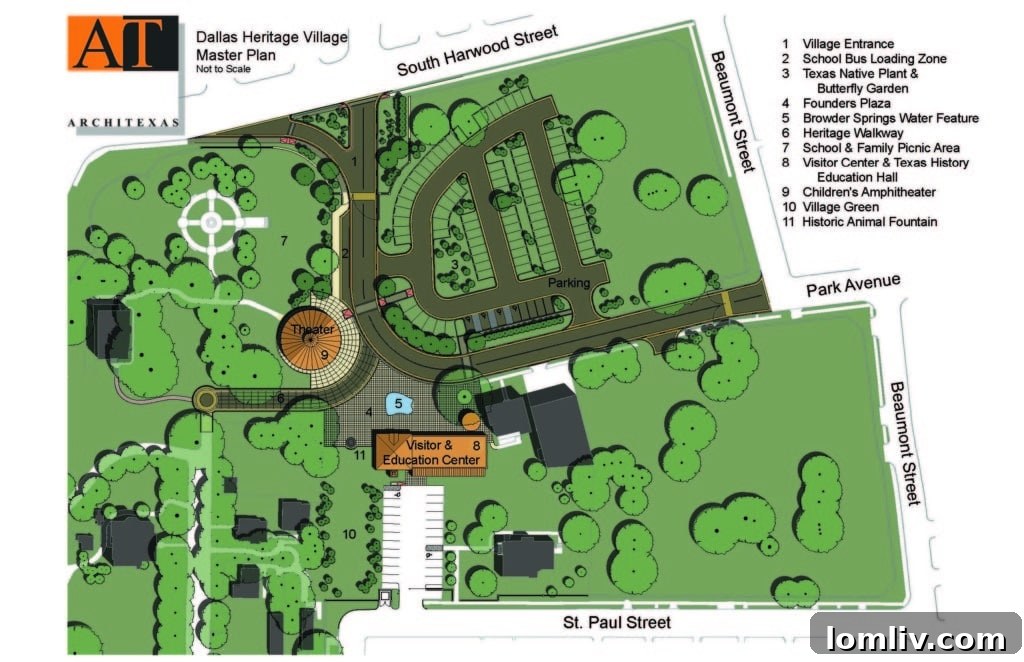
The second reason will likely come as no surprise to you, given your work for Daltxrealestate: we possess undeveloped land, which we currently utilize as overflow parking. Developers were circling us like buzzards, keenly interested in acquiring that land. However, all our land is designated as parkland, and selling parkland requires an act of the state legislature, meaning our property is secure. Nonetheless, we needed a clear response to our developer friends, articulating our definitive plans for this valuable property. We had already made the strategic decision in the mid-1990s not to collect any more historic buildings, precisely because of the overwhelming maintenance burden they impose. So, our focus shifted to a dual question: ‘What does Heritage Village truly need, and what does this evolving neighborhood need?’ For many years, this neighborhood was overlooked for park development because people assumed, ‘Well, you already have a park – Old City Park.’ But Old City Park isn’t a conventional public park; it’s a history museum situated on parkland, and it isn’t free to access.
This realization led us to the decision to transform a portion of our land into a genuinely public park, which would serve as the ‘front yard’ of Dallas Heritage Village, with a new visitor center strategically placed within it. We also pursued this strategy because we were acutely aware of our deferred maintenance issues, and we knew we couldn’t launch a major capital campaign solely focused on deferred maintenance – it’s simply not an appealing prospect for donors. So, the master plan is fundamentally a proactive response to the changing dynamics of this neighborhood, preparing us for the future. As I’ve explained to our developer friends, this new public park will likely be ‘the icing on the cake’ for all their surrounding projects. However, as a nonprofit organization, we must exercise prudence and prioritize the long-term sustainability of Dallas Heritage Village. We have not yet initiated a capital campaign in any formal way. We have a well-defined plan and a clear vision, and that’s our current position on the master plan.”
Daltxrealestate: So, there hasn’t been a capital campaign officially launched yet?
Prycer: “Not at all. There has been no ‘soft phase’ or any formal launch of a capital campaign at this point. We are certainly engaging in conversations and putting out feelers with potential supporters. But, in all honesty – and I know this has come up in public discussions – we cannot responsibly launch a major capital campaign until we have eradicated our annual operating deficit. And we are not there yet. So, that’s another crucial point in response to some of the comments we see on social media. We are fully aware that our finances are not in ideal shape, and there are numerous complex reasons for that. However, we also know that it would be fundamentally unsound business practice to attempt to raise $20 million for a capital project while simultaneously grappling with an annual six-figure operating deficit. It simply doesn’t make financial sense.”
Daltxrealestate: Is that what ultimately impacted your OCA (Office of Cultural Affairs) score?
Prycer: “Oh (long pause), that’s a completely separate and complex issue, but I don’t believe it was directly related to our operating deficit. The politically correct answer, I suppose, is that with the implementation of the new Cultural Plan, the OCA, quite rightly, decided to factor certain considerations more heavily into their scoring, for lack of a better term. What they had not done until recently was codify specific definitions for these factors. Now, they have. For instance, they now define targets for board diversity and staff diversity, which are important and something they should care about. Previously, they hadn’t established clear benchmarks for where organizations should stand. Now they have, and I would say that even though we experienced a funding cut that year, in some ways we ‘won’ because we now have a clear target to work towards, which we lacked before. However, if you look at our score or ratio percentage from that year compared to how they have defined the criteria for the application we just submitted this year, we would not have failed under the new guidelines.
The other peculiar detail, which often gets overlooked because of its nuance – and I’m trying not to have an axe to grind here – is that there are three distinct categories of organizations that are essentially compared against each other. In two of those three categories, a ‘curve’ was applied to the scores. So, while six organizations technically ‘failed’ based on their raw scores city-wide, our specific cohort had an outlier who scored 100 percent, which meant no curve was applied to our group. In my opinion, an organization scoring 100 percent is as deeply flawed as us failing, because nobody is perfect; there’s always room for improvement. Ultimately, six organizations initially failed that year based on raw scores, but after the curves were applied, only two actually failed: Dallas Heritage Village and the Dallas Historical Society. Notably, we are the only two historical organizations that are part of the OCA’s funding structure. This also points to some inherent challenges. For instance, the reporting metrics and attendance records required from us as a historical museum are quite different from those expected of performing arts organizations. It’s often a struggle to fit a ‘square peg into a round hole’ when applying uniform criteria. So, yes, we failed. There were many political twists and turns involved in that process. As for this year, we are receiving the exact same funding level as last year, and I do not yet have our new official scores.”
Daltxrealestate: What about the people who believe that funds are simply being mishandled or misappropriated?
Prycer: “To anyone who suspects us of misappropriating funds, I urge you to review our annual budget. Our operating budget is approximately $950,000 a year. Now, consider this: how much do you honestly believe it costs to operate a museum of our scale, much less to meticulously restore and maintain a single historic structure, let alone 30 of them? The costs associated with preserving our unique collection of buildings, supporting educational programs, and managing the Village are substantial and transparently documented. We are deeply committed to fiscal responsibility and every dollar is carefully allocated to advance our mission.”
Daltxrealestate: Tell us about some of the recent successes or ‘wins’ Dallas Heritage Village has celebrated.
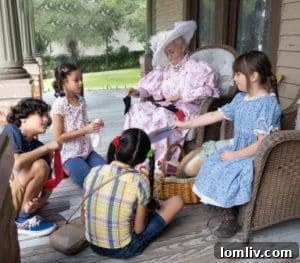 Prycer: “Despite the challenges, the good news is that we have recently received some truly significant major gifts in the past couple of months, which are instrumental in advancing other key projects. We were thrilled to announce at our annual membership meeting just last night that we’ve received two gifts, both of which are record-breaking for our organization. The first is a generous gift of $165,000 spread over three years. This is the largest gift we have ever received from an individual donor, and it will fund a full-time position for three years, a position that will be shared collaboratively between Dallas Heritage Village and our wonderful neighbors at Vogel Alcove.
We’ve been partnering with Vogel Alcove for many years, ever since they relocated into City Park Elementary. Their ‘itty-bitties’ come over for field trips, nature walks, and participate in various other activities we offer. We’ve been actively exploring what early childhood learning can look like within a history museum context, as there isn’t much dedicated early childhood programming happening in history museums nationally. Crucially, we’re also examining how this type of engagement can benefit children who are experiencing trauma, as many of the Vogel Alcove children are. We realized the profound need for a dedicated individual who works for both organizations; this position will solidify our partnership, provide immense benefits for the children, and also support other parents of young children in our community.
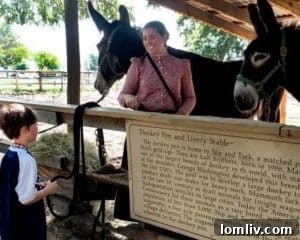 Our second major achievement – the largest grant we’ve ever received from a foundation – comes from the Joe and Doris Dealey Foundation. They are providing us with $500,000, distributed as $100,000 per year for five years, to bolster our animal program. Of course, we have donkeys, sheep, and chickens, and they certainly enjoy their meals! But beyond their sustenance, this incredible funding will also enable us to restore our barn, which is in dire need of work, and transform it into a more robust educational exhibition space. It will also facilitate the crucial restoration of our historic wagons and carriages. Furthermore, we’ll be able to add another dedicated staff position to help care for our animals, enhancing their well-being and the visitor experience. These two significant gifts are, I hope – and I’m already seeing glimmers of this – inspiring others who may have been undecided to join our cause. People often prefer not to be the first to write a really big check, but these monumental commitments are setting a powerful precedent for our future sustainability and growth.”