The Dallas City Council recently engaged in critical discussions surrounding the city’s economic development policy, identifying key priorities aimed at fostering robust growth and equitable opportunities. Central to these deliberations were the urgent needs for developing essential infrastructure for both housing and commercial ventures, alongside establishing expedited and straightforward tax abatement processes designed to attract and retain businesses within the city limits. These strategic areas emerged as focal points ahead of the anticipated adoption of significant revisions to the 2021 economic development policy, scheduled for a crucial meeting on December 14.
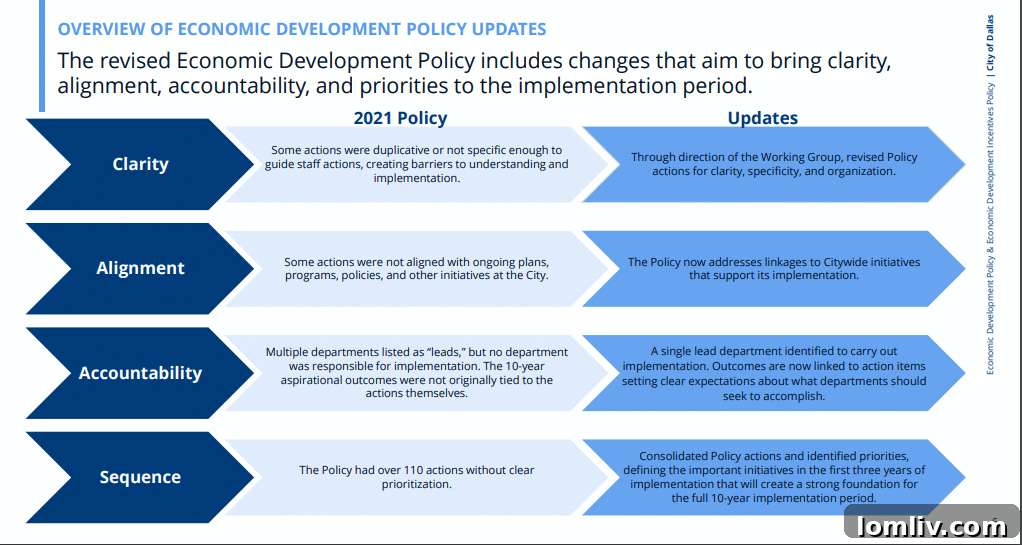
This year was specifically designated as a “transition period,” crucial for meticulously aligning the city’s economic development policy with other foundational documents, most notably the Racial Equity Plan. This alignment is a pivotal step before embarking on its comprehensive 10-year implementation phase. To facilitate this complex process and ensure a successful integration of equity principles, the city strategically partnered with HR&A Advisors, a leading consultancy renowned for its expertise in urban planning and economic development. Their mandate was clear: to guide Dallas in “operationalizing equitable economic development,” transforming ambitious goals into tangible, actionable strategies.
Andrea Batista Schlesinger, a distinguished managing partner with HR&A Advisors, underscored the profound nature of Dallas’s commitment to equity. She highlighted that her team meticulously identified various existing city business practices that inadvertently hindered equitable economic development. Through diligent analysis and collaborative effort, these obstacles were subsequently reimagined and restructured into impactful, practical strategies designed to propel Dallas forward. “A year ago, you all took an incredibly bold step of adopting an economic development policy that centers on equity,” Schlesinger remarked, acknowledging the council’s foresight and leadership. She further elaborated on HR&A’s instrumental role, stating, “We’ve had the honor of working with you for the last year following the charge that you gave to the city focusing on … what it would take to shift the North Star of all economic development policy, practices, and resources in the direction of equity.” This statement powerfully encapsulates the transformative vision guiding Dallas’s revamped economic strategy, emphasizing a fundamental shift towards fairness and inclusion as core tenets of progress.
Navigating Barriers to Equitable Economic Development in Dallas
The journey towards a more equitable and efficient economic landscape in Dallas has not been without its challenges. Outgoing Dallas City Councilwoman Jennifer Gates, who adeptly chaired the Economic Development Policy Task Force, provided insightful observations into the difficulties businesses often encounter when attempting to establish or expand their operations within the city. During her tenure, the task force convened monthly over the past year, consistently hearing feedback that underscored a prevailing sentiment: navigating the business environment in Dallas proved to be unexpectedly arduous for many.
Councilwoman Gates articulated the core issues, stating, “It was challenging to navigate the city programs and opportunities that were available.” She further highlighted the pervasive problems of “unpredictability” and “subjectivity” that frequently arose during negotiations for business incentives. This lack of clear, consistent guidelines often left businesses, irrespective of their size, in a precarious position, struggling to understand the city’s expectations. “Large or small companies that want to do business in Dallas want to have an idea of what’s important to the council and the city so they know how to address their deals,” Gates explained, pointing to a critical need for transparency and standardized procedures. A significant portion of these concerns revolved around limited opportunities and complex access for small and minority-owned businesses, an area the revised policy explicitly seeks to address.
Despite these identified hurdles, Gates reassured stakeholders that the forthcoming revisions do not introduce drastic overhauls to the foundational plan adopted in 2021. Instead, they aim to refine and strengthen existing frameworks. She stressed the importance of a holistic perspective, advising the council, “It’s really important that you all recognize the impact of other policies ongoing with the city.” This emphasizes that economic development cannot operate in isolation but must be harmonized with other urban strategies. Gates concluded her remarks by underlining the indispensable role of ongoing assessment: “Constant evaluation is going to be essential and crucial to the success of these recommendations.” This forward-looking perspective highlights the dynamic nature of economic policy and the necessity for continuous adaptation to achieve long-term success.
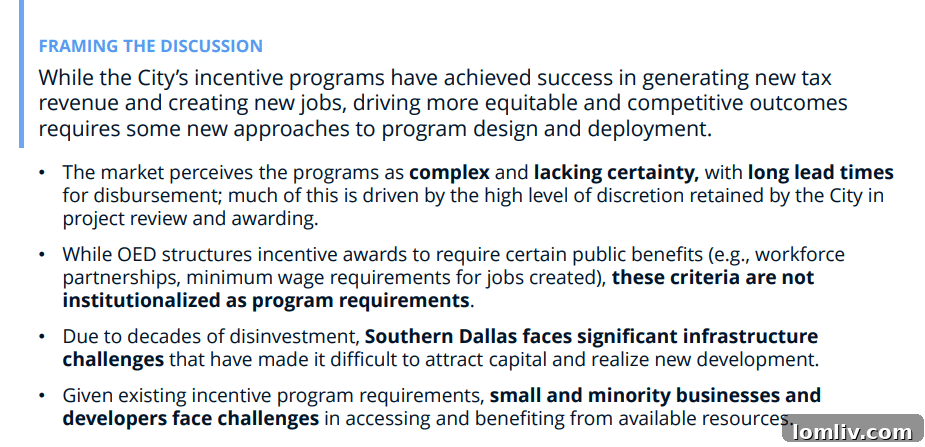
Delving deeper into the specific impediments, Taylor Kay, a senior analyst with HR&A Advisors, presented a detailed enumeration of challenges that necessitate innovative approaches. These insights are crucial for understanding the rationale behind the proposed policy adjustments:
- Program Complexity and Uncertainty: The city’s existing incentive programs are widely perceived by the market as overly complex and lacking predictable certainty. This is compounded by extensive lead times required for the disbursement of funds. A significant contributing factor to this issue is the high degree of discretion that the city retains throughout the project review and incentive awarding processes, leading to inconsistent outcomes and hindering business planning.
- Lack of Institutionalized Public Benefit Criteria: While the Office of Economic Development makes concerted efforts to structure incentive awards to mandate specific public benefits, these crucial criteria are regrettably not yet firmly institutionalized as explicit program requirements. This informal approach can lead to varying interpretations and inconsistent application, undermining the equitable objectives of the policy.
- Infrastructure Deficiencies in Southern Dallas: Decades of systemic disinvestment have left Southern Dallas grappling with severe infrastructure challenges. These deficiencies present substantial barriers to attracting new capital and realizing much-needed development projects, perpetuating economic disparities within the city. Addressing this will be fundamental to fostering comprehensive growth across all areas of Dallas.
- Access Barriers for Small and Minority Businesses: Given the existing stringent requirements of current incentive programs, small and minority-owned businesses and developers frequently face formidable obstacles in accessing and effectively benefiting from the available economic development resources. This disparity highlights a critical need for more inclusive and accessible pathways to support these vital segments of the Dallas economy.
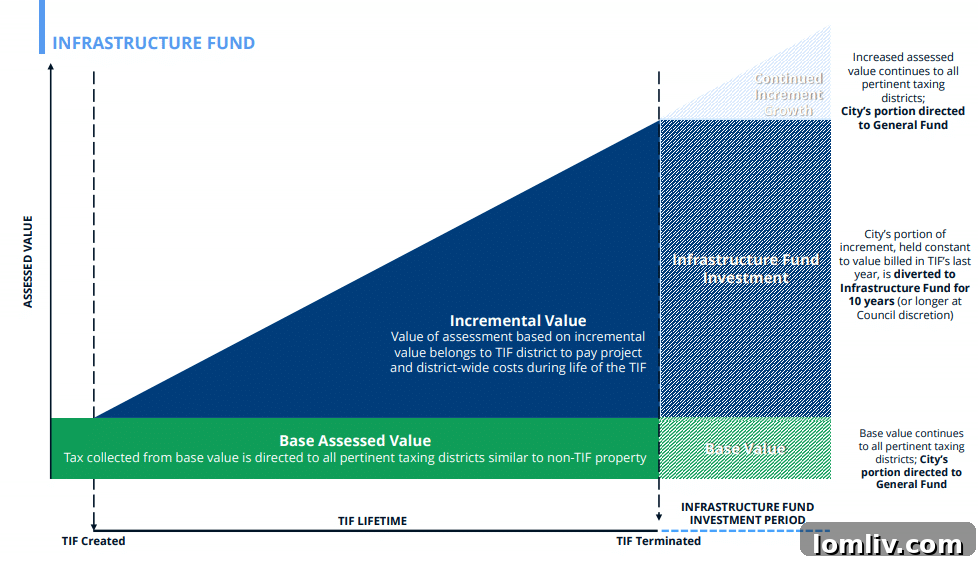
Assistant City Manager Majed Al-Ghafry emphatically reinforced the strategic importance of proactive infrastructure development and targeted economic incentives. He stated that these tools are not merely advantageous but are absolutely “key” to successfully recruiting new businesses and, equally important, retaining existing enterprises within Dallas. Al-Ghafry highlighted a paradoxical situation: “We’re the ninth-largest city in the country. Our economy is so powerful and diverse, yet sometimes we cannot compete with other cities in the attraction and retention of corporations or opportunities for some of the small and large companies to come into Dallas.” This stark reality underscores the competitive landscape of urban economic development. He asserted that for Dallas to maintain its competitive edge and truly thrive, it must adapt its strategies: “We have to play the game the way other cities are doing by offering infrastructure ahead of time or we have to offer the incentives specifically for the infrastructure component.” This direct approach advocates for leveraging infrastructural investment as a powerful catalyst for economic growth and business attraction.
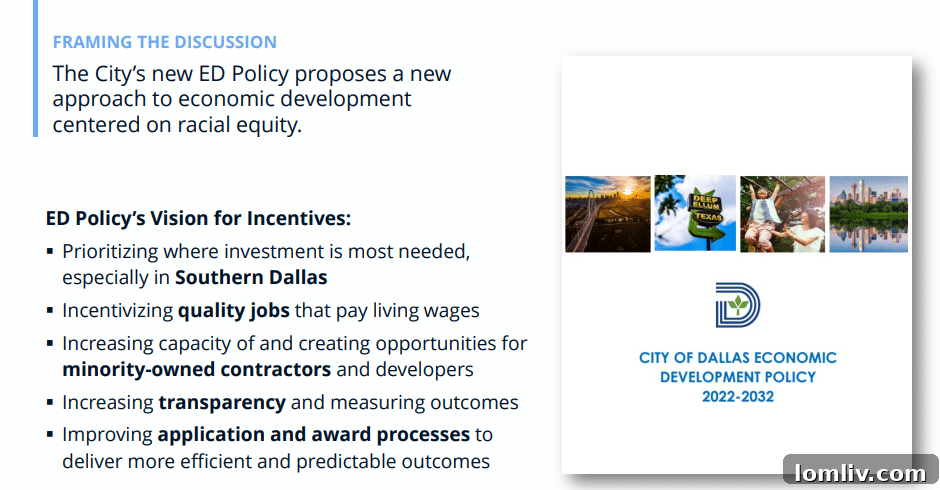
Investing in Infrastructure: A Foundation for Dallas’s Economic Future
A recurring and prominent theme throughout the City Council discussions was the unequivocal emphasis on the critical necessity of investing in and providing robust infrastructure. Council members consistently highlighted that a modernized and expanded infrastructural base is not merely an amenity but a fundamental prerequisite for making Dallas an appealing and viable location for businesses seeking to establish or grow their operations. Without adequate roads, utilities, and public services, the city’s aspirations for economic growth and diversification would remain constrained.
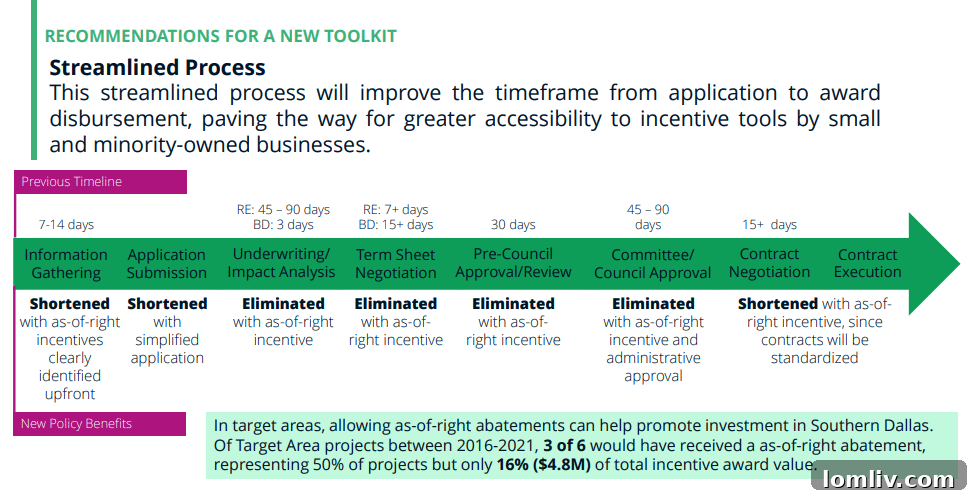
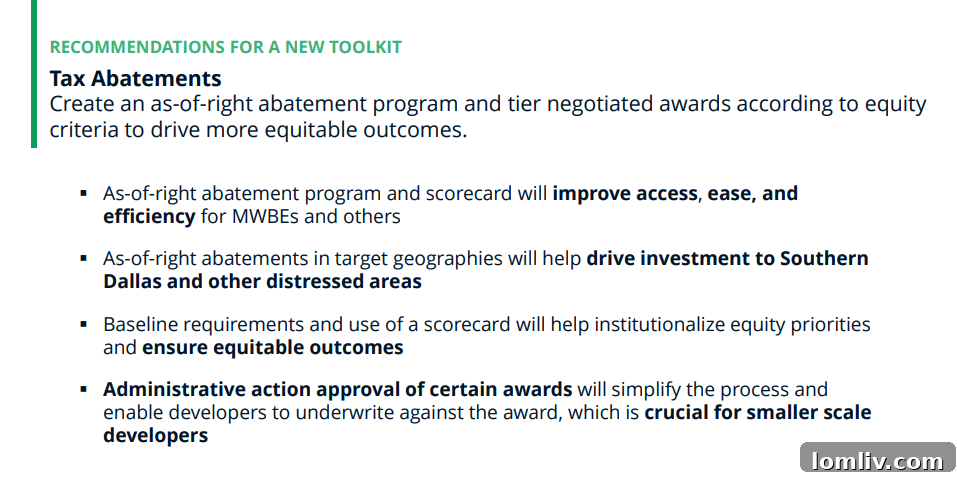
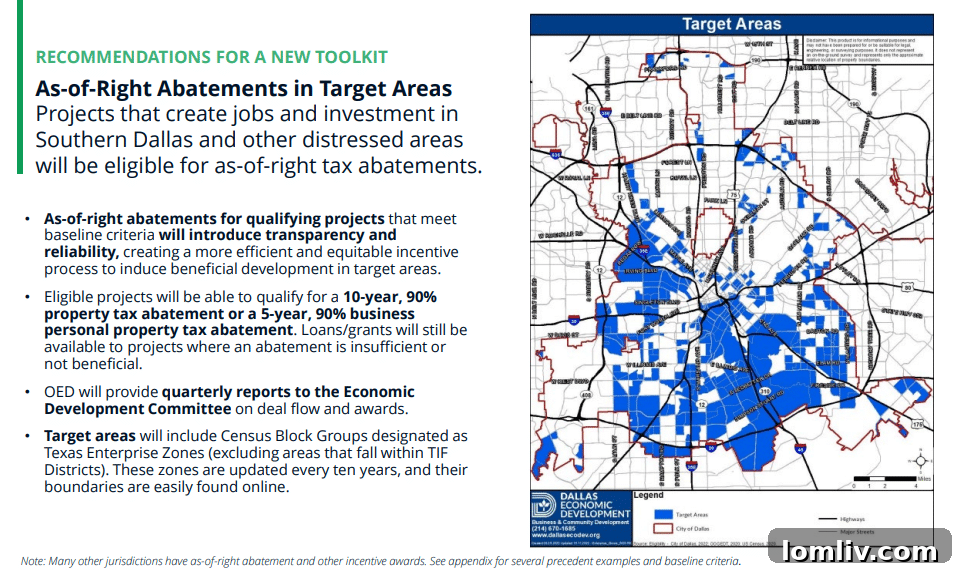
In a significant move to address infrastructural disparities and stimulate development in previously overlooked areas, the city proudly announced a substantial $55 million award in New Market Tax Credits. This vital funding is specifically earmarked for “impactful investments in underserved areas of Dallas,” targeting regions that have historically suffered from a lack of capital and development opportunities. Robin Bentley, Dallas’s Economic Development Director, highlighted the uniqueness of this initiative, proudly stating that Dallas is currently the only city in Texas to implement such a focused program for commercial development within underserved communities. Beyond the existing “toolkit” of economic incentives, the policy slated for adoption this week introduces four innovative new incentive strategies, further enhancing the city’s capacity to drive targeted development.
These strategic investments are specifically channeled into areas characterized by a poverty rate of 20 percent or higher. This deliberate targeting sends a clear and compelling signal to the development community. Bentley elaborated on this strategy, explaining, “These are the areas where we want to signal to the development community that this is where we want investment to happen and if they’re willing to make an investment in these areas, we’ll make it as easy as possible to do business with the city.” This commitment aims to dismantle barriers and create an inviting environment for developers willing to contribute to the revitalization of these critical neighborhoods, fostering inclusive growth across the entire city.
District 8 Councilman Tennell Atkins has emerged as a steadfast advocate for the cohesive integration of the economic development policy, the housing policy, and the Racial Equity Plan. He firmly believes that these documents must operate in perfect alignment, functioning synergistically to achieve their overarching goals. “If they’re not aligned together, it’s not going to work,” Atkins asserted, underscoring the interconnectedness of these critical urban planning instruments. He painted a vivid picture of the dire need for infrastructure in certain parts of Dallas, stating, “We are in dire need of infrastructure. Some parts of the city of Dallas do not have infrastructure. They’re still on septic tanks, still on dirt roads.” This poignant description highlights a stark reality for many residents and businesses in these underserved areas. Atkins passionately argued for the immediate implementation of effective tools to address these infrastructural deficits, warning of the long-term economic consequences: “We’re not going to be able to keep lowering our tax rate if we do not invest in infrastructure.” His words serve as a powerful reminder that robust infrastructure is not an optional luxury but a fundamental prerequisite for sustainable economic health and responsible fiscal management.
Beyond the tangible investments in infrastructure, Council members also placed significant emphasis on the crucial need for enhanced communication and comprehensive education regarding the benefits and mechanics of tax abatements and other economic incentives. District 11 Councilwoman Jaynie Schultz eloquently articulated this point, recognizing that potential resistance to these policies often stems from a lack of understanding regarding their broader economic implications. “For the people who may be pushing back against this, I think we are not yet communicating enough the ultimate economic benefit to everybody,” Schultz noted. She stressed the importance of clearly articulating the positive ripple effects, not only for individual businesses but also for the city’s overall tax base, encompassing sales and property taxes. “That needs to be part of the story we tell,” she concluded, advocating for a narrative that highlights how initial investments through incentives ultimately contribute to a growing, healthier economy for all residents. In line with this commitment to transparency and public understanding, city officials confirmed that HR&A Advisors will continue their engagement into the next year. Their ongoing role will include developing and disseminating educational videos and comprehensive communication materials to both the media and the general public, ensuring that the rationale and benefits of Dallas’s ambitious economic development strategy are clearly understood by all stakeholders.