Texas’s Soaring Rental Market: A Deep Dive into Dallas-Fort Worth and Beyond
The Lone Star State has long been a magnet for new residents, drawn by its robust economy, diverse job opportunities, and vibrant culture. However, this influx of population has significantly impacted the housing sector, particularly the rental market. In recent years, Texas cities have emerged as frontrunners in the national conversation about escalating rent prices. Specifically, Austin and Arlington have experienced some of the most rapid rental growth across the state, securing positions among the top 10 fastest-growing rental markets nationwide. This trend highlights a dynamic shift in the cost of living within these highly sought-after urban centers, as revealed by a comprehensive report from ApartmentList.com, offering crucial insights for both current residents and prospective movers.
Understanding the National Rental Landscape and Texas’s Prominent Role
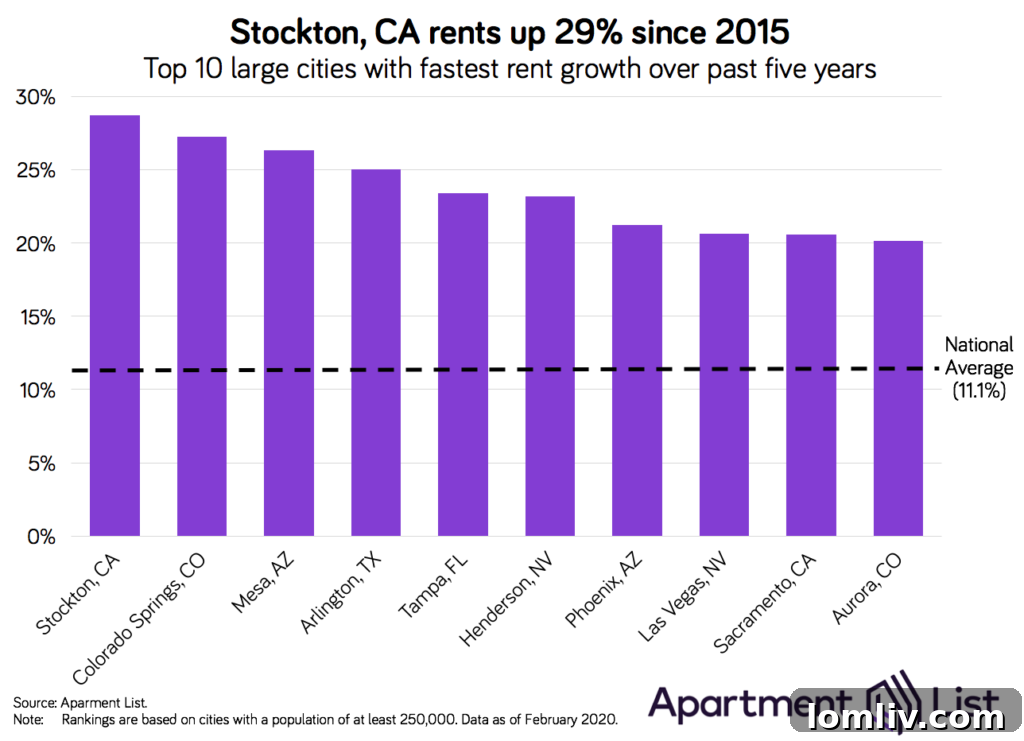
While Texas cities are making headlines for their rental surges, it’s important to contextualize this growth within the broader national picture. According to the same ApartmentList.com report, Mesa, Arizona, took the top spot nationally, recording an impressive 5.1 percent increase in rent over the last year alone. This figure is particularly striking as it triples the national average growth rate of 1.7 percent during the same period. However, Texas’s presence on this list underscores its undeniable appeal and the intense demand for housing. The state’s consistent job creation, lower cost of doing business, and lack of state income tax continue to attract corporations and individuals alike, intensifying competition for available rental units and driving up prices across various metro areas.
Arlington, Texas: A Case Study in Rapid Rent Appreciation
Arlington, a prominent city within the expansive Dallas-Fort Worth Metroplex, stands out as a prime example of Texas’s booming rental market. Ranked as the 10th fastest-growing market nationally, Arlington saw a year-over-year rent increase of 2.8 percent. For those considering a move to this dynamic city, median rental costs currently sit at approximately $1,020 for a one-bedroom apartment and $1,260 for a two-bedroom unit. But the short-term figures only tell part of the story. A longer perspective reveals an even more dramatic shift: since 2015, rents in Arlington have skyrocketed by an astonishing 25 percent. This five-year growth rate significantly surpasses the national average of 11 percent, placing Arlington in a league with traditionally high-cost states such as California, Colorado, and Arizona, underscoring the pressing need for accessible housing solutions in rapidly developing Texas cities.
The Diverse Landscape of Dallas-Fort Worth Rent Growth
The Dallas-Fort Worth (DFW) Metroplex, a sprawling economic powerhouse, presents a complex and varied rental market. The ApartmentList.com report, which analyzed 38 cities within DFW, found that an overwhelming 27 of them exhibited a higher year-over-year rent growth rate than the national median index. This widespread growth across the region highlights the collective strength and desirability of the DFW area. However, within this general trend of appreciation, distinct patterns emerge, with certain cities experiencing particularly rapid increases, while others maintain a relative affordability, offering a diverse array of options for renters navigating the competitive Texas housing scene.
McKinney: A Suburban Success Story with Rapid Growth
Leading the charge in rental growth within the immediate Dallas metro area is McKinney, a city renowned for its charming historic downtown, excellent schools, and family-friendly atmosphere. McKinney has seen the fastest rent appreciation in the metro, with a year-over-year increase of 3.4 percent. This robust growth reflects its rising popularity among families and professionals seeking a suburban lifestyle with easy access to DFW’s economic hubs. The median two-bedroom rental in McKinney now commands approximately $1,439, while a one-bedroom unit typically costs around $1,158. The demand for quality housing in McKinney, driven by its ongoing development and high quality of life, continues to push rental prices upward, making it a key area for real estate observers.
Plano: Premium Living and High Rental Costs
For those seeking premium living within the Dallas metro, Plano stands out with some of the most expensive rents among the larger cities. Known for its corporate headquarters, upscale amenities, and top-rated school districts, Plano offers a high quality of life that comes with a higher price tag. The median two-bedroom rental in Plano averages $1,473, reflecting its status as a highly desirable residential and business hub. While rents increased by 2.6 percent over the past year, the market remained relatively stable month-over-month, suggesting a consistent, albeit high, baseline for rental costs. Plano’s appeal to affluent residents and major businesses ensures its position as one of the DFW’s priciest, yet highly attractive, rental markets.
Dallas Proper: Balancing Urban Life and Relative Affordability
In a surprising twist, Dallas proper, the vibrant heart of the metroplex, holds the distinction of having the least expensive rents among the major cities reported. With a median two-bedroom rental priced at approximately $1,137, Dallas offers a more accessible entry point for renters seeking an urban lifestyle. Rents in Dallas increased by 2.3 percent over the past year, with a modest 0.1 percent increase over the last month. Despite being a major metropolitan center, the report highlights that Dallas remains “more affordable than most comparable cities across the country.” This relative affordability in the urban core can be attributed to a combination of factors, including a diverse housing stock, ongoing new construction, and the sheer scale of the city, which allows for a wider range of price points compared to its more exclusive suburban counterparts.
Unexpected Spikes: Rockwall and Coppell’s Remarkable Rent Hikes
Beyond the larger cities, some smaller, yet equally significant, shifts are occurring within the DFW rental market. The report notably didn’t spotlight Rockwall, despite data revealing it experienced the highest rent hike in the entire Metroplex. Rent in Rockwall surged by an astounding 13.4 percent, nearly eight times the national average. This dramatic increase positions Rockwall as a rapidly evolving market, where a one-bedroom rental can cost around $1,450 and a two-bedroom unit can reach $1,800. Such an extraordinary jump in prices often indicates a sudden surge in demand coupled with limited supply, perhaps driven by new developments, increased desirability, or specific economic factors influencing this more niche market.
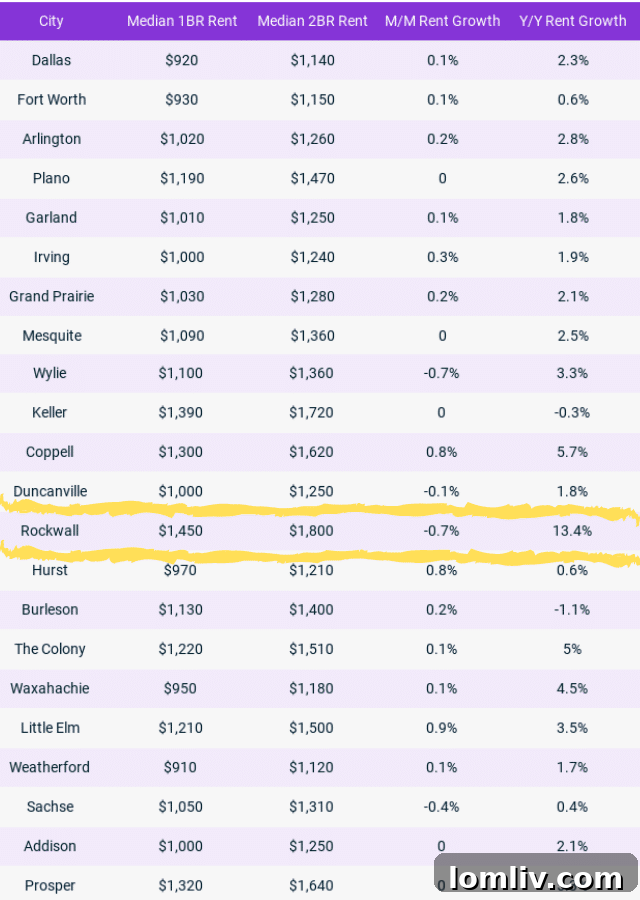
Following closely behind Rockwall is Coppell, which recorded the second-highest rent hike. Rents in Coppell rose by 5.7 percent, a substantial increase reflecting its growing appeal. Renters in Coppell can expect to pay a median of $1,300 for a one-bedroom apartment and $1,620 for a two-bedroom. These significant increases in both Rockwall and Coppell demonstrate that rapid rent growth isn’t confined solely to the largest cities but can also emerge in smaller, high-demand communities within the sprawling DFW region, often driven by factors like excellent school districts, desirable neighborhoods, and strategic locations.
Uncovering DFW’s Affordable Havens
Despite the prevailing trend of rising rents across the Dallas-Fort Worth Metroplex, the region still offers a beacon of hope for budget-conscious renters. There are eight cities within DFW where the median cost for a one-bedroom rental remains under the $1,000 mark. These more affordable options include Dallas itself, Fort Worth, Denton, DeSoto, Haltom City, Hurst, Waxahachie, and Weatherford. The presence of these cities ensures that the DFW area retains a level of accessibility for a diverse range of residents, from young professionals and students to families and individuals seeking more economical living arrangements without straying too far from the economic opportunities and amenities of the larger metro area.
Among these affordable havens, Haltom City stands out with the lowest median rental costs, offering one-bedroom apartments for approximately $790 and two-bedroom units for around $990. Its strategic location near Fort Worth and its diverse community make it an attractive option for those prioritizing affordability. Following closely, Denton provides another excellent value, with median costs of $870 for a one-bedroom and $1,090 for a two-bedroom rental. Denton, a vibrant college town known for its music scene and growing economy, balances affordability with a lively atmosphere. These cities prove that while some parts of DFW are experiencing rapid rent escalation, the broader metroplex still holds pockets where reasonable rental prices can be found, catering to a wider demographic of renters.
Key Drivers Behind the DFW Rental Boom
The dynamic shifts in the DFW rental market are not arbitrary but are underpinned by several powerful economic and demographic forces. Foremost among these is the explosive population growth Texas has experienced over the last decade, with many new residents choosing DFW as their destination. This influx, fueled by robust job growth in sectors like technology, finance, and logistics, creates a sustained demand for housing. Additionally, while new construction is ongoing, it often struggles to keep pace with the sheer volume of new arrivals, leading to a supply-demand imbalance that inherently drives up rental prices. Infrastructure improvements, the expansion of corporate campuses, and the overall perception of a high quality of life also contribute to making DFW cities incredibly attractive, further intensifying competition in the rental market.
Navigating the DFW Rental Market: A Forward Look
For renters and investors alike, understanding the nuances of the Dallas-Fort Worth rental market is more critical than ever. The ApartmentList.com report paints a clear picture of a region characterized by significant growth, yet also by pockets of relative affordability. While cities like Arlington, McKinney, and Plano see rapid appreciation, the core cities of Dallas and Fort Worth, along with smaller communities like Haltom City and Denton, continue to offer more reasonable prices compared to many other major U.S. metropolitan areas of similar size. As the DFW Metroplex continues its trajectory of economic and population expansion, the rental market is expected to remain competitive, but with careful research, renters can still find options that align with their budgets and lifestyle preferences.