DFW’s Evolving Housing Market: A Deep Dive into Affordability and Supply Challenges
The Dallas-Fort Worth (DFW) real estate market continues to be a hotbed of activity, yet a recent report from Metrostudy sheds light on a significant shift: while housing starts are on the rise, true affordability is becoming an elusive commodity. The latest data reveals a robust 12.4 percent year-over-year increase in housing starts, accompanied by an 8.3 percent surge compared to the previous month. However, this growth is disproportionately concentrated in higher price brackets, pushing potential homeowners into the existing home market or, increasingly, into the rental sector.
The core of the issue lies in the escalating cost of land and construction, which is fundamentally reshaping the landscape of new home construction in DFW. This trend points to a market where the definition of “affordable” is rapidly moving upwards, creating ripple effects across the entire housing ecosystem.
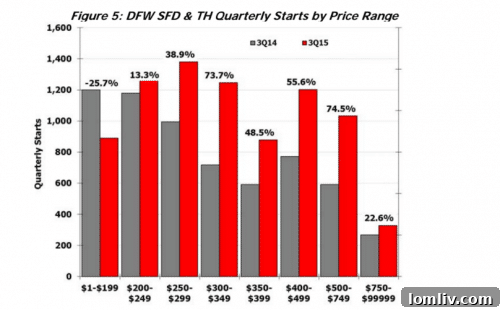
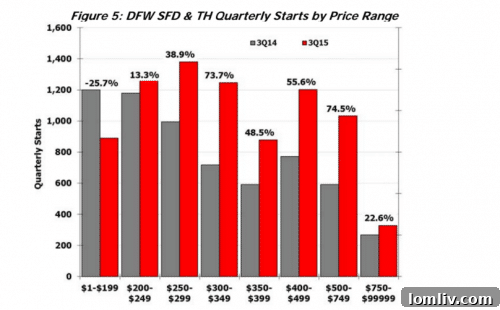
“New home starts below $200,000 dropped significantly, while starts between $250,000 and $400,000 experienced a substantial surge,” stated Paige Shipp, Regional Director of Metrostudy’s Dallas Office. “Although starts for homes priced between $200,000 and $250,000 did increase, the diminishing supply at this crucial price point remains a serious concern for the DFW housing market. Buyers actively seeking affordable housing near employment hubs and the urban core are increasingly compelled to navigate the limited resale market or opt for rental properties. Notably, the third quarter saw starts for homes priced from $250,000 to $750,000 jump by an impressive 38.9% and 74.5% compared to the second quarter. The most striking increase in new construction was observed in the $300,000 to $350,000 range, which is rapidly solidifying its position as DFW’s new benchmark for an ‘affordable’ price point in new builds.”
This observation aligns perfectly with insights shared by Dr. Jim Gaines, a leading economist with the Real Estate Center at Texas A&M University. Dr. Gaines previously highlighted the growing void in the less-than-$200,000 housing bracket, a critical segment for maintaining broad market accessibility.
“For many years, Texas proudly held the distinction of offering the most affordable housing among major metropolitan areas,” noted Dr. James Gaines. “However, the landscape is shifting dramatically, and affordability, particularly for workforce housing, is poised to become a pressing and major issue for our region. We are simply not building enough houses within the crucial $150,000 to $200,000 price bracket, which has long served as a gateway to homeownership for many.”
The implications of this growing affordability gap are far-reaching. As homeownership becomes more challenging, demand for rental properties intensifies. This begs the crucial question: what exactly is this heightened demand for leases doing to rent prices across the Dallas-Fort Worth metropolitan area? The answer points to significant upward pressure, impacting household budgets and potentially altering the demographic fabric of the region.
Construction Delays Exacerbate Supply Challenges
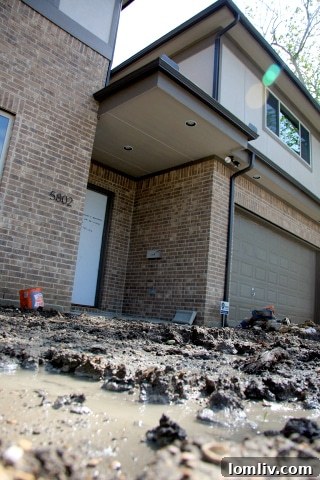
Beyond the pricing dynamics, external factors have also contributed to slower-than-normal inventory growth in the DFW housing market. A particularly rainy spring brought construction activities to a grinding halt, significantly impacting the pace of new builds. This was especially problematic for custom builders engaged in teardowns and new construction projects in popular areas like East Dallas and Lakewood, where development timelines are often tight and demand is consistently high.
Overall housing inventory did see an increase this quarter, with homes priced from $250,000 and above showing more than six months of supply. However, as builders successfully complete and close on their homes currently under construction, the months of supply metric is expected to decrease. Despite a 15.5% drop in inventory to another record low, existing home sales demonstrated resilience, growing by 6.3% during the third quarter. The median price of existing homes, while experiencing a slight decrease since the last quarter to $202,000, remains a significant 9.0% higher than it was twelve months ago, reflecting sustained appreciation in the DFW real estate market.
“The process of builders pushing new homes from the initial start phase to a final closing can be likened to forcing a bowling ball through a pipe,” explained Shipp. “Once the adverse weather conditions cleared, concrete and foundation companies found themselves in exceptionally high demand, struggling to keep pace with the surge in new projects. As home construction progresses through its various stages, this pressure systematically shifts to other critical trades, including framers, then drywall installers, and subsequently painters. The lingering effects of the spring’s persistent rain continue to significantly impact builders across the DFW area and are widely anticipated to do so throughout the remainder of 2015, prolonging construction timelines and potentially influencing overall supply.”
These delays not only push back completion dates but also often lead to increased construction costs, which are inevitably passed on to the buyer, further contributing to the upward trajectory of home prices. This bottleneck in the construction pipeline is a critical factor limiting the overall housing supply, particularly in the most sought-after price ranges.
The Soaring Rental Market: A Direct Consequence
The challenges in the homeownership market have a direct and profound impact on the rental sector. According to a comprehensive report from the Joint Center for Housing Studies at Harvard University, the demand for rental housing has witnessed an unprecedented surge, increasing by a staggering 9 million households between 2005 and 2015. This represents the fastest increase in recent history, with the number of renter households climbing from 34 million in 2005 to nearly 43 million by 2015. Concurrently, the proportion of households choosing to rent versus own their residence has also risen significantly, from 31 percent to 37 percent within the same ten-year period.
This dramatic shift is a clear indicator that a growing segment of the population, unable to find suitable or affordable homes to purchase, is turning to rentals. This increased demand, in turn, fuels competitive rental markets and drives up prices, even as new multifamily construction reaches levels comparable to those seen before the economic downturn.
- The Consumer Price Index (CPI) for contract rents illustrates a consistent upward trend, showing an average nominal growth rate of 3.5 percent for the twelve months concluding in September 2015.
- Rents for professionally managed apartments have grown even faster, according to MPF Research’s same-store measure. Nominal apartment rents were up at a robust 5.6 percent annual rate during the third quarter of 2015, highlighting the intense demand for quality rental units.
- A broad examination across all major metropolitan areas revealed that rent growth surpassed overall inflation in the third quarter of 2015. Specifically, year-over-year increases in real rents across markets in the South and West were particularly substantial, with 32 metros experiencing climbs of 5.0 percent or more, underscoring a nationwide trend of escalating rental costs.
The DFW market is no exception to this trend, experiencing significant rental price appreciation that directly impacts household budgets and the overall cost of living. The interplay between limited housing supply, rising construction costs, and robust population growth creates a challenging environment for both aspiring homeowners and renters.
Market Dynamics and Future Projections
While the overall market shows strong long-term fundamentals, some recent shifts indicate a minor rebalancing. Anecdotal evidence suggests that homes in Dallas-Fort Worth are now remaining on the Multiple Listing Service (MLS) for a few days or weeks longer than they did at the beginning of February. This slight extension in market time, coupled with reports of price reductions in the $250,000 to $400,000 range, suggests a subtle tempering of buyer frenzies. Sellers in this segment may be adjusting their expectations in hopes of achieving faster sales. While some observers attribute this decrease in activity to the typical seasonal slowdown associated with the holiday season, many industry experts anticipate a vigorous rebound in the spring. As real estate professional Ken Lampton aptly puts it, the market often picks up “when the peeps have hit the shelves,” signaling renewed buyer interest as the warmer months approach.
The DFW housing market, characterized by its dynamic growth and evolving challenges, demands careful monitoring. Addressing the affordability crisis will require collaborative efforts from developers, policymakers, and community leaders to ensure a diverse and accessible housing supply that can accommodate the region’s continued expansion. The balance between growth, affordability, and sustainable development will define the future of Dallas-Fort Worth’s residential landscape.
What are your thoughts on these unfolding trends in the DFW real estate market? Share your insights.