Navigating Dallas’s Future: Streamlining Development and Empowering Communities
Dallas, a vibrant and rapidly growing metropolis, has long faced challenges associated with its intricate and often protracted processes for building permits and zoning regulations. These complexities have, at times, created hurdles for developers, businesses, and residents alike, impacting everything from new construction projects to essential home renovations. However, a significant shift is underway within city leadership, signaling a renewed commitment to modernize these systems. Through a series of upcoming public meetings and workshops, Dallas city leaders are actively seeking to engage residents and stakeholders, ensuring that the evolution of these critical urban planning mechanisms is a collaborative and transparent process. This proactive approach aims to foster a more efficient, equitable, and understandable framework for urban development, paving the way for a more accessible and responsive municipal government.
Beyond the overarching concerns of permitting and zoning, the City of Dallas offers a diverse array of vital services designed to strengthen neighborhood stability and enhance the quality of life for its citizens. These crucial programs are primarily facilitated through the dedicated Housing and Neighborhood Revitalization Department. Their initiatives include comprehensive homebuyer assistance programs, which are instrumental in helping first-time buyers navigate the complex housing market and achieve homeownership dreams. Additionally, the department provides grants for home rehabilitation, empowering residents to maintain and improve their properties, thereby preserving the character and value of Dallas’s diverse neighborhoods. Despite the immense value these services offer, a significant portion of the community remains unaware of their existence or the straightforward pathways to access them. Bridging this information gap is a priority for the city, ensuring that all eligible residents can benefit from the support available to foster thriving, resilient communities.
Empowering Residents: Navigating City Services and Programs
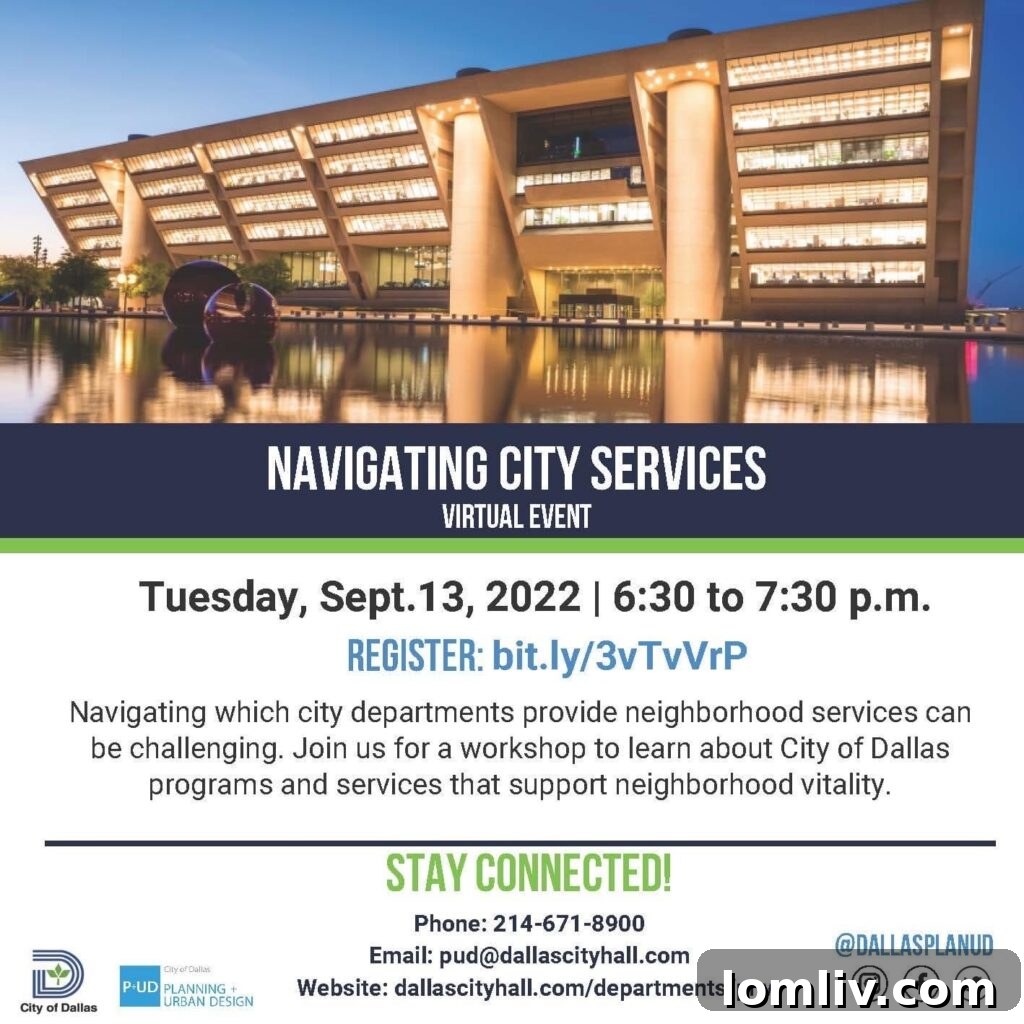
To address the critical need for greater awareness and accessibility regarding city services, a crucial virtual workshop has been meticulously planned. This online event is scheduled for Tuesday, September 13, from 6:30 to 7:30 p.m. It offers an invaluable opportunity for Dallas residents and various stakeholders to gain a comprehensive understanding of how to effectively navigate the array of programs and services that are specifically designed to support neighborhood vitality. This workshop is not merely an informational session; it is an interactive guide aimed at demystifying municipal processes and connecting citizens directly with the resources they need to thrive. Participants will learn practical steps to access assistance, understand eligibility criteria, and discover how to leverage city initiatives for the betterment of their homes and communities. This initiative underscores the city’s dedication to ensuring that its resources are not just available, but also understandable and easily attainable for everyone.
The upcoming “Navigating City Services” event is proudly hosted by the City of Dallas’s Planning and Urban Design Department, a division committed to fostering thoughtful and sustainable urban growth. This department plays a pivotal role in shaping the physical landscape and future trajectory of Dallas, making their involvement in this workshop particularly relevant. Prospective participants are strongly encouraged to register online well in advance to secure their spot and receive all necessary access information. Early registration ensures that attendees will be fully prepared to engage with the workshop’s content and participate actively in discussions, maximizing their learning experience. This digital format not only enhances convenience but also expands the reach of these crucial educational opportunities, allowing a broader segment of the Dallas community to participate from the comfort of their homes or offices.
Shaping Dallas’s Future: The ForwardDallas Comprehensive Land Use Plan
On the very same day, September 13, earlier in the morning, a critical meeting will take place as the city’s ForwardDallas Comprehensive Land Use Plan Committee convenes from 8:30 to 10:30 a.m. This committee plays an instrumental role in guiding the city’s long-term development strategy. The ForwardDallas initiative is a monumental undertaking, serving as the blueprint for how Dallas will grow and evolve over the coming decades. It’s not just about drawing lines on a map; it’s about making fundamental decisions that will shape everything from housing affordability and economic development to environmental sustainability and transportation infrastructure. Public visioning workshops, integral to gathering community input for the ForwardDallas plan, are also scheduled. These important sessions will be held at 6 p.m. on Wednesday, October 19, and at 10 a.m. on Saturday, October 22. These workshops are designed to be inclusive forums where residents can voice their aspirations, concerns, and ideas for the future of their city, ensuring the plan truly reflects the collective vision of Dallas.
The importance of public input in this transformative process cannot be overstated. Julia Ryan, the esteemed Director of Planning and Urban Design, has emphatically articulated that community engagement is absolutely vital for such an expansive and impactful undertaking. The comprehensive land use plan, a cornerstone of responsible urban governance, will ultimately dictate the trajectory and character of Dallas’s future development. It is more than just a regulatory document; it will serve as a foundational policy framework that can effectively prevent undesirable outcomes, such as the construction of an industrial plant in immediate proximity to a residential neighborhood. Such a plan ensures harmonious coexistence between different land uses and safeguards the quality of life for residents. It provides a strategic guide for sustainable growth, protecting property values, promoting economic vibrancy, and fostering a sense of community. Without robust public participation, a plan of this magnitude risks becoming detached from the realities and desires of the very communities it seeks to serve.
As Director Ryan thoughtfully conveyed, “It’s important that the community understands what we’re trying to do and for us to be able to talk to them throughout the process and have the dialogue.” This statement encapsulates the city’s commitment to transparent governance and collaborative planning. It acknowledges that effective urban development is not a top-down mandate but a shared journey involving continuous communication and mutual understanding between city officials and the citizenry. The dialogue fosters trust, ensures accountability, and ultimately leads to more robust, resilient, and widely supported outcomes. By engaging residents at every stage, from initial concept to final implementation, Dallas is striving to create a comprehensive land use plan that is not only technically sound but also socially equitable and reflective of the diverse needs and aspirations of all its inhabitants. This open conversation is crucial for building a city where growth benefits everyone, and where future generations can thrive.
The Impact of a Modernized Planning Approach
The ongoing efforts to reform Dallas’s permitting and zoning processes, coupled with the ambitious ForwardDallas Comprehensive Land Use Plan, represent a pivotal moment for the city. Historically, a lack of clarity and efficiency in these areas has often led to frustration, delays, and increased costs for both individual residents and large-scale developers. Streamlining these systems will not only accelerate crucial projects but also foster a more business-friendly environment, attracting investment and creating jobs. Moreover, simplified and transparent processes empower everyday citizens to undertake home improvements or launch small businesses with greater ease, reducing administrative burdens and fostering local economic vitality. This modernization is not just about speed; it’s about fairness and predictability, ensuring that regulations are consistently applied and clearly understood by all stakeholders.
The visioning workshops for ForwardDallas are particularly important, as they provide an unparalleled opportunity for Dallasites to directly influence the city’s growth narrative. Imagine a future where green spaces are strategically preserved, public transportation options are seamlessly integrated, and diverse housing choices are available across all income levels. This is the kind of future that a well-crafted land use plan, informed by community input, can help bring to fruition. It’s about designing a city that is resilient to future challenges, whether economic or environmental, and one that enhances the quality of life for all its residents. The decisions made today regarding land use will resonate for decades, affecting everything from school district planning to the location of essential services. Therefore, active participation in these workshops is not just an option, but a civic responsibility, ensuring that Dallas continues to evolve as a city that truly serves its people.
Conclusion: A Collaborative Path to a Brighter Dallas
In conclusion, Dallas stands at the precipice of a transformative era in urban planning and community engagement. The city’s proactive measures to simplify building permits and zoning, combined with its comprehensive approach to neighborhood revitalization, underscore a deep commitment to creating a more accessible and supportive urban environment. The upcoming virtual workshop on navigating city services offers a direct pathway for residents to harness available resources, while the ForwardDallas initiative and its associated public visioning sessions lay the groundwork for a thoughtfully planned and sustainable future. By embracing public dialogue and integrating community perspectives into these critical processes, Dallas is not merely adapting to growth; it is actively shaping its destiny. The success of these endeavors hinges on the continued, enthusiastic participation of its residents. Each meeting attended, each comment submitted, and each idea shared contributes to building a stronger, more vibrant, and more equitable Dallas for generations to come. This collaborative spirit is the true engine of progress, ensuring that the city’s development reflects the collective aspirations of all who call it home.