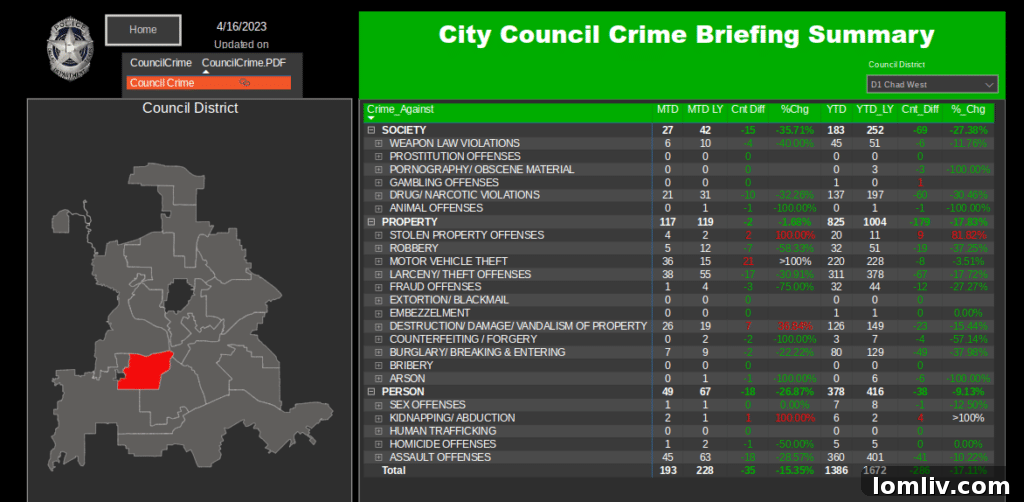
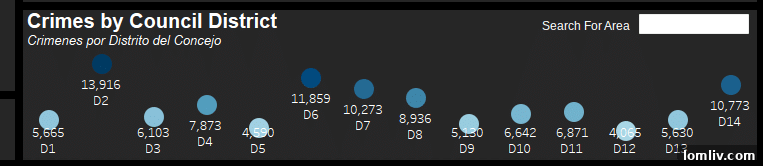
Once considered a challenging area, especially during the early 1990s, when the mere mention of its name would prompt parental warnings about venturing out after dark, Oak Cliff, Dallas, has undergone a remarkable transformation. This dramatic shift is particularly evident in the area now encompassing Dallas City Council District 1, which includes the vibrant North Oak Cliff and the culturally rich Bishop Arts District. Today, District 1 stands as a testament to successful urban revitalization, boasting a thriving community, robust civic engagement, and notably, one of the lowest overall crime rankings among the 14 council districts. Last year, District 1 proudly ranked 10th in the number of reported crimes, a stark contrast to its historical perception.
The journey from its past to its present status as a desirable and secure locale is a story of deliberate effort and community collaboration. This significant improvement in public safety and quality of life has not gone unnoticed by those seeking to represent its residents. Candidates currently vying for a seat on the Dallas City Council to represent District 1 unanimously point to one overarching factor as the primary driver behind this impressive crime reduction: profound and sustained community engagement.
As the May 6 election approaches, incumbent District 1 Dallas City Councilman Chad West seeks re-election, facing spirited challenges from political newcomers Mariana Griggs and Albert Mata. Efforts to reach Mr. Mata for comment on this crucial topic were unsuccessful.
Mariana Griggs passionately articulated the district’s unique strength: “District 1 has a lot of engagement. That is the key. We’re a tale of two districts. You go south of Jefferson [Boulevard], and the engagement decreases. The engagement in North Oak Cliff is spectacular, above and beyond. District 1 is No. 1. We know how to get things done, and we can be a model for the whole city if you let us.” This statement underscores a perceived disparity in civic participation, suggesting that the proactive involvement of residents north of Jefferson Boulevard is a powerful force for positive change.

Councilman West’s campaign has garnered significant support, including endorsements from several local police and firefighter associations, notably the influential Dallas Police Association Political Action Committee. West attributes Oak Cliff’s transformation from a notorious area to a highly sought-after destination to a combination of factors: the City Council’s unwavering support for local law enforcement, the unparalleled neighborhood engagement within District 1, and the strategic recruitment of quality new developments. These elements, he argues, have collectively fostered an environment conducive to safety and prosperity.
“I can only speak for my district, which is a small piece of Oak Cliff,” West stated, emphasizing the localized nature of these successes. “I think it’s [due in part to] more engaged neighborhoods. Over half of the geographic area that I represent is empowered by neighbors who have taken it upon themselves to take leadership and take ownership.” This highlights the decentralized yet powerful impact of individual community members stepping up to address local challenges and contribute to collective well-being.
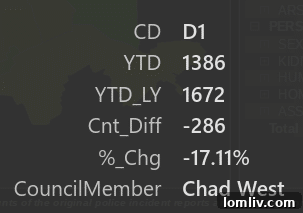
The effectiveness of these efforts is clearly reflected in the latest crime statistics for District 1. Year-to-date data reveals encouraging decreases across several key crime categories compared to the same period last year. Property crime has fallen by almost 18 percent, crimes against persons are down by 9 percent, robberies have seen a substantial 37 percent reduction, and vandalism/destruction of property incidents have decreased by 15.44 percent. These figures demonstrate tangible progress in creating a safer community.
However, as we have observed throughout this series on crime trends across Dallas City Council districts, some data can be interpreted in various ways, sometimes appearing arbitrary depending on the scope of analysis. Critics have rightly pointed to an increasing murder rate across Dallas this year. It is crucial to note, however, that this concerning trend is not specific to District 1, where the already low number of homicides has remained stable. Furthermore, a thought-provoking Dallas Morning News report highlighted that “justifiable homicides,” such as those involving law enforcement officers or incidents deemed self-defense, are often not included in official murder counts, which can impact the public’s perception of overall safety.
West shared a practical perspective with daltxrealestate.com, noting that criminals likely do not respect the arbitrary borders of council districts. “I don’t think they have it in their heads that when they cross Illinois Avenue or Interstate 35, that [police are] going to be cracking down on crime tougher on this block versus one block south or east or west,” West explained. He added, “Either way the data goes, whether it supports me or is against me, I don’t think it’s attributable to what one council member is doing.” This emphasizes the need for a comprehensive, city-wide approach to crime prevention that transcends political boundaries, while acknowledging the unique strengths of highly engaged districts.
Fostering Safe Neighborhoods Through Strategic Initiatives
While criminals may not recognize district lines, there are concrete actions that a body of elected officials, like the Dallas City Council, can undertake to cultivate safer environments for all residents. These actions often involve a blend of policy support for law enforcement and innovative urban planning.
Acknowledging the realities of public safety, including the council’s support for Police Chief Eddie Garcia’s comprehensive Violent Crime Reduction Plan and the ongoing challenge of staffing shortages that result in fewer patrol officers on the streets, Councilman West highlighted the significant impact of seemingly minor strides. He specifically pointed to infrastructure improvements as a key strategy. By reducing minor accidents, these improvements indirectly free up valuable patrol officers to concentrate their efforts on more serious criminal activities and other critical areas, thereby enhancing overall public safety without necessarily increasing police numbers.
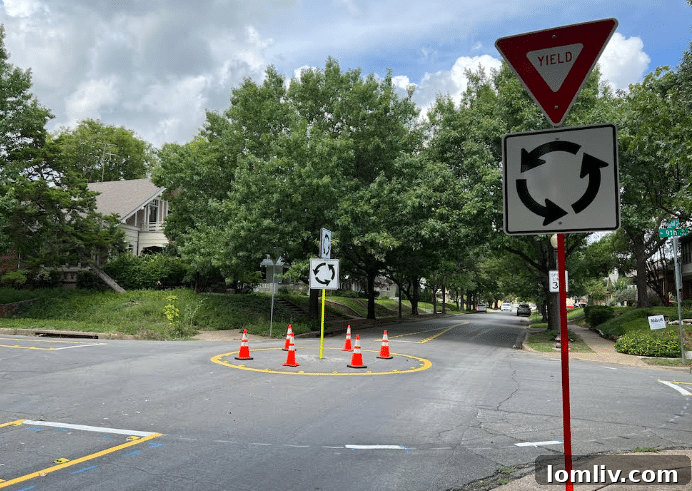
Two notable examples underscore this strategy’s effectiveness. A recent project on Jefferson Boulevard involved reducing the number of traffic lanes from six to four, a change that astonishingly resulted in an 82 percent reduction in accidents, according to West. Additionally, the installation of a new traffic island in Winnetka Heights has successfully curbed the number of motorists exceeding the speed limit, making streets safer for pedestrians and drivers alike. These infrastructure changes are not just about traffic flow; they are integral components of a holistic crime reduction strategy.
“Collisions, when they occur, take away valuable time from firefighters and police officers who have to respond to those situations,” West explained, illustrating the ripple effect of traffic safety. He continued, “When you have an engaged neighborhood that is watching and communicating directly with DPD, you typically see a reduction in crime because you have neighbors who are paying more attention to crime prevention. That continues to be the No. 1 priority in my district. It has been before my time, and it probably will be after my time to infinity.” This strong emphasis on neighborhood vigilance and direct communication with law enforcement forms the bedrock of District 1’s ongoing success in crime prevention.
The Genesis of Engaged Neighborhoods: A Model for Dallas
The vibrant spirit of North Oak Cliff and its commitment to safety are deeply intertwined with its demographic and economic evolution. Over the past two decades, North Oak Cliff has become an increasingly attractive hub for young families and ambitious business professionals, drawn by a compelling combination of accessible housing opportunities and a dynamic workforce landscape. This influx of new residents has injected fresh energy and a renewed sense of civic responsibility into the community.
“The development is radiating out from downtown,” Griggs observed, tracing the geographical spread of revitalization. “Kessler Park and North Oak Cliff, north of Colorado [Boulevard] was really the first to get redeveloped. As those homes got new owners and as people redeveloped the homes, families moved in and people got jobs. We all grew up. I moved in 20 years ago and didn’t have kids. The neighborhood grew up.” Her personal anecdote perfectly captures the organic growth and maturation of the community, where individual life stages mirrored the district’s broader development.
The power of collective action became particularly evident during the drafting of the West Oak Cliff Area Plan (WOCAP), a critical initiative designed to give residents greater control over new development. This period saw the formation of three new neighborhood associations, a clear indicator of burgeoning civic interest and a desire for local governance.


Councilman West elaborated on the lessons learned during this extensive process: “The city and I both learned early on in the three-year WOCAP process that the engagement that’s typically performed by the city wasn’t working.” Recognizing this deficiency, the city strategically modified its outreach methods. Instead of relying solely on online postings and flyers, the approach shifted to more direct and personalized interactions: door-knocking, distributing yard signs, and hosting community pop-ups at grocery stores and local markets. This hands-on strategy proved remarkably effective, particularly in reaching diverse segments of the population.
“That was not a surprise to me because when I went out during COVID to get people registered, the only way you could reach a lot of people, especially in our predominantly Hispanic neighborhoods, was by hosting pop-ups and sometimes in conjunction with a sporting event or food drive. It was a way to reach a population that otherwise was not engaged in that process,” West explained. This tailored approach ensured that the voices of all community members, regardless of technological access or language barriers, were heard and incorporated into the planning process.
The success of WOCAP’s outreach was truly monumental. West proudly noted that the total number of people engaged for District 1’s WOCAP efforts surpassed the engagement numbers for the entire city’s comprehensive Racial Equity Plan. This statistic powerfully illustrates the depth of community involvement and the effectiveness of targeted, boots-on-the-ground outreach strategies.
Beyond the WOCAP development, the community’s commitment to safety is further exemplified by the North Oak Cliff United Police Patrol (NOCUPP). Since 2007, this organization has funded a dedicated police officer who patrols the area approximately 60 percent of the time, serving as a vital supplement to the Dallas Police Department’s resources.
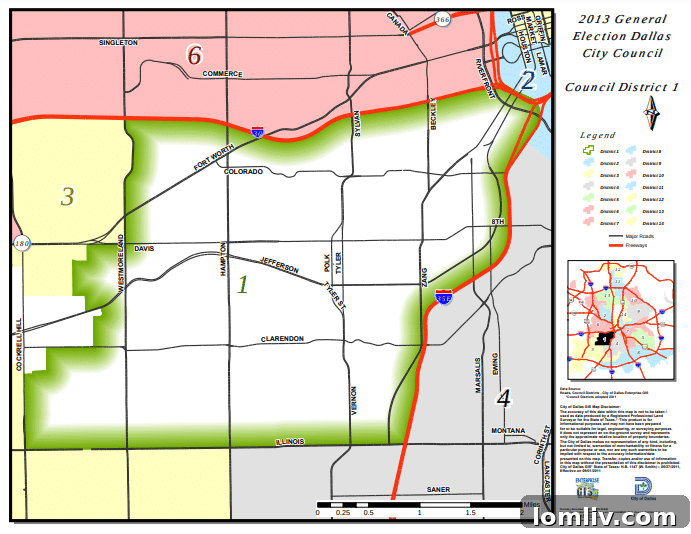
The NOCUPP’s patrol area is extensive, covering key neighborhoods such as East Kessler, Kessler Park, Kessler Plaza, Kidd Springs, Kings Highway, Briscoe Boulevard in Ravinia Heights, Stevens Park Estates, Stevens Park Village, West Kessler, and Winnetka Heights. According to leaders of this non-profit, volunteer-run organization, NOCUPP officers have made approximately 770 arrests since the program’s inception, showcasing its tangible impact on crime deterrence and enforcement within the community.
“An officer literally drives every street of every neighborhood once a day,” West affirmed, highlighting the consistent presence provided by NOCUPP. “I wish there was more patrol, but it is a supplement that neighbors have paid into and supported.” This voluntary, community-funded initiative demonstrates an extraordinary level of commitment from residents who actively invest in their own safety and security.
Supporting Law Enforcement and Implementing Modern Deterrents
Community vigilance and support for law enforcement extend beyond patrol initiatives to proactive crime prevention measures. A recent report detailing an armed robbery at a local Oak Cliff doughnut shop, USA Donuts, quickly galvanized community crime watchers. While the incident itself was regrettable, a positive outcome emerged: the swift installation of security cameras and improved lighting at the establishment. This incident underscored the immediate value of both community response and technological deterrence.
USA Donuts, a standalone building within a small strip mall off Westmoreland Road, represents a typical small business vulnerable to such incidents. West emphasized the importance of such preventative measures: “You can’t necessarily stop someone who is going to commit a crime. What is certainly helpful is to put in things that deter crime, such as cameras. Having good communication with the police, having a well-lit facility, those kinds of things can help deter crime.” This proactive approach focuses on creating an environment less attractive to potential offenders.
Mariana Griggs offered a broader perspective, suggesting that crime in any area, including District 1, often ebbs and flows in correlation with its economic health. “Sometimes it’s chronic and sometimes it’s acute, depending on what the stressors are,” she stated. Elaborating on this, she pointed out societal factors: “Are you flush with cash? Do you have a three-day weekend? People, when they spend time with their families and drink a lot, will stab each other. These things do happen. We cannot escape humanity and the way we treat each other.” Her view highlights the complex interplay between economic stability, social behavior, and crime rates, suggesting that true crime reduction requires addressing underlying societal stressors.
Griggs also noted that random gunfire is a prevalent concern among her neighbors, an issue she believes can be effectively tackled through targeted education. Her approach to governance prioritizes efficiency and direct action. “The No. 1 challenge in government is so many layers of bureaucracy, so many talking heads,” Griggs lamented. “The mayor just put together his subcommittee for the bond package and it’s 75 talking heads. Somebody has to make a decision. I’m an educator. I have a business degree. I want to focus on reducing recidivism, creating public safety, and increasing engagement because I think those are the only ways we’re going to continue to have low crime.” Her platform emphasizes a practical, results-oriented approach rooted in education and community involvement to sustain low crime rates.
In a renewed effort to bolster security and maintenance in key commercial corridors, Councilman West is actively working with property owners in the thriving Bishop Arts District and along Jefferson Boulevard to establish a Public Improvement District (PID). This initiative is particularly challenging, as the concept has failed to gain traction four times previously. Despite past setbacks, West remains determined.
“We’re going to try it again,” West declared. “I’ve got a professional consultant putting together a plan. That would also supplement security presence along those busy corridors.” A PID would enable property owners within a designated area to collectively fund additional services, such as enhanced security patrols, improved lighting, and maintenance, thereby creating a safer and more attractive commercial environment. Its successful implementation would represent a significant step forward in reinforcing the safety infrastructure of these vital areas.
Beyond district-specific initiatives, Councilman West emphasized the broader context of public safety in Dallas. He expressed pride in the overall reduction of violent crime across the city, considering it a significant achievement. He underscored the critical importance of the entire council continuing to support law enforcement, with particular attention to the police pension fund, which is currently grappling with a massive deficit. This pension problem, police officials have repeatedly warned, poses a formidable challenge to recruiting and retaining qualified officers in Dallas, directly impacting the city’s ability to maintain adequate police staffing levels and, consequently, its overall safety.
“I’m concerned about crime everywhere in Dallas,” West affirmed, articulating a city-wide perspective. “I think you’ve got to continue to focus on crime prevention. Even when you are successful at the moment, you don’t want to rest on your laurels because that’s when things can get worse.” His words serve as a vital reminder that crime prevention is an ongoing battle, requiring constant vigilance and sustained effort, even in times of success.
Mariana Griggs echoed the support for Chief Garcia and his Violent Crime Reduction Plan but maintained that crime could regrettably persist as long as the Dallas Police Department faces a critical staffing shortage. Her focus remains firmly on the fundamental issue of police presence. “I feel like our chiefs get bogged down in data,” she critiqued, suggesting a need for a more direct approach. “Our chief needs to focus on recruiting 600 new cops. It needs to be a persistent and holistically-driven, focused deterrence.” Her stance highlights the urgent need for robust recruitment efforts to address the manpower deficit and ensure the long-term efficacy of crime reduction strategies across Dallas.
Editor’s Note: This is the sixth installment in our extensive series examining neighborhood crime trends across Dallas City Council districts. We invite you to share your experiences: Have you been the victim of a crime in a Dallas neighborhood or shopping center? Please reach out and tell us your story at [email protected]. Your insights help us to better understand and report on these critical community issues.